Liberation theology: books to read, in order
Liberation theology is not a settled body of doctrine but a live argument — about whether the Christian gospel commits the church to a political option for the poor, and about whether the movement's borrowings from Marxist social analysis compromised the faith it meant to serve. This path is built so you can hear both sides at full strength: it starts with short, fair-minded primers, moves to the founding Latin American texts in their own words, then places Rome's censure and the movement's reply side by side rather than deciding between them, and ends with the sympathetic and sceptical assessments plus the Black and Asian theologies that grew from the same root. Nothing here is chosen to settle the dispute; everything is chosen because serious readers on both sides of it take the book seriously.
What the movement actually claims
BeginnerBe able to state the preferential option for the poor, the role of base ecclesial communities, and what Medellin and Puebla decided — in the movement's own terms, before anyone argues about them
▸ Study plan for this stage
Pace: Two to three weeks for 231, 99 and 242 pages. Read Berryman first, Boff second and Romero third. Phillip Berryman was a Catholic priest in Central America and writes as a sympathetic outside observer; Leonardo Boff is a founding figure of the movement and writes from inside it, which is why the two
- The preferential option for the poor, stated in the movement's own terms before it is criticised or defended
- Base ecclesial communities: what they were, who led them, and what authority they claimed
- Medellin in 1968 and Puebla in 1979 as the Latin American bishops' conferences the movement points to
- The see-judge-act method the Boffs set out, and where it borrows from social analysis
- The difference between a description of the movement by an observer and an account of it by a participant
- Romero's preaching as the movement in its pastoral rather than academic form, and the political conditions of El Salvador that made it dangerous
- How would you state the preferential option for the poor in a single sentence a critic of the movement would accept as accurate?
- What did a base ecclesial community actually do on a given week, according to Berryman?
- Where does the Boffs' method depend on social-scientific analysis rather than on theology?
- Reading Berryman and Boff side by side, where does description end and commitment begin?
- What is Romero claiming about the church's responsibility, and what does he stop short of claiming?
- Write out the see-judge-act method from the Boffs in your own words, then apply it to a situation Berryman describes, and note which step is doing the contested work.
- Take three of Romero's homily excerpts and mark, for each, whether the claim is theological, factual or political — the categories will not separate cleanly, which is the argument's starting point.
- Draw a one-page timeline from Medellin to Puebla to Romero's death using Berryman's chronology; you will hang the Vatican documents on it in stage three.
Next up: With the vocabulary and the chronology in place, the founding texts can be read as arguments rather than slogans.

Berryman's short survey, published as Liberation Theology: Essential Facts About the Revolutionary Movement in Latin America and Beyond, is the cleanest first hundred pages on the subject: a former priest in Central America explaining the base communities, Medellin and Puebla to readers who have heard the slogans and not the substance. Start here because everything later assumes you know what a base community was.
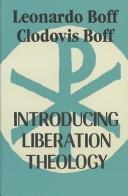
The companion volume to Berryman, but written from inside: the Boff brothers setting out the method — see, judge, act — in about a hundred pages. Reading a primer by an outside observer and a primer by a participant back to back shows you immediately where description ends and commitment begins.
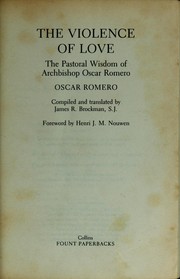
Excerpts from the homilies Romero broadcast from San Salvador in the two years before he was shot at the altar in 1980. This is the movement as preaching rather than theory, and it is the reason the argument was never merely academic; read it before the systematic works so the stakes are concrete.
The founding texts
IntermediateRead the four books that defined the field and understand the specific theological moves — a Christology from below, salvation as historical liberation, and the use of social-scientific mediation — that made them controversial
▸ Study plan for this stage
Pace: Six to eight weeks for 323, 270, 338 and 458 pages, in this order, and treat these as the slow centre of the path. All four are academic theology with substantial footnoting, and Jon Sobrino's Christology at the Crossroads is the hardest — it assumes a working knowledge of twentieth-century Christol
- Gutiérrez's claim that theology is a second act — reflection on a prior commitment to the poor
- Salvation understood as historical liberation, and the specific move that makes it controversial
- Christology from below: building from the historical Jesus upward rather than from conciliar dogma downward
- Social-scientific mediation, and the distinction between using Marxist analysis and adopting Marxist metaphysics
- Miranda's argument from the biblical text itself that justice for the oppressed is the gospel's content, not its implication
- Sobrino's development of the Christology, and why it remained the subject of Vatican notifications for decades
- Structural sin as a category, and what it does that individual sin does not
- What does Gutiérrez mean by theology as a second act, and what does it imply about who can do theology?
- How does Boff build his Christology, and at what specific point does that method depart from the conciliar route?
- What is Miranda's textual case, and which biblical passages carry the most weight in it?
- Where exactly do these authors use Marxist analysis, and what do they claim they are not adopting along with it?
- How far does Sobrino push the Christology beyond Boff, and what is the theological cost he accepts?
- Which of these four arguments would survive if the Marxist social analysis were removed?
- Write a one-page statement of Gutiérrez's core argument that a reader hostile to it would sign as accurate; that discipline is what makes stage three possible.
- List every passage Miranda treats as decisive, look each one up in a standard critical commentary, and note where the commentary reads it differently.
- Mark every point in Boff and Sobrino where a classical Christological formula is restated in historical terms, and keep that list for the Vatican Instructions in the next stage.
Next up: You can now read the Vatican's charges against specific claims you have seen made, rather than against a summary of them.

The book that named the movement, published in 1971 and catalogued under its full title A Theology of Liberation: History, Politics, and Salvation. Gutierrez argues that theology is a second act, reflection on a prior commitment to the poor, and everything written for or against liberation theology since is in some sense a reply to this. Read it first among the primary sources.
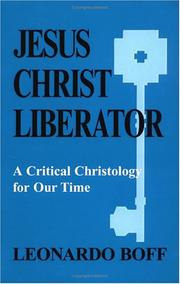
The Latin American Christology to set beside Gutierrez's ecclesiology — Boff builds from the historical Jesus upward rather than from conciliar dogma downward, which is precisely the move Rome would later question. It comes after Gutierrez because Boff assumes the option for the poor and asks what it implies about Christ.

The most direct confrontation with the question everyone circles: Miranda argues from the biblical text itself that justice for the oppressed is not an implication of the gospel but its content. Placed here because it is the strongest version of the case that the Marxist borrowing was scriptural before it was political.
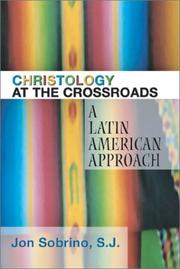
Sobrino, writing from El Salvador where six of his Jesuit colleagues were murdered in 1989, pushes the Christology further than Boff and is the figure Rome would still be issuing notifications about decades later. Read last in this stage: it is the hardest of the four and it makes most sense once you have Gutierrez, Boff and Miranda in place.
Rome's objection, and the reply
IntermediateRead the Vatican's actual charges rather than summaries of them, understand what was and was not condemned, and be able to state the strongest version of each side's case
▸ Study plan for this stage
Pace: Five to six weeks for 547, 197, 182 and 293 pages. Read Hennelly first: his anthology reprints the primary documents in sequence — Medellin, Puebla, the Congregation for the Doctrine of the Faith's 1984 Instruction on certain aspects of the theology of liberation and its 1986 Instruction on Christia
- What the 1984 Instruction actually condemns, and the distinction it draws between the theology and certain forms of it
- What the 1986 Instruction affirms, and why reading only the first document misrepresents Rome's position
- Ratzinger's central charge about the reduction of salvation to a this-worldly political programme
- The ecclesiological question in Church: Charism and Power — where authority in the church comes from and who holds it
- The difference between a notification, a condemnation and a silencing, and what was imposed in Boff's case
- McGovern's finding on where the critics were right about the Marxist analysis and where the charges overshot
- Reading a censure and a reply side by side without deciding in advance which is the document of record
- What does the 1984 Instruction condemn by name, and what does it explicitly decline to condemn?
- Which of Gutiérrez's, Boff's or Sobrino's specific claims from the last stage do the Instructions engage, and which do they pass over?
- What is Ratzinger's strongest argument, stated as he would state it?
- What did Boff say in Church: Charism and Power that drew the notification, and what did he say in reply?
- Where does McGovern conclude the critics were correct, and on what evidence?
- Can the two Instructions be read as consistent with each other, and what turns on the answer?
- Read the 1984 and 1986 Instructions in Hennelly back to back in one sitting and list every claim the second makes that the first does not — that list is the whole reason for reading the anthology rather than excerpts.
- Take the marked passages from Boff and Sobrino you kept in the last stage and check each against the Instructions' text, noting which are addressed directly, which by implication and which not at all.
- Write out the strongest one-page case for the Congregation's position and the strongest one-page case for Boff's, both without hedging, then set them beside McGovern's assessment.
Next up: With the central dispute heard from both sides, the last stage follows the method outside Latin America and reads the assessments written after the movement's political moment passed.
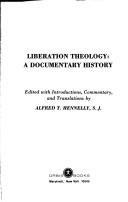
The indispensable volume for this stage and the reason it can be built at all: Hennelly's anthology, which the catalogue displays simply as Liberation Theology, reprints the primary documents in sequence — Medellin and Puebla, the Congregation for the Doctrine of the Faith's 1984 Instruction on certain aspects of the theology of liberation and its 1986 Instruction on Christian freedom and liberation, and the theologians' responses. The two Vatican Instructions do not resolve as standalone books
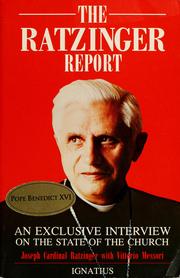
The prefect of the Congregation that issued those Instructions, in his own voice and at book length, on what he thought was wrong with the movement. Whatever you conclude, the criticism deserves to be met at its strongest rather than in paraphrase — and this is the future Benedict XVI making it.

The specific book that drew a formal notification and a year of imposed silence on its author in 1985, so it is the concrete case rather than the general dispute. Read it immediately after Ratzinger to see exactly which claims about ecclesial authority were at issue.
A careful, non-partisan audit of the charges by a scholar who takes both the theology and the objections seriously — including where the critics were right about the Marxist analysis. It closes the stage because it is the book that lets you weigh the exchange rather than pick a team.
What grew from it
IntermediateTrace the method beyond Latin America into Black and Asian theology, and place the whole movement in the scholarly assessments written after its political moment passed
▸ Study plan for this stage
Pace: Four weeks for 254, 144 and 336 pages. James Cone's A Black Theology of Liberation was written in parallel with the Latin Americans rather than downstream of them, and it is a polemical work by a participant in the Black theology it founded. Aloysius Pieris writes from Sri Lanka as a Jesuit working
- The same liberation method applied where race rather than class is the primary axis of oppression
- The 1970s encounter between Black theology and Latin American liberation theology, and how each changed
- Pieris's problem: in Asia the church is a small minority among ancient religions, so a theology of the poor must also be a theology of religious pluralism
- The distinction Pieris draws between the poverty that is imposed and the poverty that is chosen in Asian religious traditions
- Feminist and ecological developments of the method, as surveyed in the Companion
- The movement's standing after the Cold War ended and the political conditions that produced it changed
- What travels when a theology is transplanted, and what turns out to have been local
- Where does Cone's argument require the Latin American framework, and where does it refuse it?
- What did the encounter between Black and Latin American theologians in the 1970s actually change on each side?
- Why does Pieris say a theology of the poor in Asia must engage other religions, and what does that add to the method?
- Which developments in the Companion are extensions of the method and which are departures from it?
- After the Cold War, what remains of the original argument that does not depend on the political conditions of the 1970s?
- Set Cone's account of oppression beside Gutiérrez's and list the points where substituting race for class changes the theology rather than just the application.
- Take Pieris's distinction between imposed and chosen poverty and test it against Romero's homilies from stage one — the fit is imperfect and the misfit is instructive.
- Read the Companion's chapter on the movement's post-Cold-War standing last, then revise the one-page statement of Gutiérrez's argument you wrote in stage two.
Next up: You have the movement's own texts, Rome's objections and the movement's reply, and the offshoots and assessments — enough to follow the argument as it continues rather than to inherit anyone's verdict on it.
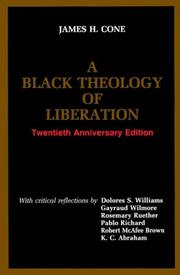
Cone was working in parallel rather than downstream, and the encounter between his Black theology and the Latin Americans in the 1970s changed both. Read it here to see the same method applied where race rather than class is the primary axis of oppression.
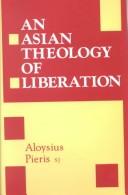
Pieris's Sri Lankan reformulation is the sharpest test of whether the method travels: in Asia the church is a small minority among ancient religions, so a theology of the poor has to be a theology of religious pluralism too. It is the strongest of the offshoot texts and belongs after Cone.
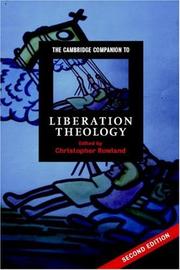
The reference volume to finish on: commissioned essays covering the biblical hermeneutics, the feminist and ecological developments, and the movement's standing after the Cold War ended and the political conditions that produced it changed. Read last, when you have enough of the primary material for the survey to be worth arguing with.