Len Deighton books in order: where to start with the Bernard Samson novels
Deighton is the other half of the British spy novel — where le Carré wrote about class and betrayal from inside the establishment, Deighton wrote a working-class, sardonic, procedurally obsessed version of the same world. There are two entry points and they suit different readers: the loose, funny sixties books narrated by a nameless agent, or the nine-book Bernard Samson sequence, which is the more ambitious achievement. This path takes the sixties books first, then Samson in its three trilogies, then the novels outside the spy world.
The nameless-spy sixties books
BeginnerStart with the early novels: standalone, fast, and the ones that made his name.
▸ Study plan for this stage
Pace: About four weeks for the four novels, 223, 255, 312 and 312 pages. They are short and fast but deliberately hard to follow — Deighton withholds explanation as a matter of style, and the plots are meant to be reconstructed rather than handed over. Read The Ipcress File slowly and the other three at p
- The unnamed working-class narrator as a direct rebuke to the gentleman-officer spy hero
- Deliberate opacity: dialogue that does not explain itself, and plot information withheld until it is nearly useless
- The footnotes, appendices and mock-official documents played entirely straight
- Procedural obsession — expenses, requisitions, office politics — as the texture of intelligence work
- Berlin as the recurring city, and the version of it in Funeral in Berlin that the Samson novels return to
- Where Deighton differs from le Carré: class position and comic register rather than moral exhaustion
- How does Deighton use the narrator's class to characterise the department he works for?
- What do the appendices in The Ipcress File add that the narrative deliberately refuses to say?
- In Funeral in Berlin, what is the actual mechanism of the defection, and at what point were you told it?
- Which of the four plots holds up as a plot, and which are held together by voice alone?
- What does the comedy in Billion-Dollar Brain do for a book about a private anti-Soviet crusade?
- Read the first chapter of The Ipcress File twice — once at pace, once marking every fact you were given and every one you inferred — and you will have Deighton's method in ten pages.
- Keep a one-line-per-chapter plot log for Funeral in Berlin; comparing it afterwards with your memory of the book is the fastest way to see how much Deighton conceals.
- Read the appendices of The Ipcress File after finishing the novel and mark which of them silently correct the narrator.
Next up: The sixties books are standalones held together by a voice; the Samson sequence is the opposite, and the first trilogy asks you to hold nine books' worth of consequence from page one.
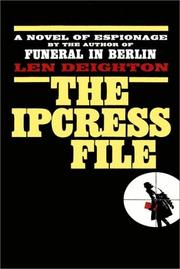
His 1962 debut, narrated by an unnamed insubordinate agent, with footnotes and appendices played straight. The single best place to start with Deighton.

A sunken U-boat off Portugal, and the most conventionally plotted of the early four. Read second; it is the slightest and it sets the pattern.

A defection staged across the Wall, and the book where the sixties sequence is at its best. Its Berlin is the same city the Samson novels return to twenty years later.

A private anti-Soviet crusade run by a Texan billionaire and an early computer. The most dated and the most enjoyable of the four; it closes the sequence.
Game, Set and Match
IntermediateBegin the Bernard Samson sequence — nine novels in three trilogies, narrated throughout by a mid-level London Central field man who has been passed over.
▸ Study plan for this stage
Pace: Four weeks for 336, 392 and 422 pages, and read all three in one continuous run without another book in between — they were conceived as a single novel in three volumes and the mole plot does not survive a gap. Berlin Game is the correct entry to the nine books; nothing later works without it.
- Bernard Samson as narrator: a field man passed over for promotion, unreliable chiefly about himself
- London Central's office politics as the real terrain, with the operational plots serving them
- The mole hunt across the three books, and how Deighton lets you outrun Samson's understanding
- The Samson marriage as the structural centre of all nine novels
- The Game-Set-Match, Hook-Line-Sinker, Faith-Hope-Charity architecture — three trilogies, one story
- Berlin as an operational space with a wall through it, twenty years on from Funeral in Berlin
- What does Samson believe about his own career, and where does the text show you he is wrong?
- At what page did you know what Berlin Game's betrayal was, and how long does Samson take?
- How does Mexico Set use Samson's own position under suspicion to constrain what he can investigate?
- What does London Match actually resolve, and what does it leave deliberately open?
- How is Deighton's Berlin here different from the Berlin of the sixties books?
- Keep a single sheet of the London Central staff — name, rank, allegiance as you currently judge it — and revise it as you read; the second trilogy will require it.
- At the end of Berlin Game, write down in one sentence what you think happened, seal it, and check it against the end of London Match.
- Mark every scene in which Samson interprets his wife's behaviour, and reread those pages after London Match.
Next up: London Match appears to close the mole hunt, which is precisely the assumption the second trilogy is built to dismantle.

Samson goes back into the East to bring an agent out, and the trilogy's central betrayal is set up. This is the correct entry to the nine books and nothing later works without it.

The recruitment of a KGB officer, and Samson himself under suspicion. Directly continuous with Berlin Game.

The mole hunt resolves, or appears to. Read all three in one run: they were written as a single novel in three volumes.
Hook, Line and Sinker
IntermediateContinue the sequence, including the volume that retells events you have already read.
▸ Study plan for this stage
Pace: Three and a half weeks for 315, 316 and 387 pages. Read them in order and do not read about Spy Sinker before you get there — its structural gamble is the point of the trilogy and is easily spoiled. Spy Sinker abandons Samson's first-person narration and retells the same events from outside.
- The second trilogy as a re-reading rather than a continuation: the same events, differently known
- Spy Hook's departmental-money plot as the pretext for reopening what London Match settled
- Samson's unreliability moving from a matter of self-image to a matter of fact
- The third-person narration of Spy Sinker as an authorial verdict on everything the first six books asserted
- How Deighton manages information the narrator does not have without cheating the reader
- What the trilogy costs: the price of Spy Sinker's revelation is that Samson stops being the story's authority
- What does Spy Hook establish that makes the first trilogy's conclusion untenable?
- Why is Spy Line the tightest of the three, and what does its confinement to Berlin do for the plot?
- Which specific scenes from Berlin Game or London Match change meaning once Spy Sinker retells them?
- Was Deighton fair to the reader in the first six books, or does Spy Sinker rely on omissions that read as cheats?
- What is lost when Samson's voice is removed, and does Deighton compensate for it?
- Before starting Spy Sinker, write down what you believe about the marriage and the mole; after finishing, annotate that page rather than rewriting it.
- Pick one scene that appears in both London Match and Spy Sinker and set the two versions side by side, marking every fact present in one and absent from the other.
- Return to your London Central staff sheet from the last stage and mark which of your allegiance judgements Spy Sinker overturns.
Next up: Winter is the prequel that supplies the family history the Samson books have been assuming, and it only reads as a revelation once you have been wrong about that family twice.

Samson chasing missing departmental money and finding the previous trilogy was not what he thought. Requires the first three.
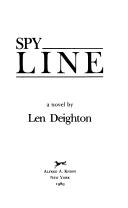
Samson on the run in Berlin. The tightest book of the middle trilogy.

The one structural gamble of the series: it drops Samson's first-person narration and retells the whole story from outside, which changes the meaning of everything before it. Do not read it early.
Outside the spy books
IntermediateRead the three novels that show what else he could do, including the prequel to the Samson world.
▸ Study plan for this stage
Pace: Five to six weeks for 544, 493 and 402 pages — the longest stage on the path and the one furthest from the spy format. Bomber covers a single RAF raid over twenty-four hours and describes the deaths of aircrew and of German civilians in detail, including a bombed hospital; it is the most sustained v
- Winter as prequel: two German brothers from 1900 to 1945, and the family history behind the Samson novels
- Why Winter is placed after Hook, Line and Sinker rather than first — it was written to be a revelation, not an introduction
- Bomber's technique of following a single raid across both sides in near-real time, with no spies in it at all
- Deighton's research method visible on the page: aircraft systems, bombing accuracy, night-fighter interception
- SS-GB's premise — a Scotland Yard detective doing ordinary police work under German occupation — and why the ordinariness is the argument
- What these three show about the writer: the spy books are a subset of a larger interest in institutions under pressure
- Which Samson characters does Winter explain, and at what point in it did you recognise them?
- Does Winter work as a novel for someone who has not read the Samson books?
- How does Bomber distribute sympathy between the crews and the civilians beneath them, and does it hold?
- What does SS-GB assume its reader believes about British conduct, and how does it test that?
- Across all three, what does Deighton think institutions do to the people inside them?
- Read Winter with the Samson family names beside you and mark the page where each one first appears — that list is the whole argument for reading it here.
- Track Bomber's hour stamps and build a timeline of the raid from both sides; the structure is the book's main achievement and it only shows up when you lay it flat.
- After SS-GB, list which institutions in it are functioning unchanged under occupation and which are not, and compare that with the department in Berlin Game.
Next up: You have both entry points, the six Samson novels that make the sequence's argument, and the three books that show what else he could do — enough to decide whether to go on to Faith, Hope and Charity.

Two German brothers from 1900 to 1945, and the prequel that supplies the family history behind the Samson novels. Read it after Hook, Line and Sinker rather than first — it is written to be a revelation, not an introduction. Note that the final trilogy, Faith, Hope and Charity, is not listed on this path.

A single 1943 RAF raid over 24 hours, told from both sides including the German night-fighter crews and the civilians beneath. Widely considered his best novel and it contains no spies at all.

A Scotland Yard detective working under German occupation in a Britain that lost in 1941. The most-imitated alternate history in British fiction; read it last as the furthest departure.