Cook Korean food at home
This four-stage curriculum takes a complete beginner from understanding the Korean pantry and flavor logic all the way to mastering the iconic dishes and the cultural stories behind them. Each stage builds directly on the last: you learn the ingredients before you cook with them, the everyday staples before the showpiece meals, and the technique before the deeper culinary history.
Everyday Korean: Kimchi, Banchan, and Rice Table
BeginnerMake authentic kimchi from scratch, build a rotating repertoire of banchan (side dishes), and assemble a proper Korean rice table — the daily cooking backbone of Korean home life.
▸ Study plan for this stage
Pace: 8–10 weeks total. Weeks 1–4: "The Kimchi Cookbook" by Lauryn Chun (~20–25 pages/day, including re-reading technique sections); Weeks 5–10: "Maangchi's Real Korean Cooking" by Maangchi (~25–30 pages/day, cooking at least 2 recipes per week alongside reading).
- Lacto-fermentation science: how salt, time, and temperature transform raw vegetables into kimchi — as explained in Lauryn Chun's foundational chapters on fermentation biology
- The role of gochugaru (Korean red pepper flakes) and jeotgal (salted seafood) as flavor pillars of kimchi paste, per Chun's ingredient breakdowns
- Salting and pressing techniques: dry-salting vs. brine-salting cabbage and other vegetables to draw out moisture before seasoning, a core skill in The Kimchi Cookbook
- Kimchi variety beyond baechu (napa cabbage): radish kkakdugi, water kimchi (mul kimchi), and vegan adaptations covered by Chun's recipe range
- The banchan philosophy: small, shareable, seasonally rotated side dishes that balance flavor, texture, and nutrition — introduced through Maangchi's home-cooking framework
- Staple banchan categories from Maangchi's Real Korean Cooking: namul (seasoned vegetables), jorim (braised dishes), jeon (pan-fried savory pancakes), and pickles
- The Korean rice table (bapsang) as a system: how steamed rice, soup or jjigae, kimchi, and 2–4 banchan are assembled and balanced for an everyday meal, per Maangchi's meal structure guidance
- Essential Korean pantry building: doenjang, ganjang, gochujang, sesame oil, and fish sauce — their roles and substitutions as referenced across both books
- According to Lauryn Chun, what is the purpose of the initial salting step, and how do you know when the cabbage is ready to be rinsed and seasoned?
- What distinguishes a vegan kimchi from a traditional one in terms of ingredients, and what substitutes does Chun suggest to replicate the umami depth of jeotgal?
- How does Maangchi define the difference between a namul and a jorim, and can you give one example of each from her book?
- What are the components of a balanced everyday bapsang (rice table) as described by Maangchi, and what role does kimchi play within it?
- Using both books as reference, which pantry ingredients appear in both kimchi-making and everyday banchan recipes — and why does that overlap matter for a home cook?
- How does fermentation time and storage temperature affect kimchi flavor, and what does Chun recommend for achieving 'ripe' (suk) kimchi versus fresh (geotjeori) kimchi?
- Make baechu kimchi (napa cabbage kimchi) from scratch using Lauryn Chun's master recipe: salt the cabbage, prepare the paste, pack the jar, and taste it at 24 hours, 3 days, and 1 week to track fermentation flavor development.
- Attempt one non-cabbage kimchi from The Kimchi Cookbook — kkakdugi (cubed radish) is ideal for beginners — and compare the texture and fermentation speed to your baechu kimchi.
- Build your Korean pantry checklist: visit a Korean grocery store (or online retailer) and source every ingredient flagged as essential in both Chun's ingredient guide and Maangchi's pantry chapter. Label and store them correctly.
- Cook a full banchan trio from Maangchi's Real Korean Cooking in a single session — choose one namul, one jorim, and one jeon — then plate them together with steamed rice and your homemade kimchi to assemble your first proper bapsang.
- Keep a fermentation and cooking journal: log each recipe attempted, note what worked and what didn't, record how your kimchi tastes at different stages, and write one adjustment you would make next time.
- Host a simple 'rice table' meal for at least one other person using only recipes from these two books — aim for rice, a soup or jjigae from Maangchi, two banchan, and your own kimchi — to practice the full assembly under real conditions.
Next up: Mastering kimchi fermentation and the everyday bapsang gives you a living pantry and a repeatable meal structure, which is the essential foundation for tackling more complex Korean cooking — such as soups, stews, grilled meats, and celebratory dishes — in the next stage.
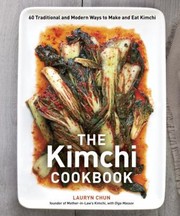
The most focused, beginner-friendly deep-dive into kimchi: covers the fermentation science, every major variety, and troubleshooting — essential before tackling broader Korean cooking.

The most trusted Korean home-cooking reference in English, written by the internet's most beloved Korean cooking teacher; its banchan and everyday rice-table chapters directly apply the pantry knowledge from Stage 1.
Going Deeper: Soups, Stews, Noodles, and Korean BBQ
IntermediateMaster the iconic centerpiece dishes — doenjang jjigae, sundubu, galbi, bulgogi, japchae — and confidently host a Korean barbecue at home, including marinades, dipping sauces, and the full ssam spread.
▸ Study plan for this stage
Pace: 6–8 weeks total: Weeks 1–3 on "Korean BBQ" by Bill Kim (~25–30 pages/day, including re-reading marinade and sauce chapters); Weeks 4–7 on "Koreatown" by Deuki Hong (~25 pages/day, with slower passes over the jjigae, noodle, and ssam chapters); Week 8 reserved for a full review cook-through and integ
- The flavor architecture of Korean marinades — the interplay of soy sauce, sesame oil, sugar, garlic, ginger, and gochugaru — as taught through Bill Kim's bulgogi and galbi recipes
- Bill Kim's 'flavor passport' philosophy: how Korean BBQ technique can flex across global flavor profiles while keeping core Korean grilling principles intact
- Mastering the ssam spread: the roles of ssamjang, perilla leaves, kimchi, pickled vegetables, and steamed rice as a composed, interactive meal format from both Kim and Hong
- Dipping sauce construction and balance — understanding sweet, salty, spicy, and acidic ratios through Bill Kim's sauce chapter
- Doenjang jjigae and sundubu jjigae from Koreatown: building deep umami through fermented soybean paste, anchovy-kelp broth (myeolchi yuksu), and tofu textures
- Japchae fundamentals from Koreatown: glass noodle hydration, stir-fry sequencing, and the balance of savory-sweet seasoning
- The role of banchan as supporting cast — how Koreatown frames small sides as essential context for centerpiece dishes like galbi and jjigae
- Home Korean BBQ logistics: heat management (charcoal vs. stovetop grill pan), meat slicing thickness, resting times, and the sequence of cooking multiple proteins from Bill Kim
- According to Bill Kim's 'Korean BBQ,' what are the non-negotiable base ingredients in a classic bulgogi marinade, and how does marinating time affect the final texture of the beef?
- How does Bill Kim structure his dipping sauces differently from his marinades, and what role does acid (citrus, vinegar) play in each context?
- Using Koreatown as your guide, what is the difference between doenjang jjigae and sundubu jjigae in terms of broth base, protein, and texture — and when would a Korean home cook choose one over the other?
- How does Koreatown describe building myeolchi yuksu (anchovy-kelp stock), and why is this broth foundational to so many of the soups and stews in the book?
- What does Bill Kim identify as the key practical steps for successfully hosting a Korean BBQ at home — covering equipment, prep-ahead tasks, and the order of cooking proteins?
- After reading both books, how would you design a complete ssam spread for six guests, drawing on Bill Kim's sauce work and Koreatown's banchan and rice guidance?
- Cook Bill Kim's bulgogi and galbi back-to-back on the same day, using his exact marinade ratios first, then adjust one variable (e.g., sugar level or marinating time) and document the difference in flavor and texture
- Build three dipping sauces from 'Korean BBQ' — one soy-based, one gochujang-based, one sesame-forward — and host a blind taste test with friends or family to identify balance issues
- Make myeolchi yuksu (anchovy-kelp broth) from scratch using Koreatown's method, then use that single broth as the base for both doenjang jjigae and sundubu jjigae in the same week to directly compare the two stews
- Cook Koreatown's japchae from start to finish, paying deliberate attention to the stir-fry sequencing (cook each vegetable and protein separately before combining) — then write a one-paragraph note on what would go wrong if you skipped that step
- Host a full Korean BBQ night at home using Bill Kim's hosting framework: prepare at least two proteins, two dipping sauces, ssamjang, and a ssam spread with lettuce, perilla, and rice — practice the logistics of tabletop grilling and replenishing sides
- After finishing both books, create a one-page 'Korean pantry and technique cheat sheet' that merges Bill Kim's sauce ratios with Koreatown's broth and fermentation staples — this becomes your personal reference card for the next stage
Next up: By mastering the centerpiece dishes and hosting mechanics in these two books, the reader has internalized Korean flavor logic deeply enough to move confidently into more advanced fermentation, regional specialties, and the full breadth of Korean home cooking that a deeper curriculum stage would demand.

The definitive English-language guide to Korean barbecue at home: covers cuts, marinades, banchan pairings, and the ssam wrapping ritual, building directly on the pantry and fermentation skills already developed.

Takes you inside the bold, high-flavor cooking of Korean-American restaurants — soups, stews, noodles, and late-night staples — bridging home cooking and the dishes behind the K-food wave.
Mastery: Tradition, Technique, and the Classics
ExpertUnderstand the deep culinary traditions — royal court cuisine, regional variation, seasonal fermentation — and cook the complex classics (gujeolpan, ganjang gejang, mul naengmyeon) with full technical and historical confidence.
▸ Study plan for this stage
Pace: 5–6 weeks, ~20–25 pages/day; linger on technique-heavy chapters and fermentation sections, re-reading as needed before attempting each complex recipe
- Royal court cuisine (宮中飮食 / gungjung eumsik) — its aesthetic principles of balance, color, and restraint as codified in the gujeolpan and other elaborate presentations
- Regional variation across Korea's provinces — how geography, climate, and local ingredients produce distinct flavor profiles (e.g., the bolder, spicier south vs. the subtler, saltier north)
- Seasonal fermentation as a living culinary system — the logic of kimchi beyond baechu, including kkakdugi, oi sobagi, and the role of jeotgal (salted seafood) as a fermentation catalyst
- Ganjang gejang (soy-marinated raw crab) — mastering raw protein preservation, the chemistry of salt-curing, and the patience required for deep umami development
- Mul naengmyeon — understanding the critical importance of a crystal-clear, deeply flavored beef or dongchimi broth, buckwheat noodle texture, and the dish's North Korean historical roots
- Hooni Kim's chef-to-home-cook translation philosophy — how professional technique is adapted without sacrificing authenticity, and why understanding the 'why' behind each step matters more than rote instruction
- Jang (장) mastery — doenjang, ganjang, and gochujang not as pantry staples but as living, aged ingredients whose quality and age fundamentally alter a dish's outcome
- The role of plating, color theory (오방색 / obangsaek, the five cardinal colors), and ritual in elevating Korean food from sustenance to cultural expression
- How does Hooni Kim frame the tension between preserving culinary tradition and making Korean cooking accessible to a modern, non-Korean audience — and where do you see that tension most clearly in his recipes?
- What are the non-negotiable technical steps in preparing ganjang gejang safely and successfully, and what does Kim identify as the most common points of failure?
- How does mul naengmyeon's broth construction differ fundamentally from other Korean soups, and why does Kim treat its clarity and temperature as matters of cultural integrity, not just preference?
- In Kim's treatment of gujeolpan, what does each of the nine compartments represent, and how does the dish embody the obangsaek color philosophy of royal court cuisine?
- How does Kim explain regional variation in fermentation — specifically, why do southern kimchis tend to be spicier and more heavily seasoned with jeotgal than northern or Seoul-style versions?
- After working through 'My Korea,' how would you articulate the difference between cooking a Korean dish correctly and cooking it with full cultural and historical understanding?
- Fermentation deep-dive: Prepare at least two non-baechu kimchi varieties from 'My Korea' (e.g., kkakdugi and oi sobagi) side by side, keeping a written fermentation log tracking smell, taste, and texture every 24 hours for one week — then compare the structural role of jeotgal in each.
- Ganjang gejang project: Source live or very fresh raw crab and execute Kim's ganjang gejang recipe in full, including the multi-stage soy brine process. Taste at the 24-hour, 48-hour, and 72-hour marks and document how umami and texture evolve — do not skip the re-boiling of the brine.
- Mul naengmyeon broth challenge: Make the broth twice — once rushing the process and once following Kim's timing and technique exactly. Serve both chilled and side-by-side; write a sensory comparison focusing on clarity, depth, and the 'cold-sweet-sour' balance Kim describes.
- Gujeolpan construction: Assemble the full nine-compartment dish from 'My Korea,' sourcing and preparing every component from scratch. Before plating, sketch the color arrangement and annotate which obangsaek colors each component represents and why that placement matters.
- Jang blind tasting: Acquire doenjang and ganjang in at least two age/quality tiers (e.g., mass-produced vs. artisanal or home-aged). Cook the same simple dish (e.g., doenjang jjigae) with each and write a structured tasting note on how the jang's age and complexity changes the final dish — connecting your findings back to Kim's commentary.
- Regional variation dinner: Plan and cook a two-region comparative meal using recipes from 'My Korea' — one menu representing a southern province (bold, spicy, rich jeotgal) and one representing a northern or Seoul style (subtler, less seafood-forward). Host a tasting and articulate the differences to your guests using the historical and geographic context Kim provides.
Next up: Mastering the classics and their historical roots in 'My Korea' gives the reader the technical confidence and cultural vocabulary needed to engage critically with Korean culinary innovation, fusion, and the global conversation around Korean food — the natural frontier beyond tradition.

Written by a Michelin-starred Korean-American chef, this book bridges authentic tradition and modern refinement, offering the deepest exploration of flavor layering, regional classics, and the cultural stories that complete a serious Korean cooking education.
Discussion
Keep reading
Paths that share books, cover the same subject, or open a related topic.