Junji Ito Reading Order: Where to Start With His Horror Manga
Junji Ito's English editions are almost all VIZ hardcover collections of previously scattered short stories, not a numbered series, so the reading order is about which collection to open first rather than which volume comes next. Picking wrong is why people bounce: the short-story collections are uneven by design, and starting with a weak one gives a false impression of the work. This path starts with the one complete long-form masterwork and the best-of collection, then the two other long works, then the collections, then the later and stranger material.
The best first Ito
BeginnerStart with the two books that show what he can do at full strength.
▸ Study plan for this stage
Pace: 2 weeks for about 1,050 pages across two hardcovers. Uzumaki (653 pages) is the single-volume edition collecting all three original volumes, and it should be read a chapter at a time over a week and a half rather than in one sitting — each chapter was serialised as a self-contained horror episode an
- The abstract premise: Uzumaki's antagonist is a shape, not a monster, and everything that happens is that shape asserting itself on flesh, weather, architecture and time
- Why Uzumaki has an ending and almost nothing else Ito wrote does — it is his one long work with real structural design rather than accumulation
- The Ito page turn: a normal panel, a normal panel, and then a full-page reveal drawn in far more detail than anything around it
- Contrast as the mechanism — clean, thin, almost bland linework for ordinary life, obsessive stippled density for the horror image
- Escalation without explanation: Ito almost never accounts for a phenomenon, and the refusal is the horror rather than a gap in it
- Shiver as a self-selected sampler with author commentary, which makes it the one book where Ito tells you what he thought he was doing
- The English publishing situation — these are VIZ hardcover collections gathering work originally scattered across magazines and Japanese volumes, not a numbered series
- What makes a spiral frightening in Uzumaki, and at what point does the book stop needing to justify it?
- Identify three of Ito's full-page reveals and describe what the preceding two pages did to set each up — the rhythm is consistent
- Uzumaki has a real ending. What does having one do to the reading experience, given that his short stories generally do not?
- Where does Ito's commentary in Shiver contradict or complicate your own reading of the story it follows?
- Which Shiver stories work and which do not, and can you state the difference in terms of structure rather than taste?
- Keep a reveal log for Uzumaki: for each chapter, note the page on which the full-page horror image lands and how many pages of ordinary life preceded it, then look at the distribution across the whole book
- Pick one Uzumaki chapter and read only the ordinary-life panels, skipping every horror image; write down what kind of story is left, and what that tells you about Ito's scaffolding
- Read each Shiver story, write one sentence on what you think it is about, and only then read Ito's commentary; keep both, and note where he is describing a different story from the one you read
- Compare the linework of a domestic panel and a horror panel on the same Uzumaki spread and describe the difference concretely — line weight, hatching density, panel border, background detail
- Using Shiver's commentary, list which collections Ito himself points to as containing his stronger work; you will check that against the anthologies in stage three
Next up: Uzumaki shows what Ito does with a real structure and Shiver shows what he thinks of his own short work; the next stage tests both against his other two book-length attempts, which are far less controlled.
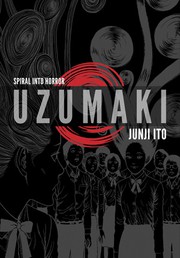
A town infected by the abstract idea of the spiral. His only long work with a genuine structure and ending, and the near-universal recommendation for a first Ito. Available as a single hardcover collecting all three original volumes.

A selected-stories collection Ito assembled himself, with author commentary on each piece. Read it second: it is the most reliable sampler of the short work and tells you which collections to prioritise.
The two other long works
BeginnerRead the other book-length stories, both of which are more uneven than Uzumaki.
▸ Study plan for this stage
Pace: 2–3 weeks for about 1,160 pages. Tomie (752 pages) is the big one — twenty linked stories written across roughly a decade and collected in a single hardcover, and it should be read a story at a time over two weeks rather than as a novel, because reading it continuously exposes the repetition rather
- Tomie as theme and variations rather than a novel — the same premise restated twenty times, and the interest is in what changes between iterations
- Ito's development visible across a decade in one book: the early Tomie stories and the late ones differ markedly in drawing and construction
- The repeating structure — a man meets Tomie, is captivated, kills her, and she regenerates — as a machine Ito deliberately runs to exhaustion
- What Tomie is about, and the fact that the collection never settles whether she is a victim, a predator, or a device
- Gyo's escalation problem: a strong premise that keeps raising the stakes past the point where it can resolve them
- The Enigma of Amigara Fault as the purest single example of Ito's method — a premise, no explanation, and a final image doing all the work
- Why a short story can end without explanation and a long work usually cannot, which is the difference between Uzumaki and Gyo
- Across the twenty Tomie stories, what varies and what never does — and which variations actually change the premise?
- Is Tomie a character? Argue it from at least three separate stories.
- Where does Gyo run out of road, and can you name the page or sequence where the escalation stops paying?
- Why does The Enigma of Amigara Fault work in twenty-odd pages when Gyo's main story does not work in three hundred?
- Uzumaki, Tomie and Gyo are all called long works. Which of the three is genuinely structured, and what is the evidence?
- Read the first and last Tomie stories back to back before reading the middle, and list every difference in drawing style, panel density and story construction across the decade
- For each Tomie story, record in one line who the point-of-view character is and what he wants; the pattern in that column is the collection's actual subject
- Read The Enigma of Amigara Fault and diagram its structure — setup, escalation, final image — then apply the same three-part diagram to Gyo's main story and see where the third part fails
- Take three Tomie stories at random and try to reorder them chronologically by internal evidence alone; the difficulty of doing so is informative about how the book is built
- Add every reveal in Gyo to your reveal log from stage one and compare the density with Uzumaki's — the difference in restraint is measurable
Next up: Having seen the long form succeed once and strain twice, you can now read the anthologies for what they actually are — Ito working at the length that suits him.
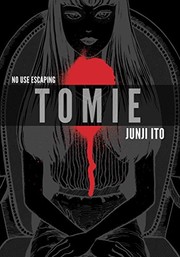
The immortal girl who provokes her own murder and grows back. Twenty linked stories written across a decade, collected in one volume — read it as variations on a theme rather than a novel.
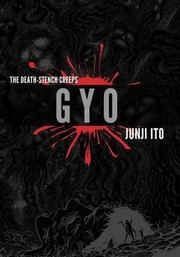
Walking fish, a death-stench and a body-horror escalation that runs out of road well before it stops. Included because it contains The Enigma of Amigara Fault, the single most widely circulated thing he has drawn.
The short-story collections
BeginnerWork through the anthology volumes, where the quality varies within a single book.
▸ Study plan for this stage
Pace: 3 weeks for about 1,320 pages across four books — Fragments of Horror (219), Smashed (416), Venus in the Blind Spot (272) and Lovesickness (408). Read one or two stories per sitting; these are anthologies and quality varies inside a single volume, so reading them straight through blunts the good one
- The anthology as Ito's native unit — his best work is 20 to 40 pages, and the collections are packaging rather than structure
- Linked sequence versus loose anthology: Lovesickness has a through-line where Fragments and Smashed do not
- Adaptation and homage — the Rampo adaptation and the Umezz memoir strip in Venus in the Blind Spot show Ito's own lineage explicitly
- The Soichi stories as comedy: the same drawing style aimed at a malevolent child, and how far the register can shift without the art changing
- Ito's recurring motifs across collections — holes, hair, insects, spirals, beautiful strangers, crowds turning — and how they recombine
- Autobiographical strips inside a horror collection, and the tonal seam where they sit
- Why the collections are best judged story by story rather than volume by volume, and how to keep your own scorecard
- Which single story across these four is the strongest, and can you say why in structural terms rather than by image?
- What does Lovesickness's through-line give it that Fragments of Horror lacks, and does it cost anything?
- How does Ito's Human Chair adaptation differ from a story of his own invention — what does working from someone else's plot change?
- The Soichi material is funny. Is it still horror, and what exactly makes it work in the same drawing style?
- Are the weak stories in these collections weak for the same reason each time? Name the reason.
- Keep a scorecard across all four books: story title, collection, one line on the premise, and a mark out of five; at the end, look at whether your top-rated stories share a structure
- Take your reveal log from stages one and two and add every story in Fragments of Horror, noting how many pages of ordinary life each one buys before the turn
- Read the Rampo adaptation in Venus in the Blind Spot, then find a synopsis of the original prose story and list what Ito added, cut and made visual
- Track one motif — holes, hair, or a crowd turning on someone — across all four collections and write down each variation in the order you meet it
- Return to the list you made from Shiver's commentary in stage one and check it against your scorecard: did Ito accurately predict which of his collections you would rate highest?
Next up: With a working sense of Ito's formula from four anthologies, the final stage is the work that deliberately departs from it.

His return to short horror after a long gap, and the most consistent of the pure anthologies. A good gauge of whether the short form is for you.

Thirteen stories including the title piece and Soichi material. Reliably grim and mostly self-contained.

A best-of collection selected with the English publisher, including an adaptation of Rampo's Human Chair and a memoir strip about meeting his idol. The most varied volume here.

A linked sequence about a beautiful stranger at a crossroads, plus shorter pieces. The most sustained of the collections and the natural end of this stage.
Later and stranger
IntermediateRead the work that is further from the established formula, once you know what the formula is.
▸ Study plan for this stage
Pace: 2–3 weeks for about 1,110 pages. Remina (259) and Dissolving Classroom (195) are each a single sitting or two. Sensor (240) is short but disjointed and worth a slower week. Frankenstein (416) is the longest here and is really three things bound together — the Shelley adaptation, a run of Oshikiri st
- Remina's scale shift — Ito's horror is usually a body or a town, and here it is a planet, which changes what the drawing has to do
- Mob horror rather than body horror: Remina's real subject is a crowd assigning blame, which makes it his most political book
- Sensor's chapter-to-chapter reinvention, and why a structure that keeps restarting divides readers
- Black comedy as a mode Ito can hold for a whole book, which Dissolving Classroom demonstrates and Smashed only sampled
- Working inside someone else's plot: the Frankenstein adaptation is the clearest view of Ito's craft, because the story is fixed and only the drawing is his
- The Oshikiri stories as an ongoing sequence of Ito's own tucked inside an adaptation volume — a good example of how VIZ collections are assembled
- The Cat Diary strips and the deliberate tonal collision of putting them after Frankenstein in the same book
- What is Remina actually about, and does the cosmic premise or the crowd do more of the work?
- Sensor restarts itself repeatedly. Is that a failure of construction or a deliberate device, and what evidence supports your answer?
- Dissolving Classroom is comic and horrific at once. Where exactly is the line, and does Ito ever cross it in the wrong direction?
- In the Frankenstein adaptation, what has Ito changed from Shelley's plot, and what did the change let him draw?
- Having read the whole path: what is the Ito formula, in one sentence, and which of these four books departs from it most successfully?
- In Remina, mark the exact page where the horror stops being cosmic and becomes the crowd, and write down what changes in the panel composition at that point
- Read Sensor once straight through and then again reading only the first and last pages of each chapter; describe what the second pass reveals about how it is assembled
- Set the Frankenstein adaptation beside a summary of Shelley's novel chapter by chapter and list every scene Ito expands, compresses or invents
- Read the Cat Diary strips immediately after finishing the Frankenstein material, as the volume forces you to, and write down what the collision does — this is the clearest case of a VIZ collection's contents shaping the reading
- Close your reveal log and your story scorecard together: across every book on this path, identify the three strongest Ito images and the three strongest Ito structures, and note how rarely they are the same pieces
Next up: This ends the path: you have the one structured long work, the two that strain, the anthologies where Ito works at his natural length, and the late books that show what happens when he leaves the formula behind.
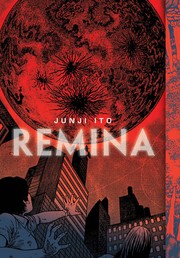
A planet appears, is named after a girl, and eats its way toward Earth while the crowd turns on her. Cosmic in scale and unusually political for Ito — mob horror more than body horror.
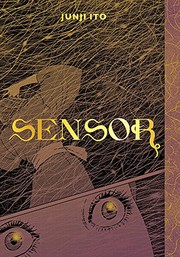
Volcanic hair, a cult and a structure that keeps reinventing itself chapter to chapter. Divisive; read it after you have a baseline.
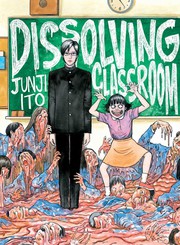
A brother apologising the world to death while his sister eats brains. The blackest comedy he has published and short enough to read in a sitting.

His adaptation of Shelley's novel, plus a run of Oshikiri stories and the Cat Diary strips. Read last: it is the clearest demonstration of him working inside someone else's plot, and the tonal jump to the cat material is jarring by design.