Jules Verne in Order: Which of the Voyages Extraordinaires to Read First
Verne wrote more than fifty novels in the Voyages Extraordinaires, and the reason so many English readers find him childish is that the Victorian translations were abridged, bowdlerised and in places simply wrong. Where you start therefore matters twice over: which book, and which edition. This path opens with the two most purely enjoyable novels, moves to Twenty Thousand Leagues and the loose trilogy it belongs to, then to the Russian and polar adventures, and ends with the late, sour books that show a very different writer from the one on the children's shelf.
Start Here: The Two Most Enjoyable
BeginnerRead the two Verne novels that work best cold, and learn the shape of the Voyages Extraordinaires: a journey with a fixed destination, an obsessive at its centre, and pages of real science that you are meant to enjoy rather than skip.
▸ Study plan for this stage
Pace: Three to four weeks. Around the World in Eighty Days is short, tightly plotted and reads in a week — its chapters are almost all one incident each, so it suits short sittings. Journey to the Center of the Earth is longer and slower in its first third, where the cipher and the preparations happen; gi
- The shape of a Voyage Extraordinaire: a journey with a fixed destination, an obsessive at the centre, a sceptical companion, and long stretches of real science that are meant to be read rather than skipped
- Phileas Fogg as a machine rather than a man — his refusal to be surprised is the joke the whole novel is built on, and the wager is a schedule before it is an adventure
- The timetable as a plot device: Eighty Days depends on nineteenth-century transport infrastructure being genuinely new, which is why it dates better than the science novels
- Lidenbrock as the first of Verne's obsessives whose judgement is outrun by his enthusiasm, a figure who recurs in Hatteras and Robur
- The Runic cryptogram at the start of Journey as a demonstration of Verne's method — the fantastic is entered through a piece of verifiable technique
- The translation problem made concrete: older English versions of Journey rename characters, cut whole passages and reverse the sense of others, so two readers can disagree about the book because they read different books
- Descriptive science as pleasure rather than obstacle — Verne expects the reader to enjoy the geology, and reading him as if the plot were the point misses most of what is there
- What does Fogg do when the schedule breaks, and what does his response tell you about the kind of character Verne finds interesting?
- Eighty Days is a comedy with a detective plot inside it. Where does the detective subplot help and where does it get in the way?
- How is the cryptogram in Journey solved, and why does Verne make the solution accidental rather than clever?
- What is at the centre of the earth in Journey, and how much of it is presented as scientifically defensible even by the standards of its own time?
- Check the names in your edition of Journey against another translation. If they differ, what else might differ that you cannot see?
- Before reading, compare the first page of two English translations of Journey to the Center of the Earth side by side. Twenty minutes of this will teach you more about Verne's English reputation than any essay.
- Keep Fogg's schedule as you read Eighty Days — place, date, hours gained or lost. The novel is arithmetic and reconstructing it is most of the pleasure.
- Mark the passages in Journey that are pure geology and read one of them twice. Deciding whether you enjoy them determines whether the rest of this path is for you.
- Summarise the last chapter of Eighty Days in 200 words including the trick it plays on the reader. Explaining it in writing is harder than it looks and shows how carefully it was set up.
Next up: You now know the shape of a Voyage and have made the edition decision that governs everything else, which is the preparation the Nemo books need — they are longer, slower and far more damaged by a bad translation.

The right first Verne. No submarines, no volcanoes — just a wager, a timetable and a man who refuses to be surprised by anything. The tightest plot he wrote, and the least dependent on nineteenth-century science holding up.

Second, because it introduces the element Eighty Days lacks: the descent into a genuinely alien place, and a professor whose obsession outruns his judgement. Also the clearest demonstration of why the translation matters — the older English versions cut and rename freely.
Nemo and the Trilogy
BeginnerRead the three loosely linked novels built around Captain Nemo and the survivors who eventually meet him, in the order that makes the connections land.
▸ Study plan for this stage
Pace: Ten to twelve weeks, the longest stage on the path. In Search of the Castaways is a long three-part novel and takes three or four weeks. Twenty Thousand Leagues Under the Sea needs a month at an unhurried pace — its catalogue passages are long and are the thing most translations cut. The Mysterious
- The thirty-seventh parallel as the organising device of In Search of the Castaways — a damaged message fixes a latitude but not a longitude, so the search circles the globe
- Nemo as a deliberate withholding: no stated nationality at first, no explained motive, and a private war whose cause Verne keeps back across an entire novel
- Aronnax as the reader's proxy — a naturalist who is a prisoner and a guest at once, and whose enthusiasm for the Nautilus compromises his judgement of its captain
- The catalogue passages in Twenty Thousand Leagues, listing species and depths at length, which the Victorian translations cut and which are a substantial part of what Verne wrote
- Robinsonade engineering in The Mysterious Island: the castaways rebuild glass, iron, nitroglycerine and a telegraph from raw materials, and the sequence is meant to be followed step by step
- The unseen benefactor as a structural mystery that pays off two books at once, which is why the reading order is load-bearing rather than a preference
- Nemo's revealed history, which recasts him politically and is the reason the trilogy is read as anti-imperial rather than merely adventurous
- What information does the bottled message in In Search of the Castaways actually contain, and how does the missing part generate the plot?
- What does Nemo want? Assemble the evidence available in Twenty Thousand Leagues alone before you reach the later book, and notice how thin it is.
- Aronnax could try to escape at several points and does not. What is stopping him, and does the novel treat it as cowardice or as fascination?
- In The Mysterious Island, which of the castaways' engineering feats do you believe and which do not survive scrutiny? Pick two of each.
- Once Nemo's history is revealed, does it explain the man you met in Twenty Thousand Leagues, or replace him?
- Do not read a plot summary of The Mysterious Island before finishing Twenty Thousand Leagues. If you look up anything about the trilogy mid-stage, look up editions only.
- Keep a list of what the castaways manufacture in The Mysterious Island, in order, with the raw material each starts from. The list is the novel's spine and reads like a syllabus.
- Read one full catalogue passage in Twenty Thousand Leagues without skipping, then check whether your edition is abridged by comparing its length against a scholarly translation's table of contents.
- Write 200 words on Nemo as he appears at the end of Twenty Thousand Leagues, before the later revelation. Keep it, and read it again after The Mysterious Island.
- Plot the thirty-seventh parallel on a globe or map before starting In Search of the Castaways. The novel's structure becomes obvious the moment you can see the line.
Next up: Having read Verne at his most sustained and most sympathetic, the next stage shows the two things the trilogy conceals — how funny he is when satirising enthusiasm, and how dark he is when an obsessive is not given a noble cause.

Also published as The Children of Captain Grant. A message in a bottle sends a yacht around the thirty-seventh parallel. Read it first of the three: it is the least famous, and it sets up characters who matter later.

The masterpiece, and Nemo is the reason — a man of no stated nationality waging a private war, whose motives Verne deliberately withholds. Read fourth, after two lighter books, because the long descriptive passages need a reader already inside his rhythm.
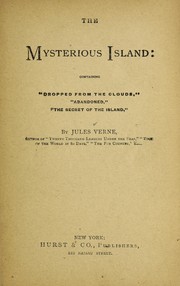
The capstone. Castaways rebuild a civilisation from nothing on a Pacific island, aided by something they cannot identify. It closes both preceding books and must be read last of the three — reading it early spoils Twenty Thousand Leagues entirely.
The Moon Books and the Great Adventures
IntermediateTake the lunar novels and the two best pure adventure stories, and see the range between Verne's satirical mode and his straightest storytelling.
▸ Study plan for this stage
Pace: Six to eight weeks. The lunar volume runs around 300 pages and contains both halves of the story — the launch novel and its sequel — so read it as one book across two or three weeks. Michael Strogoff is around 240 pages and the fastest read on the whole path; a week is comfortable. The Adventures of
- The Baltimore gun club as satire: a society of artillerymen made miserable by peace who solve their boredom by shooting at the moon, which is far more mocking of American enthusiasm than the reputation suggests
- The engineering calculations in the lunar books, which Verne worked out in earnest, and the several places where the physics is right in a way that later became famous and wrong in ways that are more interesting
- The sequel's shift from committee comedy to enclosed survival once the projectile is fired, which is a genre change inside one volume
- Michael Strogoff as Verne with the science removed entirely — a courier, a distance, an enemy line, and a construction many readers consider his tightest
- Testing yourself with Strogoff: if you enjoy it, you like Verne the storyteller independently of Verne the futurist, which is a useful thing to know about your own reading
- Hatteras as an early Voyage and a much darker one — a monomaniac who drives a crew north and does not return intact, written before Verne became a household name
- The obsessive who is not redeemed, established here, which is the thread running directly into the late novels
- What is the gun club's stated reason for the moon shot, and what does the novel suggest is the real one?
- Where does Verne's lunar physics hold up and where does it fail? Name one of each without consulting anything.
- Michael Strogoff has no invention in it at all. What is holding the reader, and is it the same thing that holds you in Twenty Thousand Leagues?
- Captain Hatteras and Captain Nemo are both obsessives with a private goal. Why is one magnificent and the other pitiable?
- The blinding scene in Strogoff is the most famous set piece Verne wrote. What does the novel do with it afterwards, and is that what you expected?
- Work through the gun club's ballistics arithmetic as far as your patience allows and check one figure. Verne expected exactly this of his readers and the book changes when you play along.
- Read the first two chapters of the lunar book as satire rather than as adventure, noting each joke about American character. The tally is longer than the book's reputation implies.
- Time yourself on Michael Strogoff's river chapters. It is the fastest prose on this path and knowing how fast tells you what the other books are spending their pages on.
- Write 200 words comparing Hatteras's final state with Nemo's. Both men fail; describe precisely how Verne's sympathy differs.
- After Hatteras, reread the last page of Journey to the Center of the Earth. Same author, same period, opposite conclusions about obsession.
Next up: Hatteras is the first Verne obsessive who is simply dangerous, which is exactly the figure the late novels take up and refuse to let off.

A Baltimore gun club, bored by peace, decides to fire a projectile at the moon — and the book is far more satirical about American enthusiasm than its reputation suggests. Usually published bound with its sequel Round the Moon, and our catalogue record covers both halves, so you get the whole story in one volume.

A courier crosses Siberia through a Tartar uprising. No science at all, and often called his best-constructed novel — the one to reach for if you want to know whether you like Verne the storyteller independently of Verne the futurist.
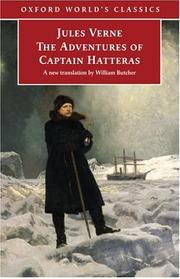
A monomaniac drives his crew toward the North Pole and does not come back intact. One of the earliest Voyages and much darker than the books that made him famous — a good bridge to the late work.
The Late and the Strange
IntermediateFinish with the books that complicate the image of Verne as a cheerful prophet of progress, including the novel that was locked in a safe for over a century.
▸ Study plan for this stage
Pace: Six to eight weeks. Robur the Conqueror and Master of the World are both short — the second is under 130 pages — and are best read as a pair within a fortnight, since the second is a direct sequel. Paris in the Twentieth Century is around 260 pages and reads quickly because it is thin on plot and th
- Robur as Verne rewriting Nemo without sympathy: the same figure of the technological outsider, stripped of the political grievance that made the earlier one tragic
- The airship against the submarine as an argument about which technology the century should fear, staged deliberately as a comment on his own famous novel
- Master of the World's escalation — Robur returns with a machine that travels by land, sea and air, and the book treats him as a menace with no case to answer
- Paris in the Twentieth Century as an early manuscript rejected by his publisher for being too gloomy and left unprinted for well over a century
- What that novel actually predicts — gas-powered vehicles, a fax-like transmission network, a financialised city — and what it is really about, which is a society with no use for poets
- The single strongest evidence against the children's-writer filing: a Verne novel in which technology arrives, works, and makes life worse
- Five Weeks in a Balloon as the template for everything after it, and as a caution: the standard English text is an old translation whose liberties are catalogued to the point that some records credit the translator as the author
- How is Robur introduced, and how does the scene deliberately echo Nemo's first appearance? What is changed in the echo?
- Master of the World gives Robur no political justification. Does that make him a stronger antagonist or a thinner one?
- In Paris in the Twentieth Century, what has happened to literature, and is the novel's complaint technological or economic?
- Which of that novel's predictions land and which do not? Separate the mechanism from the social consequence, because Verne is better at the second.
- Reading Five Weeks in a Balloon last, what is already fully formed in it, and what did Verne only learn later?
- Having read the path, is Verne a prophet of progress or a critic of it? Cite one novel on each side before answering.
- Read Robur's first appearance immediately after rereading Nemo's. The two pages side by side are the whole argument of the late work.
- List every technology named in Paris in the Twentieth Century and mark which exist now. The list takes ten minutes and is the fastest way to see what the novel is and is not doing.
- Check the title page of your Five Weeks in a Balloon for the translator's name, then compare a paragraph with a modern translation if one is available. Some editions credit the translator so prominently that catalogues have filed him as the author.
- Write 300 words on how Verne's attitude to the technological outsider changes from Nemo to Robur, citing a scene from each.
- Compile your own six-book Verne shelf for a newcomer, disagreeing with this path where you now think it is wrong, and give a sentence of justification for each choice.
Next up: This is the end of the path. The natural next step is not another Verne but a scholarly annotated edition of Twenty Thousand Leagues, which after this sequence reads as a different and much larger novel than the one on the children's shelf.

The airship answer to Nemo, and a much less sympathetic figure — Verne rewriting his own most famous character as a straightforward menace. Read it as a commentary on Twenty Thousand Leagues.

The late sequel in which Robur returns as an outright terrorist with a machine that travels by land, sea and air. Bleak, brief, and about as far from Around the World in Eighty Days as Verne ever travelled.

Written in 1863, rejected by his publisher as too gloomy, and not printed until 1994. A dystopia of gas-powered cars, fax machines and a society with no use for poets. The single strongest argument that the children's-writer filing is wrong, and the right place to end.

The first of the Voyages Extraordinaires, from 1863, and the template for everything above. Read last as a curiosity — and be aware that the common English text is an old translation, credited in some catalogue records to the translator William Lackland.