Jujutsu Kaisen Reading Order: Where to Start and What Order to Read the Manga In
Gege Akutami's Jujutsu Kaisen runs in single volumes with no omnibus or deluxe edition to complicate the numbering, so the reading order is simply numeric with one exception: the prequel Jujutsu Kaisen 0 is numbered zero but should not be read first. This path lists the volumes that verified individually and marks where each arc begins and ends; the volumes not named here are the intervening numbers, and you read straight through in numeric order. One honest caveat: manga volume digits normalise away in book catalogues, so a volume record can occasionally resolve to a neighbouring number in the same series — check the cover number when you buy.
Start here
BeginnerMeet Yuji Itadori and the premise, and get through the setup arc that everything later depends on.
▸ Study plan for this stage
Pace: About a week for three volumes — Vol. 1 (192 pages), Vol. 2 (catalogued with the Japanese series title appended, 呪術廻戦 Jujutsu Kaisen #2) and Vol. 3 (192 pages). A VIZ volume of this series runs roughly 190–200 pages and takes 30–45 minutes at a reading pace that actually looks at the art, so this st
- Cursed energy as the whole system: it is generated by negative human emotion, which makes every monster in the series a byproduct of ordinary life
- Sukuna's fingers as the counting device — twenty of them, and the plot is organised around how many have been consumed
- Itadori as a vessel rather than a chosen one, and the deferred death sentence that gives the opening arc its deadline
- The jujutsu sorcerer grading system, from grade 4 up to special grade, and how Akutami uses it to set expectations before a fight
- Cursed techniques as rule sets — each sorcerer has a specific, stated, limited ability, and fights are won by exploiting the limits
- Gojo Satoru as a deliberate power imbalance the story has to keep engineering reasons to remove
- Akutami's panel habits: the sudden full-page reveal, the deadpan comic aside dropped into a fight, and the author's-note pages at the end of each volume
- What exactly is cursed energy, where does it come from, and why does that origin make the setting's horror inescapable?
- Why is Itadori sentenced to death rather than simply protected, and what does that sentence let Akutami do to the plot?
- How does the grading system tell you, before a fight starts, roughly what kind of scene you are about to read?
- By the end of volume 3, what has the series established that it will not walk back?
- What is the function of the comedy — Itadori's obliviousness, Nobara's bluntness, Gojo's clowning — inside a horror manga?
- Start a technique ledger on page one: for each named sorcerer or curse, write the technique, its stated rule, and its stated limit — this series rewards rule-tracking more than almost any other shonen
- Keep a running count of Sukuna's consumed fingers by volume; it is the cleanest measure of plot progress in the entire run
- Pick the first fight in volume 1 and mark every panel where a rule is stated aloud, then check whether the fight is won by strength or by a rule you were told about earlier
- Read the author's-note and bonus pages at the end of each of the three volumes; Akutami uses them to comment on his own choices, and they are part of the reading experience
- After volume 3, write two sentences on the cost structure — what winning a fight has so far taken from the characters — and keep it for comparison at the end of the path
Next up: The opening three volumes give you the rules, the deadline and the cast; the next stage introduces the antagonist who turns those rules into an argument.

Itadori swallows Sukuna's finger and is sentenced to death with a delay. Volume 1 is the correct starting point despite the existence of a volume numbered 0.

The Cursed Womb arc and the first real demonstration of what a special-grade curse can do. Catalogued with the Japanese series title appended.

Closes the opening arc and establishes the cost structure the series runs on. By the end of this volume you know whether the series is for you.
The Vs. Mahito arc
BeginnerRead the run that turns the series from a monster-of-the-week into a story with a villain.
▸ Study plan for this stage
Pace: About a week for volumes 4 (200 pages), 5 (192) and 6 (192) — read them consecutively, without a gap, because this is one continuous escalation. Volume 4 introduces Mahito and the cursed-spirit faction; volume 5 is where the series establishes that named characters do not survive on plot armour, and
- Mahito as a curse born from human hatred of other humans, which makes him an argument about the setting rather than a monster in it
- Idle Transfiguration — a technique that reshapes the soul and therefore the body — and why it is the most frightening rule established so far
- The soul as a physical object in this cosmology, and the consequences that follow once a technique can touch it
- Escalation with consequences: volume 5 is the point where the series' body count starts being permanent
- Grief as fuel — how Akutami converts a death into the motivation that carries the next twenty volumes
- The cursed-spirit faction as an organised opposition with goals, replacing monster-of-the-week structure
- Domain expansion introduced as the top of the technique hierarchy, with a stated cost attached
- What is Mahito's actual position on humans, and how does the series make it coherent rather than simply evil?
- How does Idle Transfiguration change what the reader has to fear, compared with the curses in volumes 1–3?
- Volume 5 makes a permanent choice. What does it buy the series, and what does it cost in reader trust?
- Trace one character's motivation before and after this arc: what specifically changed?
- How is a domain expansion presented on the page, and why does it read as a rule change rather than a power-up?
- Add Mahito's technique to your ledger with its stated rule and every limit the manga names — then mark, later in the run, each time one of those limits is used against him
- Reread the panel sequence in volume 5 where the series' first major loss lands, and note how many pages Akutami spends on it and how many on the reaction; the ratio is his method
- Find every panel across volumes 4–6 in which a character explains a rule mid-fight and decide whether it is exposition or setup — Akutami plants payoffs this way
- Compare Mahito's design across his appearances in these three volumes and note what changes in how he is drawn as the arc escalates
- Update your cost-structure note from stage one: what does the series now say a victory costs?
Next up: With a real antagonist and permanent stakes in place, the series can afford a tournament — and the tournament is what makes the prequel land when you double back to it.

Introduces Mahito and the cursed-spirit faction. This is the first arc with a real antagonist rather than an obstacle.

The consequences land, and the series establishes that named characters do not survive on plot armour.

Sets up the Kyoto Goodwill Event and widens the cast to the sister school. Read straight on from volume 5.
The Goodwill Event, then the prequel
BeginnerFinish the tournament arc, then double back to the prequel at the point where it pays off.
▸ Study plan for this stage
Pace: About a week for three volumes — Vol. 7 (192 pages), Vol. 8 (192) and then Jujutsu Kaisen 0 (200). Read 7 and 8 consecutively; they are one tournament arc and volume 8 closes it while turning the plot toward the conspiracy underneath the school. Then stop and read volume 0, which is a standalone pre
- The Kyoto Goodwill Event as a conventional shonen tournament used to differentiate a large cast quickly
- The second-year students becoming distinct characters, and how a tournament format does that work more efficiently than a mission
- The conspiracy under the school — the higher-ups, the sentencing of Itadori, and the first sign that the institution is the problem
- Reading order versus publication order: volume 0 came first in print and belongs eighth in reading, which is the single most consequential ordering decision in this series
- Yuta and Rika as a prequel pair whose situation rhymes with Itadori and Sukuna, deliberately
- Cursed technique inheritance and the Zenin and Gojo clan politics that volume 0 introduces and the main series then uses
- What a one-volume story can do that a long serial cannot — volume 0 has an ending, and the main run has not needed one yet
- What does the tournament format accomplish here that a mission arc could not?
- By the end of volume 8, what do you know about the jujutsu establishment that the students do not?
- Read volume 0 at this position: what specifically would have been lost by reading it first?
- How does Yuta's situation mirror Itadori's, and where does the parallel deliberately break?
- Volume 0 has a complete ending. Does knowing how it resolves change how you read the ongoing series' stakes?
- Before opening volume 0, write down everything you currently know about Gojo's past and the clan politics; then read the prequel and mark what it fills in
- Chart the Goodwill Event matchups and record what each fight reveals about a character rather than who wins — the tournament is characterisation, and reading it as competition misses it
- Add every volume 0 technique to your ledger, and note which ones reappear in the main series
- Find the final pages of volume 0 and identify exactly which thread they set up; then check it against where volume 8 left the main plot — that overlap is why the prequel sits here
- Compare Akutami's art in volume 0 with volume 8: it was drawn earlier, and the differences in panel density and figure work are visible
Next up: You now have the full cast, the institutional conspiracy and the prequel's payoff in place, which is precisely the state the series needs you in before Shibuya.

The Kyoto Goodwill Event proper — the closest the series gets to a conventional shonen tournament, and where most of the second-year cast becomes distinct.

Closes the event and turns the plot toward the conspiracy running underneath the school. Stop here before reading the prequel.
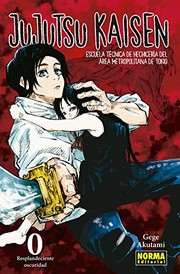
The standalone prequel following Yuta Okkotsu, published before the main series began. Read it HERE, not first: it assumes the reader already knows Gojo and the school, and its ending is a setup whose payoff you have now reached.
Shibuya and after
IntermediateContinue into the arc the series is built around, and know that the run keeps going past this path.
▸ Study plan for this stage
Pace: 1–2 weeks, and read this stage without interruption. It covers volumes 10 (192 pages), 12 (192), 14 (192) and 16 — the volumes that verified individually — but the series is continuous, so read the intervening volumes in place, in numeric order, exactly where they fall between these. Volume 10 is th
- The pre-arc positioning volume: Akutami placing every faction on the board before an arc that will not pause to explain itself
- Shibuya as a single continuous event across many volumes, with parallel fights running simultaneously in one geography
- Binding vows as the series' deepest rule — power traded for a stated restriction — and how the arc's biggest turns run on them
- Consequences that carry: from this arc on, the series stops resetting between arcs, and losses stay lost
- Non-combatant civilians inside a shonen action arc, and what their presence does to the moral arithmetic of every fight
- The institution as antagonist — the higher-ups' response to Shibuya is the point at which the school's authority collapses
- How Akutami handles a cast too large for one arc: characters disappear from the page for volumes at a time and return changed
- Why does volume 10 spend its length on positioning, and what would be unreadable in the Shibuya volumes without it?
- How does Akutami keep multiple simultaneous fights legible across a single location, and where does the clarity break down?
- What is a binding vow, and which Shibuya turns are impossible without that rule having been established earlier?
- What changes structurally in the series after Shibuya — name the new constraints the story is now working under
- Looking back at your technique ledger: how many of Shibuya's decisive moments turn on a rule stated volumes earlier?
- Draw the Shibuya geography as Akutami gives it — station levels, the barrier boundaries, where each group enters — and place each fight on it; the arc is spatial and the map makes it readable
- Keep a timeline of the arc in hours rather than volumes; several fights run concurrently and the manga expects you to hold that
- Go through your technique ledger and mark every rule that pays off during Shibuya, noting the volume where it was first stated — this is the strongest evidence for how far ahead Akutami plans
- Compare a single-page layout from volume 1 with one from volume 14 and describe what has changed in how Akutami uses a page under maximum pressure
- Close your cost-structure note from stage one with a third entry, then write the one-line answer to what this series says power costs — and carry the ledger forward, because the run continues past volume 16
Next up: This is where the path stops rather than where the story does: you have the rules, the prequel in its proper place and the arc the whole series is built around, and the remaining volumes continue straight on in numeric order.

The last quiet stretch before the Shibuya Incident, and the volume that positions every faction.

The Shibuya Incident opens. From here the series stops resetting between arcs and the consequences carry forward permanently.

Mid-Shibuya, and the point most readers name as where the series is at its best. Nothing here is readable out of order.

The aftermath of Shibuya and the new rules the story runs on afterwards. The series continues well past this volume; keep going in numeric order.