Judy Blume books in order: where to start
Two very different shelves sit under one name: the broadly comic Fudge books for newly independent readers, and the frank, plain-spoken novels about puberty, religion, cruelty and sex that made Blume one of the most frequently banned authors in the United States. This path separates them by reading age and by content so an adult choosing a book knows what is in it. Two practical notes: reading level and subject matter are different things here, and several titles have been revised by Blume in later editions, most famously Are You There God? It's Me, Margaret, where the 2014 revision replaced the sanitary-belt scene with adhesive pads.
The Fudge books
BeginnerStart with the comic family series, which is the least complicated Blume and the usual entry point for a newly confident reader.
▸ Study plan for this stage
Pace: 3–4 weeks for about 570 pages across four short novels — Tales of a Fourth Grade Nothing (120 pages), Otherwise Known as Sheila the Great (138), Superfudge (166) and Fudge-a-mania (147). Each is a week of bedtime reading aloud, or two or three sittings for a child reading alone; the chapters are sho
- Blume's child point of view: Peter Hatcher narrates as a nine-year-old, and no adult in the book gets to explain the events to the reader
- Comedy from an unmanageable sibling — Fudge is funny because Peter is not enjoying it, and the humour depends on that gap
- Shifting the camera: Otherwise Known as Sheila the Great retells the same social world from a boastful, frightened child's inside view, and Sheila is not likeable in the first book
- Fear treated seriously in a comic book — Sheila's terror of dogs, swimming and the dark is played straight even while the book is funny
- Short chapters and set-piece structure, which is why these are the standard first chapter books for a newly independent reader
- The four-book arc as a family changing over time: a new baby, a move to New Jersey, a shared holiday, and children who visibly grow
- How plain Blume's sentences are, and how much of the reading level is carried by vocabulary rather than by subject
- Why is Fudge funny to a reader and not to Peter, and what would break if Blume narrated from Fudge's side?
- Sheila is unsympathetic in the first book and sympathetic in her own. What did Blume change — the character, or only the vantage point?
- What is the Santa conversation in Superfudge actually doing in the story, and is it there for the child or the adult?
- Where does Blume let a real fear sit unresolved inside a comic novel, and why does the comedy survive it?
- Which of the four would you hand to a hesitant seven-year-old, and on what evidence from the text?
- Read the opening chapter of Tales of a Fourth Grade Nothing aloud and time it; use that as the unit for planning the rest of the series as bedtime reading
- Read the Sheila chapters in Tales of a Fourth Grade Nothing, then the corresponding early chapters of Otherwise Known as Sheila the Great, and write down every fact about Sheila that changes meaning once you are inside her head
- Before starting Superfudge, read the Santa passage yourself and decide whether to read it aloud, paraphrase it, or wait — it is short and easy to find
- Track one running gag across all four books — the mynah bird, Fudge's eating, Peter's dog Turtle — and note how Blume refreshes it each time
- Mark the point in Fudge-a-mania where the child you are reading with stops laughing at Fudge and starts identifying with Peter; that is the signal they are ready for stage three
Next up: The Fudge books show Blume's comic register and her child's-eye narration; the next stage keeps the plain prose but starts attaching it to material with real weight.
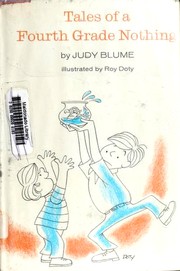
Peter Hatcher and his destructive toddler brother Fudge. Short, funny, no content to think twice about, and the book that opens the four-book sequence.
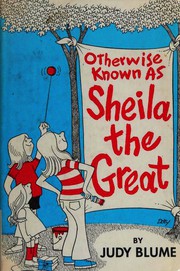
The same world from the point of view of Sheila Tubman, a boastful child terrified of dogs, swimming and the dark. Read second: it is a standalone but assumes you have met these families.

A new baby, a move to New Jersey, and the book where Fudge asks about Santa Claus. Note for the adult: the Santa conversation is explicit, which some families read aloud around.

A shared summer house with the Tubmans. The lightest of the four and the natural place to stop if the series has done its work.
Shorter and younger
BeginnerTwo books for readers not yet ready for a full novel, or for a reader who wants Blume without the harder subject matter.
▸ Study plan for this stage
Pace: 2 weeks for about 340 pages, but the two books are nothing alike in demand. Freckle Juice (45 pages) is the easiest thing Blume has written — one sitting, or two short ones for a reluctant reader, and it is genuinely a bridge book rather than a novel. Starring Sally J. Freedman as Herself (298 pages
- The bridge book as a form: Freckle Juice's length, vocabulary and illustration density are calibrated to a specific reading stage, not to a subject
- A wish and a scam — the whole plot of Freckle Juice is a child paying for something impossible, and the comedy is entirely in the transaction
- Sally as an inward narrator: much of the novel is her invented scenarios, which is a structural change from Peter Hatcher's plain reportage
- Postwar American Jewish childhood as the book's setting, with the Holocaust present in a child's half-understanding rather than in explanation
- Fantasy as a child's way of handling what nobody will explain to her, and Blume's refusal to correct Sally on the page
- The gap between reading level and emotional level — Sally reads easily and asks a great deal
- Autobiography in fiction, and how little the book announces itself as such
- What makes Freckle Juice work at 45 pages — what has Blume stripped out that a novel would need?
- How does Blume signal that Sally's Hitler scenarios are imagined, and what would change if an adult character corrected her?
- Sally is a child processing mass death through invention. Where does the book let that be funny, and where does it stop?
- This is Blume's most autobiographical novel. Does knowing that change how you read it, and should it?
- Would you give Sally J. Freedman to the same child who just finished Fudge-a-mania? What in the text decides it?
- Read Freckle Juice in one sitting and count how many scenes it contains; that number is a useful yardstick for what a bridge book can hold
- Mark every one of Sally's imagined sequences in the first fifty pages and note what real event triggers each — the pattern is consistent and it is the book's method
- Read the passages where Sally's family talk about relatives lost in the war, and write down exactly how much the book tells the reader versus how much Sally has worked out herself
- Set a page of Sally J. Freedman beside a page of Tales of a Fourth Grade Nothing and compare sentence length and vocabulary — the reading level is close, which is the point worth noticing
Next up: Sally shows Blume putting heavy subject matter under easy prose; the next stage is where that combination made her one of the most frequently banned authors in the United States.

A very short chapter book about a boy who buys a recipe for freckles. The easiest text Blume has written and useful for a reluctant reader.
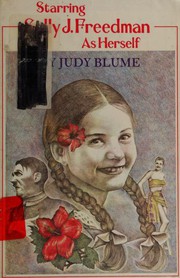
Blume's most autobiographical novel, set in 1947 Miami Beach, with a Jewish child imagining Hitler alive next door in the shadow of the war. Gentler prose than the middle-grade novels but the subject matter is heavier than the length suggests.
The frank middle-grade novels
BeginnerThe books Blume is actually famous for, and the ones most often challenged. Each entry says what is in it.
▸ Study plan for this stage
Pace: 3 weeks for about 470 pages — Are You There God? It's Me, Margaret. (154 pages), Blubber (153) and Then Again, Maybe I Won't (164). Each is two or three sittings. These are the books Blume is famous for and the ones most often challenged in American schools and libraries; all three appear repeatedly
- Puberty described in the plain register of the child experiencing it, which is the specific quality that made these books both useful and contested
- Margaret's two subjects — a body and a religion — run in parallel, and the book declines to settle the religious one
- Prayer as private speech: Margaret's addresses to God are conversational and unsupervised, and that informality is part of what has been challenged
- Blubber's refusal of the moral ending — the narrator is a participant, the cruelty is detailed, and no adult arrives to fix it
- Complicity as the actual subject of Blubber: the reader is placed inside the group, not beside the victim
- Then Again, Maybe I Won't as the deliberate boys' counterpart to Margaret, matching it topic for topic in a different body
- Class and money as Blume's quieter theme in Then Again — a family moving up, and a boy with a stomach ache nobody can diagnose
- Why editions differ: Blume updated Margaret's period-supply scene in 2014, and reprints since carry the revised text
- What does Margaret gain by keeping the religious question open, and would the book be more or less challenged if it resolved it?
- Blubber has no rescue and no lesson. What is it teaching, if anything, and how does a teacher use a book like that?
- Where in Blubber does the narrator's own participation become visible to her, and does the book let her off?
- Then Again, Maybe I Won't matches Margaret topic for topic. Which of the two is franker, and about what?
- If you compare a pre-2014 and a post-2014 Margaret, what exactly is different, and does it change anything but the hardware?
- These three are among the most challenged books in American schools. Reading them now, which passages are the ones the challenges actually cite?
- Find the sanitary-protection scene in whichever Margaret edition you have and identify from the text alone whether it is the original or the 2014 revision; if you can get both, read the two versions side by side
- Read Blubber's final chapter and write down what has and has not changed for the narrator, then argue on paper whether the ending is bleak or accurate
- Mark every adult in Blubber and note what each of them knows and does; the pattern is the book's argument
- Read Margaret and Then Again, Maybe I Won't in the same week and build a two-column list of what each child worries about — the symmetry is deliberate and it is the reason to read them as a pair
- Look up which of these three titles appear on the American Library Association's most-challenged lists, then find the specific passages in each book that the objections describe, and decide for yourself what you would say to a parent asking about them
Next up: These are the books that made Blume's reputation and her ban record; the next stage keeps the same frankness but for readers old enough for grief, illness and sex.

A sixth-grader with a Jewish father and Christian mother waiting for her period and choosing a religion. Contains menstruation, bra-shopping and a frank conversation with God; challenged for both the religious content and the puberty content. The 2014 edition updates the sanitary-protection scene, so editions differ.
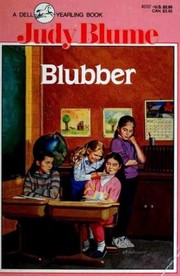
A class turns on an overweight classmate and the narrator joins in. There is no adult rescue and no tidy moral, which is exactly why it is challenged and exactly why teachers use it. The cruelty is graphic and unresolved.

The boys' companion to Margaret: erections, wet dreams, shoplifting and spying on a neighbour with binoculars. Read after Margaret so the pair can be discussed together.
Older readers
IntermediateThree novels for the end of middle school and beyond, with subject matter to check before handing over.
▸ Study plan for this stage
Pace: 3–4 weeks for about 590 pages — Deenie (159), Tiger Eyes (220) and Forever (208). Read them in that order and read each yourself before handing it over, because the three are pitched at noticeably different ages despite similar lengths. Deenie is about a girl who has been groomed for modelling and i
- The body as the site of the story in all three — a brace, a bereavement, a first sexual relationship — and Blume's refusal to abstract any of them
- Deenie's real subject: a mother's investment in a daughter's appearance, with the scoliosis as the thing that ends it
- Illness written as logistics — appointments, fittings, school, the brace worn all day — rather than as tragedy
- Tiger Eyes and the mechanics of grief: numbness, the relatives who take over, the place you are moved to, and how long it takes
- Los Alamos as a chosen setting, with the bomb and a violent death held in the same book without either being made to explain the other
- Forever's design: Blume wrote it in response to teenage fiction in which girls who have sex are punished, and the plot's ordinariness is the argument
- Contraception, a clinic visit and the end of a first relationship treated as information a reader might need, which is precisely the ground of the challenges
- Why these three are challenged separately and for different reasons — masturbation in Deenie, suicide and alcohol in Tiger Eyes, explicit sex in Forever
- Deenie is challenged almost entirely over two short passages. Having read the book, what is it actually about?
- How does Blume write grief in Tiger Eyes without a redemptive turn, and where, if anywhere, does the book console the reader?
- What does Forever do that teenage novels before it did not, and is the effect achieved by the explicitness or by the ending?
- Tiger Eyes is short and gentle in its prose. What makes it the hardest book on this path for a younger reader?
- Given a fourteen-year-old who has read Margaret, which of these three would you offer next, and what would you say about it beforehand?
- Read Deenie's brace-fitting chapters and list every practical detail Blume includes; then find the two passages that generate the challenges and note how much of the book they occupy
- Track the mother in Deenie from first chapter to last and write down what she wants at each stage — the novel is her arc as much as Deenie's
- In Tiger Eyes, mark every time the narrator does not talk about her father's death, and count the pages between the death and the first time she says it plainly
- Read Forever's ending and then write, in one paragraph, what a novel with the older convention would have done instead; that contrast is the book's whole design
- Before passing any of these to a young reader, write yourself three sentences on what is in it — this is exactly the work the challenges are trying to take out of your hands
Next up: Having read Blume at her frankest for young readers, the last stage shows what she does with the same directness when the audience is adult.

A girl told she is beautiful is diagnosed with scoliosis and put in a back brace. Includes references to masturbation, which is the specific reason it is challenged.
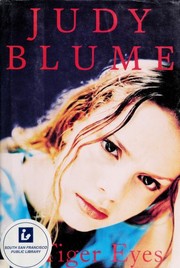
A fifteen-year-old whose father is murdered in a hold-up moves to Los Alamos. Grief, alcohol and a suicidal peer; widely considered her best novel and her most emotionally demanding for younger readers.

Blume wrote it deliberately as a novel in which teenagers have sex and it is neither punished nor romanticised. Explicit, written for older teenagers, and the most banned book she has published. Do not hand it to a Fudge-aged reader on the strength of the author's name.
The adult novels
IntermediateWhere Blume goes when she is not writing for children.
▸ Study plan for this stage
Pace: 2 weeks for 408 pages. Summer Sisters is a full-length adult novel and reads at a very different speed from everything above — longer chapters, a shifting point of view, and a twenty-year span. It follows a friendship between two women from adolescence into adulthood and contains explicit sex, infid
- The same directness aimed at adults: Blume's sentences do not change, only what they are permitted to describe
- A friendship as the central relationship of a novel, with the men in orbit around it
- Class difference between the two women as the engine, running under the summers on Martha's Vineyard
- Time as structure — the book skips years, and each jump asks the reader to reconstruct what happened in between
- Shifting point of view, including brief chapters from peripheral characters, which is a technique none of the children's books use
- Adolescent sexuality written retrospectively by an adult narrator rather than in the present tense of Forever
- What carries over from the children's books and what does not, once the constraint of a young audience is removed
- What is different about Blume's prose here, and what is exactly the same as in Tiger Eyes?
- The novel spans twenty years in gaps. What does Blume choose to skip, and what does the skipping do?
- How does Summer Sisters handle first sexual experience differently from Forever, and how much of that difference is the narrator's age?
- Is the class difference between the two women the subject of the book or its setting? Argue from a specific summer.
- Having read across the whole path: what is the single quality present in Tales of a Fourth Grade Nothing and still present here?
- Note each time-jump in Summer Sisters and write one line on what you had to infer about the missing years — the inference is the reading experience
- Read a Summer Sisters sex scene against the equivalent in Forever and describe the difference in what the narrator knows and when she knows it
- List the point-of-view characters and how many pages each gets; the distribution tells you whose book Blume thinks it is
- Close the path by writing a paragraph on Blume's method — plain sentences, child's-eye or woman's-eye vantage, no moral supplied — citing one book from each of the five stages
Next up: This closes the path, with the two shelves that sit under one name now clearly separated: the comic books for new readers, the frank and frequently banned novels for children and teenagers, and the adult fiction at the end.

An adult novel about a twenty-year friendship between two women, with explicit sex and a very different register. Read it last, as the answer to what Blume does with an adult audience.