Invincible Reading Order: Where to Start Robert Kirkman's Superhero Comic
Invincible is one story told across one hundred and forty-four issues, and Robert Kirkman built it so that the first genuine shock lands early and reframes everything before it. That makes the edition question the first real decision: the run exists as twenty-five slim trade paperbacks, as ten fatter Ultimate Collection hardcovers, and as three enormous compendiums, and the three schemes count issues differently, so a reader who mixes them will either repeat a hundred pages or skip them. This path commits to the twenty-five numbered trades and stays in that convention throughout. One honest note on availability: volumes two, four and ten do not resolve as trades in our catalogue — asking for them returns the Ultimate Collection volume of the same number, which is a different book collecting different issues — and Compendium Three is missing as well, so the compendium route cannot be completed here either. Those three gaps are named where they fall.
The twist that starts the series
BeginnerRead the superhero pastiche Invincible pretends to be, then the issue that detonates it, and understand why spoiling this is worse than spoiling most comics.
▸ Study plan for this stage
Pace: A few evenings, but do not start until you have solved the gap. Invincible, Vol. 1 (120 pages) is four issues and reads in a sitting; Vol. 3 (144 pages) follows it here — but volume two sits between them and is not in this catalogue, because asking for it returns the Ultimate Collection edition, whi
- Three incompatible collected editions — twenty-five slim trades, ten Ultimate Collection hardcovers, three compendiums — counting issues differently, so mixing them means repeating or skipping a hundred pages
- Volume one as deliberate pastiche: cheerful, generic teen-superhero material played straight so that it can be detonated
- Cory Walker's art on Vol. 1 versus Ryan Ottley's later, and why the visual register matters to the trick
- Nolan/Omni-Man as the premise's load-bearing element — the father, not the son, is what the series is about
- Why volume two is the one gap on this path you must not read around
- Perfect Strangers in Vol. 3 as the series' real first chapter: everything before it is setup for a reveal
- What genre does Vol. 1 present itself as, and which specific conventions is Kirkman leaning on so that the reader relaxes?
- What happens in volume two, and why does knowing it in advance damage the reading in a way most comic spoilers do not?
- How does Vol. 3 change the meaning of scenes you already read in Vol. 1?
- Which collected edition are you buying, and how will you check that the next volume you order continues rather than overlaps?
- Mark is a high-schooler with a job and a best friend. Why does Kirkman keep the ordinary-life material after the reveal instead of dropping it?
- Read Vol. 1 cold, then after Vol. 3 go back through Vol. 1 and mark every panel of Nolan that now reads differently. Kirkman planted more than most first-time readers notice.
- Locate volume two, Eight Is Enough, before you open Vol. 3 — check whether the copy you have found is the four-issue trade or the Ultimate Collection hardcover, and confirm by issue numbers rather than by the number on the spine.
- Write down, in one sentence, what you think the series is about at the end of Vol. 1. Seal it. Reread it after Vol. 3.
- Compare a page of Walker's art in Vol. 1 with a page of Ottley's later work in Vol. 5 and note what changed in how bodies and impacts are drawn.
Next up: With the reveal behind you and the edition question settled, the next stage watches Kirkman rebuild — a hero without a mentor, in a world that now needs replacing.
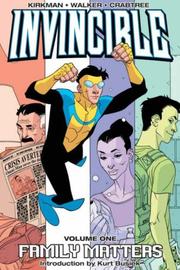
Family Matters, the first four issues: a high-schooler whose father is the most powerful superhero on Earth starts to develop his own powers. Deliberately generic, deliberately cheerful, and doing that on purpose — read it cold, and read it before anyone tells you anything.
Perfect Strangers, where the series becomes what it actually is. It sits directly after the volume our catalogue is missing — volume two, Eight Is Enough, contains the single most infamous scene in the run, and asking for it returns the Ultimate Collection edition instead, which is a different collection. Read volume two's four issues in any form you can find before this one; going from volume one straight to volume three throws away the whole effect.
Rebuilding, and the world getting bigger
BeginnerSee how Kirkman handles the aftermath, and watch the book expand from a family story into a shared universe with its own political mess.
▸ Study plan for this stage
Pace: About two weeks for three trades — Invincible, Vol. 5 (176 pages), Vol. 7 (144) and Vol. 9 (144). Volume four is another Ultimate Collection substitution in this catalogue, so read a summary of it before Vol. 5. These are the volumes where the book fills out its cast, so read them close together rat
- Aftermath as structure: Kirkman spending volumes on consequence instead of resetting to a status quo
- The Guardians of the Globe reconstituted — a superhero team used as world-building furniture rather than as the main cast
- Ryan Ottley settling in as regular artist from Vol. 5, after which the book looks like itself permanently
- Distributing plot to the supporting cast — Atom Eve, Robot, Rex Splode — as the move that lets the series run another eighteen volumes
- The Viltrumite question shifting from backstory to engine in Vol. 9, when the story leaves Earth for good
- Cecil Stedman and government oversight: superheroics as an institution with budgets and handlers
- What is Mark rebuilding in Vol. 5, practically — what has he actually lost besides a father?
- Which supporting character in Vol. 7 first carries a plot Mark is not in, and what does that free the book to do?
- What changes in the book's scale in Vol. 9, and what does Kirkman give up by leaving Earth?
- Robot appears normal through these volumes. What has the series already shown you about him that you have not been asked to notice yet?
- What is Cecil for, dramatically — why does the series need a person who can overrule the hero?
- Keep a cast list as you read these three volumes: every named character, one line on what they can do and one on what they want. By Vol. 9 it should be long enough that you need it.
- In Vol. 7, mark each scene Mark is absent from and count the pages. Compare with the same count in Vol. 1 — that ratio is the structural change this stage is about.
- Read a summary of volume four before Vol. 5 and write down three facts you expect to need; check at the end of Vol. 5 which of them the trade actually assumed.
- Track every mention of Viltrum across all three volumes, with page references. In Vol. 9 the accumulated references become the plot, and the list shows how long Kirkman was seeding it.
Next up: The Viltrumite question raised in Vol. 9 is the one the next stage answers, in the arc most readers name as the series' peak.

The Facts of Life. Volume four is another Ultimate-Collection substitution in our records, so pick the story up here, with Mark rebuilding a life and the Guardians of the Globe reconstituted around him. Ryan Ottley is now the regular artist and the book looks like itself from this point on.
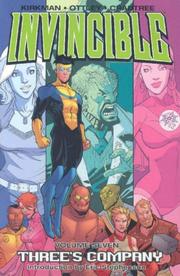
Three's Company. The supporting cast — Atom Eve, Robot, Rex Splode — stop being background and start driving plots of their own, which is the structural move that lets the series run another eighteen volumes without repeating itself.

Out of This World, and the point where the story leaves Earth for good. The Viltrumite question stops being backstory and becomes the engine of everything that follows.
Escalation to the Viltrumite War
IntermediateFollow the long build to the series' central conflict, and read the arc most people name as its peak.
▸ Study plan for this stage
Pace: Two to three weeks for Invincible, Vol. 11 (168 pages), Vol. 13 (144) and Vol. 14 (212). Volume ten resolves only as the Ultimate Collection edition here, so read a summary before Vol. 11. Read Vol. 13 and Vol. 14 back to back with no gap — Growing Pains exists to get the pieces in position and the
- The Robot subplot in Vol. 11 as the run's second great betrayal, and how it is built out of material seeded in the previous stage
- Vol. 13 as a positioning volume — how a serial gets its cast where the next arc needs them without feeling like it stalled
- The Viltrumite War as the payoff of every empire reference planted since Vol. 9
- Ottley's page architecture in Vol. 14: what 212 pages of near-continuous action requires of an artist
- Costs that stick — the war is the point where the series proves damage is permanent
- Reading a slim trade line: why Vol. 14 is half again the length of Vol. 13, and what that tells you about how Kirkman paced the arc
- What does Robot do in Vol. 11, and which earlier scenes were preparing it?
- Why is Vol. 13 unsatisfying alone and necessary in sequence — what specifically does it move into place?
- What are the Viltrumites' actual war aims, and why can they not simply be defeated in a fight?
- What does the war cost that cannot be undone, and how do you know Kirkman means it?
- After Vol. 14, is the series over as a story? What is left to write about, and does the answer worry you?
- Reread Robot's scenes in Vol. 7 and Vol. 9 immediately after finishing Vol. 11. Mark every line that reads as a confession in hindsight.
- Read Vol. 13 and Vol. 14 in a single sitting, then write two sentences: one describing Vol. 13 as its own book, one describing it as act one of Vol. 14. The gap between them is what a positioning volume does.
- In Vol. 14, pick any ten-page stretch of the war and count panels per page, then do the same for ten pages of Vol. 5. Ottley's storytelling density changes measurably under sustained action.
- List every character who is permanently altered by the war — killed, maimed, exiled. Keep the list; the next stage is about that list.
Next up: The war leaves a cast full of permanent damage, and the next stage is the series spending volumes on it rather than resetting.

Happy Days. Volume ten resolves only as the Ultimate Collection edition, so this is the resumption point; it is also where the Robot subplot turns, in one of the run's genuinely nasty surprises.

Growing Pains, the last volume before the war, and the one that gets the pieces into position. Read it immediately before the next volume rather than as a standalone.

The Viltrumite War itself, and the most sustained action in the series. It is also the clearest demonstration of what Ottley brought to the book, and the volume that decides whether you are staying for the back half.
The long consequences
IntermediateRead the post-war stretch, where Kirkman spends volumes on the cost of what happened rather than resetting to a status quo.
▸ Study plan for this stage
Pace: Two to three weeks for Invincible, Vol. 16 (136 pages), Vol. 18 (160) and Vol. 21 (152). Read Vol. 17 alongside Vol. 18 if you can get it — the two together are a single sitting and Vol. 17 sets up The Death of Everyone. Vol. 18 kills named cast members explicitly and at length; that is what the arc
- Political aftermath landing on Earth: occupation and oversight as the war's real consequence, not a victory parade
- Family as the series' oldest and most reliable engine, returning in Vol. 16 after the widest-scale arc
- The Death of Everyone as proof that Invincible will actually spend its cast rather than threaten to
- Deliberate deceleration in Vol. 21 — the domestic volume as necessary breath before a finale
- Fatherhood inverting the premise: the son becomes the parent the series opened by interrogating
- Why a long serial needs volumes that reward continuity, and why Vol. 21 is the one that most does
- What is the political settlement after the war, and why is it a worse problem for Mark than the fighting was?
- Who dies in Vol. 18, and does the series earn it — what had it invested in them beforehand?
- What does Vol. 21 actually contain, and why would a first-time reader in a bookshop dismiss it?
- How does Mark's own family change what the Nolan material from Vol. 1 to Vol. 3 means?
- Where does this stretch tell you the finale is going, and what has it already ruled out?
- Take the list of the permanently damaged you made in the previous stage and, at the end of Vol. 21, mark what each of those characters is doing now. The ones with entries are what the series spent forty issues on.
- Read Vol. 17 and Vol. 18 together in one sitting as intended, then try describing the arc without naming who dies — that constraint shows you how much of its weight is the death and how much is the build.
- Count the pages of Vol. 21 that contain no fighting at all. Compare with Vol. 14. That ratio is the argument the volume is making.
- Write down what you now expect the ending to be, and what it would have to do to satisfy you. Keep it for the next stage.
Next up: Everything is now in position for a two-volume finale that Kirkman wrote as one continuous piece.

Family Ties. The war's political aftermath lands on Earth, and Mark's family becomes the plot again — the series' oldest and most reliable move.
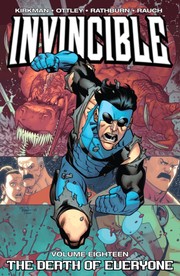
The Death of Everyone, the second-most-discussed arc in the run and the one that proves Invincible will actually spend its cast. Volume seventeen sets it up; you can read them together in a sitting.

Modern Family. The book slows down deliberately here and becomes domestic, which reads as filler in isolation and as the necessary breath before the finale in sequence. This is the volume that most rewards having read the run in order.
The End of All Things
IntermediateFinish the series, and know what the ending is actually about before you get there.
▸ Study plan for this stage
Pace: One week, and clear the time before you start. Invincible, Vol. 24 (152 pages) and Vol. 25 (192) are The End of All Things, Parts One and Two — one continuous story split across two books, so do not open Vol. 24 unless you can read both. Vol. 25 closes the run at issue one hundred and forty-four and
- A finale written as one piece across two trades, and why Part One has no ending of its own
- The epilogue jump forward as a formal choice — resolving the story by outliving it rather than by winning
- What the ending is actually about: not whether Mark wins, but whether he becomes his father
- Closure in a creator-owned series that could run indefinitely, and the difference from a franchise book that cannot end
- The compendium route as an alternative — three volumes instead of twenty-five — and the fact that Compendium Three does not resolve in this catalogue, so that route cannot be finished here
- Compendium and trade issue counts do not line up, so the two schemes cannot be combined mid-series
- Where does Part One stop, and what does the fact that it stops there tell you about how it was written?
- What question does the epilogue answer that the fight could not?
- Does the ending vindicate or condemn the premise of Vol. 1 — and does Kirkman commit to either?
- Reading all twenty-five back, which volume turned out to matter most that you did not expect at the time?
- If you were recommending this run to someone else, which edition would you tell them to buy, and what would you warn them about first?
- Read Vol. 24 and Vol. 25 across a single weekend without stopping between them, as the arc is constructed.
- Open the sealed one-sentence description you wrote at the end of Vol. 1 and compare it with what the series turned out to be.
- Go back to the first four issues in Vol. 1 immediately after the epilogue and mark every setup that the ending pays off. The distance between those pages is the whole point of reading it in order.
- Before recommending the compendiums to anyone, work out on paper which issues each of the three collects against these twenty-five trades, and note where Compendium Three's absence from this catalogue leaves the route incomplete.
Next up: The run is finished at issue one hundred and forty-four; what remains is deciding which edition to press on anyone you tell about it, and remembering to warn them about volume two first.

The End of All Things, Part One. The finale runs across the last two volumes and is one continuous piece; do not start it unless you can read both.

The End of All Things, Part Two, which closes the run at issue one hundred and forty-four with an epilogue that jumps decades ahead. If you would rather read the whole series in three volumes instead of twenty-five, the compendiums are the way — but note that Compendium Three does not resolve in our catalogue, so that route cannot be finished here, and its issue counts do not line up with these trades.