Inuyasha Reading Order: Where to Start Rumiko Takahashi's Manga
Inuyasha ran for fifty-six volumes and Rumiko Takahashi never wrote it to be sampled — it is one continuous quest, in publication order, from the moment Kagome falls down the well to the last fight inside the jewel. The only real decision a new reader makes is which English edition to buy, and this path settles that first: the numbering used throughout is VIZ's single-volume English release, the one catalogued as Inuyasha, Vol. N, and it must not be mixed with the three-in-one VIZBIG omnibuses, which renumber everything. An honest catalogue warning before you start: this series is unevenly recorded. Of the thirty-nine volumes checked, 14 made it onto this path; several queries returned a Japanese-language edition or silently handed back a different volume, and nothing past volume forty-four could be reached at all. So this path pins the volumes that verifiably exist, marks the gaps as gaps, and tells you where it stops rather than pretending to run to the end. One caveat about the records themselves: seven of the volumes below are catalogued as the Japanese Shogakukan edition or a Spanish one rather than the VIZ English printing, so their buy links search by title instead of going to a specific edition. Check the language before you order.
Down the well
BeginnerMeet Kagome, Inuyasha and the shattered Shikon jewel, and understand the episodic monster-of-the-week structure the series starts in before it commits to a plot.
▸ Study plan for this stage
Pace: About a week for three VIZ singles — Inuyasha, Vol. 1 (183 pages), Vol. 6 (180) and Vol. 7 (186). A volume is comfortably one sitting; the constraint is not length but the gap, because volumes two to five are not in this catalogue and you need a synopsis of them before opening Vol. 6. Takahashi draw
- The well as a fixed two-way door between modern Tokyo and Sengoku-era Japan — the only mechanism the series ever uses to move between them
- The Shikon jewel shattered rather than stolen: a plot engine that licenses an indefinite number of self-contained chapters
- Hanyō status — Inuyasha belongs to neither humans nor demons, which is the emotional line under every arc that follows
- The subjugation beads and the 'sit' command as a running gag that is also the actual power relationship between the leads
- Monster-of-the-week construction in Vol. 1, versus the first signs in Vol. 7 of a villain who connects back to a central mystery
- What the Vol. 2–5 gap costs you: the introductions of Shippo and Miroku, including Miroku's wind tunnel, which later volumes never re-explain
- VIZ single-volume numbering versus the VIZBIG three-in-one omnibuses, which renumber everything and must not be mixed with these
- Why does shattering the jewel rather than losing it generate a fifty-six-volume story, and what would the series be if Kagome had simply kept it whole?
- In Vol. 1, how many chapters introduce and resolve their own threat entirely within themselves — and how does that count change by Vol. 7?
- What has to be true about Shippo and Miroku by the start of Vol. 6, and where does the text assume you already know it?
- By Vol. 6 Sesshomaru returns rather than being defeated and dropped. What does making him recurring change about the stakes?
- If you later buy a VIZBIG volume, which of these three singles does it duplicate, and how do you check before paying?
- Read Vol. 1 chapter by chapter and mark in the margin where each chapter's problem is raised and where it is closed. Do the same for Vol. 7 and compare the two tallies — that difference is the series acquiring a spine.
- Before opening Vol. 6, write yourself a two-paragraph synopsis of volumes two to five covering Shippo, Miroku and the wind tunnel, and keep it tucked in the book; you will need it again at every later gap.
- Keep a running shard count. At the end of each of these three volumes, note how many jewel shards the party holds and who else is holding one — the number is the series' actual clock.
- Check the page count and spine of your copies against the 183, 180 and 186 pages listed here before you buy any further volumes, to confirm you are in the VIZ singles line and not an omnibus.
Next up: You now know the episodic shape the series starts in, which is exactly what the next stage watches it abandon as the cast fills out and a single antagonist takes over.
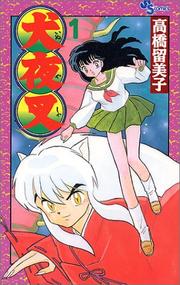
The correct entry point and the only one: a modern Tokyo schoolgirl is pulled through a shrine well into feudal Japan, wakes a half-demon pinned to a tree, and shatters the jewel both of them now have to collect. Everything the series does for the next fifty volumes is set up here, and there is no later jumping-on point.
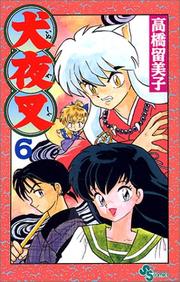
Volumes two through five are the weakest stretch of the run and, conveniently, the ones our catalogue cannot deliver — volume two does not resolve, and volumes three, four and five all return volume nineteen instead. You lose the introduction of Shippo and Miroku, which a synopsis covers in a paragraph. Pick the story back up here, where the shard hunt has settled into its rhythm and Sesshomaru has become a recurring threat rather than a one-off.

Read straight after volume six. This is where Takahashi starts letting the villain of the week connect back to the central mystery instead of resetting each time, and it is the first sign the series has a spine.
Naraku, and the party assembles
BeginnerWatch the cast fill out and the true antagonist take shape, which is the point where Inuyasha stops being episodic and starts being a single long story.
▸ Study plan for this stage
Pace: Roughly a week to ten days for InuYasha Vol. 9 (187 pages), Vol. 13 (185) and Vol. 15 (187). Read Vol. 9 slowly — it is the densest character material in the first third — then read a synopsis of volumes ten to twelve, which this catalogue cannot supply, before Vol. 13. Vol. 9 covers the massacre of
- Naraku as an antagonist who works through proxies and forged evidence rather than direct force, which is what makes him usable for forty volumes
- Sango and the demon-slayer village: the last core party member, and the point at which the group becomes an ensemble rather than a duo
- The Tessaiga and the inheritance quarrel — Sesshomaru's claim on his father's sword turning the brothers into a second plotline running parallel to the jewel hunt
- Kikyo's presence as the reason the Inuyasha–Kagome relationship cannot resolve, and the structural function of an unresolvable triangle in a long serial
- Betrayal-by-illusion as Takahashi's recurring device: characters made to attack each other on false information
- How to read across a volume gap — what you can infer from context and what you genuinely have to look up
- What does Naraku actually do to Sango's village, and why is manipulation rather than slaughter the more important half of it?
- How does Sango's arrival change what the party can attempt that it could not before Vol. 9?
- What is the Tessaiga inheritance dispute really about, given that Sesshomaru cannot wield the sword?
- Why does Kikyo's return make the central romance permanently unstable rather than simply complicated?
- After Vol. 15, is this a series you want another forty volumes of? Name the specific thing that decided it.
- In Vol. 9, list every piece of information Sango is given about who killed her village and by whom, in order. Then mark which ones were false. That list is Naraku's method in miniature.
- Draw the party as it stands at the end of Vol. 15 — Inuyasha, Kagome, Shippo, Miroku, Sango, Kirara — and write beside each what problem they can solve that nobody else can. Any name you cannot fill in is a character the volume gaps cost you.
- Read the Tessaiga scenes in Vol. 13 immediately after the Sesshomaru material in Vol. 6, back to back, and note what has changed in how the brothers are drawn to each other.
- Write down, before starting the next stage, which of the two plots you are actually reading for — the jewel or the brothers. Check it against yourself at the end of Vol. 28.
Next up: With the full party assembled and both plotlines running, the next stage is the series at its most confident, where arcs stretch across several volumes instead of resolving in one.
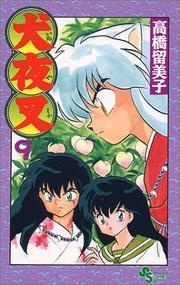
Sango and the demon-slayer village, the arc that gives the group its last core member and gives Naraku his first genuinely cruel act on the page. If you read only one volume from the first third after the opening, read this one.
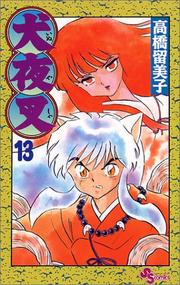
Volumes ten to twelve are another catalogue hole — ten and twelve do not resolve and eleven returns the Japanese 犬夜叉 edition rather than the English one. Resume here, with the Tessaiga and Sesshomaru material that turns the brothers' rivalry into the series' second real plotline alongside the jewel.

The Kikyo material moves to the foreground, and with it the love triangle that a lot of readers either stay for or quit over. Worth knowing which you are before committing to another forty volumes.
The long middle
IntermediateRead through the series at its most confident, where the arcs run several volumes each and the supporting cast carries as much plot as the leads.
▸ Study plan for this stage
Pace: Two to three weeks for four volumes — InuYasha Vol. 18 (187 pages), Vol. 20 (190), Inuyasha Vol. 24 (185) and Vol. 28 (187). Read 18 and 20 close together, since they are one movement; 24 and 28 belong to the Band of Seven arc and its Mount Hakurei payoff, with several volumes missing between them,
- Multi-volume arcs replacing chapter-length episodes — the structural change that defines the middle of the run
- Kagura and Kanna as detachments of Naraku who want out of him, which gives the series its best sustained subplot
- The Band of Seven as an arc built on a set of individually characterised opponents rather than one escalating threat
- Mount Hakurei and the use of a purifying barrier to strip the cast of their usual advantages
- Where the shard count starts mattering again, and how Takahashi uses it to steer toward an endgame
- Reading a serial across missing volumes: what a gap between Vol. 20 and Vol. 24 actually removes
- What does Kagura want, and why is a villain's henchman wanting to escape her own boss a stronger engine than another power-up?
- Why does the Band of Seven arc read better than the arcs where Naraku fights directly?
- What does the Mount Hakurei barrier take away from Inuyasha and Miroku, and what does the arc make them use instead?
- By Vol. 28, how many shards are in play and who holds them — and what does that tell you about how much series remains?
- Which of these four volumes could be cut without damage, and what does your answer say about how the middle is paced?
- Read Vol. 18 and Vol. 20 in one weekend as a single unit, then write one paragraph describing them as one story. If that paragraph is hard to write, you have found where the arc's seams are.
- Track Kagura across all four volumes: note every scene where she acts against Naraku's instruction, however small. The accumulation is the subplot.
- Before opening Vol. 24, look up a summary of volumes twenty-one to twenty-three and write down the three facts you most need; check afterwards which of them the volume actually assumed.
- Compare a fight scene in Vol. 1 with one in Vol. 24 page for page — count panels per exchange. Takahashi's storytelling pace changes measurably, and the pages show it.
Next up: The Hakurei payoff pushes the series into its endgame material, which is where the catalogue's coverage thins and the final stage tells you exactly where it stops.

Naraku's detachments — Kagura and Kanna — become characters rather than obstacles, and the series gains its best subplot: villains who want out. Read volumes seventeen through twenty close together; they are one movement.

The close of that movement and the setup for the Band of Seven, the longest and most popular arc in the series. Stopping here is defensible if the length is starting to tell on you.
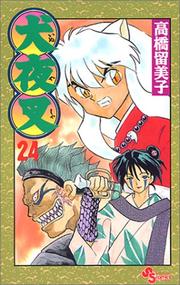
The Band of Seven at full strength, seven resurrected mercenaries who are more fun than anything Naraku does himself. This is the stretch people mean when they say the middle of Inuyasha is better than its reputation.
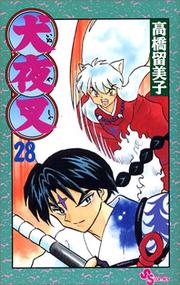
Mount Hakurei, and the arc's payoff. It also marks the point where the shard count starts mattering again and the series begins steering toward an endgame.
As far as this catalogue reaches
IntermediateFollow the endgame material as far as the English records allow, and know exactly what is missing and where to find it.
▸ Study plan for this stage
Pace: Two to three weeks, and read the gap notes before you buy. Inuyasha Vol. 30 (183 pages), Vol. 34 (190) and InuYasha Vol. 40 (192) are here, with Vol. 44 closing the stage. Read a synopsis of volumes thirty-one to thirty-three before Vol. 34 and of thirty-five to thirty-nine before Vol. 40 — the late
- Naraku's heart kept separate from his body — the late-series problem that replaces the shard hunt as the main obstacle
- Moryomaru as a rival for the same prize, which turns the endgame into a three-way contest rather than a chase
- Convergence: individual arcs for Sango, Miroku, Kohaku and Sesshomaru being resolved alongside the main plot rather than after it
- Sesshomaru as a participant rather than a complication, completing a fifty-volume shift in his function
- Where this path actually ends — Vol. 44 of 56, with twelve volumes of story unread
- How to finish: VIZ singles forty-five to fifty-six, or the final VIZBIG omnibuses, never a mixture, since one VIZBIG collects three singles and the counts will not line up
- Why does moving Naraku's heart out of his body change what kind of story the final act can be?
- What does Moryomaru want that Naraku also wants, and how does a second claimant raise the stakes without a new power level?
- How is Sesshomaru's role at Vol. 40 different from his role at Vol. 6, and at what point did it change?
- Given that this list ends at Vol. 44, what is left unresolved when you close it — and how would you describe the state of the plot to someone picking up Vol. 45?
- If you buy VIZBIG volumes to finish, which numbered omnibus contains volume forty-five, and how did you work that out?
- Write down the open threads at the end of Vol. 44 — the heart, Kohaku's shard, Kikyo, the well itself — one line each. This is the handover note you will need when you find volume forty-five.
- Before Vol. 34, write a short summary of volumes thirty-one to thirty-three from a synopsis, then mark afterwards every place the volume assumed something your summary missed. Repeat the exercise before Vol. 40 and see whether your summaries got better.
- Work out the VIZBIG conversion on paper: three singles per omnibus, starting from Vol. 1, and identify which omnibus you would need to continue from forty-five. Do this before ordering anything.
- Reread the first chapter of Vol. 1 immediately after Vol. 44 and list what Takahashi set up on page one that is still running forty-three volumes later.
Next up: This is where the catalogue stops rather than where the story does — twelve volumes remain, and the notes above tell you which edition to buy to read them.
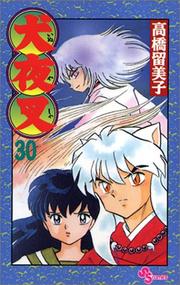
The aftermath of Hakurei and the reshuffle that follows it — Naraku's body, his heart and the question of where the heart is kept, which drives most of what remains.

Moryomaru and the fight over Naraku's heart. The plotting gets denser here and the volume-to-volume gaps start to hurt, so read a synopsis of thirty-one to thirty-three before opening this one.

Late-series Takahashi, with the cast's individual arcs converging and Sesshomaru finally becoming a participant rather than a complication.

The last volume that resolves in our catalogue, and it is not the ending — the series runs to fifty-six, and everything from forty-six onward was unreachable under every title convention tried, including the VIZBIG omnibus form. To finish, look for volumes forty-five to fifty-six as VIZ singles or the final VIZBIG volumes; do not mix the two numbering systems, because a VIZBIG volume collects three singles and the counts will not line up.