Become an HVAC tech: heating, cooling & job security
This four-stage curriculum takes a complete beginner from "what is HVAC?" all the way to confident, job-ready troubleshooting and career awareness. Each stage builds on the last — first establishing the physics and trade vocabulary, then diving into refrigeration and heating systems, then preparing for the EPA 608 certification exam, and finally developing the diagnostic mindset and understanding the long-term career landscape that makes HVAC one of the most durable skilled trades.
Foundations: Trade Basics & Core Science
BeginnerUnderstand the fundamental physics (heat transfer, pressure, electricity) and trade vocabulary that underpin every HVAC system, so later technical reading makes immediate sense.
▸ Study plan for this stage
Pace: 10–12 weeks total. Weeks 1–7: "Refrigeration and Air Conditioning Technology" by Whitman — read Units 1–10 at roughly 20–25 pages/day, 5 days/week, focusing on the foundational units covering matter, heat, refrigeration cycle basics, and trade safety before advancing to system components. Weeks 8–12
- Heat transfer modes — conduction, convection, and radiation — as explained in Whitman's early units, and how each mode drives HVAC system design decisions
- States of matter and latent vs. sensible heat: understanding why refrigerants absorb and release large amounts of heat during phase changes (Whitman, Unit 1–2)
- The basic refrigeration cycle — evaporator, compressor, condenser, metering device — and the role each component plays in moving heat from one place to another (Whitman, Units 3–5)
- Pressure concepts: absolute vs. gauge pressure, psig vs. psia, and how pressure and temperature relationships govern refrigerant behavior (Whitman, Unit 2)
- Trade safety and tool identification: EPA Section 608 awareness, proper PPE, and the purpose of core hand tools and instruments introduced in Whitman's safety and tools units
- Ohm's Law and the relationship between voltage, current, and resistance as the mathematical backbone of all HVAC electrical diagnosis (Smith, Chapters 1–3)
- Series vs. parallel vs. series-parallel circuits and how loads are wired in real HVAC equipment — furnaces, condensing units, air handlers (Smith, Chapters 4–6)
- Reading and interpreting basic electrical diagrams (schematic/ladder diagrams) for HVAC controls, including common symbols for contactors, relays, thermostats, and capacitors (Smith, Chapters 7–9)
- According to Whitman, what is the difference between latent heat and sensible heat, and why does latent heat make refrigerants so effective at transferring thermal energy?
- Trace the path of refrigerant through the basic four-component refrigeration cycle described in Whitman: at which point does the refrigerant absorb heat, and at which point does it reject heat?
- Using the pressure-temperature relationship covered in Whitman, explain what happens to the boiling point of a refrigerant when system pressure drops — and why that matters for evaporator performance.
- Applying Ohm's Law from Smith's early chapters: if a 240-volt circuit has a total resistance of 20 ohms, what is the current flowing through the circuit, and how would that change if a second identical resistor were added in parallel?
- From Smith's chapters on circuit types, how does current behave differently in a series circuit versus a parallel circuit, and which wiring arrangement is most common for the loads (motors, heaters) in an HVAC system and why?
- After studying Smith's chapters on electrical diagrams, describe the function of a contactor and a control relay in an HVAC system, and explain how you would locate and interpret each on a ladder diagram.
- Heat transfer journal: For one full week, log five real-world examples you observe each day (a cold drink warming up, a metal door feeling colder than a wooden one, sunlight heating a dark surface) and classify each as conduction, convection, or radiation using Whitman's definitions — then explain which HVAC component exploits that same mode.
- Refrigeration cycle sketch drill: Without looking at Whitman, draw the four-component refrigeration cycle from memory, label each component, draw arrows showing refrigerant flow direction, and annotate whether the refrigerant is a high-pressure liquid, high-pressure vapor, low-pressure liquid, or low-pressure vapor at each stage. Check against the book and repeat until the sketch is accurate in un
- Pressure-temperature chart practice: Using the PT chart in Whitman's appendix, pick five common refrigerants (e.g., R-22, R-410A, R-134a) and for each one, find the saturation temperature at three different pressures. Then reverse the exercise — given a temperature, find the corresponding saturation pressure. Record your answers and verify them.
- Ohm's Law problem set: Write out 20 practice problems using Smith's formula triangle (V = IR). Vary which variable is unknown. Then extend to calculating wattage (P = IV) for common HVAC loads — a 5-amp blower motor on 120 V, a 20-amp compressor on 240 V — and compare results to nameplate data on any appliance available to you.
- Build and test simple circuits: Using an inexpensive breadboard kit, 9-volt battery, resistors, LEDs, and a multimeter, wire a series circuit and a parallel circuit following Smith's diagrams. Measure voltage across each component and current through the circuit, record results in a table, and verify they match calculated values using Ohm's Law.
- Ladder diagram translation exercise: Find the wiring diagram on the inside panel of any window AC unit, room heater, or furnace (or download a manufacturer's wiring diagram online). Using Smith's symbol guide, identify and label every component on the diagram — thermostat, contactor, capacitor, motor — and write a one-paragraph narrative describing the sequence of operation from 'thermostat calls
Next up: Mastering the physics of heat movement and the logic of electrical circuits from Whitman and Smith gives you the conceptual language needed to make sense of complete, integrated HVAC systems — so the next stage, which examines full system design, refrigerant handling, and advanced controls, will feel like a logical extension rather than a leap into the unknown.
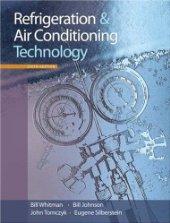
The single most widely used HVAC textbook in vocational programs — it introduces heat theory, refrigeration cycles, electrical basics, and trade terminology in a structured, beginner-friendly way. Read it first to build the vocabulary everything else depends on.

HVAC work is as much electrical as mechanical; this dedicated text builds comfort with circuits, controls, and wiring diagrams right after the core physics are established, preventing the 'electrical wall' that stops many new techs.
Systems Deep Dive: Refrigeration & Heating
IntermediateUnderstand how real refrigeration systems and heating appliances (gas furnaces, heat pumps, boilers) are designed, how refrigerants behave, and how components interact under load.
▸ Study plan for this stage
Pace: 10–12 weeks, ~25–35 pages/day (5 days/week) — "Modern Refrigeration and Air Conditioning" by Althouse is a dense, heavily illustrated textbook (~1,100+ pages); pace yourself by unit/chapter clusters rather than raw page count. Aim to finish one major system section (e.g., compressors, metering devic
- The refrigeration cycle in depth: how the four core components (compressor, condenser, metering device, evaporator) interact under real load conditions and how changing one variable (e.g., ambient temperature, refrigerant charge) cascades through the entire system
- Refrigerant properties and behavior: pressure-temperature (P-T) relationships, superheat, subcooling, latent vs. sensible heat, and how to use a P-H (Mollier) diagram to analyze system performance
- Compressor types and operation: reciprocating, scroll, rotary, and screw compressors — construction, capacity control, common failure modes, and how to read compressor performance data
- Metering devices: thermostatic expansion valves (TXV), fixed orifices/piston metering devices, and electronic expansion valves — how each regulates refrigerant flow and how to set/adjust superheat
- Condensers and evaporators: heat transfer principles, airflow requirements, fouling effects, and how to diagnose performance degradation from pressure and temperature readings
- Gas furnace systems: heat exchanger design, combustion principles, gas valve and ignition system operation, flue venting categories, and safety controls (limit switches, pressure switches, flame sensors)
- Heat pumps: reversing valve operation, balance point, auxiliary/emergency heat, defrost cycle logic, and how heating and cooling modes differ in component loading
- Boilers and hydronic heating: steam vs. hot-water boilers, aquastat and pressure-relief valve functions, zone valves, and how to read boiler ratings and efficiency (AFUE)
- Given a set of system pressures and temperatures on a running refrigeration system, how do you calculate actual superheat and subcooling, and what do abnormal values tell you about charge level or metering device performance?
- How does a TXV sense and respond to load changes, and what symptoms appear when it is set too high, too low, or has a failed sensing bulb?
- Walk through the complete sequence of operation for a gas furnace from thermostat call to steady-state heating — which safety controls can interrupt the sequence, and why?
- How does a heat pump's reversing valve switch the system between heating and cooling modes, and what happens to suction and discharge pressures when the outdoor temperature drops below the balance point?
- What are the key differences between a high-efficiency condensing furnace and a standard 80% furnace in terms of heat exchanger design, venting, and condensate management?
- Using a P-H diagram, trace the refrigerant state points around a vapor-compression cycle and identify where energy is added, rejected, and where irreversibilities occur.
- Pressure-Temperature drill: Using Althouse's P-T charts and a set of refrigerants (R-410A, R-22, R-134a), practice converting between saturation pressure and temperature in both directions until you can do it in under 30 seconds without the chart.
- P-H diagram mapping: For a hypothetical system with given suction/discharge pressures and measured superheat/subcooling values, plot all four state points on a blank Mollier diagram, calculate the refrigeration effect, work of compression, and COP.
- Component identification teardown (or virtual lab): Using Althouse's exploded diagrams, identify every component on a residential split-system or window unit — label the metering device type, trace refrigerant flow direction, and locate all service ports.
- Furnace sequence-of-operation flowchart: Without referencing the book, draw a complete start-up sequence for a 90%+ condensing gas furnace, including every safety interlock; then compare it to Althouse's coverage and fill in any gaps.
- Superheat/subcooling field simulation: Using a manifold gauge set (real or simulated via HVAC training software), record suction pressure, discharge pressure, suction line temperature, and liquid line temperature on a running system; calculate target superheat using the manufacturer's chart method and determine whether the system is properly charged.
- Boiler/hydronic system sketch: Draw a simple one-zone hot-water boiler system from memory, labeling the boiler, circulator pump, expansion tank, air separator, pressure-relief valve, and zone valve; annotate the function of each safety device and cross-check against Althouse's hydronic chapters.
Next up: Mastering how refrigeration and heating systems behave under normal load sets the essential diagnostic baseline for the next stage, where the focus shifts to troubleshooting real-world faults, reading electrical schematics, and using test instruments to isolate failures in these same systems.
A classic, deeply detailed reference on refrigeration system design and components — compressors, metering devices, heat exchangers — that complements Whitman by going further into the 'why' behind system behavior.
Certification: EPA 608 & Code Compliance
IntermediatePass the EPA Section 608 refrigerant-handling certification exam and understand the regulatory and safety framework governing refrigerant use, recovery, and record-keeping.
▸ Study plan for this stage
Pace: 4–5 weeks, ~15–20 pages/day. The ASHRAE Pocket Guide is a dense reference, not a narrative read — treat it in thematic chunks rather than cover-to-cover. Week 1: refrigerant properties & thermodynamic tables. Week 2: refrigerant safety classifications, leak detection, and handling. Week 3: recovery,
- EPA Section 608 regulatory framework: who must certify, the four certification types (Type I, II, III, Universal), and what each covers
- Refrigerant classification: ASHRAE Standard 34 safety groups (A1, A2L, B1, B2, etc.) and what flammability/toxicity ratings mean for handling procedures
- Thermodynamic properties of common refrigerants (R-22, R-410A, R-134a, R-404A, HFOs) as presented in the ASHRAE tables — pressure-temperature relationships and saturation data
- Refrigerant recovery, recycling, and reclamation: definitions, required equipment standards, and when each process is mandated
- Venting prohibitions and de minimis release rules: what is illegal, what is exempt, and the civil penalty structure
- Leak detection requirements: threshold leak rates for different equipment types, required repair timelines, and documentation obligations
- Refrigerant cylinder safety: color coding, DOT regulations, filling limits (80% rule), and safe storage/transport practices
- Record-keeping and reporting: what must be logged, retention periods, and how to complete a refrigerant transaction record
- What are the four EPA 608 certification types, and which refrigerant systems does each authorize a technician to service?
- Using the ASHRAE Pocket Guide pressure-temperature tables, what is the approximate saturated suction pressure of R-410A at 40°F evaporating temperature, and why does this matter for system diagnosis?
- What is the difference between refrigerant recovery, recycling, and reclamation as defined by EPA regulations, and what equipment certification is required for each?
- Under EPA Section 608, at what leak rate (in pounds per year or percentage) must a commercial refrigeration system owner repair a leak, and within what timeframe?
- What ASHRAE safety classification is R-32, and what special precautions does that classification require compared to an A1 refrigerant like R-134a?
- What information must appear on a refrigerant transaction record, and how long must it be retained?
- EPA 608 Practice Exam Simulation: Download a free Type II or Universal practice test, use the ASHRAE Pocket Guide as your only open reference, and score yourself — target ≥ 84% (the passing threshold) before scheduling the real exam.
- Pressure-Temperature Drill: Pick five refrigerants from the ASHRAE tables (e.g., R-22, R-410A, R-134a, R-404A, R-32). For each, look up the saturated pressure at 40°F and 105°F. Create a one-page cheat sheet from memory, then verify against the guide.
- Refrigerant Safety Classification Chart: Without looking, write out the ASHRAE 34 safety group for at least eight common refrigerants. Check your answers in the Pocket Guide and note which ones are A2L (mildly flammable) — these are increasingly common and heavily tested.
- Mock Recovery Scenario: Walk through a written scenario — e.g., recovering refrigerant from a 5-ton R-410A rooftop unit before compressor replacement. List every regulatory step: verify technician certification, connect recovery machine, achieve required recovery vacuum level, label the recovery cylinder, and complete the transaction record. Cross-check each step against the ASHRAE guide and EPA 6
- Record-Keeping Template Build: Create a blank refrigerant transaction log template that satisfies all EPA 608 record-keeping fields. Fill it in with a fictional service call, then audit it against the regulatory requirements summarized in the ASHRAE Pocket Guide.
- Refrigerant Cylinder Safety Audit: Physically inspect (or sketch from memory) a refrigerant cylinder and label: the color code, the DOT specification markings, the tare weight, the fill limit calculation (80% rule), and the required storage conditions. Use the ASHRAE Pocket Guide safety sections to verify each label.
Next up: Mastering refrigerant regulations and thermodynamic reference data in the ASHRAE Pocket Guide gives you the safety and code foundation needed to move confidently into hands-on system diagnostics and equipment-specific service procedures in the next stage.

Introduces the industry's governing standards body and its code language — reading this alongside exam prep teaches you to speak the regulatory vocabulary that inspectors, engineers, and employers expect on the job.
Mastery: Troubleshooting, Business & Career Durability
ExpertDevelop a systematic diagnostic mindset for real-world fault-finding, understand service business economics, and internalize why skilled HVAC work is growing, recession-resistant, and AI-proof.
▸ Study plan for this stage
Pace: 8–10 weeks total: Weeks 1–6 on "HVAC Troubleshooting Guide" (~25–30 pages/day, including time to pause and sketch diagnostic trees); Weeks 7–10 on "Shop Class as Soulcraft" (~20 pages/day, reading more reflectively with journaling breaks).
- Systematic fault-finding methodology: isolating variables in refrigerant, electrical, and airflow subsystems using Miller's step-by-step diagnostic frameworks
- Reading and interpreting manifold gauge pressures, superheat, and subcooling values to pinpoint refrigerant-side faults (overcharge, undercharge, restriction, compressor failure)
- Electrical troubleshooting logic: using wiring diagrams, multimeters, and Miller's ladder-diagram approach to trace control-circuit and load-circuit faults
- Airflow diagnostics: static pressure testing, duct leakage indicators, and how airflow deficiencies masquerade as refrigerant or equipment problems
- Service business economics: flat-rate vs. time-and-material billing, call-back costs, and how diagnostic accuracy directly protects profit margins
- Crawford's 'bodily knowledge' and the irreplaceable value of tacit, hands-on skill — why HVAC mastery cannot be outsourced or automated
- The philosophical case for manual trades as intellectually rich, autonomous, and recession-resistant careers versus the fragility of knowledge-worker abstraction
- Career durability strategy: continuous skill-stacking (refrigerants, controls, IAQ, commissioning) as a hedge against market shifts and technological change
- Given a set of manifold gauge readings and a measured superheat/subcooling value from Miller's examples, can you correctly identify the most likely fault and explain your reasoning step by step?
- How does Miller recommend you use a wiring diagram before touching any component — and why does skipping this step increase both diagnostic time and liability?
- What is the danger of diagnosing a refrigerant problem before ruling out airflow issues, and which Miller diagnostic sequence addresses this?
- According to Crawford, what distinguishes a 'stochastic' trade problem from a routine one, and how does that distinction explain why skilled tradespeople cannot be replaced by algorithms or low-wage labor?
- How does Crawford's concept of 'engagement with resistant reality' apply to the moment an HVAC technician encounters a fault that contradicts their initial hypothesis?
- Using both books together: how does the economic value of a fast, accurate diagnosis (Miller) connect to Crawford's argument that manual expertise commands respect and market premium?
- Diagnostic tree construction: After each major fault category in Miller (refrigerant, electrical, airflow, controls), draw a hand-written decision tree on paper — symptom at the top, branching tests in the middle, confirmed faults at the leaves. Review and refine after reading the next chapter.
- Live gauge reading log: On at least three real or simulated service calls, record suction pressure, discharge pressure, superheat, and subcooling; compare your diagnosis to Miller's reference tables and note every discrepancy with a written explanation.
- Wiring-diagram cold-read drill: Pull a wiring diagram for an unfamiliar unit (residential split, rooftop, or heat pump) and, before powering anything, write out the full control-circuit sequence of operation and identify the three most likely electrical failure points — then verify against Miller's electrical chapters.
- Airflow-first checklist: Create a one-page pre-diagnostic checklist (filter, static pressure, supply/return temperatures, blower operation) that you physically complete before opening the refrigerant circuit on any call, internalizing Miller's 'airflow first' discipline.
- Crawford reflection journal: After finishing each chapter of 'Shop Class as Soulcraft,' write a half-page connecting one of Crawford's philosophical arguments to a specific technical moment you have experienced or read about in Miller — building a personal philosophy-of-craft document.
- Career durability audit: List every HVAC skill domain (refrigerants, electrical, controls, IAQ, hydronics, commissioning, customer communication) and honestly rate your current proficiency 1–5. Use Crawford's framework of 'mastery as ongoing engagement' to write a 12-month skill-stacking plan targeting your lowest-rated domains.
Next up: Completing this stage equips the reader with both the technical precision to diagnose complex faults confidently and the philosophical grounding to commit to HVAC as a lifelong, intellectually serious career — the ideal foundation for any next stage focused on advanced specializations (building automation, hydronics, commercial refrigeration) or entrepreneurship in the trades.
Shifts focus from 'how systems work' to 'why systems fail' — organized around real fault symptoms and diagnostic logic, this is the bridge between textbook knowledge and field competence.

A philosopher-turned-motorcycle-mechanic's argument for why hands-on skilled trades offer genuine intellectual depth, economic resilience, and human meaning that knowledge-economy jobs cannot replicate — the perfect capstone for understanding why you chose this path.
Discussion
Keep reading
Paths that share books, cover the same subject, or open a related topic.