Honor Harrington Reading Order: Where to Start with David Weber
David Weber's Honorverse is fourteen main-line Honor Harrington novels plus three separate spin-off sequences and four anthologies, and the recommended reading orders you find online usually interleave all of them chronologically. That is the wrong advice for a first read: the interleaved order stalls the main story for hundreds of pages at exactly the point it gets good. Read the fourteen Honor novels straight through first, in publication order, and treat the branches as a second pass. This path does that and flags where each branch slots in.
Start Here: The First Four
IntermediateMeet Honor and the Manticore-Haven conflict, and find out whether Weber's mix of naval tactics, orbital mechanics and infodump suits you before committing to a fourteen-book series.
▸ Study plan for this stage
Pace: Four to six weeks for about 1,590 pages. These are the shortest books in the series — On Basilisk Station 427 pages, The Honor of the Queen 421, The Short Victorious War 376, Field of Dishonor 367 — and the pages turn fast once you have accepted Weber's habit of stopping the story to explain a techn
- The Napoleonic transposition: Manticore as a constitutional monarchy with a great navy, Haven as an expansionist revolutionary power, and Honor herself as a Nelson figure — knowing this makes half the plotting predictable in a way that is part of the pleasure
- The physics Weber actually commits to: the impeller wedge and its open throat and kilt, sidewalls, and why a ship must be crossed on the vulnerable axis to be killed. Almost every battle in fourteen books is decided by this geometry
- Missiles versus energy range, and the tactical consequence that most engagements are decided before the ships are close enough to see each other
- Faster-than-light gravitic signalling versus light-speed sensors, which is why Weber can write a fleet action with real command delays
- The Havenite economy as a political premise: the Legislaturalists' Basic Living Stipend and the conquest that pays for it, which is the cause of the war and is explained rather than assumed
- Treecats, and the fact that a telepathic empath riding the protagonist's shoulder is a permanent plot device rather than decoration
- Grayson as the series' second home, established in book two and load-bearing for the next ten volumes
- Weber's structural habit: an infodump chapter, then the consequence of it in action. Learning to read the first at speed is the practical skill this stage teaches
- Describe the geometry of an impeller wedge and explain why the throat and the kilt matter. Which battle in these four books turns entirely on it?
- What does Haven need from conquest, and why can it not simply stop?
- The Honor of the Queen is widely rated the best of the early books. What does it do that On Basilisk Station does not?
- Field of Dishonor leaves the fleet entirely. What does it establish that the shipboard books could not, and why can it not be skipped?
- By the end of book four, what has permanently changed for Honor — professionally, politically and personally?
- Draw the impeller wedge from Weber's descriptions in On Basilisk Station, mark the throat and kilt, and then diagram the final engagement of that book on it. If the diagram works, you can follow every battle in the remaining thirteen novels.
- Keep a two-column list from book one: on the left, every infodump chapter; on the right, the scene later in the same book that pays it off. By book four you will be able to tell at a glance which digressions to read closely and which to skim.
- Track the Manticore-Haven strategic situation across the four books in four short paragraphs, one per volume. The Short Victorious War is where the skirmishing becomes a stated war aim, and writing it down is how you notice.
- After Field of Dishonor, list every character introduced in books one to three who is now dead. The list is short, and it is Weber telling you what kind of series this is.
Next up: You have the war, the physics and the cost of crossing Honor's aristocratic enemies; the next stage runs the naval campaign and Honor's disgrace and rebuilding in parallel.

Book one, and the correct starting point with no caveats: a disgraced junior captain posted to a backwater picket, and the single best demonstration of what the series does. If you do not enjoy this one, the series will not convert you.

Widely considered the best early volume, and the book where the series finds its emotional register alongside the tactics. Read it second; it is also the first sign that Weber will let real damage stick.

The open war finally starts, and the Havenite political machinery moves to the foreground. Third because it converts the first two books' skirmishing into a stated strategic situation the rest of the series runs on.
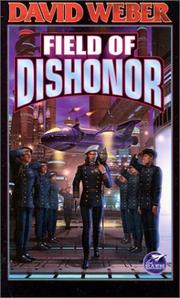
The one that leaves the fleet entirely for a domestic plot of duelling and politics on Manticore. It divides readers, but it is load-bearing for Honor's arc and cannot be skipped.
The War Honor Was Built For
IntermediateFollow the long middle of the main line, where the naval campaign and Honor's personal disgrace and rehabilitation run in parallel.
▸ Study plan for this stage
Pace: Six to eight weeks for about 2,165 pages, and note the jump in length — Echoes of Honor alone is 736 pages, nearly twice On Basilisk Station. Read Field of Dishonor and Flag in Exile back to back if you can; they are one movement, and Flag in Exile is the payoff to both the Grayson material from boo
- Grayson's constitutional and religious politics, and Honor's position as a foreign Steadholder inside them — the series' most sustained piece of world-building
- The Havenite regime change from Legislaturalist oligarchy to the Committee of Public Safety, and the deliberate French-Revolutionary parallel including the political commissioners attached to every ship
- The other side becoming a viewpoint: Weber starts giving Havenite officers real interiority here, which is the structural change that makes the later books work
- Technological escalation as plot engine — the tactical innovations introduced in this stretch are what make the later fleet actions unrecognisable from book one
- The commerce-raiding problem in Honor Among Enemies: a warship's tactics do not solve a piracy problem, which is why that book feels different
- The prisoner-of-war arc as the series' turning point, and Weber's demonstration that his protagonist has no plot armour
- Honor's parallel rehabilitation: professional, political and religious standing rebuilt across four books rather than restored in one scene
- What does the Committee of Public Safety change about how Haven fights, and where does that show up tactically rather than politically?
- Flag in Exile resolves a thread opened in The Honor of the Queen. What is it, and what does Grayson's response say about how far that society has moved?
- Honor Among Enemies puts Honor in command of a crew of misfits. What is Weber demonstrating about command that the regular-navy books cannot?
- In Enemy Hands does something to Honor that most series would not do to a protagonist. What does it buy the series in the seven books that follow?
- Name the tactical innovations introduced across these four books and say, for each, which side introduced it and what the other side did in response.
- Keep a running technology ledger from Flag in Exile onward: each new weapon or system, which navy fielded it, and the counter that appeared. By Echoes of Honor you will have a working escalation chart, and it is the single most useful reference for reading stage three.
- Read Flag in Exile immediately after Field of Dishonor and write one paragraph on what the pair does with Honor's two societies — Manticore's aristocracy and Grayson's theocracy — that neither book manages alone.
- Pick two Havenite viewpoint chapters, one from The Short Victorious War and one from Echoes of Honor, and compare how much interior life each gives its officer. That difference is Weber changing what kind of novel he is writing.
- After In Enemy Hands, list what Honor has permanently lost. Then check that list again after Echoes of Honor and mark what was recovered and what was not.
- Time yourself on Echoes of Honor's first hundred pages. If the pace of that book defeats you, that is real information about whether stage three's 883-page volumes are for you.
Next up: The first war reaches its resolution in the next stage, and with it the point where the series stops being one officer's story and the spin-off sequences split off.

Honor on Grayson, out of the Manticoran service, and the payoff to The Honor of the Queen. Read it immediately after Field of Dishonor — the two together are one movement.

A commerce-raiding assignment with a crew of misfits, and a return to the ship-level storytelling of book one after two land-heavy volumes.

The series' sharpest turn, and the point at which Weber demonstrates he will do genuinely unpleasant things to his protagonist. Avoid every summary of this one before reading it.

The direct consequence of In Enemy Hands and a long escape-and-rebuild novel. Read them back to back; the second is unreadable out of order and much better in sequence.
The Turn
IntermediateReach the point where the series stops being about one officer and becomes a multi-viewpoint war novel — and where the spin-off sequences branch off.
▸ Study plan for this stage
Pace: Eight to ten weeks for about 2,390 pages across three volumes, and this is where the series' length becomes a real commitment: Ashes of Victory is 636 pages, War of Honor 883, At All Costs 868. Ashes of Victory is the natural stopping point if you want a complete arc rather than the whole series — n
- Ashes of Victory as a designed ending: the first war closes, the cast is reset, and everything after is a different series wearing the same title
- The scale change — from a captain's story to a multi-viewpoint war novel with dozens of viewpoint characters, which is why the page counts double
- Havenite politics after the Committee: the restored Republic under Pritchart and Theisman, and the fact that Weber turns the antagonist state into a sympathetic one without pretending the war was symmetrical
- The Solarian League as the new opponent, and its introduction as a bureaucratic rather than a military threat
- The Mesan Alignment thread, which begins here and is largely developed inside the spin-off sequences rather than the main line
- The branch structure itself: three parallel sequences plus four anthologies, all chronologically simultaneous with these three novels
- Why the interleaved reading orders exist and why they are still the wrong first read — they are chronologies, and this series is not built to be read chronologically the first time
- What makes Ashes of Victory a complete ending? State what is resolved and what is left open.
- War of Honor is widely considered the series' hardest read. What is it actually setting up, and which later book pays it off?
- How does the Republic of Haven under Pritchart and Theisman differ from both of its predecessors, and what does Weber gain by rehabilitating the enemy?
- What is the Solarian League's actual weakness, and how does Weber establish it before any shot is fired at it?
- If you stop after Ashes of Victory, what have you missed? Answer it honestly enough to make the decision.
- At the end of Ashes of Victory, write down the ending you would give the series if it stopped there. Then read on and compare it against what Weber does — the exercise is the clearest way to see what the last five books are for.
- Count the viewpoint characters in On Basilisk Station and then in War of Honor. The two numbers, side by side, are the structural change this stage is about.
- Build a one-page chronology chart placing Crown of Slaves, The Shadow of Saganami, Storm from the Shadows and the four anthologies against these three novels. Keep it for the second pass; building it now is also how you see why the interleaved order breaks the main story.
- Update the technology ledger you started in stage two through all three books. The gap between what a ship could do in book one and what it can do at the end of At All Costs is the series' actual arc.
- For War of Honor specifically: keep a list of every political manoeuvre that reads as pointless while you are reading it, then check the list against Mission of Honor. Most of them will have been load-bearing.
Next up: The Haven war is over and the Solarian confrontation is set; the last stage finishes the main line, and it is the stretch where the spin-offs stop being optional.

Closes the first war and resets everything. It is the natural stopping point if you want a complete arc in nine books, and the last volume before the cast and the page count balloon.
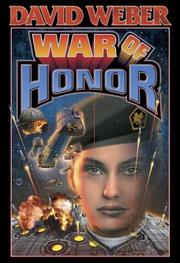
The most politically dense book in the series and the one people most often stall on. Push through: it sets up the Solarian League confrontation that the final third is about.
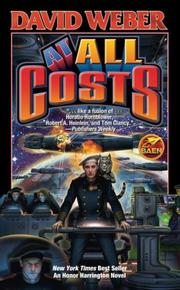
The big battle volume that resolves the Haven war, and the branch point. Crown of Slaves and the Torch sequence with Eric Flint, and The Shadow of Saganami and Storm from the Shadows on the Talbott Quadrant, all run alongside these years — read them here on a second pass, plus the four anthologies More Than Honor, Worlds of Honor, Changer of Worlds and The Service of the Sword.
How It Ends
IntermediateFinish the main line, understanding that the last three books assume the spin-offs and read thinner than the early volumes if you have skipped them.
▸ Study plan for this stage
Pace: Seven to nine weeks for about 2,120 pages: Mission of Honor 620, A Rising Thunder 557, Uncompromising Honor 947. Read them with an honest expectation set. These three assume you have read Crown of Slaves and The Shadow of Saganami and Storm from the Shadows, and if you have not, characters will arri
- Convergence: the branch sequences stop running parallel and merge into the main line, which is both the payoff of the structure and the reason these books are hard to read alone
- The Solarian League's collapse as an institutional failure rather than a military defeat — Weber's most sustained argument about how a system rots
- The Mesan Alignment as the retroactive explanation for events across the whole series, and the honest question of whether it is set up or bolted on
- A Rising Thunder as a bridge novel: what a bridge volume is for in a long series, and why it reads as thin even when it is doing necessary work
- The ending Weber actually writes in Uncompromising Honor, and what it closes versus what it deliberately leaves for the prequels
- Where to stop and why — the distinction between a series continuing and a setting continuing
- The second pass: the branch sequences and the four anthologies, read after the main line rather than inside it, and slotted at the At All Costs branch point
- Name three things in Mission of Honor that only make sense if you have read Crown of Slaves or The Shadow of Saganami. What did you do about them?
- What is A Rising Thunder actually accomplishing? State it in three sentences, then judge whether it needed 557 pages.
- Is the Mesan Alignment adequately set up by the earlier books, or is it retrofitted? Point to specific earlier volumes for your answer.
- What does Uncompromising Honor resolve, and what does it leave open on purpose?
- Having finished the main line, which of the branch sequences would you now read first, and what specifically do you want it to explain?
- Keep a list, while reading Mission of Honor, of every character or event you cannot place. When the book is done, look each one up and record which branch novel it came from. That list is your reading order for the second pass, derived from your own gaps rather than from someone else's chart.
- Compare the final fleet action of Uncompromising Honor against the engagement that ends On Basilisk Station, with your technology ledger beside you. Twenty-five years of in-universe escalation are visible in the two scenes, and this is the cleanest way to see it.
- Write down, before starting Uncompromising Honor, what you think the series must resolve to have an ending. Check it afterwards against what Weber closes.
- Now go back to At All Costs and read the branch sequences and the four anthologies from that point — Crown of Slaves and the Torch books, The Shadow of Saganami and Storm from the Shadows, then More Than Honor, Worlds of Honor, Changer of Worlds and The Service of the Sword. Reread Mission of Honor immediately afterwards and note how much of what read as unexplained now lands.
Next up: That is the main line complete and the correct place to stop; anything further in the Honorverse is a branch or a prequel, best approached as a second pass from the At All Costs split.

The Solarian League becomes the enemy and the branch sequences start bleeding into the main line. This is the first Honor novel where skipping Crown of Slaves and The Shadow of Saganami is genuinely felt.

The shortest late volume, and heavily dependent on Storm from the Shadows. Read it as the bridge it is rather than as a standalone.

The conclusion of the main sequence, and where to stop. What follows is prequel and spin-off material rather than continuation, so this is a real ending — the only one the series offers.