Make your own organic cleaners
This curriculum takes a beginner from zero knowledge of DIY cleaning all the way to a confident, science-informed maker of safe and effective homemade cleaners. Each stage builds on the last: first establishing practical recipes and safety habits, then deepening understanding of the chemistry and ingredients at work, and finally expanding into a whole-home, zero-waste lifestyle where natural cleaning is second nature.
Foundations: First Recipes & Safe Habits
BeginnerUnderstand the core ingredients (vinegar, baking soda, castile soap, essential oils) and make your first batch of safe, effective cleaners for every room.
▸ Study plan for this stage
Pace: 6–8 weeks total: Weeks 1–3 on "Clean Mama's Guide to a Healthy Home" (~20–25 pages/day), Weeks 4–8 on "The Organically Clean Home" (~15–20 pages/day, slower pace to allow time for hands-on recipe practice alongside reading).
- The 'Clean Mama' cleaning philosophy: a simple, rotating routine built around non-toxic, homemade products that reduce chemical exposure in everyday home life (from Clean Mama's Guide to a Healthy Home).
- The 'Dirty Dozen' toxic chemicals commonly found in commercial cleaners — learning to read ingredient labels and understanding why Rapinchuk advocates replacing them with natural alternatives (Clean Mama's Guide to a Healthy Home).
- The four core ingredients — distilled white vinegar (acidic, cuts grease and mineral deposits), baking soda (mild abrasive and deodorizer), castile soap (plant-based surfactant), and essential oils (antimicrobial properties + scent) — and how each one works chemically (both books).
- Safety rules and ingredient compatibility: why vinegar and baking soda should NOT be combined in a sealed spray bottle (neutralization reaction renders both ineffective), and which essential oils require dilution or are unsafe around pets and children (both books).
- Room-by-room cleaning logic from The Organically Clean Home: matching the right homemade formula to the right surface (e.g., acidic cleaners avoid marble/granite; castile soap for floors; baking soda paste for grout).
- Proper storage, labeling, and shelf-life of homemade cleaners: using dark glass or HDPE spray bottles, labeling with contents and date, and understanding that water-based recipes without preservatives should be used within 2–4 weeks (The Organically Clean Home).
- Building a 'natural cleaning kit' starter pantry: the minimum supplies needed to make every recipe in both books, including sourcing tips for quality castile soap and food-grade vs. cleaning-grade ingredients (The Organically Clean Home).
- Developing a sustainable habit loop: Rapinchuk's daily/weekly/monthly task framework from Clean Mama's Guide ensures homemade products are used consistently rather than sitting unused.
- After reading Clean Mama's Guide to a Healthy Home, can you name at least five 'Dirty Dozen' chemicals Rapinchuk flags as harmful, and explain what product category each typically appears in?
- What is the chemical reason you should not mix vinegar and baking soda together in a sealed spray bottle, and what does Rapinchuk recommend using each one for separately?
- Using The Organically Clean Home as your reference, which surfaces or materials should never be cleaned with an acidic (vinegar-based) cleaner, and what should you use instead?
- Can you describe the role of each of the four core ingredients — vinegar, baking soda, castile soap, and essential oils — in a homemade cleaner, including one specific recipe from either book that features each?
- What safety precautions does Rapinchuk outline for using essential oils in homemade cleaners, particularly regarding children, pets, and skin contact?
- How does the room-by-room structure of The Organically Clean Home help you decide which recipe to make first for your own home, and what factors (surface type, soil level, frequency of use) should guide that decision?
- **Pantry audit (Week 1):** Before making anything, go through your current cleaning products and use the 'Dirty Dozen' list from Clean Mama's Guide to a Healthy Home to flag any ingredients of concern. Write down which products you want to replace first — this becomes your personal recipe priority list.
- **Starter kit shopping (Week 2):** Using the supply lists in both Rapinchuk books, purchase your core ingredients (distilled white vinegar, baking soda, castile soap, and 2–3 essential oils such as lavender, tea tree, and lemon). Source dark glass spray bottles and label them before you begin.
- **First recipe batch — All-Purpose Spray (Week 3):** Make the all-purpose spray from Clean Mama's Guide to a Healthy Home. Use it for one full week on kitchen counters and bathroom surfaces. Keep a simple log: does it cut grease? Leave residue? How does it smell? Adjust the essential oil ratio based on your notes.
- **Room-by-room recipe week (Weeks 5–7):** As you read each room chapter in The Organically Clean Home, make and test that room's featured recipe before moving to the next chapter. Minimum targets: kitchen cleaner, bathroom scrub (baking soda paste), floor cleaner, and glass/mirror spray.
- **Safety & labeling drill (Week 4):** Label every bottle you make with: name of cleaner, full ingredient list, date made, and any safety notes (e.g., 'keep away from cats' for tea tree oil blends). Practice this as a non-negotiable habit from your very first batch.
- **Reflection journal entry (End of Stage):** Write a one-page summary answering: Which recipe from the two Rapinchuk books worked best in your home? Which ingredient surprised you most? What would you tweak? This reflection will directly inform your goals when you move into more advanced formulation in the next stage.
Next up: Mastering Rapinchuk's core four ingredients and room-by-room logic gives you a reliable safety baseline and hands-on confidence with basic formulas, which prepares you to explore a wider palette of natural ingredients (washing soda, borax, citric acid, herbs) and more specialized or advanced recipes in the next stage.

A perfect entry point: Rapinchuk introduces simple, non-toxic cleaning routines and basic DIY recipes in plain language, building confidence before any chemistry is introduced.

Follows naturally from her first book, expanding the recipe repertoire room by room and reinforcing safe ingredient habits so the beginner has a solid, practical toolkit.
Broadening the Pantry: Herbs, Oils & Natural Ingredients
BeginnerExpand beyond the basic four ingredients to include essential oils, herbs, and plant-based surfactants, and understand why each ingredient does what it does.
▸ Study plan for this stage
Pace: 4–5 weeks total: Week 1–2 — Read "DIY Natural Household Cleaners" by Matt Jabs (~20–25 pages/day, including re-reading ingredient profiles); Week 3–5 — Read "The Naturally Clean Home" by Karyn Siegel-Maier (~15–20 pages/day, pausing to cross-reference Jabs' ingredient notes and journal new ingredien
- The 'why' behind each ingredient: understanding the functional role (surfactant, antimicrobial, deodorizer, emulsifier, abrasive) that every herb, oil, or plant-based compound plays in a formula, as introduced by Matt Jabs
- Essential oils beyond fragrance: how oils like tea tree, lavender, eucalyptus, and lemon contribute active antimicrobial, antifungal, or antiviral properties rather than just scent, per both Jabs and Siegel-Maier
- Plant-based surfactants (e.g., castile soap, saponins): how they lift and suspend grease and dirt without synthetic detergents, as covered in Jabs' ingredient breakdowns
- Herbs as functional cleaning agents: Siegel-Maier's use of herbs such as thyme, rosemary, and lavender for their natural antiseptic and preservative qualities in homemade formulas
- Carrier and infusion methods: how to infuse herbs into vinegar or water bases to extract active compounds, a technique detailed in 'The Naturally Clean Home'
- Ingredient compatibility and incompatibility: which expanded pantry ingredients work synergistically (e.g., castile soap + essential oils) and which react poorly (e.g., castile soap + straight vinegar), a practical caution raised by Jabs
- Sourcing and quality standards: what to look for when buying essential oils, dried herbs, and plant-based surfactants to ensure purity and effectiveness
- Scaling and proportioning: how to adjust recipes from both books when adding new ingredients without destabilizing the base formula
- According to Matt Jabs in 'DIY Natural Household Cleaners,' what functional role does castile soap play, and why should it not be mixed directly with acidic ingredients like vinegar?
- Which essential oils does Karyn Siegel-Maier highlight in 'The Naturally Clean Home' for their antimicrobial properties, and what surfaces or cleaning tasks is each best suited for?
- How does Siegel-Maier's herb-infused vinegar method work, and what does the infusion process add that plain vinegar alone cannot provide?
- Drawing on both books, how would you categorize the following into their primary cleaning function: tea tree oil, washing soda, castile soap, dried thyme, and lemon essential oil?
- What quality indicators should you look for when purchasing essential oils for cleaning use, based on guidance from either Jabs or Siegel-Maier?
- How do the ingredient philosophies of Jabs and Siegel-Maier complement or differ from each other, and what does each author uniquely contribute to your expanded pantry knowledge?
- Ingredient audit & expansion list: After finishing Jabs, list every ingredient he introduces beyond the basic four (baking soda, vinegar, castile soap, lemon). Look each one up, confirm its functional role, and add it to a personal 'expanded pantry' reference card.
- Herb-infused vinegar project: Following Siegel-Maier's method in 'The Naturally Clean Home,' make one herb-infused vinegar (e.g., rosemary or thyme) and one plain vinegar cleaner. Use both on the same surface type and write a one-paragraph comparison of smell, performance, and ease.
- Essential oil function chart: Create a two-column chart — one column listing each essential oil mentioned across both books, the other describing its specific cleaning function (antimicrobial, antifungal, deodorizing, etc.) and the surface or task it targets.
- Compatibility test: Mix a small batch of castile-soap-based cleaner per Jabs' guidance, then deliberately add a small amount of vinegar to a separate portion. Observe and document what happens to the formula, connecting the result back to Jabs' explanation of why this combination is problematic.
- Recipe remix: Choose one recipe from 'DIY Natural Household Cleaners' and one from 'The Naturally Clean Home' that clean the same surface (e.g., bathroom tile). Compare the ingredient lists side by side, note where they overlap and diverge, then write your own hybrid recipe with a written rationale for each ingredient you chose.
- Sourcing scavenger hunt: Visit one local store and one online retailer; find three essential oils and one plant-based surfactant mentioned in either book. Evaluate each product against the quality criteria discussed by the authors (purity, labeling, botanical name listed) and record your findings.
Next up: Mastering the function and compatibility of this expanded pantry — herbs, essential oils, and plant-based surfactants — gives the reader the ingredient literacy needed to confidently tackle room-by-room and surface-specific formulation in the next stage, where recipes become more targeted and technically demanding.

Jabs (founder of DIYNatural.com) bridges the gap between simple recipes and ingredient knowledge, explaining the role of each component so readers stop following recipes blindly and start understanding them.
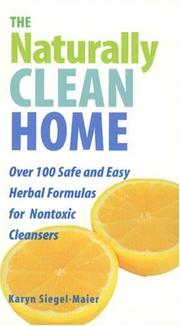
Introduces herbal and botanical ingredients alongside the staple pantry items, widening the learner's palette and explaining the antimicrobial and aromatic properties of common plants.
The Chemistry Behind the Clean
IntermediateGrasp the basic science — pH, surfactancy, microbial action, and ingredient interactions — so you can troubleshoot, adapt, and create your own formulas safely.
▸ Study plan for this stage
Pace: 2–3 weeks, ~20–25 pages/day — Soap and Cosmetic Labeling is a focused, reference-style text (~200 pages), so a relaxed but consistent pace allows time to cross-reference ingredient lists, re-read regulatory sections, and take notes on formulation chemistry as it appears in labeling context.
- pH and its role in product safety and stability — understanding how acidic vs. alkaline ingredients behave and why pH ranges matter for skin-safe and surface-safe cleaners
- Saponification chemistry — how fats and oils react with alkalis (NaOH/KOH) to produce soap, and what the resulting molecular structure means for cleaning action
- Surfactancy basics — the hydrophilic/hydrophobic nature of soap and detergent molecules, how they lift oils and suspend dirt in water, and how this is reflected in ingredient naming conventions
- INCI (International Nomenclature of Cosmetic Ingredients) naming system — decoding standardized ingredient names to identify the chemical function and origin of each component
- Ingredient interaction and incompatibility — recognizing which ingredient classes conflict (e.g., cationic vs. anionic surfactants, acids vs. bases) as revealed through label analysis
- Regulatory definitions that encode chemistry — how legal distinctions between 'soap,' 'cosmetic,' and 'drug' are rooted in the product's mechanism of action and active chemistry
- Reading labels as a formulation diagnostic tool — using declared ingredient order (descending concentration) and INCI names to reverse-engineer and evaluate a formula's chemistry
- Safety and disclosure obligations tied to chemical function — understanding why certain ingredients (preservatives, antimicrobials, fragrance) require special label treatment based on their chemical activity
- What is saponification, and how does the chemical reaction between an alkali and a fatty acid produce a molecule capable of cleaning — and how would you identify the resulting soap on a product label using INCI nomenclature?
- How does the descending-order ingredient list on a label allow you to infer the approximate pH profile and dominant chemistry of a cleaning product?
- What is the functional difference between a true soap and a synthetic detergent (syndet), and how does Gale's labeling framework help you distinguish them — both legally and chemically?
- Why do certain ingredient combinations (e.g., an acid preservative in a high-pH soap base) signal a formulation problem, and how can label reading surface these incompatibilities before you ever make the product?
- How do regulatory category definitions (soap vs. cosmetic vs. drug) reflect the underlying chemistry of how a product achieves its cleaning or antimicrobial effect?
- Using only the information available on a product label as described by Gale, how would you assess whether a homemade natural cleaner is likely to be microbiologically stable?
- Label Decoding Sprint: Collect 5–10 labels from commercial natural cleaning products (dish soap, all-purpose spray, hand soap). Using Gale's INCI guidance, identify every ingredient's chemical class (surfactant, alkali, acid, preservative, fragrance, etc.) and map the likely pH range and cleaning mechanism of each product.
- Saponification on Paper: Write out the saponification reaction for two different oils (e.g., coconut oil and olive oil). Look up their INCI names and the INCI name of the resulting soap. Practice writing a compliant ingredient declaration for each hypothetical bar soap.
- Incompatibility Matrix: Create a simple 2-column table of ingredient pairs that should NOT appear together in a formula (e.g., high-pH base + acid-activated preservative, cationic conditioner + anionic surfactant). Source each pair from the chemistry principles discussed in Gale's labeling and ingredient sections.
- Regulatory Category Sorting Exercise: Write brief descriptions of five hypothetical homemade cleaning products (varying claims and mechanisms). Using Gale's definitions, classify each as soap, cosmetic, or drug — then explain in one sentence what chemical or functional property drove the classification.
- DIY Label Draft: Formulate a simple 4–6 ingredient natural all-purpose cleaner on paper (e.g., water, castile soap, white vinegar, essential oil — or a corrected, chemically compatible version). Draft a full compliant label for it using Gale's templates, including proper INCI names in descending order, and flag any chemical incompatibilities you discover in the process.
- Reflective Formula Journal: After completing the book, write a one-page 'chemistry profile' for one cleaning product you already make or use at home — documenting its likely pH, surfactant type, preservation strategy, and any label claims — using Gale's framework as your analytical lens.
Next up: Mastering the chemistry encoded in labels and ingredient lists gives the reader a precise scientific vocabulary and a safety-first mindset, which is the essential foundation for confidently moving into hands-on formulation stages where they will design, test, and refine their own natural cleaning recipes from scratch.

Though focused on labeling, Gale's clear explanations of ingredient classifications and safety rules build the precise vocabulary needed to read and evaluate any cleaning formula critically.
Whole-Home & Zero-Waste Mastery
ExpertIntegrate natural cleaning into a fully sustainable, zero-waste household system — including laundry, personal care, and waste reduction — and confidently formulate your own products.
▸ Study plan for this stage
Pace: 4–5 weeks total: Weeks 1–3 cover "Zero Waste Home" by Bea Johnson (~20–25 pages/day, reading all five Rs framework chapters plus the room-by-room sections); Weeks 4–5 cover "Make Your Place" by Raleigh Briggs (~15–20 pages/day, a lighter, illustrated guide best read slowly with notebook in hand for
- Bea Johnson's 5 Rs hierarchy (Refuse, Reduce, Reuse, Recycle, Rot) as the governing framework for a zero-waste household system
- Room-by-room audit methodology from 'Zero Waste Home' — systematically identifying and eliminating single-use products in the kitchen, bathroom, laundry, and beyond
- Bulk buying, package-free sourcing, and supply-chain thinking as prerequisites for a truly zero-waste cleaning routine
- The philosophy of multi-purpose, minimal-ingredient formulations championed in 'Make Your Place' — fewer ingredients, broader utility
- DIY recipes from 'Make Your Place' for cleaners, personal-care products, and home remedies using accessible ingredients (castile soap, baking soda, vinegar, essential oils, herbs)
- Integration of personal-care product formulation (deodorant, lotion, tooth powder) into the same zero-waste system as household cleaners
- Waste-stream awareness: understanding what actually gets recycled vs. landfilled, and designing your product choices around that reality ('Zero Waste Home')
- Confident independent formulation: adapting and scaling recipes, substituting ingredients, and troubleshooting results based on principles rather than rigid recipes
- According to Bea Johnson in 'Zero Waste Home,' what is the correct order of the 5 Rs and why does the sequence matter — specifically, why does 'Refuse' come before 'Reduce'?
- How does 'Zero Waste Home' recommend handling the bathroom and laundry room to eliminate packaged cleaning and personal-care products, and what specific swaps does Johnson model in her own household?
- What core pantry ingredients does Raleigh Briggs rely on throughout 'Make Your Place,' and what is the underlying rationale for keeping the ingredient list so short?
- How do the philosophies of 'Zero Waste Home' and 'Make Your Place' complement each other — where does Johnson's systemic, lifestyle-level thinking hand off to Briggs's hands-on formulation guidance?
- Using principles from 'Make Your Place,' how would you adapt a basic all-purpose cleaner recipe if you needed to increase its degreasing power or make it safe for a wood surface?
- What strategies does 'Zero Waste Home' offer for navigating social, logistical, or financial obstacles to zero-waste living, and how do these apply to sustaining a homemade-products routine long-term?
- Whole-home waste audit: Before finishing 'Zero Waste Home,' walk every room with a notepad and list every packaged cleaning or personal-care product. After reading, map each item to a Johnson-style swap or a Briggs recipe — this makes the 5 Rs framework tangible and personal.
- Batch formulation day: Using recipes from 'Make Your Place,' spend one afternoon making at least four products from different categories (e.g., an all-purpose spray, a scrubbing powder, a deodorant, and a lip balm or lotion). Document your process, note any substitutions, and evaluate results after one week of use.
- Ingredient pantry consolidation: Cross-reference every recipe in 'Make Your Place' and highlight the ingredients that appear most frequently. Purchase only those high-frequency staples in bulk and package-free where possible, applying Johnson's Reduce and Refuse principles to your own supply chain.
- Recipe adaptation challenge: Take one base recipe from 'Make Your Place' and deliberately create three variations — one for a different surface or use case, one with a substituted ingredient, and one scaled up to a larger batch. Write brief notes on how and why you changed each variable.
- Zero-waste laundry overhaul: Using guidance from both books, replace your current laundry routine entirely for two weeks — homemade detergent (Briggs), line-drying where possible, and package-free sourcing (Johnson). Log any friction points and problem-solve them using principles from the texts.
- Personal sustainability manifesto: After completing both books, write a one-page household cleaning and personal-care policy for your own home — listing your approved ingredient pantry, your sourcing rules (bulk, package-free, local), your non-negotiable swaps, and one area still in progress. This synthesizes both books into a living document you can revise over time.
Next up: Mastering whole-home integration and independent formulation in this stage gives the reader the confidence and systems-thinking foundation needed to explore deeper topics such as advanced cosmetic chemistry, community-scale zero-waste practices, or teaching and sharing these skills with others.

Johnson's landmark book reframes cleaning products within a whole-home waste-reduction philosophy, pushing the advanced learner to question every packaged product and replace it with a homemade alternative.

A concise, practical zine-style guide to homemade cleaners, personal care, and remedies that challenges the learner to apply everything learned and improvise confidently with minimal ingredients.
Discussion
Keep reading
Paths that share books, cover the same subject, or open a related topic.