Harold Pinter in Order: Which Play to Read First
Pinter's plays are short, cheap to buy and easy to read in an evening, which is exactly why people read them in the wrong order and conclude that nothing happens in them. Something is always happening — a territory is being taken — and the way to see it is to start with the two plays where the intruder is physically present, then move to the sexual and marital plays, then the memory plays, and only then the late political work, which is unbearable if you have not learned to read his silences first.
The Two Rooms to Start In
BeginnerLearn what a Pinter play is doing: a closed room, an arrival, and a struggle for possession conducted entirely through evasion. Learn also to treat the marked pauses as stage directions with content.
▸ Study plan for this stage
Pace: Two weeks. Each play is an evening's reading, but read each twice — once straight through for the plot, once slowly with the pauses observed as written. The second reading is where the stage becomes visible, and it takes about as long as the first.
- The room as the unit: one enclosed space, someone already in it, and someone arriving who wants it — the structure both plays share and every later play varies
- Territory as the actual subject. Nothing metaphysical is at stake in The Caretaker; a bed, an attic and a job are, and following the property is how you follow the plot
- The three marked levels of silence — the comma, the Pause and the Silence — which Pinter wrote deliberately and which carry as much information as the lines around them
- Davies and his papers at Sidcup, an errand endlessly deferred, which shows how Pinter uses a stated intention as a character's defence rather than a plan
- Aston's speech about the hospital in The Caretaker: the one long uninterrupted monologue, placed where it is because everything around it is evasion
- Motive withheld as design in The Birthday Party — Goldberg and McCann come for Stanley and you are never told why, and the play is not being obscure about it
- The interrogation scene as a Pinter set piece: two questioners, a rhythm that accelerates, and questions that contradict each other on purpose
- In The Caretaker, who wins? Track the possession of the room and the possession of the job separately and see whether the two answers agree.
- Why should The Birthday Party be read second rather than first? Answer from what you learned in The Caretaker that made it legible.
- Take Aston's hospital monologue. Why is it the only speech of its kind in the play, and what does it change about how you read Mick?
- Goldberg and McCann's interrogation of Stanley contains questions with no possible answer. What are they for, if not information?
- Pick three Pauses and three Silences from either play. Can you state what is happening in each? If not, that is where to reread.
- Read The Caretaker once straight through, then a second time reading every Pause and Silence at its full written length. Time the difference; it will be substantial and the point is that this is the play.
- Chart Davies's stated plans against what he actually does in each scene. Sidcup should appear on the list repeatedly and never happen.
- Read the interrogation scene of The Birthday Party aloud, taking both parts. The rhythm is the argument and it does not survive silent reading.
- Write 200 words on what Goldberg and McCann want, using only evidence from the text. The exercise is worth doing precisely because the text will not let you finish it.
Next up: With the room, the intruder and the weight of the silences understood, you can watch Pinter keep the structure and replace the intruder with a marriage.
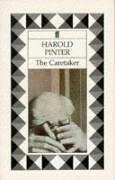
The right first Pinter, not the more famous The Birthday Party. Three men, one attic, and a fight over who gets to stay that is legible on a first reading without any theory of menace attached.

Read second. It is the same structure with the motives withheld — two men arrive at a seaside boarding house to collect a lodger, and you are never told why. Having The Caretaker behind you makes the withholding read as design rather than obscurity.
The Short Plays and the Couples
IntermediateSee Pinter turn from intruders to marriages, and recognise the recurring move where a couple's shared story about themselves turns out to be a negotiation.
▸ Study plan for this stage
Pace: One week, since both are short. Read A Slight Ache first and, if you can, listen to it as well as read it — it was written for radio and the fact that the match-seller is never heard is designed for an audience who cannot see him. The Lover is a single sitting and rewards an immediate second pass.
- The silent figure as the pressure that reveals a marriage: the match-seller at the gate never speaks, and Edward and Flora disintegrate entirely on their own
- Radio as the original medium of A Slight Ache, which makes the silence of the third character absolute rather than merely notable
- The reversal in A Slight Ache, where the couple's positions are swapped by the end without either having been argued out of anything
- The Lover's premise: a husband and wife conduct an affair with each other in assumed roles, so the play's marriage and the play's adultery are the same relationship
- Role-play as a negotiated arrangement with rules, and what happens when one party tries to change the rules — the plot of The Lover in one line
- The turn from intruders to couples, and the discovery that a marriage is itself a contested territory of the kind The Caretaker staged with three men and an attic
- Comedy as a Pinter weapon rather than a relief — The Lover is genuinely funny and that is what makes its last movement land
- The match-seller says nothing and does nothing. What, precisely, is he doing to Edward and Flora?
- By the end of A Slight Ache, what has changed between the two spouses, and can you point to the moment it happened?
- In The Lover, who proposes the change to the arrangement and why? What does the other one want instead?
- Is the role-play in The Lover a way of keeping the marriage alive or a way of managing its failure? Argue both readings from the text.
- Compare Flora's final position with Ruth's arrival in the next stage. What has Pinter established here that the major plays assume?
- Read A Slight Ache with your eyes shut for one scene, having someone read it aloud, or listen to a recording. Then note what changed about the match-seller.
- Write out the rules of the arrangement in The Lover as the couple appear to understand them, then mark which rule is broken and by whom.
- Take one exchange from The Lover and rewrite it with the role-play removed. What is left is the play's actual subject and it should be uncomfortable.
- Compare the function of the silent match-seller with the function of Aston's silence in The Caretaker in 200 words.
Next up: Having seen a marriage treated as contested ground, you are ready for the play where a family renegotiates a wife in front of her husband and calls it a discussion.

Originally a radio play, and the purest demonstration of the method: a silent match-seller stands at the gate and a marriage disintegrates around him without him saying a word.
A suburban husband and wife conduct an affair with each other under assumed roles. Short, funny and genuinely disturbing, it is the hinge between the early menace plays and the sexual politics of The Homecoming.
The Major Plays
IntermediateRead the run of full-length plays Pinter is judged on, and follow his shift from present-tense threat to contested memory as the source of power.
▸ Study plan for this stage
Pace: Six to eight weeks, roughly a play a week with a second reading of each. The Homecoming needs two weeks on its own. Landscape and Silence are very short and go together in a single evening. Old Times, No Man's Land and Betrayal are each an evening plus a rereading. Keep the given order — it tracks t
- The Homecoming's proposition scene, in which a household discusses an arrangement for Ruth while her husband is in the room, and the fact that Ruth negotiates terms rather than being disposed of
- Teddy the philosophy professor and his stated intellectual detachment, which the play tests and finds to be exactly what he says it is
- The turn to memory in Landscape and Silence: characters who speak in the same space without addressing each other, so that the audience assembles the relationship they will not
- Old Times' irreconcilable accounts — three people, two versions of a shared past, and no authority in the play capable of settling it
- Memory as an instrument of power rather than a faculty: whoever's account is accepted controls the present, which is the discovery the late plays run on
- No Man's Land recombining the intruder structure with the memory play — two ageing writers, two menacing servants, one long night in Hampstead
- Betrayal's reversed chronology, so each scene is read through knowledge the characters do not yet have, which makes dramatic irony the play's whole mechanism
- The recurring three-hander shape: two men and a woman, in which the woman turns out to hold the balance more often than a first reading suggests
- In The Homecoming, what does Ruth get? Follow the terms she names rather than the terms she is offered.
- Teddy watches and does not intervene. Is that characterisation, thesis, or evasion on Pinter's part? Argue it from a specific scene.
- Old Times gives you two incompatible pasts. Is there any evidence in the text that settles which is true — and does the play want there to be?
- How does No Man's Land use Briggs and Foster? Compare their function with Goldberg and McCann's in The Birthday Party.
- Betrayal runs backwards. Name one scene that would be inert in forward order and say exactly what the reversal supplies.
- For The Homecoming, write down what each of the five characters wants at the start and what each has by the end. It is a one-page table and it is the play.
- Read Landscape and Silence in a single sitting and mark every point where one character's speech could be answering another's. Then note that none of them is.
- Take Old Times and build two timelines, one per version of the past, listing the events each requires. Where they conflict, note whether the conflict is factual or interpretive.
- Reorder Betrayal chronologically on paper and read the scene list in that order. Write 200 words on what is lost, which is the argument for the play's structure.
- For any one of these plays, count the lines given to the woman against the lines given to the men, then reconsider who is directing the scene. The count is usually the opposite of the impression.
Next up: You can now read a silence, a contested memory and a negotiation, which is exactly the equipment the late political plays assume and never explain.
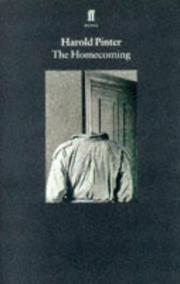
The masterpiece and the most shocking thing he wrote: a philosophy professor brings his wife to meet his father and brothers in North London, and by the final scene the household has renegotiated her entirely. Everything the earlier plays imply is stated here.
The turn to memory, in two short pieces where characters speak past each other about a past that will not reconcile. Slight-looking and structurally decisive; this volume pairs them as they are usually published.

Three people and two incompatible accounts of a shared past, with no way to adjudicate. Read after Landscape, because it makes the memory technique carry a whole evening.

Two ageing writers drink through a night in Hampstead while two menacing servants circle. It brings back the intruder structure of The Caretaker inside the memory play, which is why it needs both behind it.

An affair told backwards, from its bitter end to the moment it began, so every scene is poisoned by what you already know. His most accessible major play and the best possible end to this stage.
Political Pinter
IntermediateConfront the late plays about torture and state power, and be able to argue whether the compression is a strength or the point at which drama becomes protest.
▸ Study plan for this stage
Pace: Two weeks. These are the shortest works on the path — One for the Road and Mountain Language are twenty minutes and less respectively, and Ashes to Ashes runs about forty-five. The reading time is trivial; the sitting-with is not. Read one per evening at most, in the given order, and reread Ashes to
- The domestic menace made literal: One for the Road puts an interrogator and a family in a room, and every technique from The Birthday Party's interrogation is present with the motive now stated
- Nicolas's charm as the play's method — he is courteous, funny and entirely explicit, so the ambiguity the early plays traded on is deliberately removed
- Mountain Language's premise, a state that forbids a minority to speak its own tongue, staged at a prison gate in four brief scenes
- Compression pushed to its limit, and the live critical question this stage exists to pose: whether that compression is a dramatic achievement or the point at which a play becomes a statement
- Ashes to Ashes as the synthesis — a marital conversation in a quiet room in which one partner's account of a lover shades, without transition, into imagery of the camps
- Devlin's attempts to hold the conversation down, which reproduce exactly the interrogator's moves from One for the Road inside a marriage
- That Pinter is not adjudicated here: informed readers disagree about whether the late work is his boldest or his thinnest, and the disagreement is worth holding open
- One for the Road removes the ambiguity of the early plays. Does that make it stronger or weaker as drama? Set out both cases before answering.
- Nicolas is charming and explicit at the same time. What does the charm accomplish that menace alone would not?
- Mountain Language is under twenty pages. Is there anything in it that a longer play would have supplied, and does its absence cost the piece anything?
- In Ashes to Ashes, what is Devlin doing? Compare his questions with Nicolas's and with Goldberg's, and say what the resemblance implies.
- Ashes to Ashes never names a historical event. Given that, on what grounds does a reader assert what Rebecca is describing — and should the play be read as making that assertion?
- Read One for the Road and Mountain Language on consecutive evenings, then write 300 words on what the second one strips out of the first and whether the loss is a gain.
- Take Devlin's questions in Ashes to Ashes and set them beside Nicolas's in One for the Road, line for line. The correspondence is the reason this play belongs last.
- Write the case that the late political plays are Pinter's strongest work, then the case that they are his weakest, at 300 words each, citing scenes in both. Do not decide in writing.
- Return to a Pause in The Caretaker and a Pause in Ashes to Ashes and write two paragraphs on whether they are doing the same thing. This is the best available test of whether the path worked.
Next up: This is the end of the path. The obvious next move is to see one of these staged rather than read, since everything above is written for actors and the silences are timed to be endured in a room with other people.

Twenty minutes in an interrogation room with a charming torturer. The domestic menace of the early plays turned literal and stripped of ambiguity — the shift is startling only if you read it in sequence.

Even shorter: a state forbids a minority to speak its own tongue at a prison gate. Read directly after One for the Road, as the same argument reduced to its bones.

The late synthesis and the best of the political work — a woman's account of a lover shades into imagery of the camps while her husband tries to hold the conversation down. It only works because it reunites the political material with the marital plays, so it belongs last.