Georgia O'Keeffe: The Best Books to Read, in Order
O'Keeffe's life divides cleanly — Texas and Virginia, then two decades in New York inside Alfred Stieglitz's circle and his marketing of her, then forty years in New Mexico working mostly alone — and the literature divides the same way. This path starts with the biographies, because the standard readings of her paintings are all biographical readings and it is worth seeing them made explicitly. Then her own writing, so you hear her flatly refusing most of what has been said about her work. Then Stieglitz, who is unavoidable and whose photographs of her did as much to build her public image as her own paintings did. Then the paintings themselves and the New Mexico years.
The Biographies
BeginnerGet the life in sequence and see three different writers reach three different verdicts on the same events.
▸ Study plan for this stage
Pace: 5-6 weeks. Robinson's Georgia O'Keeffe is 639 pages and Lisle's Portrait of an Artist 447, so give each about two weeks at 40-50 pages a day; Full Bloom (480 pages) reads faster because you will already know the events and will be reading for the difference in verdict. All three cover the 1946 death
- The five-part shape of the life every biography follows: Sun Prairie and the art schools, Texas, the Stieglitz years in New York and at Lake George, the shift to New Mexico from 1929, and Abiquiu after 1949
- Why 1915 is the hinge — the Columbia, South Carolina charcoals that Anita Pollitzer showed Stieglitz without asking
- The difference between a biography written from documents and one written from interviews: Lisle worked in 1980 against O'Keeffe's wishes and without the archive, Robinson after access widened
- O'Keeffe's 1933 breakdown and hospitalisation, and how differently the three books weight Stieglitz's affair with Dorothy Norman as a cause
- Reputation as something managed: Drohojowska-Philp's reading of the black clothes, the granted interviews and the refused ones as deliberate self-construction
- The recurring problem of the flower paintings — every biographer must decide whether to accept O'Keeffe's flat denial of the sexual reading or to override it
- Juan Hamilton's arrival in 1973 and the contested last decade, which the three books handle with visibly different degrees of caution
- What did Stieglitz actually do with the 1915 charcoals, and why does the account of that episode differ between Lisle and Robinson?
- Which specific stories in Lisle does Robinson correct, and what new material made the correction possible?
- How does Full Bloom explain O'Keeffe's move to New Mexico differently from Robinson — as escape, as career decision, or as both?
- Where does each biographer stand on the sexual reading of the flowers, and does that position come from evidence or from a prior commitment?
- What does each book do with the years after 1971, when O'Keeffe's central vision failed and Hamilton took over much of her practical life?
- Pick one event — the 1933 hospitalisation — and read all three accounts of it back to back, noting for each what is cited as evidence and what is inferred.
- Make a two-column list from Lisle of claims that Robinson either drops or explicitly contradicts; that list is the practical measure of what the archives changed.
- Mark every passage in Full Bloom where Drohojowska-Philp treats a public statement of O'Keeffe's as strategy rather than fact, then check what the same statement is used for in Robinson.
- Build a one-page chronology from Robinson with columns for where O'Keeffe was living, what she was painting and who was in the household, and keep it beside you for the rest of the path.
Next up: Having watched three writers explain the paintings by way of the life, you are ready to hear O'Keeffe reject exactly that procedure in her own words.
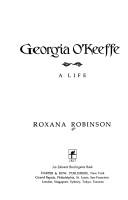
The standard biography, thorough and evenhanded, covering the whole life from Sun Prairie to Abiquiú. Start here: it is the book the others are arguing with. Our catalogue also returns this record for the title Georgia O'Keeffe: A Life, so it appears once.
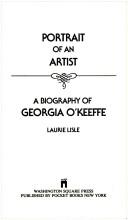
The first serious biography, published in 1980 while O'Keeffe was still alive and against her wishes. Less complete than Robinson and valuable precisely for that — it shows what could be assembled before the archives opened, and it is the source of several stories that later work had to correct.
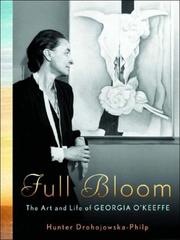
The most sceptical of the three, and the most interested in O'Keeffe as a manager of her own reputation — the interviews, the black clothes, the refusals. Read it third, once you know the standard account well enough to see what it is pushing against.
Her Own Voice
BeginnerRead O'Keeffe on her own work, and notice how consistently she rejects the readings the biographies rely on.
▸ Study plan for this stage
Pace: 2-3 weeks. These are short and largely visual: Georgia O'Keeffe, her own 1976 book of plates with facing commentary, is 158 pages; Some Memories of Drawings 102; Art and Letters, the Cowart and Hamilton National Gallery volume, 320. Read the two picture books in single sittings and let the letters r
- O'Keeffe's own critical vocabulary — where she stood, what the light was doing, how big the thing was — and its refusal of symbolic explanation
- The 1915-16 charcoals as the deliberate clearing-out she describes in Some Memories of Drawings: putting away colour and starting from shapes in her head
- Her repeated, explicit denial that the flower paintings are about sex, and the fact that she made the denial for fifty years without it taking
- The letters as a different register from the public statements: practical, funny, sharp about other painters, and much less guarded
- Cropping and scale as her stated method — enlargement so that a viewer is forced to look at something they would otherwise walk past
- The gap between an artist's account of her intentions and a critic's account of her meaning, and what weight each deserves
- In Georgia O'Keeffe, what does she actually say about how a given picture came to be made, and how often does she mention meaning at all?
- What does Some Memories of Drawings claim she was trying to do in 1915, and does that match what Robinson said she was doing?
- Which of the biographers' interpretations does her own commentary directly contradict, and which does it merely fail to support?
- How does the voice in Art and Letters differ from the voice in the plate books — and which is likelier to be the everyday one?
- If she denied the sexual reading consistently, on what grounds do critics keep it? Is any of that ground in these three books?
- Take five plates in Georgia O'Keeffe, read her note beside each, then find the same painting discussed in Robinson and write down what the biography adds and what it invents.
- Read Some Memories of Drawings straight through with the 1915 charcoals in front of you, and try to state in one sentence what she says she was removing from her work.
- Pull ten letters from Art and Letters written in a single year and compare their tone to any public statement she made in that same year.
- Write a paragraph in her plate-commentary register about one painting — location, scale, what she was looking at, nothing else — and notice what the constraint makes impossible to say.
Next up: Her own account is deliberately silent about the machinery that made her famous, which is the next stage: Stieglitz, the gallery and the photographs.

Her own book of plates with her commentary beside them — terse, concrete, largely about how a picture got made and where she was standing. The primary document of this path, and the direct rebuttal to the sexual readings of the flower paintings she spent fifty years denying.
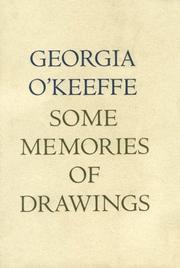
A smaller companion in the same voice, on the early charcoals and watercolours that first got Stieglitz's attention. Read it second: those 1915 drawings are where the whole career starts, and this is her account of making them.
The National Gallery volume edited by Cowart and Juan Hamilton, pairing a large body of correspondence with the paintings. This is where her ordinary written voice lives — practical, funny, sharp about other artists — and it is the fullest published selection of her letters other than the Stieglitz correspondence.
Stieglitz
IntermediateUnderstand the partnership that made her famous — the gallery, the promotion, the photographs, and the marriage — from more than one side.
▸ Study plan for this stage
Pace: 6-7 weeks, and the heaviest stage on the path. Sarah Greenough's My Faraway One Vol. 1 is 832 pages of annotated letters covering 1915-1933 — read it in sections of a few months at a time rather than straight through. Benita Eisler's O'Keeffe and Stieglitz is 546 pages. Stieglitz's Georgia O'Keeffe:
- The primary-source distinction: Greenough's volume is the correspondence itself with apparatus, while Eisler is an interpretation built on top of it
- Stieglitz as dealer and promoter — 291, the Intimate Gallery, An American Place — and the invention of an American modernist market
- The composite portrait: hundreds of photographs made across twenty years, exhibited in 1921, as an image-making project separate from her painting
- How the 1921 exhibition set the terms in which her own paintings were then read
- The Lake George household and its effect on what she could paint and when
- Eisler's confidence versus the letters' ambiguity — a case study in how much interpretation a document will actually bear
- Two Lives as the first exhibition to hang his photographs and her paintings together, and what that juxtaposition argues
- In the 1915-1918 letters, who is pursuing whom, and how does that read against the version in the biographies?
- What did Stieglitz's promotion of O'Keeffe consist of concretely — pricing, exhibition scheduling, press language — as visible in the correspondence?
- Where does Eisler assert a motive that the letters in Greenough leave genuinely open?
- What do the 1921 photographs do to a viewer's reading of the flower paintings made in the same decade?
- After Two Lives, can you say what each of them took from the other formally, rather than biographically?
- Choose one contested episode — the Dorothy Norman years — read the relevant run of letters in Greenough first, then Eisler's chapter on it, and mark every sentence of Eisler's that the letters do not support.
- Go through Georgia O'Keeffe: A Portrait and sort the images into hands, face, torso and full figure; the proportions are themselves an argument about what the project was.
- Lay Two Lives open and pick three pairings of a photograph with a painting, and write down what each pairing is claiming; then check whether the catalogue essays by Rathbone, Shattuck and Turner claim the same thing.
- Track one word — 'work' — through fifty consecutive letters in Greenough and note who uses it about whose art, and how that ratio shifts after 1929.
Next up: With the promotion machinery and the public image accounted for, the last stage sets both aside and looks at what she actually painted, in the place she painted most of it.

The Stieglitz-O'Keeffe correspondence, edited and annotated by the National Gallery's photography curator. Our catalogue holds Volume 1, covering 1915 to 1933 — the courtship, the marriage and the crisis years — which is the essential half; a second volume continues the letters.
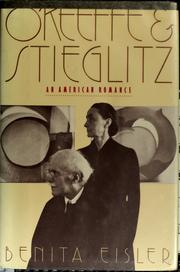
A dual biography built around the relationship as an artistic and commercial arrangement as much as a marriage. Read it after the letters so you can check its interpretations against the primary text — Eisler is confident where the letters are ambiguous.
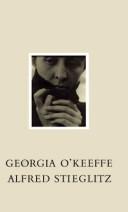
The composite portrait itself: hundreds of photographs of O'Keeffe made over twenty years, hands and face and body, exhibited to considerable scandal in 1921. It is the other half of how her public image was constructed, and it belongs in a reading list about her as much as any painting does.

The exhibition catalogue that hung her paintings and his photographs together for the first time, with essays by Belinda Rathbone, Roger Shattuck and Elizabeth Hutton Turner. The best single place to see the visual conversation between them. Richard Whelan's biography of Stieglitz is the next step if the man himself becomes the interest.
The Work and New Mexico
IntermediateLook closely at the paintings and drawings, and at the forty years in the desert that produced most of the images people know.
▸ Study plan for this stage
Pace: 4 weeks. Barbara Buhler Lynes's Georgia O'Keeffe and New Mexico (143 pages), One Hundred Flowers (192), Ruth Fine's O'Keeffe on Paper (143) and Wanda Corn's Georgia O'Keeffe: Living Modern (320) are all illustrated volumes, so the page counts understate the time — budget a week each and give the pla
- How literal the New Mexico paintings are: Lynes matches images to Ghost Ranch, the Pedernal and the Abiquiu house with photographs of the sites
- Scale and cropping as the actual subject of the flower paintings, visible only in large reproduction
- The works on paper as the clearest record of her formal decisions — charcoal, watercolour and pastel across the whole career, not just the early years
- Catalogue raisonne thinking: what it means for Lynes to know the full body of work when she selects fifty images
- Corn's argument that the clothes, the two houses and the photographs are one continuous modernist project rather than biography
- The difference between a museum study written to an argument (Corn, Fine) and a picture book assembled to be looked at (One Hundred Flowers)
- Which specific landscape features recur in the New Mexico paintings, and what does Lynes's site photography show about how much she altered them?
- Seeing a hundred flower paintings in sequence at large scale, what changes about the sexual reading — does it weaken, or does it just become one reading among several?
- What do the drawings in O'Keeffe on Paper show about her working method that the oils conceal?
- What is Corn's evidence that the wardrobe was deliberate rather than merely practical, and is it the same evidence Drohojowska-Philp used?
- After all four books, which paintings do you now think are badly served by a biographical reading?
- Take three paintings reproduced in Lynes, find her photograph of the corresponding site, and write down every change O'Keeffe made — removed, simplified, recoloured, moved.
- Work through One Hundred Flowers noting only where each image is cropped relative to a whole plant, and see whether the cropping decisions fall into a small number of types.
- Pair five drawings in O'Keeffe on Paper with the finished oils they precede and describe what was resolved between the two.
- Read Corn's chapter on the wardrobe, then go back to the Stieglitz portrait photographs from the previous stage and decide which of them Corn's argument explains and which it does not.
- Write a 300-word account of one painting using only what is in these four books and nothing from the biographies, and see how far you get.
Next up: This is the end of the path; Christine Taylor Patten's Miss O'Keeffe, a memoir by her night nurse, and Richard Whelan's biography of Stieglitz are the two obvious next books depending on which half of the story held you.

The New Mexico years by the compiler of her catalogue raisonné, matching paintings to the specific places — Ghost Ranch, the Pedernal, the Abiquiú house — with photographs of the sites. Start the stage here; the landscape is not generalised, and this shows how literal much of it is.

A hundred flower paintings reproduced large, which is the only way to judge the argument about them: at scale the cropping and the colour transitions do most of the work, and the biographical reading looks thinner than it does in reproduction.
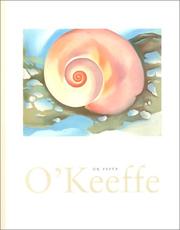
The National Gallery study of the works on paper across the whole career — charcoals, watercolours, pastels. The corrective to seeing her only as an oil painter, and the drawings are where her formal decisions are easiest to follow.

The Brooklyn Museum's study of her clothing, houses and self-presentation, treating the wardrobe and the photographs as a deliberate modernist project. The right last book: it takes what Drohojowska-Philp suspected and Stieglitz photographed and makes it a scholarly argument. Christine Taylor Patten's Miss O'Keeffe, a memoir by her night nurse, is the small personal footnote to it.