Fruits Basket Reading Order: Where to Start and What Order to Read It In
Fruits Basket is one continuous story by Natsuki Takaya, and the only real question is which edition to buy. It ran to 23 single volumes; the later Collector's Edition reprints exactly the same material in 12 larger books, so a reader who mixes the two will pay twice for the same chapters. Pick one and stay in it. This path follows the original single volumes in order, which is the numbering most secondhand copies and most online discussion use. Two catalogue notes, stated up front rather than buried: volume 4 does not resolve here — our catalogue returns Fruits Basket Another, the separate sequel series, for that number — and this path runs to volume 14 of 23, so it takes you well past the story's turn but not to the end.
The Setup
BeginnerMeet Tohru and the Sohma household, learn the rule of the curse, and see why a premise that sounds like a sitcom is being played as something else.
▸ Study plan for this stage
Pace: 1 week for the three volumes — about 590 pages of manga, which is one or two sittings per volume rather than a daily page count. Before you buy, settle the edition question: the original run is 23 single volumes and the later Collector's Edition reprints exactly the same material in 12 larger books,
- The premise stated plainly: an orphaned high-school student ends up housekeeping for the Sohma family, whose members transform into zodiac animals when embraced by someone of the opposite sex.
- Takaya runs comedy and bereavement in the same scenes rather than alternating them. That combination, not the transformation gimmick, is what the series is.
- The zodiac legend is set up in volume one as folklore and will be re-examined for the rest of the run. Note how it is first told, and who tells it.
- Kyo is the cat — the animal left out of the legend — and volume three moves that from a running joke to the series' central injury.
- Tohru's endurance is presented admiringly at first. Whether the series continues to endorse it is a question you should start holding from volume one.
- The Sohma house has a hierarchy and an offstage head, and the early volumes are careful about how little they tell you.
- Volume three is where most readers commit. If it has not landed by then, the later darkening will not rescue it.
- How does the first chapter establish Tohru's grief without letting it stop the comedy? Point to a specific page turn.
- Who tells the zodiac banquet story in volume one, and what do they leave out that later volumes will supply?
- What is the actual rule of the curse as stated in these three volumes, and what has not yet been explained about it?
- By volume three, what has changed in how the book treats Kyo's exclusion?
- What does Tohru get out of the arrangement? The series is careful not to make her purely a giver — find where.
- Read volume one twice: once for the jokes and once tracking only the references to Tohru's mother. The second pass turns a comedy into a book about mourning, which is the series' whole method.
- Keep a single sheet with the twelve zodiac animals down one side. Fill in the Sohma who corresponds to each as they appear, and leave the cat's row visibly outside the list — the shape of that sheet is the plot.
- Mark the panel in volume three where Kyo's position stops being funny. Note the page number; you will use it again at the end of the path.
- Write down, after volume three, what you expect the head of the family to be like. Keep the note sealed until stage four.
Next up: With the household and the rule established, the next volumes widen to the rest of the zodiac and start showing you that every one of these people was raised the same way.
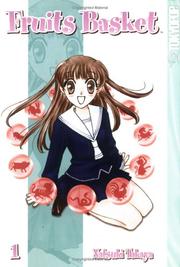
An orphaned high-school student living in a tent ends up housekeeping for a family whose members turn into zodiac animals when hugged by the opposite sex. The comedy is real and so is the fact that Tohru's mother has just died — the whole series is in that combination, and it is set here.
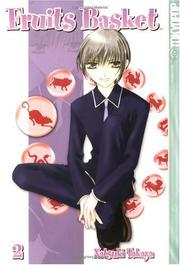
The cast widens to the rest of the zodiac and the first hints arrive that the curse is enforced rather than merely suffered. Read straight on from the first volume; the tone shift is gradual and depends on continuity.

Kyo's position as the cat — the animal left out of the zodiac legend — moves from a running joke to the series' central injury. This is the volume where most readers commit.
The Zodiac Fills In
BeginnerMeet the wider Sohma family and start seeing the pattern in how each member was treated as a child.
▸ Study plan for this stage
Pace: 1 to 2 weeks for volumes 5, 6 and 7, about 570 pages. One gap to handle first: volume 4 has no separate record in our catalogue — a search returns Fruits Basket Another, the distinct sequel series — so buy volume 4 on its own before reading this stage, because volume 5 picks up directly from it. The
- The zodiac members are introduced as comic types and then given histories that undercut the type. The gap between the two is deliberate and repeats for nearly every character.
- The pattern is the plot: each Sohma was isolated in childhood, and the head of the family is somewhere behind every one of those isolations.
- The curse is enforced rather than merely suffered. This stage is where that distinction becomes visible and it changes the genre of the story.
- Akito stops being an offstage threat in volume 7. Everything withheld in volumes 1 to 6 is being saved for that arrival.
- The Sohma house has an inside and an outside — the main house compound versus Shigure's — and which characters can leave and which cannot is doing quiet structural work.
- Takaya introduces new zodiac members faster than she resolves them, so the reader accumulates open questions on purpose.
- Take any two zodiac members introduced in these volumes. What is identical in their childhoods, and what is different?
- What is the practical difference between the Sohmas who live at the main house and those who do not?
- Volume 7 is the point at which Akito appears properly. What had the earlier volumes told you, and how much of it turns out to be accurate?
- How does the comedy change in these volumes — is there less of it, or is it doing something different?
- Whose account of the curse do you currently trust, and on what basis?
- Extend the zodiac sheet from stage one: for each member, add one line for the childhood incident that defines them. By volume 7 the column reads as a single repeated sentence, which is the discovery the series wants you to make yourself.
- Reread the first appearance of any Sohma introduced comically, immediately after their backstory chapter. Note which jokes stop working.
- Track who is physically able to leave the Sohma estate and who is not, volume by volume. The list is short and it predicts the endgame.
- After volume 7, open the sealed note from stage one and compare your expectation of Akito with what you have now been shown.
Next up: The pattern is now visible; the next four volumes stop treating it as a pattern and start treating it as what it is.
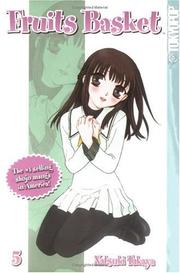
The story picks up directly from volume 4, which is the gap in this path — our catalogue returns the sequel series Fruits Basket Another for that number, so buy volume 4 separately before reading on. From here the Sohma family's internal hierarchy comes into focus.
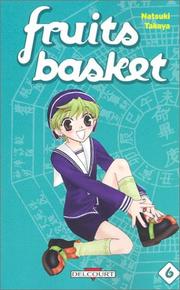
More of the zodiac arrive and the backstories start rhyming: every one of them was isolated young, and always with the head of the family somewhere behind it. The pattern is the plot.

The point at which Akito stops being an offstage threat. Read it in sequence — the earlier volumes are deliberately withholding, and this one collects on them.
The Darker Turn
BeginnerFollow the series as it stops being a comedy about a curse and becomes a story about how families organise abuse.
▸ Study plan for this stage
Pace: 2 weeks for volumes 8 to 11, about 770 pages. These read more slowly than the earlier volumes despite similar page counts, because the comic chapters thin out and the backstory chapters are dense with dialogue. This stretch deals directly with the physical and psychological abuse of children by the
- Volume 8 is the one most often named as the point where the series changes genre. The change is in emphasis, not in event — the material was always there.
- Tohru's grief, held offstage since volume one, comes forward in volume 9, and the book quietly stops treating her endurance as simply admirable.
- Kyo's history and the confinement waiting for him make the cat's exclusion into a concrete institutional arrangement rather than a metaphor.
- Volumes 9 and 10 are effectively one movement and should be read together.
- The romantic triangle acquires real consequences in volume 11, and the terms of the curse are finally stated plainly enough to see how they could be broken.
- The series' theory of abuse is structural: the family is organised so that harm is transmitted downward and everybody involved has reasons that make sense from inside.
- Takaya's technique of planting a joke and collecting on it many volumes later is running at full strength here; several payoffs in this stretch were set up in volume 1.
- What exactly changes in volume 8? Name the specific chapter and say whether the change is in the story or in how it is being told.
- How does the series revise its own earlier presentation of Tohru's selflessness, and does it ever criticise her directly?
- What is planned for Kyo, who decided it, and which characters know?
- By volume 11, what would actually have to happen for the curse to end? State the terms as the book has stated them.
- The Sohmas mostly do not resist. What reasons does the series give, and are they treated as sufficient?
- Reread the panel you marked in volume 3 immediately after finishing volume 10. The same image is doing a completely different job; write down what changed.
- Track Tohru's mother across volumes 8 to 11 — every mention, memory and flashback — and note where the presentation of her stops being straightforwardly warm.
- For volumes 8 to 11, keep a per-volume tally of comic chapters against backstory chapters. The ratio inverts across four books and the numbers make the tonal shift measurable rather than impressionistic.
- Write one paragraph on what the series thinks a family is, using only evidence from this stage. Keep it; the last stage will test it against Akito.
Next up: You now understand what the curse costs the people bound by it; the last stage puts you in front of the person who enforces it.
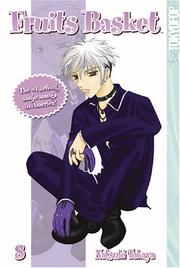
The comic register thins out and the individual histories get harder. This is the volume most often named as the one that changes what the series is.
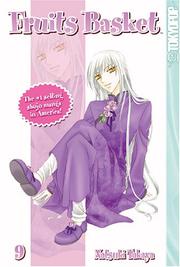
Tohru's own grief, held offstage since volume 1, comes forward — and the book quietly stops treating her endurance as simply admirable.
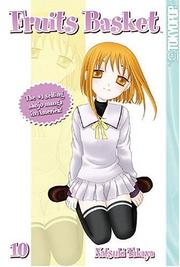
Kyo's history and what waits for him at the end of his adolescence. Read directly after volume 9; the two are effectively one movement.

The romantic triangle finally has consequences attached to it, and the curse's terms are stated plainly enough to see how they will have to be broken.
Akito and the Curse
IntermediateReach the heart of the story — what the head of the Sohma family actually is, and what the curse costs everyone bound by it.
▸ Study plan for this stage
Pace: 1 to 2 weeks for volumes 12, 13 and 14, about 570 pages, and worth reading more slowly than the page count implies because volume 13 carries the series' densest exposition. Be clear about where you are stopping: this path runs to volume 14 of 23, so the story is well past its turn and clearly headin
- Volume 12 asks you to hold cruelty and damage in the same character. That is the series' most difficult sustained move and it is not resolved quickly.
- The older Sohma generation's story arrives in volume 13, and the curse turns out to be inherited in more than one sense — as a supernatural condition and as a way of raising children.
- Akito's own upbringing is presented as an explanation and not as an excuse, and the distinction is maintained carefully. Watch how the book keeps both.
- Volume 13 is unreadable out of order and is essential to the ending; it is the volume that retroactively organises everything from volume 1.
- By volume 14 every faction is committed and the terms of a possible ending are on the table, which is why this is a coherent place to pause even though it is not the end.
- The comedy has not disappeared. Takaya keeps it running underneath the worst material, and the persistence is a deliberate argument about how people actually live inside such a family.
- The remaining nine volumes resolve the curse, the romance and Akito. Knowing that the series does reach a genuine ending is worth having before you decide whether to continue.
- What is Akito, in the terms the series itself uses by volume 13? Answer without reaching for a word the book does not use.
- Does the story ask you to forgive Akito, to understand Akito, or neither? Point to the panels that decide it.
- How does the older generation's story change your reading of the head of the family's authority?
- What is left unresolved at the end of volume 14, and which of those threads look like they must resolve together?
- Reading back from here, when did the series first tell you the truth about the curse? It is earlier than most readers remember.
- Reread the first chapter of volume 1 straight after finishing volume 13. Mark every line that now reads as foreshadowing. The number of them is the best available measure of how tightly the series was planned.
- Complete the zodiac sheet you started in stage one: every member, their childhood incident, and their current position on whether the curse should end. The finished sheet is a map of the endgame.
- Test the paragraph you wrote at the end of stage three against volumes 12 and 13, and rewrite it. Keeping both versions shows you exactly what Akito's introduction was for.
- Before continuing past volume 14, decide your edition and write it down — 23 singles or 12 Collector's Editions. Volumes 15 onward are where readers who never decided end up with duplicates.
Next up: This is where the path stops rather than where the story does; you have the curse, the family and the two people it will come down to, and the remaining volumes continue directly by number.
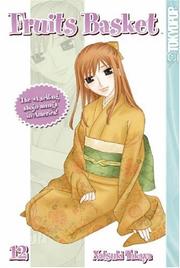
Akito moves to the centre of the book and the reader is asked, for the first time, to hold cruelty and damage in the same character. The series' most difficult sustained move.

The older Sohma generation's story arrives, and the curse turns out to be inherited in more than one sense. Essential to the ending, and unreadable out of order.

Where this path stops, at 14 of 23 — volume 15 does not resolve in our catalogue, though several later volumes do. The story is well past its turn by here and clearly heading somewhere; to finish it, continue with the remaining single volumes or switch cleanly to the 12-volume Collector's Edition rather than mixing the two numberings.