Keep a thriving freshwater aquarium
This curriculum takes a beginner from zero aquarium knowledge to confident mastery of the nitrogen cycle, fish stocking decisions, and thriving planted tanks. Each stage builds directly on the last — first establishing core husbandry instincts, then deepening water-chemistry and livestock knowledge, and finally unlocking the art and science of high-performance planted aquascapes.
Foundations: Tank Setup & the Nitrogen Cycle
BeginnerUnderstand how a healthy aquarium works from day one — equipment, cycling, basic water parameters, and avoiding the most common beginner mistakes.
▸ Study plan for this stage
Pace: 3–4 weeks, ~20–25 pages/day — Boruchowitz writes in an accessible, conversational style, so the pace is comfortable for a beginner. Read one chapter at a time, pause to take notes on equipment lists and water-parameter tables, and re-read any section on the nitrogen cycle until it feels intuitive be
- The nitrogen cycle: how ammonia (from fish waste/uneaten food) is converted to nitrite, then to nitrate, by beneficial bacteria — and why a tank must be fully cycled before adding fish
- The role of the biological filter and why it is the most critical component of any freshwater setup
- Essential equipment and its purpose: tank, filter (mechanical/biological/chemical), heater, thermometer, lighting, and substrate
- Water parameters every beginner must monitor: ammonia (NH₃), nitrite (NO₂), nitrate (NO₃), pH, temperature, and general hardness (GH)
- The concept of 'new tank syndrome' — the ammonia/nitrite spike that kills fish in uncycled tanks — and how to avoid it
- Fishless cycling vs. fish-in cycling: the pros, cons, and step-by-step process for each method as described by Boruchowitz
- Stocking density and the 'inch-per-gallon' rule of thumb — its usefulness and its limitations
- Dechlorination and why tap water must be treated before it ever touches a fish or a cycled filter
- What are the three stages of the nitrogen cycle, which bacteria drive each stage, and what toxic compound is produced at each step?
- According to Boruchowitz, what is the single most common mistake beginners make when setting up their first tank, and how does understanding the nitrogen cycle prevent it?
- What water parameters should you test for during a fishless cycle, how often should you test, and what readings indicate the cycle is complete?
- What is the purpose of each of the three filtration types (mechanical, biological, chemical), and which one must never be replaced all at once — and why?
- How does Boruchowitz recommend acclimating new fish to a tank, and what can go wrong if this step is skipped?
- What factors beyond the 'inch-per-gallon' rule should a beginner consider when deciding how many fish a tank can safely support?
- Set up a journal: before buying anything, write down your planned tank size, filter choice, heater wattage, and substrate type, then cross-check each item against Boruchowitz's equipment recommendations to justify every decision.
- Draw the nitrogen cycle from memory — ammonia → nitrite → nitrate — labeling the bacteria responsible at each step and the safe/unsafe concentration ranges for each compound. Redraw it daily until it sticks.
- Run a fishless cycle on your actual tank (or a small test bucket): dose ammonia, test every 2 days, and log ammonia, nitrite, and nitrate readings in a table until you observe the full cycle complete. Compare your timeline to the typical range Boruchowitz describes.
- Create a 'new tank checklist' drawn directly from the book: equipment, water treatment steps, cycling method, and the parameter thresholds you must hit before adding any fish.
- Visit a local fish store and, without buying anything, evaluate three display tanks using the criteria from the book — note stocking density, visible equipment, and any signs of poor water quality. Write a one-paragraph assessment of each.
- Practice a water change on your cycling tank: calculate the correct volume (25–30%), treat the replacement water with dechlorinator, match the temperature, and record the before/after parameter readings to see the effect firsthand.
Next up: Mastering tank setup and the nitrogen cycle gives you a stable, cycled aquarium as a foundation — the next natural stage builds directly on this by introducing fish selection, compatibility, and species-specific care, where water-parameter knowledge becomes the lens through which every stocking decision is made.
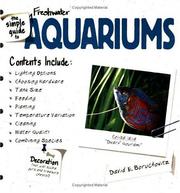
A genuinely beginner-friendly overview of setup, cycling, and maintenance that builds the vocabulary needed for every book that follows. Read this first to get a confident mental model of the whole hobby.
Water Chemistry & Fish Health
BeginnerRead and interpret water-test results, understand what drives parameter swings, and recognize and treat the most common fish diseases.
▸ Study plan for this stage
Pace: 4–5 weeks, ~20–25 pages/day, reading in focused 30-minute sessions; allow extra review time on chapters covering disease diagnosis and water chemistry tables
- The nitrogen cycle and its direct impact on fish health — understanding how ammonia, nitrite, and nitrate accumulate and why each is dangerous at different thresholds
- The 'big six' water parameters (pH, hardness/GH/KH, ammonia, nitrite, nitrate, dissolved oxygen) and how Andrews explains their ideal ranges for common freshwater species
- How to read and interpret liquid test kit results versus test strips, and why Andrews emphasizes accuracy in diagnosis before treatment
- The relationship between pH buffering (KH) and pH crashes — understanding carbonate hardness as the aquarium's chemical safety net
- Recognizing the clinical signs of the most common freshwater diseases covered by Andrews: ich (white spot), fin rot, velvet, dropsy, and fungal infections
- The disease triangle: host (fish), pathogen, and environment — Andrews' framework showing that most disease outbreaks are triggered by environmental stress, not just pathogen exposure
- Quarantine protocol as a preventive and treatment tool — why Andrews stresses isolating new fish and sick fish before any medication is introduced
- Safe medication practices: understanding active ingredients, correct dosing, removing carbon from filters before treatment, and completing full treatment courses
- According to Andrews, what sequence of events occurs during a new-tank ammonia spike, and at what approximate ppm levels do ammonia and nitrite become acutely dangerous to fish?
- How does carbonate hardness (KH) act as a pH buffer, and what does Andrews identify as the warning signs that a tank's buffering capacity is failing?
- Using Andrews' disease identification guidance, what are the key visual differences between ich (white spot disease) and velvet (Oodinium), and why does this distinction matter for choosing a treatment?
- Andrews describes the 'disease triangle' — what are its three components, and how does poor water quality tip the balance toward disease even when a pathogen is present at low levels?
- Why does Andrews recommend removing activated carbon from the filter before medicating, and what broader principle about filtration and treatment does this reflect?
- What does Andrews say about the role of a quarantine tank, and what minimum setup does he recommend for it to be effective?
- Set up a water-testing log: test your tank (or a friend's) for pH, ammonia, nitrite, and nitrate every other day for two weeks using a liquid test kit, recording results in a table and flagging any readings outside Andrews' recommended safe ranges
- Simulate a parameter swing on paper: using Andrews' nitrogen cycle explanation, map out day-by-day ammonia, nitrite, and nitrate changes for a hypothetical new 20-gallon tank stocked on Day 1 — predict when each parameter peaks and when the cycle completes
- Disease photo drill: find 10 photographs of common freshwater fish diseases online and, using Andrews' visual identification keys, attempt to name each condition, note the causative agent (bacterial, fungal, parasitic, or viral), and write one first-response action Andrews recommends
- Design a quarantine tank checklist: based on Andrews' recommendations, write out the minimum equipment, water parameters, and observation period required before a new fish can be moved to the display tank
- Medication label analysis: obtain the packaging (or an online label) for two common aquarium medications (e.g., an ich treatment and an antibacterial treatment) and cross-reference the active ingredients and dosing instructions against Andrews' guidance — note any discrepancies or cautions he flags
- KH buffering experiment (safe, no fish required): using a small container of dechlorinated tap water, measure its pH and KH, then add a small amount of aquarium-safe pH-down product in measured drops, retesting after each addition — observe how KH level predicts resistance to pH change, mirroring Andrews' buffering explanation
Next up: Mastering water chemistry and disease recognition through Andrews gives the reader the diagnostic vocabulary and parameter awareness needed to confidently move into more advanced topics — such as species-specific water requirements, planted tank chemistry, or breeding conditions — where stable, well-understood water quality is the essential foundation.
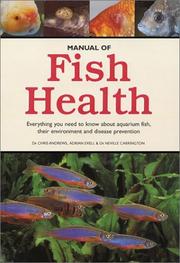
The go-to reference for diagnosing and treating disease; reading it now means you can stock confidently knowing you can identify and respond to health problems early.
Stocking: Choosing & Keeping Compatible Fish
IntermediateMake informed, compatible stocking decisions based on species behavior, water requirements, and tank size, and maintain a balanced community long-term.
▸ Study plan for this stage
Pace: 8–10 weeks total: Weeks 1–4 cover Axelrod's "Atlas of Freshwater Aquarium Fishes" (~35–40 pages/day, focusing on species profiles, habitat notes, and compatibility icons); Weeks 5–9 cover Riehl's "Aquarium Atlas Vol. 1" (~30–35 pages/day, cross-referencing water parameter tables and behavioral notes
- Species-level compatibility: understanding how aggression, territory, schooling behavior, and predator/prey size ratios determine which fish can coexist peacefully in the same tank
- Water parameter matching: aligning pH, hardness (GH/KH), and temperature ranges across all intended tankmates using the detailed parameter tables in Riehl's Aquarium Atlas
- Biotope awareness: recognizing the natural geographic and ecological origins of species (e.g., South American blackwater, African rift lake, Southeast Asian river) as a framework for grouping compatible fish, as illustrated across both atlases
- Stocking density and tank size: applying the practical rules of thumb and species-specific space requirements documented in both Axelrod and Riehl to avoid overcrowding
- Behavioral guilds: categorizing fish by their ecological role and activity zone (surface, mid-water, bottom/substrate) to build a balanced, layered community
- Feeding compatibility: identifying dietary overlaps and conflicts (carnivores, herbivores, omnivores, specialized feeders) using the feeding notes in both atlases to prevent competition and malnutrition
- Long-term community maintenance: using the breeding behavior, growth potential, and adult size data in both books to anticipate how a stocking plan will evolve over months and years
- Cross-referencing species data: developing the habit of verifying a species' requirements across both Axelrod and Riehl to catch discrepancies and build a more complete, reliable profile
- After reading both atlases, how would you use Axelrod's species entries alongside Riehl's parameter tables to evaluate whether a Discus, a Corydoras, and a Pearl Gourami can share the same 75-gallon community tank?
- What geographic and water-chemistry clues in both books would alert you that a particular species is unsuitable for a general community setup, and what alternative tankmates would you propose?
- How do the behavioral descriptors in Riehl's Aquarium Atlas (e.g., territorial, peaceful, fin-nipper) change your stocking sequence — which fish go in first and why?
- Using the adult size and space requirement data found across both atlases, how would you calculate a safe maximum stocking level for a 55-gallon planted tank, and what margin of safety would you build in?
- How do the breeding and reproductive behavior notes in both Axelrod and Riehl factor into long-term community stability, and which species combinations might become problematic once spawning begins?
- If two species you want to keep show conflicting water parameter requirements between Axelrod's and Riehl's entries, what process would you follow to resolve the discrepancy and make a final stocking decision?
- Build a compatibility matrix: Choose 8–10 species that interest you from Axelrod's atlas, then look each one up in Riehl's Aquarium Atlas and create a side-by-side table of pH range, temperature, hardness, adult size, aggression level, and water layer. Highlight any conflicts in red.
- Design a biotope stocking plan: Using the geographic origin data in both books, design a complete stocking list for a single biotope (e.g., Amazon basin, West African rivers, Southeast Asian streams). Justify every species choice with page references from at least one of the two atlases.
- Stocking sequence exercise: Take your biotope stocking list and write a step-by-step introduction schedule — which fish are added first, how long you wait between additions, and why, drawing on the behavioral notes in Riehl's profiles.
- Parameter envelope calculation: For a chosen community of 5–6 species, extract the water parameter ranges from both atlases and calculate the overlapping 'safe zone' for pH, temperature, and hardness. Determine whether a viable overlap exists or whether the community must be revised.
- Predict future problems: Select three species from Axelrod that are noted as fast-growing, highly territorial when breeding, or reaching a large adult size. Write a one-paragraph risk assessment for each, describing how they could destabilize a community tank within 12–18 months.
- Cross-reference audit: Pick any 5 species that appear in both Axelrod and Riehl and document every data point where the two books agree or disagree (size, pH, behavior, diet). Reflect in writing on how you would handle discrepancies when making real stocking decisions.
Next up: Mastering species compatibility and water parameter alignment through both atlases gives the reader the biological and chemical foundation needed to tackle the next stage — aquarium plants, filtration, and water chemistry management — where those same parameter ranges must now be actively maintained and manipulated in a living system.

A comprehensive species reference that lets you cross-check water parameters, temperament, and size for any fish you are considering — the essential stocking companion.

Expands species knowledge with detailed care profiles and compatibility notes; its encyclopedic depth rewards the reader who already has Axelrod's foundation and is ready to stock more ambitiously.
Planted Tanks: Plants, Substrate & Fertilization
IntermediateSet up and sustain a thriving planted aquarium by understanding plant nutrition, CO₂, lighting, and substrate selection.
▸ Study plan for this stage
Pace: 4–5 weeks, ~20–25 pages/day (the book is ~200 pages of dense, science-backed content); plan for slower reading around the soil chemistry and nutrient chapters, which reward re-reading and note-taking
- The Natural Aquarium Method (NAM): using soil as a nutrient-rich substrate layer capped with gravel to mimic natural aquatic ecosystems
- Plant nutrition macros and micros: how nitrogen (N), phosphorus (P), potassium (K), iron (Fe), and trace elements are absorbed by roots vs. the water column
- The nitrogen cycle through a plant lens: how rooted aquatic plants consume ammonia and nitrate directly, reducing dependence on mechanical filtration
- CO₂ dynamics: the role of photosynthesis, fish respiration, and substrate decomposition in maintaining dissolved CO₂ levels without pressurized injection
- Soil chemistry and the sediment layer: organic matter content, redox potential, and why anaerobic substrate conditions can benefit plant roots
- Lighting fundamentals: intensity, spectrum, and photoperiod as they relate to plant photosynthesis rates and algae competition
- Allelopathy and plant competition: how some aquatic plants chemically suppress algae, and how plant density and health are the primary algae controls
- The low-tech vs. high-tech trade-off: Walstad's argument that balanced, soil-based systems can outperform CO₂-injected, fertilizer-dosed setups in stability and cost
- According to Walstad, why is a nutrient-rich soil substrate preferable to an inert substrate dosed with liquid fertilizers, and what are the key risks of each approach?
- How do aquatic plants contribute to biological filtration, and under what conditions can a heavily planted tank reduce or eliminate the need for a traditional filter?
- What is the relationship between light intensity, CO₂ availability, and algae outbreaks in a planted tank, and how does Walstad recommend balancing these variables?
- Describe the two-layer substrate system Walstad advocates: what goes in each layer, why, and what soil properties should be avoided?
- How does Walstad explain the role of fish and snails in a planted ecosystem — what do they contribute beyond aesthetics?
- What does Walstad mean by 'the balance' in a natural aquarium, and what observable signs indicate that a tank has or has not achieved it?
- Tank audit: If you have an existing tank, document your current substrate, lighting duration, and plant species. Map your setup against Walstad's NAM criteria and list three specific changes you could make.
- Substrate design exercise: Plan a two-layer substrate for a hypothetical 20-gallon planted tank — research a locally available potting soil (checking for Walstad's red-flag additives like perlite, fertilizer beads, or wetting agents), calculate the volume needed for a 1-inch soil layer, and spec out the capping gravel.
- Lighting log: For one week, track your tank's photoperiod and note any algae growth patterns. Cross-reference with Walstad's guidance on light hours and intensity to hypothesize a cause-and-effect relationship.
- Plant selection chart: Using Walstad's plant discussions, create a table of 8–10 species she recommends, noting each plant's light requirement, root-feeding vs. water-column-feeding tendency, and its role in nutrient export or algae suppression.
- Nitrogen tracking experiment: Test your tank water for ammonia, nitrite, nitrate, and pH at the same time each day for two weeks. Graph the results and annotate with any plant growth or fish behavior observations, then interpret through Walstad's nitrogen-cycle framework.
- Written reflection: In 300–400 words, argue either for or against setting up a Walstad-method tank in your specific situation (space, budget, livestock goals), citing specific claims and data points from *Ecology of the Planted Aquarium* to support your position.
Next up: Mastering Walstad's foundational science of plant nutrition, substrate chemistry, and biological balance equips the reader to critically evaluate more advanced or high-tech planted tank techniques — such as pressurized CO₂ systems, EI (Estimative Index) dosing, and aquascaping design — that build directly on these same biological principles.

The foundational science text for planted tanks — Walstad explains nutrient cycling, substrate biology, and low-tech plant keeping in a way that permanently changes how you think about a planted setup.
Advanced Aquascaping & System Optimization
ExpertDesign visually compelling aquascapes, dial in high-tech CO₂ and dosing regimens, and optimize every system variable for long-term fish and plant health.
▸ Study plan for this stage
Pace: 6–8 weeks total: Weeks 1–4 on "Nature Aquarium World" (~20–25 pages/day, treating each layout spread as a case study); Weeks 5–8 on "Aquascaping" by George Farmer (~15–20 pages/day with active note-taking on technique rationale and system specs).
- Amano's wabi-sabi and Ma (negative space) philosophy as the aesthetic foundation of Nature Aquarium design
- The 'Nature Aquarium' layout archetypes — Concave, Convex, and Triangle compositions — and how they guide plant and hardscape placement
- Hardscape construction using Iwagumi stone arrangements and Seiryu/Ohko rock principles for natural, balanced layouts
- High-tech CO₂ injection systems: diffuser placement, bubble-count calibration, drop checker use, and timing with lighting schedules
- Advanced fertilization: the Estimative Index (EI) and Perpetual Preservation System (PPS) dosing methods for macro- and micro-nutrients
- Plant layering and the foreground/midground/background hierarchy for depth, perspective, and visual flow
- George Farmer's systematic approach to troubleshooting: diagnosing algae outbreaks, nutrient deficiencies, and flow dead-zones as interconnected system failures
- Long-term tank optimization: balancing light intensity (PAR/PUR), CO₂, and nutrients as a dynamic triangle to sustain a mature aquascape
- Looking at any layout in 'Nature Aquarium World,' can you identify which compositional archetype Amano used and explain how the hardscape, plants, and negative space each serve that composition?
- What are the key differences between EI and PPS dosing regimens as discussed in 'Aquascaping,' and under what tank conditions would you choose one over the other?
- How do CO₂ injection timing, lighting photoperiod, and fertilizer dosing interact as a system, and what cascade of problems occurs when one variable is misaligned?
- Using Farmer's troubleshooting framework, how would you diagnose and resolve a persistent green spot algae outbreak in a mature high-tech planted tank?
- How does Amano's concept of Ma (negative space) translate into a practical hardscape layout decision, such as stone or driftwood placement?
- What specific maintenance and pruning strategies does Farmer recommend to preserve the original compositional intent of an aquascape as plants mature and grow?
- Compositional Sketch Series: Before touching any tank, sketch 3 original aquascape layouts on paper — one Concave, one Convex, one Triangle — annotating where each plant species and hardscape element would go and why, referencing Amano's layouts as models.
- Hardscape-Only Build: Set up a dry hardscape in your tank using only rocks or driftwood (no substrate or water). Photograph it from the front glass, then critically compare it against an Amano Iwagumi layout for balance, focal point, and negative space. Adjust and re-photograph.
- CO₂ & Lighting Calibration Log: Over two weeks, log daily bubble count, drop checker color at lights-on and lights-off, and any visible plant pearling. Use Farmer's guidance to make one incremental adjustment at a time and document the effect.
- Dosing Regimen Trial: Implement either EI or PPS dosing for a full 4-week cycle as outlined in 'Aquascaping.' Track plant color, growth rate, and any algae appearance in a weekly photo journal to evaluate the regimen's effectiveness in your specific setup.
- Algae Audit & Root-Cause Analysis: If any algae appears during the study period, write a one-page diagnosis using Farmer's troubleshooting framework — identify the likely imbalance (light, CO₂, nutrients, or flow), the corrective action taken, and the outcome after two weeks.
- Mature Tank Critique: Find a photo of a well-known competition aquascape (e.g., from ADA or Aquatic Gardeners Association) and write a structured critique covering composition, plant layering, hardscape use, and what system optimizations you infer were required to achieve and maintain it — grounding your analysis in concepts from both books.
Next up: Mastering the aesthetic and technical precision demanded by Amano and Farmer builds the expert eye and system-management discipline needed to tackle the next stage's focus on specialized biotope design, rare species husbandry, and breeding — where every optimized variable directly supports the survival and reproduction of demanding livestock.
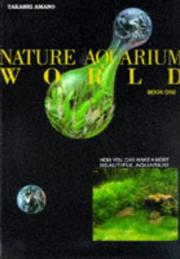
The landmark work that defined modern aquascaping; studying Amano's layouts and philosophy after mastering the science gives you the aesthetic framework to apply everything you have learned.

A practical, modern guide to high-tech planted tank design, CO₂ injection, and fertilizer dosing — the ideal capstone that ties together chemistry, stocking, and artistry into a complete system.
Discussion
Keep reading
Paths that share books, cover the same subject, or open a related topic.