Flavia de Luce Reading Order: Where to Start with Alan Bradley
Flavia de Luce is an eleven-year-old chemist in a decaying English country house in 1950, who rides a bicycle called Gladys, keeps a Victorian laboratory inherited from a great-uncle, and has a working knowledge of poisons that she deploys mostly against her two older sisters. The books are usually shelved as cosy mysteries and read in any order on that basis, which is a mistake. The murders are self-contained; the story of what happened to Flavia's mother Harriet, who disappeared in Tibet when Flavia was a baby, is not — it accumulates from hints in book one to the centre of the series by book six, and it is the reason readers stay. Read them in publication order. This path covers all eleven novels in sequence, then the novella and the two non-Flavia books by Alan Bradley.
The First Four
BeginnerMeet Flavia, Buckshaw and the de Luce family, and learn the pattern — a body, a chemical clue, and a great deal of information about the household that Flavia reports without understanding.
▸ Study plan for this stage
Pace: 4–6 weeks, roughly a book a week. These are 350–400 page mysteries that read quickly, and the four are close enough in construction that reading them back to back is the best way to see the formula. Each turns on a corpse, described by an eleven-year-old who finds bodies interesting rather than frig
- The formula: a body near Bishop's Lacey, a chemical clue only Flavia can read, and a solution she reaches before Inspector Hewitt
- The unreliable-by-age narrator — Flavia reports the household accurately and interprets it wrongly, and the gap is where the family plot lives
- Buckshaw as a character: the house, the entail, the chemistry laboratory inherited from Uncle Tar, and the money that is running out
- The de Luce family shape — Colonel de Luce and his stamps, Feely at the piano, Daffy behind a book, Dogger and his shell shock, Mrs Mullet
- Harriet: absent, mentioned early and often, and never yet the subject of a plot
- Poison as Flavia's actual expertise, and the way Bradley uses real period chemistry as the clue mechanism
- 1950 England as a setting with rationing, National Service and a war that has not finished happening to anyone
- What exactly does Flavia notice in The Sweetness at the Bottom of the Pie that the police do not, and is it chemistry or observation?
- How does Flavia's relationship with Inspector Hewitt change between book one and book four, and who is managing whom?
- What has A Red Herring Without Mustard told you about the de Luce finances, and how much of it did Flavia understand as she reported it?
- Count the mentions of Harriet across these four books. What has actually been established about her, as opposed to implied?
- Which of the four is the weakest as a mystery, and does it matter, given what the series is really doing?
- Keep a running Harriet file from page one: every mention, who makes it, and what it adds. By the end of book four the file should be a page long and should contain almost no facts — that emptiness is the series' engine.
- For each of the four books, write down the poison or compound the plot turns on and check whether the chemistry Flavia describes is real. Bradley almost always uses genuine period chemistry, and finding the one place he bends it is the reward.
- Chart the formula across all four: page on which the body appears, page on which Flavia first crosses Hewitt, page on which she is locked in or trapped, page of the solution. The variance is small, which is the finding.
- Track Dogger. Note every scene in which he is present and every scene in which someone explains him to Flavia. Books five and six will pay this off directly.
- Track Gladys the bicycle as a motif rather than a prop: note what Flavia says to her and when. It marks the moments the narration is loneliest.
Next up: You have the formula and a page of unanswered questions about Harriet; the next three books stop treating that as background and make it the plot.
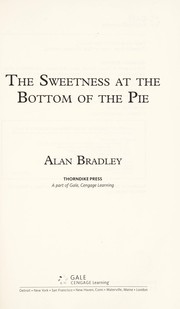
The first book and the only correct starting point: a dead bird with a stamp on its beak, a stranger in the cucumber patch, and Flavia's father arrested. It won the Debut Dagger and it establishes everything — the chemistry, the sisters, and the first mention of Harriet.

Second, in which a travelling puppeteer dies in front of the village. Read in order: Flavia's relationship with Inspector Hewitt develops from book one and is assumed here. The catalogue record carries an incorrect publication year.
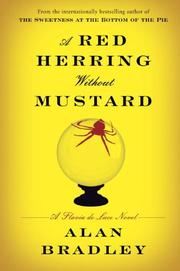
Third, and the one where the family's financial situation and the true state of Buckshaw come properly into view — the estate problem that drives several later plots starts here. A fortune-teller, a burnt tent and a Romany caravan.
Fourth, a Christmas book with a film crew at Buckshaw and Flavia attempting to trap Father Christmas with birdlime. Lighter than the others and the last of the comparatively self-contained novels — the Harriet thread takes over from the next book on.
The Middle: Harriet Takes Over
BeginnerFollow the run where the family story stops being background. These three are the emotional centre of the series and the reason the order is not optional.
▸ Study plan for this stage
Pace: 4–5 weeks. Speaking from Among the Bones and The Dead in Their Vaulted Arches must be read back to back — book five ends on the series' only genuine cliffhanger and the gap between them should be hours, not days. Leave a little space before As Chimney Sweepers Come to Dust, which changes setting ent
- The pivot: what the previous five books were building, and how Bradley reframes the family in one sequence
- The Colonel and Dogger reread — everything about both men in books one to four means something different afterwards
- Feely and Daffy as grieving children rather than as tormentors, which is the same behaviour under a new description
- Flavia as a detective who solves a case about herself, and what that does to the formula
- The wartime and intelligence material that book six introduces, and how far back through the series it reaches
- Book seven's deliberate exile: removing Buckshaw, Hewitt, Dogger and the village to see what is left of the character
- Why publication order is not optional from here — book six is genuinely unreadable out of sequence
- What is the last sentence of Speaking from Among the Bones actually claiming, and how many earlier books does it retrospectively change?
- After The Dead in Their Vaulted Arches, which scenes in books one to four now read differently? Name three specifically.
- What does Dogger turn out to have been doing throughout the series, and where was it visible?
- In As Chimney Sweepers Come to Dust, what is Bradley testing by taking every supporting character away — and does Flavia survive the test?
- Is the boarding-school book a failure of the series or a necessary consequence of book six? Argue it either way, using book seven's own material.
- Finish your Harriet file. Go back through the entries you made in stage one and annotate each with what you now know it meant. The ones that were hiding in plain sight are the ones to note.
- Reread the opening chapter of The Sweetness at the Bottom of the Pie immediately after finishing The Dead in Their Vaulted Arches. Write a page on what has changed in a text that has not changed at all.
- Pick the three scenes involving Dogger you flagged in stage one and reread them against book six. Write out what each scene was actually doing.
- Write the plot of book seven in one paragraph, then write the paragraph again as the consequence of book six rather than as a school story. The second version is the one most readers never construct, and it is why the book divides them.
Next up: The family question is answered and the series has to find a new subject; the last four books are Bradley working out what Flavia is for once the mystery about her is solved.
Fifth, an exhumation in the church crypt, and the book that ends on the series' one genuine cliffhanger — a single sentence that changes the premise. Do not read the next book's blurb before finishing this one.
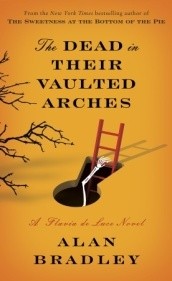
Sixth, and the pivot of the whole series: it resolves what the previous five books were quietly building toward and reframes Flavia's father, her sisters and Dogger. Unreadable out of order in a way none of the earlier books are.
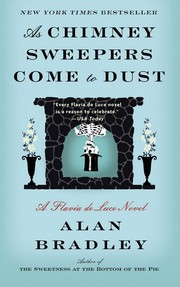
Seventh, and a deliberate change of setting — Flavia is sent to a Canadian boarding school, away from Buckshaw and every supporting character. Divisive among readers; read it as the consequence of book six rather than as a standalone.
The Later Books
BeginnerRead the final four, in which Flavia is older, the household has changed and the tone darkens — and see where the series has reached, since it is not finished.
▸ Study plan for this stage
Pace: 5–6 weeks. Thrice the Brinded Cat Hath Mew'd and The Grave's a Fine and Private Place should be read together with almost no gap — they are one movement, and the second opens in the immediate aftermath of the first. The Golden Tresses of the Dead follows comfortably. What Time the Sexton's Spade Dot
- Flavia older: the narration loses some of its comic distance as she stops misunderstanding what she reports
- The household after book six — who is gone, who has arrived, and what Buckshaw now costs to keep
- Dogger promoted from servant and confidant to partner, which is the largest structural change in the later run
- Arthur W. Dogger and Associates: the series turning itself from a mystery about a family into a detective agency
- Tone drift as a deliberate choice rather than a decline, and where you think it goes too far
- An unfinished series: the eleventh book neither resolves the arc nor pretends to
- The chemistry receding as the emotional plot advances — count the laboratory scenes and you can see it happen
- What does Thrice the Brinded Cat Hath Mew'd assume you remember from book seven, and would it land at all without it?
- The Grave's a Fine and Private Place is the most sombre in the series. What is it actually about, if not the murder it contains?
- What changes about Flavia's method once Dogger is a formal partner rather than a servant she confides in?
- In What Time the Sexton's Spade Doth Rust, what has Bradley set up that has not been paid off?
- Is the darkening of the last four books growth in the character, or a writer running out of the comic premise? Argue from specific scenes.
- Count the laboratory scenes per book across all eleven and plot the numbers. The curve is a straight line down, and it is the clearest evidence of what the series became.
- Reread the first Dogger scene in book one and the last in book eleven side by side, and write the paragraph that connects them. This is the single strongest character arc in the series and it is not Flavia's.
- Take the closing chapters of Thrice the Brinded Cat and the opening chapters of The Grave's a Fine and Private Place and mark exactly where one book ends and the next begins. If you cannot find the seam easily, that is the answer to whether they are one movement.
- Track the series' titles: several are quotations from Shakespeare, Tennyson, Marvell and the sonnets. Find the source of each and read the surrounding lines, then write one sentence per book on whether the quotation is decoration or a clue to the plot. Some are both.
- Write the twelfth book's opening page as Bradley would, from where book eleven leaves off. The exercise tells you how completely you have absorbed the voice, which is what the series runs on.
Next up: With the eleven novels read in order, the material outside the sequence — a novella and two books from before Flavia existed — can be read for what it shows about how Bradley got here.
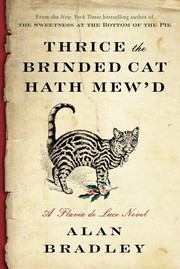
Eighth. Flavia is back at Buckshaw and finds a woodcarver hanging upside down from his bedroom door. The homecoming is not what she expected, and the book turns on a family development that only lands if book seven is fresh.

Ninth, and the most sombre in the series — the de Luces on a river trip, in the aftermath of the previous book, with Dogger given the largest role he has had. Read it directly after Thrice the Brinded Cat; the two form one movement.

Tenth: a severed finger in a wedding cake, and Flavia and Dogger setting up as a formal detective partnership. The catalogue credits the audiobook narrator alongside Bradley on this record.
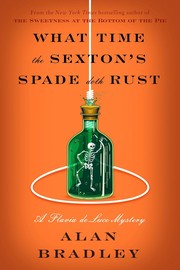
Eleventh and the most recent, published in 2024 after a five-year gap. This is where the series currently stops — read it last, and note that it does not close the story off.
The Novella, and Bradley Beyond Flavia
IntermediatePick up the short piece that sits outside the numbered sequence, and see the two very different books Alan Bradley wrote before the series that made him famous at seventy.
▸ Study plan for this stage
Pace: 2–3 weeks and no more. The Case of the Copper Corpse is a digital-only short piece of an hour or two and sits chronologically after book four, though reading it now costs nothing. The Shoebox Bible is a short memoir, an evening or two. Ms. Holmes of Baker Street is a slim Sherlockian argument and ta
- The novella as a compressed version of the formula: one body, one school, one deduction, no family plot at all
- The Shoebox Bible as the biographical source of the series' central absence — a mother written about by a man who could reach her, unlike Flavia
- Bradley as a first novelist at seventy, and what a long non-fiction apprenticeship put into the fiction
- Ms. Holmes of Baker Street as Sherlockian play: an argument made in earnest form for a conclusion nobody is meant to adopt
- The pleasure the two non-Flavia books share with the novels — Victorian and Edwardian detail, and confident deduction from small physical evidence
- That the Holmes book is co-written with William Sarjeant and is a piece of a specific fan tradition with its own rules
- Where does The Case of the Copper Corpse fit in the sequence, and what does the short form force Bradley to cut?
- Which passage in The Shoebox Bible most obviously anticipates the Harriet plot, and is that a real connection or one you are constructing in hindsight?
- What are the rules of the Sherlockian game Bradley and Sarjeant are playing, and how would you tell a good move from a bad one?
- Having read the memoir, does anything in book six read differently? Say specifically what.
- If you were recommending the series to someone, would you include any of these three? Which, and to whom?
- Read The Case of the Copper Corpse against the plot chart you built in stage one. Mark which elements of the formula survive the compression and which are the first to go.
- Take one passage from The Shoebox Bible about Bradley's mother and one passage from The Dead in Their Vaulted Arches about Harriet, and set them on the page together. Write half a page on the resemblance — and on the point where the resemblance stops.
- Follow one deduction in Ms. Holmes of Baker Street from evidence to conclusion, then find a deduction in a Flavia novel with the same shape. The technique is identical, which is the point of reading it last.
- Write the final version of your Harriet file as a single page: what the series established, when, and by what means. It is the record of an eleven-book plot built almost entirely out of omissions.
Next up: This is the end of the path: eleven novels in order, the novella, and the two books that show where the voice came from — with the series still unfinished.
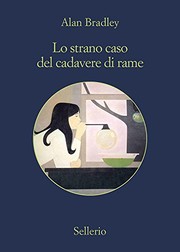
A short Flavia story published as a digital-only original — a body in a bath at a boys' school. It falls between the earlier novels and can be read any time after book four. The catalogue record is the ebook, filed as Case of the Copper Corpse.
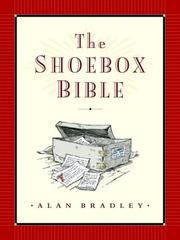
Bradley's memoir of a Depression-era childhood and his mother, written before the Flavia books. Short, and read after the series rather than before — the preoccupation with an absent or unreachable mother is unmistakable once you know where it goes.

Bradley with William Sarjeant, arguing in earnest Sherlockian fashion that Sherlock Holmes was a woman. The right closing curiosity: it is the same pleasure in Victorian detail and confident deduction that the Flavia novels run on, played completely straight.