Become a firefighter: physical courage, human job
This curriculum takes a complete beginner from zero knowledge of firefighting to a well-rounded, job-ready candidate across four tightly sequenced stages. It opens with the culture and mindset of the profession, builds through fire science and EMS fundamentals, sharpens hiring and CPAT readiness, and closes with the tactical and leadership knowledge that separates elite firefighters — the kind of physical, adaptive, human-centered work that automation simply cannot replace.
Foundations: Culture, Mindset & the Job
BeginnerUnderstand what the firefighting profession truly demands — its culture, daily realities, brotherhood, and the personal commitment required before investing in a career path.
▸ Study plan for this stage
Pace: 1–2 weeks, ~20–30 pages/day (the book is ~200 pages); read in long sittings of 45–60 minutes to stay immersed in the narrative flow
- The daily reality of inner-city firefighting: Smith's firsthand account from Engine Co. 82 in the South Bronx exposes the relentless pace, danger, and emotional weight of the job far beyond public perception
- Firefighting culture and brotherhood: the tight-knit bonds formed through shared risk, mutual dependence, and collective grief that define firehouse life
- Personal sacrifice and commitment: the physical, emotional, and family toll the profession demands, and the conscious choice firefighters make to accept it
- The human side of emergency response: Smith's empathy for the communities served reveals that firefighting is as much a social and humanitarian role as a technical one
- Resilience and coping under chronic stress: how firefighters process loss, trauma, and near-death experiences while maintaining operational readiness
- The firehouse as a living institution: its routines, hierarchy, humor, and unwritten codes of conduct that socialize new members into the culture
- Motivation and calling vs. job: understanding why people enter the profession — service, identity, belonging — and what sustains them through hardship
- Self-assessment of fit: using Smith's honest portrayal as a mirror to evaluate whether one's own values, temperament, and risk tolerance align with the career
- After reading Report from Engine Co. 82, how would you describe the daily emotional and physical demands of a firefighter in your own words — and how does that compare to your expectations before reading?
- What specific aspects of firehouse culture — brotherhood, hierarchy, humor, grief — does Smith highlight, and why are these cultural elements essential to the job's functioning?
- How does Smith portray the relationship between firefighters and the communities they serve, and what does this suggest about the social responsibilities of the profession?
- What sacrifices — personal, familial, and psychological — does Smith document, and are you prepared to make similar commitments?
- How do the firefighters in Engine Co. 82 cope with repeated trauma and loss, and what does this reveal about the mental resilience the career requires?
- Based solely on Smith's account, what are three qualities or values a person must genuinely possess to thrive in this profession — and how honestly do you rate yourself on each?
- **Reflective journal entry:** After finishing the book, write a 1–2 page personal response answering: 'What surprised me most about the profession, and does this career still align with who I am?' Be brutally honest.
- **Culture mapping:** Create a simple diagram or list of the unwritten rules, rituals, and values Smith describes in the firehouse. Label each as 'I already embody this,' 'I need to develop this,' or 'This challenges me.'
- **Community ride-along or station visit:** Contact a local fire station and request a non-emergency visit or observation. Use Smith's descriptions as a reference point — note what matches, what differs, and what surprises you.
- **Character study:** Choose two firefighters Smith writes about and write a one-paragraph profile of each — their personality, their coping style, and what made them effective (or struggle). Identify which traits you share.
- **Sacrifice inventory:** Make a concrete, personal list of what you would have to give up or adjust (schedule, relationships, hobbies, income stability) to pursue this career. Research one real firefighter's schedule online to ground the exercise in fact.
- **Discussion or interview:** Find someone currently working as a firefighter (or a veteran) and ask them three questions drawn directly from themes in Smith's book — e.g., about brotherhood, the hardest call they've run, or what keeps them going. Compare their answers to Smith's portrayal.
Next up: Having internalized the culture, emotional demands, and personal commitment the profession requires through Smith's lived narrative, the reader is now ready to move from 'Do I want this?' to 'How do I get there?' — making the next stage focused on the concrete steps of entering the career (testing, training, and hiring processes) both timely and motivating.
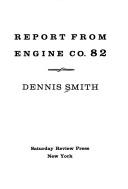
A classic, ground-level account of life inside a busy firehouse that gives beginners an authentic feel for the job's pace, danger, and camaraderie — essential context before any technical study.
Getting Hired: The Application, Testing & CPAT
BeginnerNavigate the entire firefighter hiring pipeline — written exams, oral boards, background checks, and the Candidate Physical Ability Test (CPAT) — with a structured preparation plan.
▸ Study plan for this stage
Pace: 4–5 weeks, ~20–25 pages/day; dedicate weekdays to reading and practice questions, and reserve weekends for full-length timed practice tests and CPAT physical training sessions
- Structure of the firefighter hiring pipeline: application → written exam → oral board → background check → medical/psych eval → CPAT
- Written exam content areas covered in 'Firefighter Exam': reading comprehension, math/number reasoning, mechanical aptitude, spatial orientation, memory and observation, and judgment/situational questions
- Effective test-taking strategies: process of elimination, time management per question, flagging and returning to difficult items
- CPAT overview: the eight standardized events (stair climb, hose drag, equipment carry, ladder raise/extension, forcible entry, search, rescue, ceiling breach/pull), pass/fail scoring, and the 10:20-minute time limit
- Oral board preparation: how to structure answers using the STAR method (Situation, Task, Action, Result) and common firefighter competency questions
- Background investigation expectations: honesty, documentation of employment/education history, and how prior issues are evaluated
- Physical fitness benchmarks required for CPAT success and a periodized training plan to build the necessary strength and cardiovascular endurance
- Study planning and self-assessment: using practice test scores to identify weak content areas and adjust review focus
- What are the eight events of the CPAT, and what does each one physically simulate on the fireground?
- Which subject areas are tested on a typical firefighter written exam, and which area does your first practice test reveal as your weakest?
- What is the purpose of the oral board interview, and how should you structure a response to a behavioral question like 'Tell me about a time you resolved a conflict'?
- What kinds of information are verified during a background investigation, and why is complete honesty considered non-negotiable?
- How do you calculate your pacing strategy for a timed written exam — for example, if you have 100 questions and 2.5 hours, how many seconds per question do you have, and how should you handle items that stump you?
- After completing two full-length practice tests from 'Firefighter Exam,' what is your score trend, and which specific question types still need targeted review?
- Take the first full-length practice test in 'Firefighter Exam' under strict timed conditions before reading any content chapters — use this cold score as your personal baseline and map every wrong answer to its content category.
- Create a 'weak-area drill log': after each reading session, write 5–10 self-generated questions on that day's content (e.g., mechanical aptitude diagrams, math word problems) and quiz yourself 48 hours later to test retention.
- Build and follow a 4-week CPAT-specific physical training schedule — include stair-climber sessions (weighted vest if possible), sled or resistance drags, farmer carries, and crawling drills to mirror each of the eight CPAT events.
- Conduct two mock oral board sessions with a friend, family member, or a mirror: prepare answers to at least 10 common firefighter behavioral questions using the STAR method, record yourself, and critique your clarity, eye contact, and composure.
- Assemble a 'hiring pipeline checklist' document: list every stage of the process, the documents you will need (ID, transcripts, employment records, reference contacts), and deadlines — treat it as a live project-management tool you update weekly.
- Take a second full-length practice test from 'Firefighter Exam' in Week 4, compare your score and error map to the Week 1 baseline, and write a one-page reflection identifying what preparation strategies worked and what to adjust going forward.
Next up: Mastering the hiring pipeline gives you the credential to enter a fire academy, making this stage the direct gateway to the next phase of the curriculum — understanding what happens once you are hired: recruit academy training, probationary expectations, and the foundational firefighting skills you will be required to learn on Day 1.
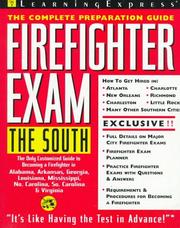
The most widely used written-exam prep book for firefighter candidates; builds the vocabulary and test-taking strategies needed before tackling the physical and oral components.
Fire Science & EMS Fundamentals
IntermediateMaster the core technical knowledge of fire behavior, suppression principles, hazardous materials, and emergency medical response that underpins every firefighter certification exam and academy.
▸ Study plan for this stage
Pace: 16–20 weeks total, broken into 3 phases: Phase 1 — "Essentials of Fire Fighting and Fire Department Operations" (IFSTA): 8–9 weeks, ~40–50 pages/day, 5 days/week; Phase 2 — "Emergency Care" (Stern): 4–5 weeks, ~35–45 pages/day, 5 days/week; Phase 3 — "Fire Investigator, 2nd Edition" (IFSTA): 4–5 wee
- Fire behavior and the fire triangle/tetrahedron: understanding combustion, heat transfer (conduction, convection, radiation), and fire development stages (incipient, growth, flashover, fully developed, decay) as covered in Essentials of Fire Fighting
- Suppression principles and hose operations: water application techniques, nozzle types, fire streams, and the science of extinguishment (cooling, smothering, fuel removal, chain-reaction interruption) from Essentials of Fire Fighting
- Structural firefighting tactics: size-up, incident command system (ICS), search and rescue, ventilation methods (horizontal, vertical, PPV), and salvage/overhaul procedures per Essentials of Fire Fighting
- Personal Protective Equipment (PPE) and SCBA: proper donning/doffing, air management, PASS device use, and IDLH atmosphere protocols detailed in Essentials of Fire Fighting
- Hazardous materials awareness and operations: recognition, placarding (DOT/ERG), isolation and denial-of-entry, decontamination levels, and HAZMAT ICS roles as outlined in Essentials of Fire Fighting
- Emergency Medical Services fundamentals: patient assessment (primary/secondary survey), airway management, CPR/AED, hemorrhage control, shock management, and triage principles from Emergency Care (Stern)
- Trauma and medical emergency response: fractures, burns, spinal immobilization, chest injuries, diabetic/cardiac/stroke emergencies, and OB emergencies as covered in Emergency Care (Stern)
- Fire cause and origin determination: burn patterns, char depth analysis, V-patterns, low burn indicators, arc mapping, and the scientific method applied to fire investigation per Fire Investigator 2nd Edition (IFSTA)
- Evidence collection, documentation, and legal considerations in fire investigation: chain of custody, photography protocols, witness interviews, and courtroom testimony standards from Fire Investigator 2nd Edition (IFSTA)
- After reading Essentials of Fire Fighting, can you explain the four stages of fire development and identify the tactical priorities a company officer should execute at each stage?
- Using the suppression principles from Essentials of Fire Fighting, how does water application method (direct, indirect, combination attack) differ in effectiveness depending on fire location and compartment conditions?
- Based on Emergency Care (Stern), walk through a complete primary and secondary patient assessment for an unresponsive trauma victim — what findings would prompt immediate transport versus on-scene treatment?
- From Emergency Care (Stern), what are the key differentiators between a diabetic emergency, a stroke, and a seizure, and how does your initial treatment differ for each?
- Drawing on Fire Investigator 2nd Edition (IFSTA), how do you systematically determine the area of origin and point of origin using burn pattern analysis, and what common indicators distinguish accidental from incendiary fires?
- Across all three books, how do the Incident Command System (ICS) roles and responsibilities shift when a structure fire transitions into a HAZMAT incident or a mass-casualty EMS event?
- Fire behavior simulation drill (Essentials of Fire Fighting): Using a tabletop model or fire behavior simulator app, map out the progression of a room-and-contents fire through all four stages; annotate heat release rate, flashover threshold (~500–600°C at ceiling), and identify the optimal suppression intervention point.
- SCBA confidence course (Essentials of Fire Fighting): Don full PPE and SCBA, complete a timed low-visibility crawl through a blacked-out hallway, practice emergency air-sharing procedures, and log air consumption rates to internalize air management discipline.
- HAZMAT placard identification drill (Essentials of Fire Fighting): Using a set of 30+ DOT placard flashcards and the ERG, practice identifying hazard class, isolation distances, and initial action guides within 60 seconds per scenario — repeat until consistent accuracy is achieved.
- Patient assessment scenario rotations (Emergency Care — Stern): With a partner, run 10 timed mock patient assessments covering at least one trauma, one cardiac, one diabetic, one stroke, and one pediatric scenario; record findings using a SOAP note format and debrief on missed assessment steps.
- Hemorrhage control and airway management skills lab (Emergency Care — Stern): Practice tourniquet application (CAT or SOFTT-W) to the 60-second standard, perform jaw-thrust and head-tilt/chin-lift maneuvers on a manikin, and practice BVM ventilation at correct rate and volume.
- Fire scene documentation exercise (Fire Investigator 2nd Edition — IFSTA): Visit a legally accessible post-fire scene (or use provided case-study photographs from the textbook) and produce a written origin-and-cause report: sketch burn patterns, photograph V-patterns and char depth, identify the area of origin, hypothesize cause, and document chain of custody for one piece of mock evidence.
Next up: Mastering fire behavior, suppression tactics, EMS patient care, and fire investigation science in this stage builds the technical vocabulary and procedural fluency needed to tackle the next stage's focus on firefighter certification exam preparation, live fire evolutions, and advanced rescue operations — where this knowledge must be applied rapidly under stress and evaluated against NFPA and state
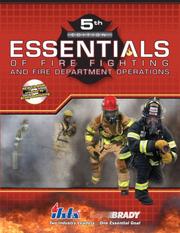
The canonical, nationally recognized textbook used in fire academies across the United States — the single most important technical reference a candidate can own and study cover to cover.
The standard EMT-Basic textbook used in EMS training programs nationwide; most fire departments require at minimum an EMT certification, and this book is the definitive starting point for that crossover.

Introduces fire cause and origin analysis, deepening understanding of fire behavior and scene reading — knowledge that makes a candidate stand out and builds intuition for suppression decisions.
Physical Readiness & Occupational Fitness
IntermediateBuild and sustain the specific functional fitness — cardiovascular endurance, strength, and work capacity — required to pass the CPAT and perform safely throughout a long physical career.
▸ Study plan for this stage
Pace: 8–10 weeks total: Weeks 1–5 cover "Firefighter Functional Fitness" (~20–25 pages/day, including re-reading key program chapters); Weeks 6–10 cover "Tactical Barbell" (~15–20 pages/day with extra time devoted to programming templates and operator/operator+ cluster design). Dedicate at least 3 session
- CPAT event-specific demands — the seven CPAT stations (stair climb, hose drag, equipment carry, ladder raise, forcible entry, search, rescue drag, ceiling breach) and the precise fitness qualities each taxes, as detailed in Firefighter Functional Fitness
- Functional movement screening and injury-prevention principles for firefighters — Kerrigan's emphasis on identifying movement deficiencies before layering load
- Firefighter-specific exercise selection — loaded carries, sled work, stair climbs under load, grip-intensive pulling, and how Kerrigan maps each drill to on-scene tasks
- Periodization for operational athletes — Tactical Barbell's distinction between strength-dominant, endurance-dominant, and balanced (Operator) templates and when each is appropriate for a firefighter's career phase
- The Operator and Zulu clusters in Tactical Barbell — how to build a minimalist, high-frequency strength block that coexists with aerobic base work without overtraining
- Aerobic base construction — Tactical Barbell's Green Protocol and the role of low-intensity steady-state (LSS) and high-intensity interval training (HIIT) in building the cardiovascular engine firefighting demands
- Work-capacity and conditioning blocks — combining strength and conditioning so that neither quality degrades the other, a central tension Tactical Barbell resolves through its 'interference effect' management strategies
- Long-term career sustainability — both books' shared theme that fitness is not a one-time CPAT prep event but a decades-long professional obligation requiring planned deload weeks, injury management, and lifestyle habits
- According to Kerrigan, which CPAT stations place the greatest demand on muscular endurance versus pure cardiovascular output, and what training modalities does he prescribe for each?
- How does Kerrigan's functional movement approach differ from generic gym programming, and why does he argue that movement quality must precede load progression for firefighters?
- What is the core logic behind Tactical Barbell's Operator template — why are only 2–3 main lifts trained at high frequency, and how does this structure protect work capacity for conditioning sessions?
- How does Tactical Barbell define and manage the 'interference effect,' and what practical scheduling rules does K. Black recommend to prevent strength and endurance adaptations from canceling each other out?
- What role does the Green Protocol play in Tactical Barbell's system, and how would you select between LSS, HIIT, and threshold runs to build a firefighter's aerobic base across a 12-week block?
- How would you integrate the firefighter-specific drills from Firefighter Functional Fitness (e.g., loaded stair climbs, hose drags) into a Tactical Barbell Operator template without exceeding weekly recovery capacity?
- CPAT simulation run: After finishing Kerrigan's event-specific chapters, set up a mock CPAT circuit (stair stepper with weighted vest, hose drag with a filled hose or heavy rope, sandbag carry, etc.) and time yourself — use the result as your baseline fitness benchmark.
- Program design drill: Using Tactical Barbell's Operator template as the skeleton, write out a full 6-week training block on paper — choose your 2–3 main lifts, assign cluster days, slot in Green Protocol conditioning sessions, and annotate each choice with the reasoning K. Black provides.
- Loaded carry progression: Each week for 8 weeks, perform a farmer's carry or sandbag carry for 200 m, progressively increasing load by 5–10 lbs — log time, load, and perceived exertion to observe the work-capacity curve Kerrigan describes.
- Aerobic base audit: Track every cardio session for 4 weeks using heart-rate data; categorize each session as LSS, threshold, or HIIT per Tactical Barbell's definitions, then compare your actual distribution to K. Black's recommended ratio and adjust accordingly.
- Movement quality checklist: Using Kerrigan's functional movement criteria, video yourself performing a goblet squat, hip hinge, push-up, and single-leg stance — identify any compensations and prescribe the corrective drills Kerrigan recommends before adding load.
- Deload and recovery planning: Draft a 12-month training calendar that includes planned deload weeks, an annual CPAT mock test, and at least one 'base-building only' mesocycle — drawing explicitly on the long-term sustainability principles from both books.
Next up: Mastering the physical foundation and programming logic in this stage equips the reader to engage meaningfully with the operational and tactical dimensions of firefighting — because understanding how to sustain a fit, resilient body prepares them to study the high-stress, high-stakes decision-making and technical skills that define actual fireground performance in the next stage.

Written by a firefighter and fitness professional, this book designs training specifically around CPAT events and on-the-job demands — far more targeted than generic fitness books.

Widely used by military, law enforcement, and fire candidates, this program builds the strength-endurance base needed for a demanding physical career with minimal recovery time between shifts.
Advanced Tactics, Leadership & the Long Career
ExpertThink and operate like an experienced firefighter — understanding incident command, size-up, fireground decision-making, and how to grow into leadership roles over a full public-service career.
▸ Study plan for this stage
Pace: 4–5 weeks, ~20–25 pages/day — Terpak's book is dense with tactical detail, so read one building-type chapter per session, pausing to sketch diagrams and review size-up factors before moving on.
- The 13 points of size-up (COAL WAS WEALTH) and how each factor feeds real-time fireground decision-making
- Building construction types (Type I–V) and how structural materials dictate fire behavior, collapse risk, and tactical priorities
- Occupancy-specific size-up: how residential, commercial, high-rise, and taxpayer buildings each demand a distinct mental checklist
- Reading smoke — volume, velocity, color, and density as intelligence tools before and during an attack
- Life hazard assessment: prioritizing occupant rescue versus fire control based on size-up data
- Water supply and apparatus positioning as early size-up decisions that lock in or limit all subsequent tactics
- Incident Command integration: how company-level size-up feeds the Incident Commander's overall strategy and resource allocation
- The culture of continuous learning — using post-incident analysis and near-miss review to sharpen size-up instincts over a career
- What are the 13 size-up factors in Terpak's COAL WAS WEALTH framework, and what specific information does each factor require the officer to gather?
- How does building construction type change your tactical priorities — for example, why does a lightweight wood-frame (Type V) structure demand a faster transition to defensive operations than a fire-resistive (Type I) high-rise?
- Describe how smoke reading (color, velocity, volume, density) can tell you the stage of the fire, its approximate location, and potential for flashover or backdraft before you make entry.
- Walk through a size-up for a two-story taxpayer building with fire showing from the first floor at 0300 hours — what factors does Terpak say you must address in the first 60 seconds?
- How does an accurate, communicated size-up directly shape the Incident Commander's strategy, resource requests, and accountability decisions?
- What are the most common size-up failures Terpak identifies, and what habits or SOGs does he recommend to prevent them?
- COAL WAS WEALTH flashcard drill: Create one card per factor with the factor name on the front and a checklist of 3–5 specific questions to answer on scene on the back; quiz yourself until you can recite all 13 from memory in under 90 seconds.
- Virtual size-up walk-arounds: Use Google Street View or fire department training photos to 'arrive' at unfamiliar buildings and verbally narrate a full size-up out loud, hitting every Terpak factor — record yourself and review for gaps.
- Construction-type field survey: Visit five different buildings in your response area (residential, commercial, taxpayer, high-rise, warehouse) and document construction type, estimated fire load, access points, and collapse indicators using Terpak's framework as your guide.
- Smoke-reading image analysis: Gather 10–15 fireground photos online and, using Terpak's smoke-reading criteria, write a one-paragraph size-up for each — identify fire stage, probable location, and recommended initial tactics.
- Tabletop scenario exercise: With a partner or crew, use a building floor plan and a scenario card (time of day, weather, reported occupancy, fire location) to conduct a verbal size-up and initial IAP, then debrief against Terpak's recommended decision points.
- Post-incident size-up audit: After any live incident or department training evolution, complete a written one-page size-up critique — what factors were identified early, which were missed, how did gaps affect tactics, and what would Terpak's framework have changed?
Next up: Mastering Terpak's size-up framework gives the reader a structured tactical mind — the essential foundation for stepping into formal leadership roles, where the next stage would build on these fireground instincts to develop command presence, crew supervision, and career-long professional growth.

A definitive tactical reference on reading a structure fire scene and making rapid, sound decisions — the kind of adaptive human judgment that no technology can replicate and that separates good firefighters from great ones.
Discussion
Keep reading
Paths that share books, cover the same subject, or open a related topic.