Fintech and Digital Payments: The Best Books on How Money Moves, in Order
Between tapping a card and money arriving in a merchant's account there are at least six parties, two networks, an interchange fee split several ways, and a settlement that will not complete for a day or more. Almost nobody who works in fintech can describe that sequence accurately, which is why so much of the industry's writing is about disruption in the abstract rather than about the rails. This path fixes that order of operations: the plumbing first, then the founding case study of a company that attacked it, then the incumbent banks' response, then the survey volumes that map the sector, and finally the arguments about where money itself is going. Read this way you get the mechanism before the narrative, which is the only sequence in which the narrative is checkable.
The Plumbing
BeginnerLearn the actual mechanics — issuers, acquirers, card networks, processors, ACH and wire, interchange and the merchant discount rate, authorisation versus clearing versus settlement. Everything later is meaningless without this.
▸ Study plan for this stage
Pace: 4–5 weeks. Payments Systems in the U.S. is a practitioner reference rather than a narrative — read it slowly, one payment type per sitting, over about two weeks, and note that the catalogued third edition predates FedNow's 2023 launch and much of the current real-time picture while the Durbin interc
- The four-party card model: cardholder, issuer, acquirer, merchant, with the network in the middle — and where the three-party models differ
- Interchange, scheme fees and the merchant discount rate: three different fees, paid by different parties, that non-specialists routinely conflate
- Authorisation, clearing and settlement as three distinct events separated in time, which is why a refund behaves differently from a reversal
- ACH versus wire versus card versus cheque: push and pull, finality, reversibility, and the cost profile of each
- Chargebacks and the liability shift, which is the real risk product a card network sells
- Float, settlement risk and the reason a payments company is a credit business whether or not it says so
- Rogoff's public-policy case that high-denomination cash mainly serves tax evasion and crime, and the objections to it
- That Benson, Loftesness and Jones is a working industry reference and Rogoff is an argument — do not read them at the same register
- Trace a $100 card purchase end to end: who is paid what, when does the merchant actually have the money, and who bears the loss if the card was stolen?
- Why is interchange set by the network rather than negotiated between issuer and acquirer, and what did the Durbin amendment change about that?
- Why can an ACH debit be returned days later when a card authorisation cannot?
- What is the merchant discount rate composed of, and which component can a processor actually compete on?
- Which of Rogoff's arguments depends on cash being anonymous, and does a retail CBDC preserve or destroy that premise?
- Which parts of Benson's third edition have been overtaken by real-time payment schemes, and how would you find out?
- Write out the full fee decomposition of a specific $50 card transaction using Benson's numbers: interchange, assessment, processor markup, and what lands in the merchant's account. Then redo it for a debit card under Durbin and for a premium rewards credit card.
- Draw the same purchase twice — once as a card transaction and once as an ACH debit — with a timeline in hours and days for authorisation, clearing, settlement and the latest possible reversal. The two timelines are the whole difference between the rails.
- Take one non-payments vertical from the survey catalogued as Fintech — lending or insurance — and write a paragraph on which part of the incumbent's value chain the startups in it are attacking. You will use this in the landscape stage.
- Test one of Rogoff's central figures — the share of large-denomination notes unaccounted for by legitimate commerce — against the current release of the central bank data he cites, and note how much it has moved since 2016.
Next up: Now that you can describe the rails, the founding case study is checkable rather than inspiring: you can see exactly which layer PayPal attacked and what it cost them.

The correct first book and the one the industry actually uses: Benson, Loftesness and Jones explain every payment type in the United States — cards, ACH, wires, cheques, cash — and how the economics and the participants differ for each. Read it before anything else here; the catalogue record is the third edition.

The systematic survey of the sector beyond payments — lending, wealth management, insurance, regtech, and the underlying technologies. Catalogued under the bare word Fintech. Read it second, as the map of what else the word covers once the payment rails are understood.

Rogoff's argument for phasing out large-denomination notes, on the grounds that most of them are used for tax evasion and crime rather than commerce. Read it here because it is the serious economic case for digital payments as public policy rather than as product, and it is genuinely contested.
The Founding Case, and the Cautionary One
BeginnerSee a startup attack the payments stack from the outside and win, then see what happens when nobody checks whether the payment volumes were real.
▸ Study plan for this stage
Pace: 3 weeks. The PayPal Wars is a fast insider narrative of about a week; it was published in 2004, so it precedes PSD1 and PSD2, the smartphone, and every company that now defines the sector, and it is written by a partisan former employee with strong views about the people involved. Money Men is longe
- Fraud loss as the existential risk of a payments company, and why loss rates in basis points decide survival
- Regulatory arbitrage in the early PayPal model — money transmission licensing, bank charters, and what it means not to be a bank
- Network effects and the distribution fight with a platform that could switch you off, which is the eBay-Billpoint story
- Merchant acquiring for high-risk sectors, which is the structural hole Wirecard grew in
- The third-party acquiring partner as the mechanism by which unverifiable volumes were reported
- Why auditors, analysts and regulators each failed to catch it, and what each was actually looking at
- The difference between an insider's memoir with a thesis and adversarial reporting built from documents and sources
- What specifically nearly killed PayPal, and what was the response — a technology, a policy, or a pricing change?
- Why did PayPal's relationship with eBay make its business both viable and precarious at the same time?
- In Money Men, what were the third-party acquirers supposed to be doing, and what made that arrangement so hard to verify from outside?
- Which signals about Wirecard were publicly available years before the collapse, and why did they not move the price?
- Jackson is a participant with a view of his colleagues; McCrum is a reporter who became part of his own story. How does each position shape what you should and should not take from the book?
- List every fraud and risk control PayPal introduced in Jackson's account, in order, and mark which of them exist as standard products today. That list is a short history of payments risk management.
- Reconstruct Wirecard's reported revenue chain from McCrum's account — merchant, acquirer, partner, reported volume — and mark the single link that could not be independently verified. Then write what a payments person from stage one would have asked about it.
- Take the fee decomposition you built in stage one and apply it to a high-risk merchant category. Work out why the margins there attract exactly the sort of business Wirecard was booking.
- Write the short-seller's memo on Wirecard as of 2016 using only what McCrum shows was knowable then, then write the company's rebuttal. Both were real documents; the exercise is seeing why the rebuttal worked for four more years.
Next up: Having seen the sector attack the incumbents from outside and then defraud its own investors, you are ready to read the incumbents' account of the same period without taking either side's framing on trust.
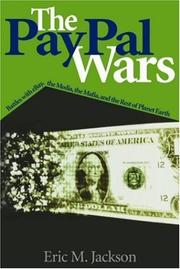
The insider account of PayPal from an early employee — the fraud losses that nearly killed it, the fight with eBay's Billpoint, and the regulatory pressure. Read it first here: it is the founding case of the whole sector and it makes concrete why payments companies are, in practice, risk businesses rather than technology ones.

McCrum's account of the Wirecard fraud, reported over five years at the Financial Times against legal threats and surveillance. The essential counterweight to the previous book: a payments processor valued higher than Deutsche Bank whose Asian business largely did not exist. Read it directly after PayPal.
The Banking Response
IntermediateUnderstand how incumbents see the same shift, and separate the genuine architectural argument — that banking becomes a set of services embedded elsewhere — from the conference rhetoric around it.
▸ Study plan for this stage
Pace: 4 weeks, about ten days a book. Date them as you read: Digital Bank is 2014 and predates open banking, PSD2 in force and the API-first wave it half anticipates; Bank 4.0 is 2018 and lands just as PSD2 arrives, which is why it reads as more prescient than it was; Doing Digital is 2020 and is the only
- Core banking systems as the actual constraint: batch processing, decades-old code, and why a mobile app does not change any of it
- Channels versus architecture — the distinction Skinner uses to separate cosmetic digitisation from real change
- King's first-principles claim: that banking becomes a set of utility services embedded in other experiences rather than a destination
- Mobile-first leapfrogging in markets without legacy branch networks, and the limits of generalising from it
- Open banking and PSD2 as the regulatory forcing function that turns a bank's data into someone else's product
- Organisational change — incentives, governance, the separate digital unit and why it usually fails — which is Doing Digital's real subject
- How to read a case study written with the cooperation of the institution being described
- What does Skinner say a bank must actually replace, and why does he think most transformation programmes avoid exactly that?
- State King's Bank 4.0 thesis in one sentence. What would falsify it, and has anything since 2018 come close?
- The African and Asian examples in Bank 4.0 are the empirical core of the argument. What is different about those markets that might not transfer?
- In Doing Digital, what do BBVA, ING, DBS and JPMorgan have in common that the failed transformations lacked?
- Which of the three books is most concrete about cost, and what does that tell you about the other two?
- Take one bank from Doing Digital and write its transformation as a sequence of decisions with dates and costs, using only what Skinner reports. Mark every point where the book gives you an outcome without a mechanism.
- Apply King's embedded-banking claim to the payment chain you decomposed in stage one: work out which participants in the four-party model disappear if banking really becomes a background utility, and which cannot.
- Read one chapter of Digital Bank and one of Bank 4.0 on the same topic — branches, or core systems — and write half a page on where they genuinely disagree rather than merely differ in tone.
- Score all three books against a checklist you write first: does the claim name a bank, a number, a date, a technology? Most of the sector's writing fails such a checklist, and knowing that is the point of the exercise.
Next up: With both the attacker's and the incumbent's accounts in hand, the survey volumes can be read for the vocabulary and the detail they carry rather than for the claims they make.

The best starting point on the incumbent side: Skinner's account of what a bank actually has to change — core systems, channels, culture — rather than what it should aspire to. Read it before the King books; it is more concrete about legacy technology, which is where most of the difficulty really lives.

King's central claim, and the one worth engaging with: banking as a utility embedded in other experiences, with first-principles design rather than digitised branches, argued from mobile-first markets in Africa and Asia rather than from New York. Read this rather than the earlier Bank 3.0, which it supersedes.

Skinner's follow-up, built on interviews with banks that actually completed a transformation — BBVA, ING, DBS, JPMorgan. Read it last in this stage as the empirical check on the two above: it is the closest thing here to evidence rather than argument.
The Landscape
IntermediateGet breadth across the sector quickly through the multi-author survey volumes, and learn to read them for what they are — practitioner snapshots with real detail and real hype in the same chapter.
▸ Study plan for this stage
Pace: 3–4 weeks, and read these differently from everything else on the path: they are collections of short practitioner chapters, so read by index rather than cover to cover. The FINTECH Book is 2016 and is a snapshot of what the industry believed about itself immediately before PSD2 and UK open banking
- Real-time payment schemes and how they differ country to country: Faster Payments, UPI, Pix, RTP and FedNow
- Open banking APIs, strong customer authentication and the PSD2 obligations that produced both
- Cross-border remittance economics: correspondent chains, FX spread, and where the actual cost sits
- Merchant acquiring, payment facilitators and the marketplace model that changed who holds the merchant relationship
- Regtech, know-your-customer and onboarding as a cost centre that startups attacked directly
- How to read a practitioner chapter: separate the mechanism being described from the company being promoted, because they are usually in the same paragraph
- The value of these volumes as dated primary sources on industry belief, which is a different value from being right
- Pick two real-time schemes from The PAYTECH Book and state precisely how they differ in settlement, addressing and dispute handling.
- What obligations did PSD2 actually impose, and on whom? Which of the book's chapters get that right and which are marketing?
- Where does the cost of a cross-border remittance actually accrue, and which layer of it have the challengers genuinely reduced?
- Read three chapters of The FINTECH Book and identify the predictions each makes. How many happened?
- Which claims across these volumes could you now check against stage one's mechanics and find wrong?
- Build a comparison table of four real-time payment schemes from The PAYTECH Book: country, operator, settlement model, addressing scheme, launch year, current volume. Fill the last column from a current source, since none of these books has it.
- Take ten predictions from The FINTECH Book with a stated horizon and score each one now. Write a sentence on the pattern in the misses — it is usually the same pattern.
- Choose one chapter written by a founder about their own company and rewrite it stripping every promotional sentence. Compare the length before and after; that ratio is the reading skill this stage teaches.
- Listen to or read two Breaking Banks interviews from 2014 and write down what the participants assumed about mobile, branches and regulation. Then mark each assumption as vindicated, wrong, or not yet settled.
Next up: You have the rails, the cases, the incumbents and the sector map; what is left is the set of arguments that the unit of account and the banking model themselves are what changes.
The crowdsourced practitioner survey that defined the genre — short chapters from founders, investors and regulators across the whole sector. Read it for breadth and for the vocabulary, not for analysis; its value is that it captures what the industry believed about itself at a specific moment.

The payments-specific volume in the same series, and the more useful of the two here: real-time payments schemes, open banking APIs, PSD2, cross-border remittance and merchant acquiring, each from a practitioner. Read it directly after Benson to see how the rails are being rebuilt.

Interviews drawn from King's radio show with founders and bankers across the sector. The lightest thing on this path and the fastest way to hear the arguments in the participants' own words — read it as a supplement, and treat the predictions as period evidence rather than forecasts.
Where Money Itself Is Going
IntermediateMove past product to monetary architecture — cryptocurrencies, a cashless national economy, and the proposal to end fractional-reserve banking entirely.
▸ Study plan for this stage
Pace: 4–5 weeks. The Age of Cryptocurrency is 2015 and is the most heavily dated book on the path — it predates the ICO boom, stablecoins at scale, decentralised finance, the 2022 collapses and every serious regulatory framework, so read it for the monetary framing and not at all for the technology landsc
- What a blockchain actually replaces in the stack from stage one: settlement finality and the trusted intermediary, not the user interface
- The double-spend problem and why it is a settlement problem in the terms you already have
- QR-code payment systems as an alternative rail that never used cards at all, and the Chinese two-platform duopoly
- Central bank digital currency: retail versus wholesale, and the intermediated model most designs settle on
- Financial inclusion claims, and the difference between account access and credit access
- Fractional-reserve banking, maturity transformation and why The End of Banking treats them as the source of instability rather than a feature
- The systemic solvency rule the book proposes in place of prudential regulation, and the obvious objections to it
- That all three books are arguing for something, and each selects the evidence its argument needs
- Which specific participant in the four-party model does a public blockchain propose to remove, and what does it substitute?
- Why did China's payment system converge on QR codes and platform wallets rather than on cards, and which of those causes were technological?
- What does the digital yuan give the state that Alipay and WeChat Pay did not already give it?
- State the argument of The End of Banking in your own words. Where does it depend on a claim about technology, and where on a claim about accounting?
- Vigna and Casey's book is a decade old. Which of its framings survive and which of its facts do not?
- Across the whole path: which layer of the payments stack has actually changed since 2004, and which is exactly where PayPal found it?
- Redraw the stage-one settlement diagram three times: as a card transaction, as a Bitcoin transaction, and as an Alipay transaction. Label who bears settlement risk, who can reverse, and who sees the data in each.
- Take one claim from The Age of Cryptocurrency about what blockchains would do to remittances, then look up the actual cost and volume of a specific corridor today and write the comparison. Do the same for one claim about banking the unbanked.
- Work through The End of Banking's proposed solvency rule on a simplified bank balance sheet: apply it, and show what the bank can and cannot do afterwards. The exercise is doing the accounting, not agreeing with it.
- Using Cashless, write the payment stack of a Chinese street vendor and of an American one side by side, with every intermediary and every fee. The comparison is the strongest empirical argument in this stage.
- Close with a one-page dated reading list of your own: for each stage, the book to keep, its publication year, and the single development since that year a new reader must be told about before starting it.
Next up: This closes the path — mechanics, cases, incumbents, landscape and the monetary arguments — and leaves you able to read scheme rulebooks, regulatory consultations and company filings, which is where the subject actually lives after the books go out of date.
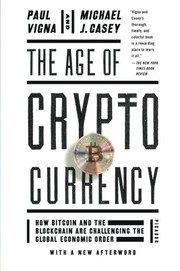
Vigna and Michael Casey's account of Bitcoin as a monetary and social phenomenon rather than a trade. The most balanced entry point to the topic and, read after the payments stages, the clearest view of which parts of the existing stack a blockchain actually proposes to replace.

The one book here about a functioning large-scale alternative: China's move to QR-code payments through Alipay and WeChat Pay, and the digital yuan pilots, written from Shanghai. Read it as the empirical case that a payments system can be rebuilt around something other than cards.

The most radical proposal on the path, written pseudonymously by an economist and an investment banker: that digital technology has made fractional-reserve banking both unnecessary and unstable, and that the fix is a solvency rule rather than more regulation. The right closing book because it disputes the premise every other book here shares.