Eudora Welty in Order: Where to Start with the Stories and the Novels
Welty is a short-story writer who also wrote novels, and readers who start with Delta Wedding usually decide she is a genteel regionalist and stop. She is nothing of the kind. This path starts with the two shortest books, which read like her stories at slightly greater length, then goes to the stories themselves, then to the two large difficult novels once you can hear the voice, and ends with the memoir and the criticism.
The Two Short Books
BeginnerGet Welty's voice at a length you can finish in an evening, and see the two extremes of her range — comic fable and late elegy — before committing to anything long.
▸ Study plan for this stage
Pace: Two to three weeks. Both editions run to about 185 pages and both are genuinely short novels — The Robber Bridegroom can be read in one long evening and should be, because its pace is part of the joke. Give The Optimist's Daughter a week and reread the last thirty pages.
- The Robber Bridegroom fuses a Grimm fairy tale with the tall-tale material of the Natchez Trace, and the mixture is unstable on purpose: a planter, his daughter, a bandit who is also a gentleman, a wicked stepmother, a severed head kept in a trunk, and the flatboat brawler Mike Fink walking in from
- The book refuses realism from the first page. Anyone who arrives at Welty expecting a documentarian of the South is corrected within twenty pages, which is exactly why it opens the path.
- The disguise plot — Jamie Lockhart robbing by night with berry-stained face and courting by day — is a joke about identity that Welty keeps returning to for forty years. Nobody in her work is only one thing.
- The Optimist's Daughter is the same imagination in a completely sober register: a daughter returns to Mississippi for her father's illness and death and finds herself at war with his much younger second wife over what may be remembered and by whom.
- The fight is about possession of the past, not about money or the house. Fay has no memory of the father and no use for one, and Laurel's grief is inseparable from her sense that this makes her the rightful heir to him.
- Objects carry the argument: the breadboard, the house's small repairs, the bird loose in the rooms. Welty puts the emotional weight into things and lets the characters talk about something else.
- Read consecutively, the two books show the range at its extremes — a comic fable and a late elegy — before any long book has been committed to.
- Where does The Robber Bridegroom stop being a fairy tale and start being a tall tale, and does it ever settle?
- Jamie Lockhart lives as two people. What does the book get from a hero who is literally in disguise, and who else in it has a second identity?
- In The Optimist's Daughter, what exactly is Laurel fighting Fay over? State it without using the word grief.
- What is the bird in the house doing in the novel? It is given several pages, which is a lot in a book this short.
- Both books end with a departure. What does each character take with them, and what do they leave?
- Read The Robber Bridegroom in a single sitting, then write 150 words on which of its elements come from the fairy tale and which from frontier legend. The seams are visible and finding them is most of the pleasure.
- In The Optimist's Daughter, mark every appearance of the breadboard and write a paragraph on what it has come to mean by the last one.
- Take one page of each book and compare the sentence lengths and the amount of dialogue. The two registers should be measurable, not just felt.
- Write 200 words on what a reader would wrongly conclude about Welty from either book read alone.
Next up: You now have both ends of her range at short length, which is the preparation for the collections where that range is exercised story by story.
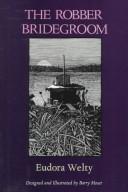
A Natchez Trace fairy tale with a bandit, a planter's daughter and a talking head in a trunk. Barely a hundred pages, very funny, and the fastest possible demonstration that Welty is a fabulist rather than a documentarian of the South.
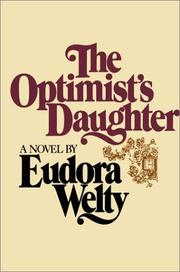
A woman returns to Mississippi for her father's death and fights his young widow over a memory. Her Pulitzer book, short and controlled, and the right second stop because it shows the same imagination working in a completely sober register.
The Stories, Which Are the Real Argument
BeginnerRead the story collections in order and understand why Welty's reputation rests on them: this is where the invention, the comedy and the strangeness are least diluted.
▸ Study plan for this stage
Pace: Eight to ten weeks and do not rush. A Curtain of Green is 285 pages, The Wide Net 214, The Golden Apples 277. One story a sitting throughout, and reread each story immediately before moving on — these are stories that give up their structure on the second pass and almost nothing on the first.
- A Curtain of Green is the first collection and contains three of the most anthologised American stories of the century: a monologue by a woman who has moved into the post office after a family quarrel, a beauty-parlour conversation that turns out to be about a rapist exhibited at a freak show, and a
- The comic monologues are the surprise. Welty's ear for the way people talk themselves into a position — and the way a grievance narrates itself as reasonableness — is her most immediately available gift.
- The same collection contains the pure lyric mode: a story that is nothing but an old woman on a road, with the plot arriving in the last page and reframing everything before it. That two registers sit in one book is the point.
- The Wide Net is the strangest of the three, mostly set along the Natchez Trace and mostly dreamlike. It contains a story in which a religious itinerant, a murderer and a naturalist meet on the same road and each sees the same heron differently, which is as direct a statement of her method as she eve
- The Golden Apples is seven linked stories about one Mississippi town across roughly forty years, with characters aging between them and the reader expected to remember. It is a de facto novel and most critics take it as her best work.
- The title comes from a Yeats poem and the classical material is deliberate — a wandering father figure who appears and disappears, a piano teacher whose life is destroyed by the town, a girl who becomes the book's only true artist. Myth is used as a pressure on ordinary lives, not as a decoding key.
- The piano-recital story at the centre of The Golden Apples is her most technically ambitious piece: two children watching the same house from different rooms, past and present interleaved, and a whole life reconstructed from what they half-see.
- In the post-office monologue, what has actually happened, and how does Welty let you know that the narrator's account is not to be trusted?
- The beauty-parlour story is very funny until it is not. Where exactly does it turn, and does the comedy retroactively change?
- In the road story about the three travellers, what does each man see when the heron appears, and what is Welty claiming about perception?
- What holds The Golden Apples together — a place, a family, a set of themes, or a single recurring figure? Argue for one.
- Who is the artist in The Golden Apples, and how does the book judge the town that produced her?
- Having read all three collections, what changes between the first and the third? Name something concrete about technique, not about tone.
- Read the post-office monologue aloud in full. It is written to be spoken and the timing is invisible on the page.
- For each of the seven Golden Apples stories, write down the year it seems to occur and who has aged. Assemble the timeline yourself; the book never supplies one.
- Take the piano-recital story and diagram which character is observing in each section and from where. The structure is the achievement and it does not survive being read passively.
- Read the Yeats poem the collection takes its title from, then write 200 words on which characters are the wanderer and which the apples.
- Pick the one story you would give somebody who had read no Welty, and write five sentences justifying it.
Next up: The stories teach you to hear her, which is the single thing the long family novels assume and never supply.
The first collection, containing Why I Live at the P.O., Petrified Man and A Worn Path — three of the most anthologised American stories of the century. Read it third and the two short novels will retroactively make sense as stories that got away from her.
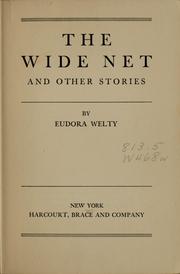
The second collection, and the strangest: dreamlike, historical, less funny, more myth. It is the bridge between the broad comedy of the first book and the formal ambition of the third.
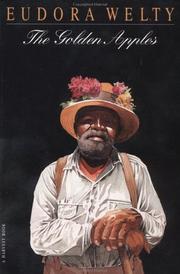
Seven linked stories about one Mississippi town across forty years, threaded with Yeats and Perseus. Most critics consider it her masterpiece; it is also a de facto novel, which makes it the perfect hinge into the long books.
The Novels You Are Now Ready For
IntermediateTake on the family novels that defeat readers who start with them, and hear the crowded overlapping talk as technique rather than as decoration.
▸ Study plan for this stage
Pace: Ten to twelve weeks. The Ponder Heart is 156 pages of monologue and reads in two sittings. Delta Wedding is 247 pages and slow by design — three weeks, and expect to be bored before you are held. Losing Battles is 436 pages of almost continuous talk; give it five weeks and keep a family list from th
- The Ponder Heart is a single voice: a hotel proprietor telling a trapped guest about her uncle's murder trial, without pause, digressing constantly, and revealing far more than she means to. It is the gentlest possible entry to the wall of family talk in the next two books.
- Its comedy runs on the gap between what the narrator says and what has evidently happened. The trial, the giving away of money, the thunderstorm — she reports all of it while insisting on an interpretation the reader cannot share.
- Delta Wedding takes place over a few days in 1923 on a Delta plantation as a family assembles for a wedding, and Welty chose that year deliberately as one with no flood and no war, so that nothing from outside could intrude on the family.
- Almost nothing happens, and the absence of plot is the design. The novel moves through several consciousnesses — a visiting child, the mother, an elder daughter's diary — and the reader assembles the family from overlapping partial views.
- The near-accident on the railway trestle is the one event everyone in the book is privately organised around, and it is narrated obliquely and repeatedly rather than shown once. That is Welty's method for the thing a family cannot discuss directly.
- Losing Battles is a hill-country family reunion for a grandmother's ninetieth birthday, told almost entirely in dialogue and external description, and Welty said explicitly that she wanted to write a book with no access to anyone's interior.
- The dead schoolteacher who is discussed all day is the novel's real subject — an outsider who tried to educate the family and largely failed, and whose funeral is happening while they talk. The comedy and the loss are the same material.
- These are the books people abandon when they start with them. Read after the stories, the crowded overlapping talk reads as a technique for showing a group mind rather than as a failure to organise a plot.
- In The Ponder Heart, what does the narrator believe happened, and what do you believe happened? Where do the two accounts separate?
- Delta Wedding is set in a year deliberately chosen for its emptiness. What does that choice let Welty show, and what does it prevent her from showing?
- The trestle incident is told more than once and never straight. Reconstruct it. Why will the family not narrate it directly?
- Losing Battles gives you no interior access at all. What does the reader learn about a character, and how does the book convey it without thought?
- What is the family's actual view of the dead schoolteacher, and how does the novel let you see past it?
- All three books are dominated by talk. What is the difference between the talk in The Ponder Heart and the talk in Losing Battles?
- Keep a running family chart for Delta Wedding and another for Losing Battles, adding names as they first speak. This is not optional; both books assume a reader who already knows everybody.
- Read The Ponder Heart aloud, at least the first twenty pages. The monologue's rhythm is the book and it is inaudible silently.
- In Delta Wedding, mark every section by whose consciousness it uses. Then look at how many pages each gets. The distribution is an argument about the family.
- Take any five consecutive pages of Losing Battles and note what you learn about each speaker from what they choose to say. Write 200 words on how characterisation works without interiority.
- Write 300 words on why Delta Wedding is the wrong first Welty, using a specific passage that would read as tedium to a new reader and as technique to you now.
Next up: Having read the fiction, you can now read her own account of how it was made and test it against what you have seen on the page.
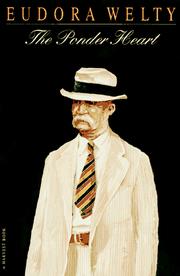
A hotel proprietor talks a stranger through her uncle's murder trial without pausing for breath. Short, monologue-driven, and the gentlest introduction to the wall of family voices that the next two books are built from.
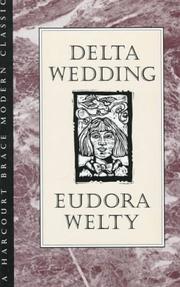
A plantation family assembles for a wedding in 1923 and almost nothing happens for three hundred pages. This is the book that ruins Welty for people who read it first; sixth, with the stories behind you, its refusal of plot reads as a deliberate choice.
A hill-country family reunion told almost entirely in dialogue over one very hot day, and her longest book. Save it for last among the fiction: it is the extreme case of everything she does, and it is a genuine pleasure only once you already trust her.
Welty on Welty
IntermediateFinish with the criticism and the memoir, and get her own account of what she thought fiction was doing, which is unusually direct for a writer so indirect on the page.
▸ Study plan for this stage
Pace: Four to five weeks. The Eye of the Story is 355 pages of essays and reviews and should be read selectively rather than cover to cover — the pieces on place, on time, and on the writers she loved first. One Writer's Beginnings is 109 pages in three lectures and takes an evening each; read it last and
- The essay on place in fiction is the central text: her argument that a novel's location is not decoration but the source of its credibility, and that a writer's authority comes from having somewhere to stand rather than from having something to say.
- The critical pieces on Austen, Chekhov and Cather are working-writer criticism — she reads for how an effect is produced, not to place a book in a tradition. They are among the most useful short essays on technique by any American novelist.
- Her essay refusing the idea that a novelist must crusade is the contested one, and it should be read as an intervention in a live argument rather than as settled wisdom. It was published in the mid-1960s in the American South, and readers then and since have disagreed sharply about whether her posit
- The Eye of the Story is unsentimental about craft in a way that One Writer's Beginnings is not, which is why it comes first — the memoir is a public performance, and the essays are the shop floor.
- One Writer's Beginnings is three lectures — on listening, on learning to see, and on finding a voice — given at Harvard and structured as an argument about where a writer's material comes from.
- The memoir's method is to show you the origin of things you have already read: a clock, a car journey, a parent's illness, a habit of overhearing. Half its pleasure depends on having done the reading first, which is why it is last on this path.
- Her image of a life's writing as one continuous line, and her account of a childhood spent listening rather than being addressed, are the two ideas the book is remembered for.
- What is Welty's argument about place, and does her own fiction obey it? Test it against The Golden Apples.
- Take her essay on Chekhov or Austen. What technical thing is she pointing at, and can you find her doing it herself?
- Set out the case she makes against the crusading novelist and the strongest case against her position. What does each side take fiction to be for?
- In One Writer's Beginnings, which scenes do you recognise from the fiction, and how has each been altered?
- The memoir is warm and the essays are not. Which do you take to be the more accurate account of how she worked, and why?
- Read the essay on place, then reread the first five pages of Delta Wedding with it in hand and annotate every place-detail that is doing structural work.
- Write 300 words setting out the crusading-novelist argument on both sides, quoting her position accurately and constructing the objection as strongly as you can. Do not resolve it.
- Make a two-column list while reading One Writer's Beginnings: the memory on the left, the story or novel it turns up in on the right. Ten entries is achievable.
- Take her account of learning to listen and write 200 words on how it shows in the dialogue of Losing Battles specifically.
Next up: This closes the path: the fables, the stories that carry her reputation, the difficult novels and her own account of the whole enterprise, read in the order that makes each one intelligible.
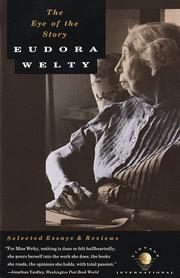
Her essays and reviews, including the celebrated pieces on place and on Austen and Chekhov. Read it before the memoir: it is the working writer's account, unsentimental about craft.

Three lectures on listening, learning to see, and finding a voice, and the best-selling thing she ever wrote. It belongs at the very end, because half its pleasure is recognising the sources of scenes you have now read.