Enid Blyton books in order: where to start with the Famous Five
Enid Blyton wrote several unrelated series aimed at quite different reading levels, which is why asking where to start with her is really several questions. This path groups them: the Faraway Tree books for the youngest readers, the Famous Five, the other adventure series, and the boarding-school stories. Within the Famous Five and the school books, order matters a little and only a little; within Faraway Tree it matters more. One thing worth knowing before handing these over: the original texts carry the class and gender assumptions of the 1940s and 1950s, and modern editions have been revised to varying degrees, so it is worth checking which edition you have bought.
The youngest books, in order
BeginnerBegin with the Faraway Tree sequence, which is genuinely sequential and pitched at the youngest readers Blyton wrote for.
▸ Study plan for this stage
Pace: A week or two of short sittings. The three Faraway Tree books are episodic — a land arrives at the top of the tree, the children visit it, they get out — so each is naturally read a chapter or two at a time and the whole sequence is comfortable in about a fortnight of bedtimes. Two things an adult s
- The Enchanted Wood establishes the whole machine: a wood, a tree whose branches carry different homes, and a ladder at the top into a land that changes every week. The second book assumes you already know Moon-Face, Silky, the Saucepan Man and the slippery-slip, and does not reintroduce them.
- This is the one Blyton sequence where order genuinely matters throughout. The Magic Faraway Tree is stronger than The Enchanted Wood but is not a starting point.
- The Folk of the Faraway Tree introduces a new child, Connie, whose function is to be corrected by the others. It is the weakest of the three and can be skipped without loss if the first two did not land.
- The land-of-the-week structure means chapters end cleanly and the books tolerate interruption well — useful for a read-aloud, and the reason these work at a younger age than the Famous Five.
- Revision is not uniform across the three books or across publishers. Some editions change only names, some rewrite descriptions of the Saucepan Man's deafness and of physical punishment, some restore the 1939 text. There is no single canonical modern version.
- The prose is repetitive by design — recurring phrases, recurring characters, a predictable shape — which is what makes it readable by a child who has just started reading alone and monotonous to an adult reading it aloud for the fourth time.
- What does the second book take for granted that only The Enchanted Wood explains? Name three specific things.
- Which edition of each book do you actually have, and what does its copyright page tell you about revisions?
- What is the fixed structure of a Faraway Tree chapter, and where in the three books does Blyton break it?
- Connie in The Folk of the Faraway Tree is treated differently from the other children. What is she for, and does it work?
- Which of the three would you hand over first if the child in question wants to read alone rather than be read to, and why?
- Before buying, compare the opening chapter of The Enchanted Wood in a modern edition against a facsimile or a pre-1990s copy. Note every change you can find. This is the fastest way to see what edition choice actually means in this author.
- List the lands that arrive at the top of the tree across all three books in order. The list will show you where Blyton was inventing and where she was repeating, and it is the clearest evidence for the usual judgement that the third book is the weakest.
- Read The Enchanted Wood and The Magic Faraway Tree back to back and mark every point where the second book relies on knowledge from the first. Use the marked-up list to decide whether a child who has only seen the film or the abridgement can start at book two.
- Read one chapter aloud at full length and time it. The Faraway Tree books are usually chosen as read-alouds, and knowing that a chapter runs twelve minutes rather than five changes which book you pick on a given night.
Next up: The Faraway Tree is Blyton at her most sequential and her youngest; the Famous Five is the series most people mean, and it works differently — only the first three books really need to be read in order.
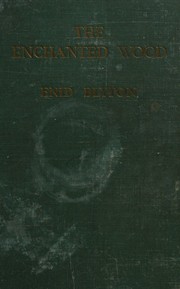
The first Faraway Tree book, in which three children find a tree whose top reaches a different land each week. Start here: the second book assumes you know the tree's inhabitants.

The best known of the three and the one with the strongest lands. Read it second, straight on from The Enchanted Wood.
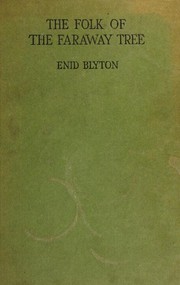
The third and last, which introduces a new child and is the weakest of the trio. Worth reading only if the first two landed.
Starting the Famous Five
BeginnerRead the first three Famous Five books in order, which is where the group is assembled and the formula set.
▸ Study plan for this stage
Pace: One to two weeks. These are short novels of roughly 180 to 200 pages in most editions and a confident reader gets through one in two or three sittings. Read the three in order and close together, because the group dynamic set up in Five on a Treasure Island is what the next twenty books run on. Cont
- Five on a Treasure Island does the assembly: Julian, Dick and Anne meet their cousin Georgina, who answers only to George, and her dog Timmy. Kirrin Island belongs to George, which is the fact that half the later plots turn on.
- George is the reason the series survived. She is written as a girl who wants to be a boy and is furious about the constraint, and Blyton gives her the strongest reactions in every book — while also, consistently, letting the boys make the decisions.
- The formula is fixed by book two: adults are absent or ineffective, a holiday location contains a concealed structure, children discover a crime, adults arrive at the end to arrest people. Five Go Adventuring Again runs it with a tutor and a secret passage.
- Five Run Away Together returns to Kirrin Island, and after it the books become largely self-contained. This is the point at which reading order stops mattering, and it is worth knowing so you do not chase twenty-one volumes in sequence.
- The four children are differentiated by function rather than by interiority: Julian decides, Dick supports, Anne keeps house and is frightened, George objects. Anne's role is the one most likely to prompt comment from a modern child.
- Food is a structural element, not a quirk — the meal descriptions are among the most-quoted passages in Blyton and are part of why the books were read in rationing-era Britain and remembered afterwards.
- Editions vary. Hodder's revised texts change dialect, some period slang, and instances of physical punishment; other imprints reprint the original. Neither is hidden, but neither is advertised on the cover.
- What does Five on a Treasure Island establish that no later book re-explains? Be specific about Kirrin Island's ownership.
- Trace how George is treated in each of the three books. Where is she vindicated, and where is she overruled by Julian and expected to accept it?
- By the end of Five Run Away Together, what is the fixed formula? Write it as a sequence of beats.
- Anne is given the domestic work in all three books, apparently willingly. How does the text frame that, and what would you say if a child asked about it?
- Which edition are you holding, and what has it changed? If you cannot tell from the book itself, what does that tell you about buying Blyton secondhand?
- Write the plot of Five Go Adventuring Again as a beat sheet, then do the same for Five Run Away Together. Lay the two side by side. The overlap is the formula, and seeing it in two columns is the fastest way to understand why order stops mattering after book three.
- Count the pages in Five on a Treasure Island between the children being introduced and the first mention of a meal, then do the same for a chapter of Five Go Adventuring Again. Blyton's pacing is unusually easy to measure and this is where it shows.
- Take one scene in which George is told to calm down or behave, and one in which she is proved right. Write out both passages. Having the two together is more useful than a general verdict when a child asks why George is angry all the time.
- Find the same passage in two different editions of any of the three — a library copy and a new paperback will usually do — and diff them line by line. Doing this once tells you what you are buying for the rest of the series.
Next up: The group and the formula are now established, so the rest of the run can be picked rather than read in sequence, and the next stage picks the three that are usually named as the best.

The first book: the cousins meet George and Timmy and find a wreck and an island. Genuinely must come first, because everything after it assumes the group already exists.

The second, a Christmas holiday mystery with a tutor and a secret passage. Read it directly after the first while the character introductions are fresh.

The third, back on Kirrin Island. After this point the books become largely self-contained and order stops mattering much.
The Famous Five at their best
BeginnerPick from the strong middle of the run, where the plotting is tightest.
▸ Study plan for this stage
Pace: Two weeks or read at leisure — these three are self-contained and can be taken in any order, or spread out over months. Same length as the first three. Five Go to Smuggler's Top has extended sequences in tunnels and marshland; Five on Kirrin Island Again involves a child held captive underground; Fi
- Five Go to Smuggler's Top is the book most often named the best-plotted in the run: a house on a hill above drained marshland, tunnels beneath it, and a plot that uses the geography rather than merely being set in it.
- Five on Kirrin Island Again gives George the most agency of any book in the series, because the island is hers and the threat is to her father. If a reader has liked George, this is the volume that rewards it.
- Five Fall into Adventure introduces Jo, a traveller child written with the class and ethnic assumptions of 1950, who divides readers sharply. She is also the most capable outsider Blyton allows into the group, which is why the book is worth reading rather than avoiding.
- These three show the formula being stretched: a hostile household in Smuggler's Top, a scientific McGuffin in Kirrin Island Again, an outsider protagonist in Fall into Adventure. The stretching is what separates them from the middle of the run.
- Setting is Blyton's real strength and these are the clearest cases — Smuggler's Top in particular is built on a specific and coherent piece of imagined landscape, which is unusual for her.
- The twenty-one Famous Five books were published between 1942 and 1963, and the later ones were written to a tighter formula. Knowing that these three sit in the strong middle helps an adult decide where to stop.
- What makes the plot of Five Go to Smuggler's Top hold together better than that of Five Fall into Adventure? Answer in terms of how the setting is used.
- In Five on Kirrin Island Again, what does George do that no other book lets her do, and what does she still have to be rescued from?
- How is Jo described when she first appears, and how has that description been treated in the edition you are reading?
- Each of these three modifies the standard formula. Name the modification in each and say which is the most successful.
- If a child has read six Famous Five books and wants more, what would you tell them about the later volumes?
- Draw the map of Smuggler's Top from the text alone — house, hill, marsh, tunnels — and check it for consistency as you read. This book is the one Blyton geography that survives the test, and doing it makes the comparison with the vaguer books concrete.
- Take Jo's first appearance in Five Fall into Adventure and write down exactly what the text says about her speech, her cleanliness and her family. Then write down what she actually does in the plot. The gap between the two is the honest answer to whether the book is worth handing over.
- Compare the role of George in Five on Kirrin Island Again with her role in Five Go Adventuring Again from the previous stage. Two passages, side by side, will show you whether the character develops or the plot simply gives her more to do.
- Pick any later Famous Five title at random from a library shelf, read the first three chapters, and beat-sheet it against your Five Go Adventuring Again beat sheet. This is the cheapest way to see for yourself where the series flattens out.
Next up: A reader who has exhausted the strong Famous Five books usually moves sideways rather than onwards, and the next stage covers the two series they move to.

A house on a hill above marshland, with tunnels underneath. Frequently named the best-plotted book in the series and a good demonstration of what Blyton could do with a setting.

George's father sets up an experiment on the island and things go wrong. The book that gives George the most to do, which is usually what readers want more of.
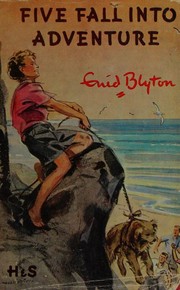
A kidnapping, a stolen document and the introduction of Jo, a character who divides readers sharply. Worth reading for how far the series will stretch its own formula.
The other adventure series
BeginnerSample the two other series a Famous Five reader usually moves to next.
▸ Study plan for this stage
Pace: One to two weeks for the two books. The Island of Adventure is noticeably longer and denser than a Famous Five, around 300 pages in most editions, and is pitched at a slightly older reader; The Secret Seven is much shorter and simpler and can be read in a sitting. Read them in that order to see the
- The Adventure series is the natural step up from the Famous Five: longer books, more atmosphere, a genuine sense of place, and Kiki the parrot as the one piece of comic machinery Blyton allowed herself.
- The Island of Adventure has four children — Philip, Dinah, Jack and Lucy-Ann — with a division of labour close to the Five's but with a stronger natural-history interest running through Philip and Jack.
- The Secret Seven is a step down, not a step sideways: shorter chapters, smaller mysteries, a club with a password and a shed. It suits a younger sibling reading alone rather than a reader leaving the Famous Five behind.
- The two series show Blyton writing deliberately for different reading levels within the same formula, which is the single most useful thing to understand when choosing a Blyton for a particular child.
- The Island of Adventure's original text is among the more heavily revised in Blyton's catalogue, precisely because of the Jo-Jo material. An adult buying secondhand should expect the unrevised version.
- Neither series is sequential in the way Faraway Tree or Malory Towers is; both introduce their cast in book one and then run standalone plots.
- What does The Island of Adventure do that a Famous Five book does not? Point to specific passages rather than to a general impression of length.
- How is Jo-Jo written in the edition you have, and what did the original text say?
- Why does The Secret Seven work for a younger reader? Identify the concrete features — chapter length, sentence length, size of the threat.
- If a child has finished the strong Famous Five books, which of these two would you offer and what would you say about the other?
- Kiki the parrot has no equivalent in the Famous Five. What does she do for the Adventure books structurally, beyond the jokes?
- Measure the two books against each other: average chapter length, average sentence length in the first chapter, and the number of named characters introduced in the first twenty pages. The numbers make the reading-level difference explicit rather than impressionistic.
- Read the first chapter of The Island of Adventure and the first chapter of Five on a Treasure Island back to back and write down what the Adventure book spends its extra words on.
- Locate the Jo-Jo passages in whichever edition you have and, if you can find a copy of the other, compare them. Then decide what you would say if asked about it, and write the sentence down before you need it.
- Track Kiki's interruptions across ten chapters of The Island of Adventure and note where each one falls in the scene. She is used to break tension at a predictable point, and seeing the pattern explains why the book can sustain more menace than a Famous Five.
Next up: The adventure series are collections of standalone plots; the school stories are the opposite, and are the most sequential thing Blyton wrote.

The first of the Adventure series, which is longer, more atmospheric and pitched slightly older than the Famous Five. The natural next step for a reader who has outgrown Kirrin.
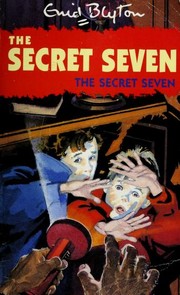
The first Secret Seven book, and shorter and simpler than the Famous Five. Better placed as a step down for a younger sibling than as a step up.
The boarding-school books
BeginnerRead the school stories, which are the most sequential of all Blyton's series because the characters age year by year.
▸ Study plan for this stage
Pace: Three to four weeks if you read the Malory Towers books in sequence, which is how they are designed — six short novels following one cohort through six school years, one term each. Add The Twins at St. Clare's alongside as a comparison rather than a continuation. The school stories contain bullying,
- First Term at Malory Towers really does have to come first. Darrell Rivers arrives as a new girl, and the six books follow the same cohort through six years — this is the one Blyton series where the pleasure is continuity rather than repetition.
- Second Form at Malory Towers is the same girls one year older, and the changes in them are the point. Reading it out of sequence removes the only thing the book has that a Famous Five does not.
- Darrell's temper is the running thread and the closest Blyton comes to a moral arc: it is established in book one, punished, and worked on across the sequence rather than solved.
- St Clare's is the other school series, more comic and less earnest, with the O'Sullivan twins arriving convinced the school is beneath them. Its tone is closer to a school farce than Malory Towers's.
- Reading one book of each before committing is the practical move, because the two schools suit different readers and each series is six volumes long.
- Note the catalogue dates on these records are unreliable — the entries here carry edition years rather than first-publication years, and the sequence dates in particular do not line up with the order of the books. Order by the term in the title, not by the year shown.
- The school-story form Blyton is working in was already established by Angela Brazil and others; these are the mass-market version of a genre, which is part of why the formula is so visible.
- What is established in First Term at Malory Towers that Second Form assumes? Name the characters and the situations.
- How does Darrell's temper function across the two Malory Towers books you have read — is it a flaw to be cured, or a permanent feature the plots use?
- What is different about the tone of The Twins at St. Clare's, and what kind of reader would prefer it?
- The school in these books is a fee-paying one and the text is explicit about it. Where does class show up most directly, and how is it framed?
- Given six books per series and two series, what would you actually hand a child first, and what would you do if they liked it?
- Read First Term and Second Form consecutively and list every character who appears in both, with one line on how each has changed. That list is the whole argument for reading these in order, and it is the only Blyton series where you can build it.
- Take the opening chapter of First Term at Malory Towers and the opening chapter of The Twins at St. Clare's — both are arrivals at a new school — and compare how each new girl is positioned. The two openings are near-identical in situation and completely different in attitude, which is the cleanest demonstration of the difference between the series.
- Note every point in Second Form where a girl is punished by her peers rather than by a teacher. Blyton's school books run on collective discipline, and having the instances collected is more use than a general sense that they are moralistic.
- Write down which of the four series in this path you would recommend to a specific child you know, with two sentences of reasoning and one sentence on which edition to buy. This is the actual decision the path exists to support.
Next up: This is the last stage; between the Faraway Tree, the Famous Five, the Adventure books and the school stories you now have all four of Blyton's main lines and know which of them reward being read in order.

Darrell Rivers arrives at a Cornish cliff-top school. The Malory Towers books follow one cohort through six school years, so this one really does have to come first.

The second year, with the same girls a year older. Reading the series in order is the whole appeal, since the pleasure is watching the characters change.

The first book of Blyton's other school series, more comic and less earnest than Malory Towers. Read it to see which of the two schools suits the reader before committing to six books.