Employee Ownership and Worker Co-ops: The Best Books, in Order
This path covers firms owned by the people who work in them, which in practice means three fairly different things: American ESOPs, worker co-operatives, and open-book management inside conventionally owned companies. It starts with what the evidence says about whether shared ownership improves performance, moves to the practitioner literature on actually running such a firm, then to the co-operative tradition and Mondragon, then to the academic research base, and finishes with the broader argument about ownership design. The order is deliberate: the case is much easier to make once you have seen the numbers.
The idea and the evidence
BeginnerEstablish what employee ownership is, in its several forms, and what it demonstrably does to firm performance.
▸ Study plan for this stage
Pace: Two to three weeks. The Citizen's Share is a full trade book and the only one of the three that needs sustained reading; Equity Alternatives and Ownership are practitioner handbooks from the National Center for Employee Ownership and can each be read in an evening or used as reference. Read Blasi, F
- The three structures this whole path keeps confusing: an ESOP (a retirement trust that holds company stock on employees' behalf, with the trustee voting most shares), a worker co-operative (one member, one vote, membership tied to working there), and open-book management inside a conventionally owne
- Blasi, Freeman and Kruse's central historical claim: broad-based ownership is an old American idea, traced back to the founding-era cod fisheries and the Homestead Act, not a 1970s tax novelty. Note that this is a framing argument as much as an empirical one.
- The finding in Equity Alternatives that does most of the work in this path: ownership alone changes little. It is ownership combined with participative management — people who can actually influence what happens at their workstation — that shows performance effects. Rosen, Case and Staubus state it
- The menu of instruments Ownership lays out: ESOP, worker co-operative, employee ownership trust, direct share purchase, phantom stock, profit sharing. Each has a different answer to who pays for the shares and what happens when a worker leaves.
- Where the money comes from in an ESOP sale — the company borrows, the trust buys the founder out, the debt is repaid from future earnings. This is the mechanism that makes an ESOP a succession tool first and a democratic reform second.
- The concentration risk: an employee whose retirement account holds the stock of the employer who also pays their wage has their savings and their income exposed to the same firm. Blasi and colleagues address it; note how, and judge whether you find it sufficient.
- Rosen, Case and Staubus write from the NCEO, an organisation that exists to promote employee ownership. That does not make the reporting wrong, but read these three as informed advocacy — the evaluation stage comes later, deliberately.
- State the difference between an ESOP and a worker co-operative on four dimensions: who supplies the capital, who bears the downside, who votes the shares, and what happens to a member's stake when they leave.
- What is the historical case The Citizen's Share makes, and which parts of it rest on documented policy and which on the authors' reading of intent?
- Why does Equity Alternatives argue that ownership without participative management underperforms? What is the proposed mechanism, and what would falsify it?
- If you were a founder aged sixty with no family successor, which structure in Ownership would you choose, and what does that choice cost you relative to a trade sale?
- Where do these three books have an institutional interest in the answer, and what would you want to see from a hostile source before believing them?
- Build a one-page comparison table of ESOP, worker co-operative and employee ownership trust using only what Rosen and Case set out in Ownership. Fill in: capital source, voting rights, exit mechanism, tax treatment, typical company size. Keep it — you will correct it against the research stage.
- Pick one company profiled in The Citizen's Share and one in Equity Alternatives and write down, for each, the specific participative practice the authors credit. Then note which of the two accounts gives you enough detail to actually copy it.
- Take the claim in Equity Alternatives that ownership plus participation beats ownership alone and write the study you would run to test it — sample, comparison group, outcome measure, the confound you cannot remove. Set this aside for stage four, where you will find out what the real studies did.
- List every place across the three books where a performance figure is quoted without a comparison group. Blasi is more careful about this than the NCEO volumes; the point of the exercise is to notice the difference in how the two kinds of book handle evidence.
Next up: You now know what the structures are and what their advocates claim for them; the next stage is the day-to-day management practice that Equity Alternatives says is the thing actually doing the work.

Blasi, Freeman and Kruse make the historical and empirical case that broad-based ownership is an American tradition rather than a fringe experiment. Start here for the framing and the data.

Rosen, Case and Staubus on why employee ownership works only when combined with participative management, which is the finding that most ownership advocates skip. The single most useful practical insight in this path.

Rosen and Case's later, shorter book covering the ownership structures available and how founders choose between them. Read it third as the up-to-date practical overview.
Running an open-book company
BeginnerLearn the management practice that makes ownership mean something day to day.
▸ Study plan for this stage
Pace: Two weeks. Both are first-person business narratives and read quickly — The Great Game of Business is the longer of the two and has the more elaborate system to follow. Give Stack a week and read Abrams over a few evenings alongside it, because Abrams is most useful as a counterweight while Stack is
- Stack's core mechanic at SRC: every employee is taught to read a real income statement and a cash-flow statement, and the numbers are updated weekly in a shared meeting rather than reported quarterly to managers. The financial literacy is the intervention, not a by-product of it.
- The Great Huddle and the line-by-line forecast — Stack's specific practice of having the person responsible for a line item forecast it out loud to their peers. This is what makes the numbers behavioural rather than informational.
- The critical number: one measurable that the whole company can move and that maps to survival in that particular year. Stack changes it deliberately as the business's binding constraint changes.
- Stack's book is the founding text of open-book management and is written by the man who ran the turnaround, about his own success. It is a persuasive case, not an evaluation; there is no comparison firm in it.
- Abrams converted South Mountain Company, a small building firm on Martha's Vineyard, to worker ownership and writes about the parts that went wrong: what the buy-in cost individual carpenters, how slowly decisions got made, how a small firm handles a member who is not carrying their share.
- The scale gap between the two books is itself instructive. SRC was a several-hundred-person remanufacturer; South Mountain had a few dozen people. Governance problems that are conversations at one scale need machinery at the other.
- What exactly does an SRC employee see on the weekly numbers, and what would they not see? Reconstruct the information set from Stack's description.
- How does Stack choose a critical number, and what stops it becoming a target that people game?
- What did worker ownership cost the individual employees of South Mountain in cash terms, and how did Abrams handle people who could not or would not buy in?
- Abrams is candid about mistakes. Name the two he treats as most serious, and say whether they look structural to worker ownership or specific to his firm.
- Could a firm run Stack's system without any employee ownership at all? What would be different, and does that tell you which half of the combination is load-bearing?
- Take a real income statement — your own employer's, a public filing, or the sample Stack works through — and draw the version an SRC line worker would see at a Great Huddle. Then mark which lines a person at your own workplace could actually influence.
- Write the critical number for an organisation you know, following Stack's own criteria, and then argue against your own choice: name the way it could be hit while the business got worse.
- Read Abrams's account of the conversion and list every decision he made that Stack's book gives no guidance on. That list is the gap between open-book management and worker ownership, which the two books together mark out better than either alone.
- Set the two books against Equity Alternatives from stage one: for each of the participative practices Rosen, Case and Staubus name, find whether Stack or Abrams actually does it, and note which practices neither firm bothers with.
Next up: Stack and Abrams are two firms making their own arrangements; the next stage moves from the single company to co-operation organised as an entire sector, with its own banks and its own federation.

Stack's account of turning a failing engine remanufacturer into an employee-owned success by teaching everyone to read the financials. The founding text of open-book management and still the most persuasive.

Abrams on converting his own building company to worker ownership, including what it cost and what he got wrong. The most honest first-person account here.
Co-operatives as an economy, not a firm
IntermediateMove from single companies to the co-operative sector and its most studied example.
▸ Study plan for this stage
Pace: Three to four weeks. Humanizing the Economy is a wide survey and reads steadily; Making Mondragon is a scholarly study and slower, and repays note-taking on the institutional structure rather than on the narrative; Capital and the Debt Trap is the most technical of the three and is organised as four
- The co-operative sector as an economy rather than a legal form: Restakis's cases — Emilia-Romagna's manufacturing consortia, Italian social co-operatives delivering care, Sri Lankan and Indian producer co-ops — depend on shared infrastructure between firms, not just on internal democracy.
- Mondragon's actual machinery, which is the reason Whyte's book is here: the Caja Laboral Popular as an internal bank recycling surplus into new co-ops, Ikerlan for research, the education institutions that supply members, and the internal capital accounts that hold each member's stake.
- The pay ratio and the membership boundary — the two questions Mondragon is most often defended and attacked on. Read Whyte for how the federation actually resolved them over time, including where it compromised.
- Sanchez Bajo and Roelants's thesis that co-operatives weathered the 2008 crisis better because their financing did not depend on the debt-driven mechanisms that failed. Note this is an argument built from case comparison, not from a large sample.
- The capital problem, stated properly: a worker co-op cannot sell equity to outsiders without diluting the thing that makes it a co-op, so growth capital has to come from retained earnings, member contributions, or co-operative banks. Every institutional oddity in Mondragon is an answer to this.
- Restakis writes as an advocate for the co-operative movement and says so; Whyte writes as a sociologist who spent years observing Mondragon and is admiring but analytical. Read Whyte for the mechanisms and Restakis for the argument that they generalise.
- Describe the Caja Laboral's role in Mondragon's expansion. Would the federation have grown the same way without it?
- What does Restakis mean when he says co-operation scales, and which of his cases actually demonstrates scale as opposed to persistence?
- How does a Mondragon co-op raise capital for a new plant, and what does a member's internal capital account actually entitle them to?
- What is the causal claim in Capital and the Debt Trap, and what alternative explanation for co-operative resilience in 2008 do the authors have to rule out?
- Mondragon has non-member employees and overseas subsidiaries that are not co-operatives. What does Whyte's account say about how the federation justified that, and does it weaken the model?
- Draw Mondragon's institutional structure from Whyte as a diagram — individual co-ops, the bank, the research and education bodies, the federation's central services — with the flow of money marked on each arrow. Compare it to the single-firm picture you had after stage two.
- Take one of Restakis's non-European cases and write down what infrastructure outside the firm it depends on. Then ask what the equivalent would be in your own country, and whether it exists.
- Work through one of the four country case studies in Capital and the Debt Trap and reconstruct the authors' argument as premises and conclusion. Mark which premises rest on figures and which on interpretation.
- Compare Abrams's answer in stage two to the capital problem with Mondragon's. Both are real firms solving the same constraint at wildly different scales; write half a page on what the small firm gives up and what it avoids.
Next up: Three stages of advocacy, practitioner memoir and admiring case study have now made the case; the next stage reads the empirical literature that tests it, including the studies that qualify it.

Restakis's survey of co-operative economies from Emilia-Romagna to Sri Lanka, arguing that co-operation scales further than most people assume. The best introduction to the sector as a whole.
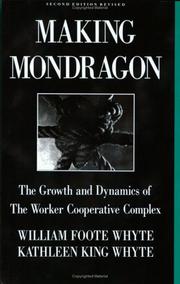
The classic study of the Basque co-operative federation, by a sociologist who watched it closely over years. Read it for the governance and finance mechanisms rather than for the romance.

Sanchez Bajo and Roelants use the 2008 crisis to ask why co-operatives were more resilient, with case studies from four countries. The strongest available answer to the claim that co-ops cannot handle capital.
What the research actually shows
IntermediateRead the empirical literature rather than the advocacy, including its qualifications.
▸ Study plan for this stage
Pace: Four to five weeks, and slower than anything before it. Shared Capitalism at Work is an NBER conference volume — separate econometric papers with tables and regression results, not continuous prose — and it assumes you can read a coefficient and a standard error. Take one or two chapters a sitting.
- The distinction this stage exists to establish: the earlier books argue for employee ownership, these ones evaluate it. Shared Capitalism at Work is the only thing in this path with large-sample data and formal controls, and its findings are more qualified than the advocacy suggests.
- What the NBER volume actually finds — the effects on productivity, turnover and worker behaviour are real but modest, conditional on complementary practices, and vary a great deal by which instrument is used. The productivity evidence in this literature is mixed rather than settled, and the volume's
- The identification problem that runs through every study here: firms that adopt employee ownership are not a random sample of firms. Better firms may adopt it rather than adoption making firms better. Watch how each chapter tries to handle this and how far it gets.
- Free-riding and monitoring, the standard theoretical objection: in a firm of a thousand, one person's extra effort raises their own share of profit by almost nothing. The volume takes this seriously and looks for the co-monitoring that would offset it.
- Logue and Yates studied Ohio ESOPs including the ones that failed, which is the correction that matters most. Most of the literature above quietly conditions on survival, so it reports the outcomes of firms that made it.
- Erdal ran an employee-owned paper company and then went and studied whole Italian towns with differing levels of co-operative employment, looking at health and social outcomes rather than firm performance. He is a participant, not a neutral investigator, and his study design is a comparison of towns
- Risk again, now with numbers: employee owners hold undiversified portfolios. The volume examines whether they are compensated for that risk, and the answer is not a clean yes.
- What does Shared Capitalism at Work report on productivity, and how large is the effect relative to the variation between firms? State it with the qualification the authors attach.
- Name the selection problem in this literature and describe how at least one chapter attempts to address it. Are you convinced?
- What distinguishes the Ohio ESOPs that failed from the ones that survived in Logue and Yates's account, and does anything in their finding contradict the earlier stages?
- How does the volume treat free-riding, and what evidence would show co-monitoring is really occurring rather than being assumed?
- Erdal claims ownership affects the health of whole towns. What is his comparison, what could confound it, and how much weight does the finding bear?
- Having read this stage, which specific claims from stage one would you now restate more cautiously?
- Take the comparison table you built in stage one and annotate every row where Shared Capitalism at Work either supports, qualifies or fails to address the claim. The annotated version is the honest one.
- Pick one chapter of the NBER volume and write out its identification strategy in plain English — what is being compared with what, and what has to be true for the comparison to mean anything. Then name the assumption you trust least.
- Using Logue and Yates, write a short list of failure modes for an ESOP. Then go back to Stack and Abrams and ask which of those failure modes their firms were exposed to and how they escaped them.
- Write a one-paragraph honest summary of what the evidence supports, aimed at a sceptical reader. Then hand it the strongest sentence you can find from Restakis or Kelly and see whether the two can both be true.
- Reconstruct the study you designed in stage one's exercise and compare it with what the NBER researchers actually did. Note specifically where they had data you assumed you could get, and where they gave up on something you thought would be easy.
Next up: With the evidence properly bounded, the last stage widens the question from whether employee ownership works to what ownership is for, and includes an American tradition the rest of the literature leaves out.
The NBER volume by Kruse, Freeman and Blasi: large-sample evidence on productivity, turnover and risk under profit sharing, stock options and ESOPs. The most rigorous thing on this list.
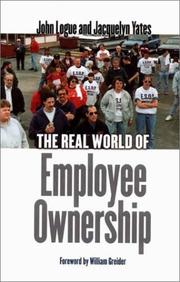
Logue and Yates's field study of Ohio ESOPs, including the ones that failed. Necessary because most of the literature quietly selects on survivors.

Erdal ran an employee-owned paper company and then studied ownership's effects on whole towns. The book that best connects firm-level ownership to community outcomes.
The bigger argument about ownership
IntermediatePlace employee ownership inside the wider debate about who should own productive assets.
▸ Study plan for this stage
Pace: Three weeks. Owning Our Future and Democracy at Work are both short and openly argumentative; Collective Courage is a work of history and denser than either, with a great deal of archival detail on organisations you will not have heard of. Give Nembhard the most time and read her second so that Kell
- Kelly's central distinction between extractive and generative ownership designs, and her five design elements — purpose, membership, governance, capital and networks. It is a typology rather than a finding, and it is useful mainly as a way of comparing structures you have already met.
- The forms Kelly puts alongside ESOPs and co-ops: employee ownership trusts, community land trusts, mutuals, commons. Note how many of them are not about work at all, which is the point she is making about ownership as a general design problem.
- Nembhard's history of African American co-operative economic practice — mutual aid societies, Black-owned co-operative stores, the Freedom Quilting Bee, Du Bois's own organising work — an entire tradition that the mainstream literature in the earlier stages simply omits.
- Why that omission is substantive and not merely a gap in coverage: Nembhard's cases develop under conditions of exclusion from ordinary credit and markets, so co-operation is a survival strategy rather than an efficiency choice. That changes what the outcome measure should be.
- Wolff's argument for worker self-directed enterprises as a systemic alternative to capitalism, not a reform within it. He is an explicitly Marxian economist making a political case; the book is a manifesto and does not pretend otherwise.
- The disagreement to hold onto: Kelly wants better ownership designs inside the existing economy, Wolff wants a different economy, and Nembhard describes people who had no realistic access to either. All three are in this stage on purpose.
- The gap between what stage four's evidence supports and what any of these three books claim. Read them knowing the size of the measured effects; the argument does not depend on the effects being large, but you should notice where it is written as though they were.
- Apply Kelly's five design elements to Mondragon and to an SRC-style open-book firm. Where do they diverge most sharply?
- What did the organisations in Collective Courage exist to do, and by what measure did they succeed? Is that measure available in the NBER data at all?
- Why does Nembhard argue this tradition was written out of the record, and what does she use as evidence for that claim rather than for the history itself?
- State Wolff's argument in its strongest form, then state the strongest objection you can find to it from the empirical stage. Which does the evidence actually bear on?
- Kelly and Wolff both use the word ownership to mean something the ESOP literature does not. Say precisely what each means by it.
- After all five stages: what would you now advise a founder who asked whether to sell to their employees, and which book would you hand them first?
- Score three organisations from earlier stages — Mondragon, South Mountain, and one Ohio ESOP from Logue and Yates — against Kelly's five design elements. Then say which of the three the scoring flatters most, and why that might be a weakness of the typology.
- Take two organisations from Collective Courage and write the entry each would get in Restakis's survey if he had included them. The exercise is about what a survey framed around economic efficiency does to a history framed around survival.
- Set Wolff's chapter on why reform is insufficient directly against the qualified findings of Shared Capitalism at Work, and write half a page on whether the two are actually in conflict or are answering different questions.
- Write the reading list you would give someone with three books from this path and no time, and defend each choice in a sentence. If your three are all advocacy or all evaluation, choose again.
Next up: This is the final stage: you now have the structures, the practice, the sector, the evidence and the argument, and the honest position is that the case for employee ownership is stronger on distribution than it is on productivity.

Kelly's typology of extractive versus generative ownership designs, covering co-ops, trusts and commons alongside ESOPs. The best conceptual map of the territory.

A history of African American co-operative economic thought and practice, an entire tradition that the mainstream literature above almost entirely omits. Read it as a correction, not an appendix.

Wolff's explicitly socialist case for worker self-directed enterprises as a systemic alternative. Included as the most far-reaching argument in the path; read it against the empirical stage rather than instead of it.