Commissario Brunetti books in order: where to start with Donna Leon
Donna Leon has written more than thirty Commissario Guido Brunetti novels, and they are best read in publication order because almost nothing carries over except the things that matter most: Brunetti's family, his colleagues, and his steadily darkening view of Venice and of Italian institutions. The plots are seldom the point and the culprit is often known early; what changes across the series is the mood. This path picks the entries worth your time rather than listing all of them, and stops well short of the full run.
Start at the beginning
BeginnerMeet Brunetti, his family and the city, and see the series' method: a crime used as a way into an institution.
▸ Study plan for this stage
Pace: Three weeks, 661 pages. Death at La Fenice (1992) is 288 pages and Death in a Strange Country (1993) is 373, and both read quickly. One practical note: our catalogue record for Death at La Fenice is an unabridged audio edition rather than a print one, so if you want the paperback you will be searchi
- Brunetti's method: a crime used as a door into a Venetian or Italian institution — here an opera house, then the American military presence and the waste trade
- The domestic frame that carries the whole series — Paola, the children, the flat, the meals — and why Leon gives it as much page space as the investigation
- Vice-Questore Patta as an obstacle rather than a superior, and Signorina Elettra as the means of getting round him
- Venice as a working city with residents and bureaucracy rather than as a backdrop
- Leon's habit of letting you know who did it well before Brunetti can prove it, and what that does to the suspense
- Publication order as the only order that matters, since almost nothing carries over except the characters and the mood
- Which institution does each of these two novels take apart, and what does Brunetti conclude about it?
- What does the reader learn about Brunetti from the meal and family scenes that the investigation scenes never state?
- How does Death in a Strange Country end, and what does that ending establish about how this series will treat justice?
- What is Patta for, structurally — why does Leon need an incompetent superior in every book?
- If the plots are seldom the point, what is holding the reader's attention instead?
- Note every meal in Death at La Fenice, who is present and what is discussed; then check how much of the plot actually advances at the table
- Write down the moment in each novel at which you first know who is responsible, and count the pages remaining — the ratio is Leon's structural signature
- List the institutions named in these two books, then keep the list open for the rest of the path and add one per novel
- After Death in a Strange Country, write one sentence on Brunetti's view of the Italian state; you will be revising this sentence at every stage
Next up: With the method visible, the nineties novels show Leon settling into it deliberately — one institution per book, book after book.

The first Brunetti novel, in which a conductor is poisoned at Venice's opera house. Start here, not with a later book: the family and the working relationships that carry thirty novels are all set up in this one.

An American soldier's body in a canal opens onto the American military presence in Italy and onto toxic-waste dumping. The second book is where Leon's real subject, institutional corruption rather than individual guilt, comes into focus.
The nineties: the series finds its shape
BeginnerWatch Leon settle into the pattern of taking one Venetian or Italian institution per book.
▸ Study plan for this stage
Pace: Four weeks, 897 pages. Dressed for Death (1994) is 288 pages, Death and Judgment (1995, published in Britain as A Venetian Reckoning) is 299 and Fatal Remedies (1999) is 310, so they can be read a week apart with a week to spare. Note the gap: the path skips Acqua Alta (1996), Quietly in Their Sleep
- The one-institution-per-book pattern hardening into a method: banking and the professions, trafficking, the travel trade
- Paola's own agency — Fatal Remedies begins with her committing a crime, which is the series' sharpest test of Brunetti's position
- The conflict Leon keeps returning to: Brunetti as a policeman in a state whose law he does not respect
- Class in Venice, through Paola's aristocratic family and Count Orazio Falier in particular
- How little the books carry forward, and the few things that do
- The British and American title differences, which matter when tracking the series
- What does Paola do at the start of Fatal Remedies, and what does Brunetti's response reveal about how he ranks law, marriage and conscience?
- Which institution does each of these three novels indict, and does Leon offer any of them a defence?
- How does Leon treat the victims in Dressed for Death, and how does that compare with the treatment of victims in the first two books?
- What role does Count Falier play, and why does Leon need a character with that kind of access?
- By Fatal Remedies, what has changed in the series' tone since Death at La Fenice?
- Add each novel's institution to the list you began in the first stage and note, beside each, whether the guilty party is punished
- Reread the opening chapter of Fatal Remedies after finishing it and mark how much of the book's moral argument is already present in those first pages
- Track Paola across these three novels specifically — her work, her opinions, her interventions — and write down where she is doing something other than supporting the hero
- Compare a Venice description from Death at La Fenice with one from Fatal Remedies and describe, concretely, how the city is being lit differently
Next up: The pattern is now fixed, and the next stage is the run in which Leon executes it best.

A body found in a slaughterhouse field leads into banking and prostitution. Published in the United Kingdom as The Anonymous Venetian, which is a separate record in our catalogue: it is the same novel, so buy only one.

Trafficking, lorry drivers and a lawyer's murder, and the book where Brunetti's anger at what he cannot prosecute becomes a running theme rather than an occasional note.

Brunetti's wife Paola commits a public crime of conscience and he has to police it. The strongest of the early books at doing what the series does best, which is making the domestic and the political the same problem.
The strongest stretch
IntermediateRead the run where the Venetian institutional portrait is sharpest and the writing most confident.
▸ Study plan for this stage
Pace: Five weeks, 1,199 pages across four novels — Friends in High Places (2000) at 329, A Sea of Troubles (2001) at 280, Uniform Justice (2003) at 286 and Doctored Evidence (2004) at 304. Note the path skips Wilful Behaviour (2002) in this run. These are short books and the temptation is to read them in
- Friends in High Places on building permits, planning corruption and the Venetian property system — the most local of the institutional targets
- A Sea of Troubles moving Brunetti out of Venice proper to Pellestrina, and what removing him from his own city does to him
- Uniform Justice on the military academy and the closed institution that will not be investigated at all
- Doctored Evidence and the assumptions about foreign domestic workers that the investigation runs on
- Signorina Elettra's growing role, and the fact that the series' most effective investigative tool is unauthorised access to records
- Why this run is the series' peak: the writing is most confident here and the endings are least consoling
- How does Friends in High Places connect Brunetti's own apartment to the corruption he is investigating, and why does Leon make it personal?
- What does taking Brunetti to Pellestrina in A Sea of Troubles expose about his relationship to Venice?
- Uniform Justice ends without a satisfying resolution — what is Leon arguing by refusing one?
- Whose evidence is disbelieved in Doctored Evidence, and on what grounds?
- Across these four, how often does Brunetti secure a conviction, and what does the tally say about the series' politics?
- Keep a running tally across the four novels of who is charged, who is convicted and who is untouched; the table is the strongest single argument about why this run is the strongest
- Count how many times Signorina Elettra obtains information illegally in these four books and note whether any character ever objects
- Take Uniform Justice's ending and rewrite the final chapter as a conventional mystery would resolve it — then say what the series would have lost
- Compare Brunetti's behaviour in Pellestrina in A Sea of Troubles with his behaviour in the Questura, listing the specific things he can and cannot do in each place
Next up: The institutional anger is controlled here; in the next stage Leon stops controlling it.
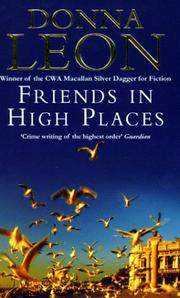
Building permits, planning corruption and a young bureaucrat's death. The clearest demonstration of how Leon turns paperwork into menace.
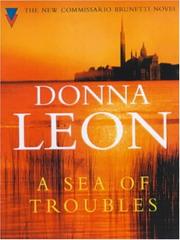
Brunetti leaves the city for the fishing island of Pellestrina, and Leon's Venice gets a lagoon and a working class rather than just palazzi and offices. Note: our catalogue record for this one is an audio edition, so check the format before ordering.

A cadet found hanged at a military academy, and a family that will not cooperate. The bleakest of the mid-series books and the one that most fully states the argument about impunity.

An elderly woman murdered, a foreign maid blamed, and Brunetti investigating without authorisation. A good example of the series' late willingness to let Brunetti work outside the rules he is meant to enforce.
The angry books
IntermediateRead the entries where Leon's disgust with environmental and social damage in the Veneto is most direct.
▸ Study plan for this stage
Pace: Four weeks, 911 pages. Blood from a Stone (2005) is 338 pages, Through a Glass, Darkly (2006) is 299 and The Girl of His Dreams (2008) is 274 — the shortest book in the path and the bleakest. These are the books in which Leon's disgust becomes explicit, and they read faster and land harder than the
- Immigration and the position of undocumented street vendors in Venice, as Blood from a Stone treats them
- Environmental damage in the lagoon and the industrial economy of Murano, in Through a Glass, Darkly
- The Girl of His Dreams on Roma communities and on the assumptions Venetians and the police make about them
- Leon's willingness in these books to let Brunetti's conclusions be unpalatable rather than reassuring
- The narrowing gap between the institution being examined and Brunetti's own employer
- How anger changes the prose itself — shorter investigations, blunter conversations, less comedy from Patta
- What does Blood from a Stone conclude about who is actually protected by the law in Venice?
- In Through a Glass, Darkly, what is the environmental crime, and why is it so difficult to attach to anybody?
- How does The Girl of His Dreams handle prejudice — whose is it, and does the novel let Brunetti out of it?
- Compare the endings of these three books with the endings in the previous stage: what has changed about how much Brunetti achieves?
- Is Leon still writing mysteries at this point, or something else wearing the form?
- Mark every passage in these three novels where an opinion is clearly Leon's rather than Brunetti's, and see whether the distance between author and detective has narrowed since the first stage
- Take the treatment of outsiders in Blood from a Stone and The Girl of His Dreams and write down what each book asks the reader to notice about their own assumptions
- Return to the institution list you have been keeping and mark which of these three targets are Venetian, which Italian and which neither
- Reread your one-sentence summary of Brunetti's view of the Italian state from the first stage and rewrite it as these books leave it
Next up: Having seen the anger at its hottest, the last stage asks where thirty years of the same detective in the same city finally arrives.

A Senegalese street vendor shot in Campo Santo Stefano, and an investigation shut down from above. The book that brings Italy's immigration politics into the series.

Set among the Murano glass furnaces and built around industrial pollution in the lagoon. The environmental theme that dominates the later books starts properly here.

A Roma child found drowned, and the prejudice that shapes how her death is treated. Frequently named as the point where the series turns from melancholy to genuinely angry.
Late Leon
IntermediateSee where thirty years of the same detective and the same city arrive.
▸ Study plan for this stage
Pace: Three weeks, 608 pages. Earthly Remains (2017) is 320 pages and Transient Desires (2021) is 288. There is a large jump in series numbering between the previous stage and these two, which is deliberate — the path picks entries rather than listing all thirty-plus. Earthly Remains begins with Brunetti
- Earthly Remains as a deliberate withdrawal: Brunetti on Sant'Erasmo, rowing, reading Ovid, and largely not being a policeman
- The lagoon itself as the subject rather than the setting, and the shift from institutional to ecological damage
- Transient Desires' return to the Adriatic and to trafficking, and how the late books handle the international dimension
- What Brunetti has and has not become over thirty years, and what has happened to his expectation of justice
- How Leon writes fatigue — the detective's, the city's, arguably the author's
- Reading a long series' late entries as a deliberate coda rather than as diminished returns
- Why does Leon take Brunetti out of Venice and off duty in Earthly Remains, and what does the novel gain from the removal?
- What is the crime in Earthly Remains, and how long does the book take to become interested in it?
- How does Transient Desires connect Venetian tourism to the trafficking it uncovers?
- Has Brunetti's view of the possibility of justice changed since Death at La Fenice, or only his tolerance for its absence?
- Reading these two after the earlier stages, what does the series look like as a whole — a crime series, a portrait of a marriage, or a thirty-year argument about Italy?
- Compare the first chapter of Death at La Fenice with the first chapter of Earthly Remains directly, sentence by sentence where possible, and describe what twenty-five years did to the prose
- Close out your institution list with these two novels and read the whole list at once — it is a functioning index of what Leon believes is wrong with Venice
- Count the pages in Earthly Remains before the crime appears, and argue for or against Leon's decision to delay it that long
- Write a two-paragraph note to someone about to start the series: which books to read, which to skip, and what to expect the reading to actually be about
Next up: This closes the path: fourteen chosen entries from a run of more than thirty, read in publication order, with the family, the food and the darkening view of Venice as the things that actually carry across.

Brunetti, exhausted, takes leave on a lagoon island to row and recover, and a beekeeper disappears. The most personal book in the series and a good place to stop if you do not intend to read them all.

Two injured young women, a boat that fled, and a case that reaches into trafficking through the Adriatic. Proof that the late books are still doing real work rather than coasting.