Donald Westlake books in order: where to start with Dortmunder and Parker
One writer in two opposite modes: the Dortmunder novels, in which a gang of New York thieves execute perfect plans that collapse for absurd reasons, and the Parker novels written as Richard Stark, in which a professional criminal with no interior life does what is necessary. They are so unalike that readers often do not believe it is the same man.
Start here: the comedies
IntermediateBegin with Dortmunder, which is the friendlier half.
▸ Study plan for this stage
Pace: 2 weeks, one book a week. The Hot Rock is about 260 pages and Bank Shot about 245, both of very fast prose - either can be finished in two or three evenings. Read them in this order; Bank Shot assumes you already find the gang funny.
- Dortmunder as the perfect planner whose plans are always defeated by something outside the plan
- The five-plan structure of The Hot Rock: the same emerald has to be stolen again and again, each time by a new method
- That The Hot Rock began as a Parker novel and turned comic when Westlake noticed the premise was funny - the two halves of his career share a chassis
- The gang as a stable comic ensemble: Kelp, who brings the jobs and steals doctors' cars, Murch, who talks about routes, Murch's Mom, and Roger Chefwick, the lock man with the model trains
- Bank Shot's central joke - unable to rob the bank, they steal the bank itself, a whole branch on a trailer
- Westlake's professionalism as comedy: the humour comes from competent men taking absurd logistics entirely seriously
- The heist briefing scene as a recurring set piece and the closest thing the books have to a song
- In The Hot Rock, what defeats each of the five plans? Is it ever Dortmunder's error?
- The gang never gets rich. What keeps them working, and what does the series think a career criminal actually is?
- How does Westlake generate comedy without any character telling a joke?
- Bank Shot's premise is a single absurd idea sustained for 245 pages. Where does it nearly run out, and how does he refuel it?
- Knowing The Hot Rock started as a Parker novel, can you see the seam - where would the cold version have gone instead?
- After The Hot Rock, write the five plans down as a numbered list with the failure point of each. The list is the novel's architecture and takes ten minutes.
- Count how often Kelp is the one who brings the job or supplies the car. The running gag is load-bearing and only visible once counted.
- Read a heist briefing scene aloud. Westlake writes procedure as dialogue, and hearing it is the fastest way to understand why the books move so fast.
- Take the moment in Bank Shot where the plan is first proposed and rewrite it in a serious register with no comedy. Whether it still works tells you how close the two Westlakes really are.
Next up: You have now read the friendly half; the same machinery, with every joke and every human moment removed, is the other one.
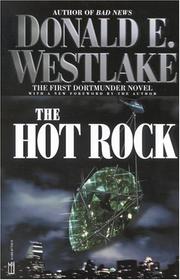
Dortmunder has to steal the same emerald five times, because each perfect plan fails in a new way. Originally started as a Parker novel and turned comic when Westlake realised how funny the premise was.
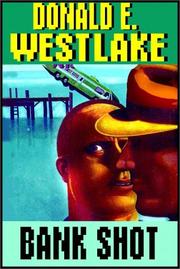
They cannot rob the bank, so they steal the bank — a whole trailer-mounted branch. The best sustained joke in the series.
Parker
IntermediateThe Richard Stark novels. ⚠️ Note our catalogue answers to Westlake's own name more reliably than to the Stark pen name.
▸ Study plan for this stage
Pace: 2-3 weeks. The Hunter and The Outfit are under 200 pages each and can each be read in a single night; Butcher's Moon at about 310 pages is the long one and works best read last across a few sittings. Read them in this order, since Butcher's Moon depends on the earlier books.
- Parker as a professional with no interior life offered to the reader - the novels report what he does and almost never what he feels
- The Hunter: betrayed and left for dead, Parker walks back into New York to recover his money, and the amount is small on purpose
- The four-part Stark structure, in which the third part typically leaves Parker's shoulder to follow the people he is coming for
- The Outfit as the clearest statement of the series logic: Parker does not defeat the syndicate, he makes hunting him unprofitable
- Money as the only motive, and the total absence of revenge as an emotional register even when the plot is revenge-shaped
- Butcher's Moon returning to a city from an earlier book with most of the series' cast in tow, and closing the sequence for twenty-three years
- The prose: declarative, unadorned, no simile, no interiority - Westlake operating at the opposite pole from Dortmunder
- That these were published as by Richard Stark, so catalogues and library records answer more reliably to Westlake's own name
- How much money is Parker actually owed in The Hunter, and what does the smallness of the sum establish about him?
- Find the point in each novel where the narration leaves Parker. What does Stark use those sections for, and why does the tension rise rather than fall?
- Is Parker a psychopath, a professional, or a genre convention? Does the series ever ask?
- In The Outfit, why does making himself expensive work where violence alone would not?
- In Butcher's Moon, which characters return, and does the book require you to remember them or does it tell you what you need?
- Set beside Dortmunder, is Parker the same character with the comedy removed, or genuinely a different invention?
- Read the opening sentence of The Hunter and the opening of The Hot Rock back to back. Two books by one man; write two sentences on how the first line of each tells you which world you are in.
- Mark where each novel's third part begins and note whose head you are in. Doing this for all three shows the Stark structure clearly enough to recognise it anywhere.
- Count the number of times Parker is described with an interior emotion in The Hunter. The number is very low, and finding the exceptions is the exercise.
- In Butcher's Moon, list the returning characters and which earlier book each came from. The novel itself supplies most of the answers; the list is what makes it read as a finale.
- Take a paragraph of Stark's prose and add three adjectives and one simile. Reading the result shows exactly what the style is refusing and why.
Next up: With both modes in your ear, the final book can be recognised for what it is: a Dortmunder plot executed in Parker's register.
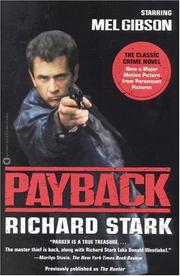
Parker, betrayed and left for dead, walks back into New York to get his money. Filmed as Point Blank and as Payback, and the record carries both titles. No moral centre whatsoever, which is the design.
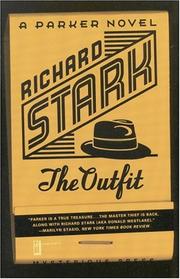
Parker takes on the organised-crime syndicate itself by making it unprofitable to keep hunting him. The clearest statement of the series' logic.

Parker returns to a city from an earlier book with almost every character from the series in tow. It closed the sequence for twenty-three years.
The standalone
IntermediateFinish with the bleakest thing he wrote.
▸ Study plan for this stage
Pace: 2 weeks for about 330 pages. It reads as fast as everything else here and is far harder to sit with, so 25 pages a day and a break when you need one is more realistic than a single weekend.
- Burke Devore, a laid-off middle manager in the paper industry, who decides to murder every rival for the job he wants
- The structure of a Dortmunder novel - a plan, a list, an escalating series of practical problems - executed without a single joke
- The fake job advertisement Devore places to identify his competition, which is the book's coldest and most plausible idea
- First-person narration, so the reader is inside the reasoning rather than watching it, unlike anything in the Parker books
- Devore's justifications, which are ordinary career advice and self-help language applied to murder
- Corporate downsizing of the 1990s as the novel's explicit target, and Westlake writing directly out of anger
- Comedy in structure and nothing funny on the page - the clearest evidence that the two halves of his career were always one technique
- Where does Devore's reasoning stop being persuasive? Note the exact killing at which you lose him.
- The fake job advertisement is a plot device and an argument. What is it arguing about how hiring works?
- Why first person here, when Parker is always third? What would the book lose in third?
- Compare Devore's planning chapters with a Dortmunder briefing. What is structurally identical, and what single element has been removed?
- Is The Ax a satire, a thriller, or a polemic? Does Westlake let you enjoy it?
- Write down Devore's justification for each killing as you reach it. Read the list at the end - the deterioration is the plot, and the list makes it undeniable.
- Mark every passage where Devore's language could appear unaltered in a career-advice book. Highlighting them is more disturbing than any of the violence.
- Set a Dortmunder planning scene beside a Devore planning scene and list what is structurally the same. The similarity is the argument of this whole reading path.
- Compare Devore's first-person voice with Parker's third-person one on the subject of a killing. Write half a page on which is colder, and why the answer is not obvious.
Next up: You now have all three Westlakes - the comedian, Richard Stark, and the standalone moralist - which is enough to work through the remaining Dortmunder and Parker novels in publication order without needing a guide.
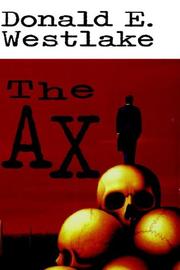
A laid-off paper-industry executive decides to murder every rival for the job he wants. A comedy in structure and not remotely funny, and written out of the corporate downsizing of the nineties.