Dennis Lehane books in order: where to start
Dennis Lehane's bibliography splits cleanly, and the two halves want different entry points. The Kenzie and Gennaro novels are a six-book Boston PI series with a continuous relationship at its centre, so they have to be read in order. The standalones — Mystic River, Shutter Island — are the books that made his reputation outside crime fiction and can be read cold, which is why most people start there and never touch the series. This path lays out the series in sequence first, then the standalones, then the historical Coughlin trilogy, so you can enter at whichever suits you and know what you are skipping.
Kenzie and Gennaro, In Order
BeginnerRead the Boston PI series in sequence, where the case-by-case plots matter far less than what happens to the two detectives across five books.
▸ Study plan for this stage
Pace: 9 to 10 weeks. A Drink Before the War is short, around 290 pages, and goes in three or four sittings. Darkness, Take My Hand is much longer at about 430 pages and much slower, because it is a serial-killer novel with sustained torture and mutilation described directly — a fortnight. Sacred is the sh
- The cases are not the series. What carries across five books is the relationship between Patrick Kenzie and Angie Gennaro and the cost each job leaves on it, which is why order is not negotiable here.
- Boston in these books is a set of specific neighbourhoods with specific racial and class boundaries, and Lehane treats geography as motive: who lives where explains most of what happens.
- Bubba Rogowski is the series' pressure valve and its moral problem — the friend who solves things by violence the protagonists will not do themselves, and whom the books never quite condemn.
- A Drink Before the War is apprentice work, and it shows: the plotting is loose and the politics are stated rather than dramatised. It is worth reading for the setup, not for the writing.
- Darkness, Take My Hand is the quality jump and the cruelty jump at once, and it is the book that decides whether this series is for you.
- Gone, Baby, Gone is built so that its final choice has no right answer, and the three preceding books exist largely to make that choice cost something — which is exactly why reading it first ruins it.
- Prayers for Rain opens inside the consequences of that decision, so its emotional situation is unintelligible if the previous book has not just been read.
- What changes between A Drink Before the War and Darkness, Take My Hand, at the level of sentences rather than plot?
- What is Bubba for, structurally? What can the books do with him that they could not do with Patrick alone?
- In Gone, Baby, Gone, what is the choice, and what is the argument on the other side? State the case against the decision Patrick makes as strongly as the book does.
- How does Angie's position on that choice differ from Patrick's, and what is the evidence for it in the earlier books?
- Sacred is the lightest of the five. What does the series need it to do?
- Keep a page on the Kenzie–Gennaro relationship: one line per book on where it stands at the start and where at the end. The plots will blur; that line will not.
- Mark every scene in the five books in which Bubba resolves a problem, and note who asked him to. The pattern is the series' argument about its own protagonists.
- Before reading the last thirty pages of Gone, Baby, Gone, write down what you think should happen. Then read, and write down what does. Keep both.
- Read the first chapter of Prayers for Rain immediately after finishing Gone, Baby, Gone and note exactly how much of it depends on the previous book. It is a good measure of how tightly Lehane sequences these two.
- Take one Boston neighbourhood named in A Drink Before the War and track how it is described in each subsequent book. The city changes across the five, and Lehane is keeping score.
Next up: Five books have brought the series to what looked like an ending; the next stage is the return Lehane wrote eleven years later, which only makes sense from here.
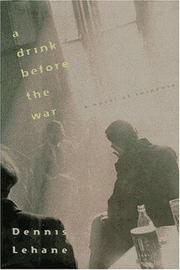
The first novel, and the correct start if you want the series — Patrick Kenzie and Angie Gennaro, a missing document, and Boston's racial geography. Rougher than what follows, and short.
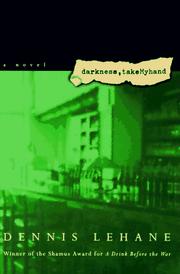
Second, and a sharp jump in quality and in cruelty — a serial-killer plot that most readers find genuinely disturbing. This is where the series becomes worth committing to.
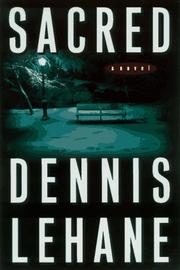
Third, and deliberately lighter after the previous book, with a plot that runs to Florida and back. The most conventional entry in the series; read it in place, since it moves the Kenzie–Gennaro relationship forward.
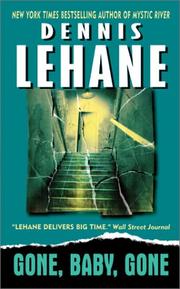
Fourth, and the best of the six: a missing four-year-old, and an ending built on a moral choice that has no right answer. Everything in the first three books is loaded to make that ending land, so do not read it first.
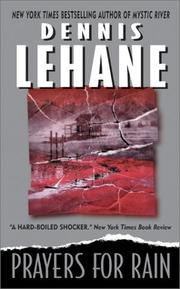
Fifth, and it begins in the wreckage of the previous book's decision. Read it directly after Gone, Baby, Gone; its emotional situation is otherwise unintelligible.
The Series Coda
IntermediateRead the late return to the series, written eleven years after it seemed to have ended.
▸ Study plan for this stage
Pace: One week. Moonlight Mile is about 325 pages and reads quickly — it is the lightest book in the series, and deliberately so. Read it soon after Prayers for Rain rather than years later; it is a direct sequel to Gone, Baby, Gone set twelve years on, and its whole effect depends on the earlier book bei
- The book is an audit of the decision made in Gone, Baby, Gone: the child at the centre of that novel is now sixteen, and Lehane is checking his own work.
- Patrick has aged into a different economic position — a mortgage, a daughter, contract work for a corporate firm — and the novel is at least as interested in that as in its plot.
- The crime plot is thin by the standards of the earlier books, and most readers find it the weakest element; it is a frame for the reckoning rather than the point.
- Written eleven years after Prayers for Rain, it carries the marks of a writer returning to a voice he had left, which is visible in how much more comfortable the prose is and how much less pressure it is under.
- Read as a coda it works; read as a sixth thriller it disappoints, and knowing which book you are holding before you start is most of the difference.
- Does Moonlight Mile conclude that the decision in Gone, Baby, Gone was right? What does Lehane actually commit to?
- What has changed about Patrick's relationship to money and work, and how does that alter the kind of case he can take?
- How does Amanda at sixteen compare with what the earlier novel led you to expect?
- What does the book lose by being written eleven years later, and what does it gain?
- Reread the final chapter of Gone, Baby, Gone immediately before starting Moonlight Mile, then note every point at which the later book answers it directly.
- List what Patrick does for money in this book against what he did in A Drink Before the War. The series' arc is legible in that single comparison.
- Write the paragraph in which Angie states her verdict on the old decision, then find where Lehane gives it to her — or find that he does not.
Next up: The series is finished; the next stage is the two novels most people arrive through, neither of which needs a word of it.
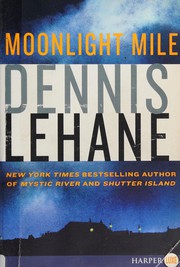
The sixth Kenzie and Gennaro book, a direct sequel to Gone, Baby, Gone twelve years on, with the same child now a teenager. It only works as a coda — read the five above first, or not at all.
The Standalones That Made His Name
BeginnerRead the two novels most people arrive through, both of which can be read without any knowledge of the series.
▸ Study plan for this stage
Pace: 4 weeks. Mystic River is about 400 pages and should be read slowly — it is his best-constructed novel and its first fifty pages set up everything; it also turns on the abduction and sexual abuse of a child, described in aftermath rather than in scene. Two to three weeks. Shutter Island is around 370
- Mystic River is structured as a single act in 1975 and its consequences twenty-five years later; the whole novel is an argument that the neighbourhood, not the murder, is the subject.
- Three men — Jimmy, Sean and Dave — carry the book, and Lehane gives each a version of the same question about what the past entitles you to do now.
- Lehane's method here is dramatic irony held for hundreds of pages: the reader is given information the characters are not, and the tension is entirely in watching them act without it.
- Shutter Island is a different kind of book — a puzzle novel in which every scene has been engineered to read two ways, set in a hospital for the criminally insane in 1954.
- It runs on period material about psychiatric practice: lobotomy, the arrival of chlorpromazine, and the institutional politics of the two, which is the argument the plot is dressed in.
- Shutter Island is much slighter than Mystic River, and rereading is where its craft is visible; on first reading it is a trick, on second a construction.
- Both were filmed, by Eastwood and by Scorsese, and both films are faithful enough that watching first will remove most of what is being described here.
- In Mystic River, what does the 1975 sequence establish that the 2000 plot cannot function without?
- Which of the three men does the novel judge, and where does it do the judging?
- In Shutter Island, name three scenes that read differently on a second pass, and say what the double meaning is in each.
- What is the novel's period argument about psychiatry, and which character speaks for which side of it?
- Why does Mystic River survive rereading better than Shutter Island, and is that a criticism?
- After finishing Shutter Island, immediately reread its first chapter and mark every line that was doing double duty. That reread is the actual reading experience of the book.
- In Mystic River, track the river itself and the buried concrete — the two physical objects the novel keeps returning to — and note where each appears. Lehane places them deliberately.
- Write the scene in Mystic River where the reader knows more than the characters and it costs the most, then say what would be lost if Lehane had withheld that knowledge from you too.
- Compare the first page of Mystic River with the first page of A Drink Before the War from stage one. Six years separate them, and the distance is the whole reason this stage exists.
Next up: Both of these are contemporary crime novels; the next stage is where Lehane left the genre for a three-book historical family saga.
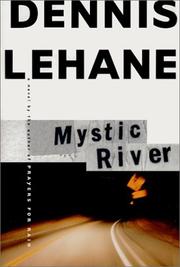
Three childhood friends in a Boston neighbourhood, one abduction, and a murder twenty-five years later. His best book and the best cold entry point to his work — if you are unsure whether you want any of this, start here rather than with the series.
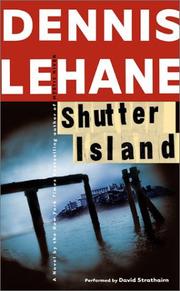
A US marshal investigating a disappearance from a hospital for the criminally insane in 1954. A puzzle novel built entirely around its ending, and much slighter than Mystic River — read it second, and read it in as few sittings as possible.
The Coughlin Trilogy
IntermediateRead the historical sequence, in order, that Lehane turned to after leaving crime fiction behind — a family saga running from the 1919 Boston police strike to wartime Cuba.
▸ Study plan for this stage
Pace: 10 weeks. The Given Day is roughly 700 pages, dense with historical material — the 1918 influenza epidemic, the Boston police strike, the Red Scare, Babe Ruth — and is the longest thing he has written; give it four to five weeks. Live by Night is about 400 pages and moves far faster, two weeks. Worl
- The Given Day is a labour novel first and a crime novel second: the Boston police strike of 1919 is the event everything is arranged around, and Lehane is arguing about who the law is for.
- The double plot — Danny Coughlin, a policeman's son, and Luther Laurence, a Black man fleeing Tulsa — lets the book put the same city in front of two people who are not permitted to see the same thing.
- Babe Ruth appears in interstitial chapters as a device rather than a character: a way of showing the period's public face while the political material runs underneath.
- Live by Night follows Joe Coughlin, Danny's younger brother, from Boston into Prohibition-era Tampa and the rum trade, and switches register completely — it is a gangster novel with a gangster's momentum.
- The trilogy's economic argument is continuous: The Given Day is about people who cannot get paid, Live by Night about a man who decides the rules governing pay are a fiction, World Gone By about what that costs him.
- World Gone By is set in 1943 Florida and Cuba and is written as an ending, not as a novel — short, resolved, and much darker than either predecessor.
- These are historical novels with real research behind them, and Lehane's Boston here is documented rather than remembered, which changes the texture of the prose from the Kenzie books entirely.
- What does the police strike actually turn on, and where does the novel place its sympathy?
- What does the Luther Laurence plot let Lehane show about Boston that the Coughlin plot alone could not?
- How does Joe Coughlin's moral reasoning in Live by Night differ from his brother Danny's in The Given Day, and does the book agree with him?
- World Gone By is much shorter than either book before it. What has Lehane decided he no longer needs?
- Is Babe Ruth doing anything the novel could not do without him?
- Keep a two-column timeline of the Danny and Luther plots in The Given Day and mark where they intersect. The intersections are few and each one is engineered.
- Read the strike chapters against a short account of the actual 1919 Boston police strike and mark where Lehane compresses, invents or reassigns. He is close to the record, and where he departs is informative.
- Track Joe Coughlin's justification for each escalation across Live by Night — write the sentence he tells himself each time. By the end you have the novel's argument in his own words.
- After World Gone By, go back to the last chapter of The Given Day and read the two endings together. The trilogy is a single downward arc and those two pages are its terminals.
Next up: You have the series, the standalones and the historical trilogy; what is left is the recent work and the short fiction, none of which needs anything above it.

The first and by far the most ambitious: Boston in 1918 and 1919, the influenza epidemic, the police strike, Babe Ruth, and the Coughlin family. Long, and unlike everything else here.
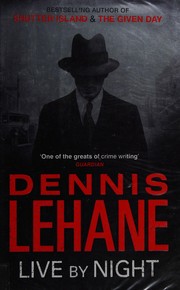
Second, following Joe Coughlin from Boston into Prohibition-era Tampa and the rum trade. It stands alone better than the first book does, but the family history from The Given Day is what gives it weight.
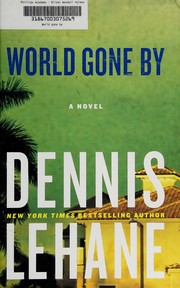
Third and last, set in 1943 Cuba and Florida, and much shorter and bleaker than the two before it. Read only after Live by Night — it is an ending, not a novel.
Later Work and the Short Stories
IntermediateFinish with the recent standalones and the one short-fiction collection, none of which requires anything else on this path.
▸ Study plan for this stage
Pace: 5 to 6 weeks. Since We Fell is about 420 pages and changes genre roughly halfway through, from a portrait of an agoraphobic journalist to a plotted thriller; two weeks, and expect the second half to feel like a different book. Small Mercies is around 320 pages, set during the Boston busing crisis of
- Since We Fell has a genuine structural break, and readers divide on whether it is a bold move or a failure of nerve; the first half is a character study Lehane has not attempted elsewhere.
- Its agoraphobia material is the most interior writing in his work, and the thriller machinery that takes over is what most reviewers objected to.
- Small Mercies returns to the neighbourhood register of Mystic River and sets it inside a documented historical moment — the court-ordered desegregation busing of Boston schools, and the white resistance to it.
- Mary Pat Fennessy is his most unsparing protagonist: the novel neither excuses nor detaches from her racism, and it declines to redeem her at the end.
- The two late novels are the same technique from different directions — a woman's interior life used as the engine of a crime plot — which is not what the Kenzie books or the Coughlin trilogy did.
- Coronado collects five stories and the stage play Lehane made from one of them, and the interest is compression: the same material as the novels, without room to explain itself.
- The play in Coronado is worth reading against the story it came from, because it shows what he thinks is load-bearing in his own writing when the prose is taken away.
- Where exactly does Since We Fell change books, and does the first half survive the switch?
- What does the busing setting give Small Mercies that a generic 1974 Boston could not?
- Does Small Mercies ask you to forgive Mary Pat? What does the ending actually do with her?
- What is compressed out of the stories in Coronado, and what does their brevity reveal about the novels?
- Across the whole path, what is Lehane consistently interested in that is not crime?
- Mark the page in Since We Fell where the genre switches, then reread the fifty pages before it looking for the setup. Deciding whether it was planted or bolted on is the argument about this book.
- Read the Coronado story and then the play version, and list what he cut. That list is his own account of what a scene needs.
- Set Small Mercies beside Mystic River — same city, same class, thirty years of the author's career apart — and write down what he can now do in a paragraph that took him a chapter in 2001.
- Choose one story in Coronado and identify which novel on this path it is a compressed version of. Most of them are.
Next up: That is the whole of the fiction worth sequencing; what remains — the screen work, the later Kenzie stories and the television writing on The Wire and Mr. Mercedes — can be picked up in any order, and the two adaptations most worth watching, Mystic River and Gone Baby Gone, are now safe to see.

A psychological thriller that changes genre halfway through, from a portrait of an agoraphobic journalist to something far more plotted. Divisive, and worth reading for the first half even if the second loses you.

Boston in 1974, during the busing crisis, and his best novel in years — a return to the neighbourhood territory of Mystic River with the historical detail of the Coughlin books. A good place to end.
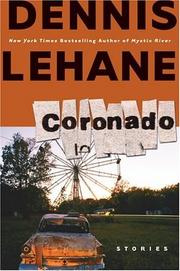
The one collection of short stories, plus a play. Read it last: the stories are minor next to the novels, but they show the compression that the long books mostly hide.