Corto Maltese Reading Order: Where to Start Hugo Pratt's Adventure Comics
Hugo Pratt drew Corto Maltese across three decades and the English translation history is a mess: the albums have appeared under at least three publishers, with different titles, different sizes, and some in black and white and some coloured. The reading order below follows Pratt's own sequence, which is chronological in the character's life and is also the order the albums were serialised. Start with the long one — it is the only novel-length story and it establishes everything the shorter albums assume.
Begin With the Long One
IntermediateMeet Corto in the only book-length adventure, and get used to Pratt's method of leaving the connective tissue out.
▸ Study plan for this stage
Pace: One to two weeks for Ballad of the Salt Sea (169 pp). It reads in two evenings but rewards a second pass immediately, because Pratt withholds so much on the first. Set in the South Pacific in 1913 and it depicts colonial warfare, slaving and the killing of prisoners as ordinary background. The recor
- Pratt's ellipsis: the decisive action frequently happens between panels, and you are expected to infer it
- Corto as a semi-passive protagonist - he arrives, observes, chooses a side late, and is rarely the cause of the plot
- The cast Ballad establishes: Rasputin, the Monk, Cain and Pandora Groovesnore, and Tarao
- The historical frame - German and British colonial competition in Melanesia on the eve of the First World War - treated as a given rather than explained
- Pratt's brush line and his open, airy panel layouts, which carry mood rather than information
- Adventure fiction inherited and inverted: the Conrad and Stevenson furniture is present, the imperial confidence is not
- What does Corto actually want in this book, and how much of it does Pratt state outright?
- How does Rasputin work as a foil, and why does the series need someone who will do what Corto will not?
- Which plot events happen off the page entirely, and how do you know they happened?
- How much of Corto's past are you told here, and how much are you led to assume you were told?
- Why does Pratt draw the sea and the sky with so little line, and what does that do to the pace?
- Finish the book, then reread the first twenty pages and list everything Pratt showed you that you could not yet read
- Track every appearance of Rasputin and mark the panels where his aims and Corto's briefly coincide - that overlap is the pattern for the whole series
- Pick three page-turns and write down what must have happened in the gutter between the last panel and the first of the next page
- If you can see both the NBM and IDW versions, compare the same page: the translation, the lettering and the colour all differ
Next up: Ballad is the only place Pratt takes his time, so once you can read his omissions at novel length you are ready for the short albums, where the same method runs at eight to twenty pages a story.

The 1967 serial that introduced the character, and the only full-length Corto Maltese story — the South Pacific in 1913, a Melanesian pirate confederation, and Corto introduced tied to a raft. Start here rather than with a shorter album, because it is the one place Pratt takes his time. The English record here is the NBM edition; a later IDW edition exists under a slightly different title, so check which one you are buying.
The Short-Story Albums, in Order
IntermediateRead the four albums of linked short stories, where Pratt does his best work, and follow Corto from the Caribbean to Ireland.
▸ Study plan for this stage
Pace: Four to five weeks, roughly one album a week: Under the Sign of Capricorn (139 pp), Beyond the Windy Isles (116 pp), Celtic Tales (138 pp), The Ethiopian (94 pp). Short volumes, but each contains six to eight separate stories and they read slower than the page count suggests. The Celtic and Ethiopia
- The story unit Pratt settles into: eight to twenty pages, one encounter, most of the plot implied
- The recurring supporting cast - Bouche Doree, Venexiana Stevenson, Professor Steiner, Soledad Lokaarth - introduced without ceremony and expected to be remembered
- Historical setting as pressure rather than subject: the Caribbean and Guianas in 1916-17, Ireland during and after the Easter Rising, the Western Front, Africa and Arabia in 1918
- The magic-realist register: dreams, ghosts and prophecies presented at the same level of reality as everything else
- Corto's code, which is never stated and has to be reconstructed from what he refuses to do
- The English publication mess - three publishers, at least two title conventions, black and white versus colour
- What changes between Ballad's novel-length method and the short-story method, and what does Pratt gain?
- Which recurring characters are you told about, and which are you simply expected to accept?
- How does the Irish material in Celtic Tales treat the politics - whose side is the book on, and how do you know?
- Why is Beyond the Windy Isles the weakest of the four, and what does it set up for the two that follow?
- In the African stories, what is Corto's relation to the colonial powers he keeps moving between?
- Pick one recurring character and track them across all four albums, writing down separately what you are told and what you inferred
- Take a single story in Celtic Tales and mark every panel where the plot advances - then count how many of the advances happen off the page
- Read the first story of Under the Sign of Capricorn and the first of The Ethiopian back to back and note how Pratt's page count per story and his density change over the run
- Before buying any of these, check your edition's title against the alternates listed above so you do not buy the same album twice under two names
Next up: The short albums establish the cast and the code; the seventies books take the same character back to album length, with the history no longer in the background but driving the plot.
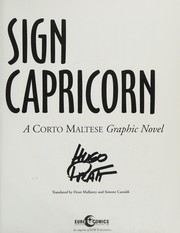
The first collection of short stories, set around the Caribbean and the Guianas in 1916 and 1917. This is where the series finds its real form — eight to twenty pages per story, most of the plot implied. Read it directly after the Ballad.

More Caribbean stories, including the introduction of several recurring figures. The catalogue title is pluralised as Beyond the Windy Isles. Read it third; it is the weakest of the short-story books and it sets up the two that follow.

Corto in Ireland and the Western Front during the First World War, and the best-regarded of the short-story albums. Older NBM editions published these stories under the title The Celts, which the catalogue also holds separately — they are the same material, so buy one.

Four stories set in Africa and Arabia in 1918. Read it after the Celtic stories. NBM's earlier edition of this material was titled Corto Maltese in Africa, which is a separate record for the same album.
The Long Journeys
IntermediateFollow the three album-length adventures of the 1970s, where the historical background becomes as important as the plot.
▸ Study plan for this stage
Pace: Four to five weeks. Corto Maltese in Siberia first and slowest - it carries the most historical scaffolding of any album and is worth a week and a half with a reference to hand. Fable of Venice (63 pp) is short but the most elliptical thing Pratt drew and should be read twice in one week. The Golden
- Real history as plot machinery: the Russian Civil War, the Red Lanterns, the Manchurian railways and the gold reserve
- Baron Ungern-Sternberg and the other historical figures Pratt drops in undocumented and unexplained
- Esotericism as structure - freemasonry, alchemy and the Venetian occult tradition in Fable of Venice
- Pratt's Venice: he grew up there, and the album's geography is a real walkable route through the city
- Deliberate opacity - Fable of Venice is designed to end without a resolution you can restate
- The quest structure of Samarkand, which repeats Ballad's shape at twice the geographical range
- How much of Siberia is invented and how much is documented history, and how would you tell without checking?
- What does Fable of Venice's ending actually resolve, and what does Pratt intend you to be left holding?
- Why does Pratt set the Venice book under early Fascism, and how visible is the politics on the page?
- How does Samarkand's treasure quest differ structurally from Ballad's, twelve years later?
- What has changed about Corto himself by the 1921-22 albums?
- Keep a list of every named historical figure in Siberia and look each one up - most are real, and the proportion is the point
- Read Fable of Venice once for the plot and once with a map of Venice, following the route the characters actually take
- Chart Samarkand's quest against Ballad of the Salt Sea beat by beat and write down where the late book deviates
- Take three pages of Siberia and count the panels in which Corto does anything at all - it is fewer than you expect
Next up: With the long journeys read, only the darkest album and the prequel remain - and the prequel only works once you already know the man.

Manchuria and the Russian Civil War, with the Red Lanterns, Baron Ungern-Sternberg and a train full of gold. Often named as the peak of the series, and the album with the most historical scaffolding. Read it first in this stage.

Venice in 1921 under the early Fascists, freemasonry, and an emerald. The most personal of the albums — Pratt grew up in Venice — and the most elliptical; expect to finish it unsure what happened, which is deliberate.

Turkey, the Caucasus and Central Asia in 1921 and 1922, in search of Alexander's treasure. The most conventionally adventurous of the late books.
Late Pratt, and the Prequel
IntermediateFinish the sequence available in English, and know honestly which albums are not.
▸ Study plan for this stage
Pace: Two weeks. Tango All at Half-Light (63 pp) in a few sittings, then Corto Maltese: The Early Years last. Tango is set in Buenos Aires in 1923 and is directly about Argentine political violence, trafficking and disappearance; it is the bleakest thing in the series. Read the prequel after everything el
- The late tonal shift: Tango has no romance left in its adventure, and its villains are ordinary
- Argentina in 1923 as a real political subject rather than a backdrop
- The prequel problem - The Early Years was drawn late and depends entirely on knowledge the reader brings
- Corto's origin material: the Russo-Japanese War, and encounters with Jack London and Rasputin as a young man
- That the sequence is incomplete in this path: The Secret Rose and Mu close the series and are absent here
- How Pratt's line loosens across the late albums, and what that does to the storytelling
- What does Tango do differently from every earlier album in its treatment of violence?
- Which moments in The Early Years land only because you have read the later-set books first?
- How does Pratt's drawing in the 1980s differ from the 1967 Ballad, and is anything lost?
- Where does the character actually end, given that the last two albums are not on this path?
- Which of the ten albums would you now hand to someone starting from nothing, and why not Ballad?
- Read The Early Years and note every reference or reversal that only works because of an album you read earlier
- Put Corto's first appearance in Ballad of the Salt Sea beside his introduction in The Early Years and compare the two versions of the same man
- Track the political content of Tango against the Fascist Venice of Fable of Venice and note how much more explicit the later book is
- Write out the ten albums in the order you read them with a one-line note on each, then mark where The Secret Rose and Mu would sit if you find them elsewhere
Next up: This is where the path ends, one stage short of the full twelve; from here the natural continuation is Pratt's non-Corto work, and the Italian or French editions where the two missing albums are in print.

Buenos Aires in 1923 — the darkest album, and about Argentina's politics as much as about Corto. The catalogue stores it under the fuller Italian-derived title Tango all at half-light.

The prequel, drawn late: Corto in the Russo-Japanese War, meeting Jack London and Rasputin. Read it last, not first — its whole effect depends on already knowing the man it describes. Two further albums, The Secret Rose and Mu, close the series but do not currently resolve to any catalogue record we can verify, so they are absent from this path rather than omitted by choice.