Best Books to Learn Combustion Science and Engineering
Combustion sits at the intersection of thermodynamics, chemical kinetics and fluid mechanics, and no single book covers all three well — which is why the field has a settled canon of complementary texts rather than one standard reference. This path starts with the one undergraduate course everyone takes, moves to the three graduate texts that divide the subject between them, then to the theory, and ends with the specialist volumes for turbulence, computation, detonation and gas turbines. You need a solid grounding in thermodynamics, transport phenomena and differential equations before starting.
The First Course
IntermediateGet the conservation equations, stoichiometry, chemical equilibrium and the basic structure of premixed and diffusion flames, at a level a senior undergraduate can carry.
▸ Study plan for this stage
Pace: A full semester - 14 to 16 weeks for about 1,570 pages, because these are problem-set books and reading them without working the problems accomplishes nothing. Turns (690 pp) carries the stage: 10 to 12 weeks at roughly two chapters a fortnight, with the end-of-chapter problems worked. McAllister, C
- Stoichiometry, equivalence ratio and the mixture fraction, and moving fluently between mass, mole and volume bases
- Chemical equilibrium and adiabatic flame temperature - computing it, and knowing why real flames fall below it
- The conservation equations for a reacting flow: species, energy and momentum with a chemical source term, and the assumptions that reduce them to something solvable
- Elementary chemical kinetics - rate laws, the Arrhenius form, chain branching, and why a global one-step reaction is a fitted convenience rather than chemistry
- Premixed flame structure: preheat zone, reaction zone, and the laminar flame speed as an eigenvalue rather than a free parameter
- Diffusion flame structure and the Burke-Schumann limit, and the difference in what controls a premixed and a non-premixed flame
- Droplet combustion and the d-squared law
- The applied vocabulary Ragland supplies - burners, furnaces, fluidised beds, solid fuels, emissions - so that the equations attach to hardware
- Given a fuel, an equivalence ratio and initial conditions, how do you compute the adiabatic flame temperature, and what does dissociation do to the answer?
- Why is the laminar flame speed a property of the mixture rather than of the burner, and what does it depend on?
- What does a global one-step reaction rate get right and what does it get wrong, and when is the error unacceptable?
- What is physically different about a premixed and a diffusion flame, and how does that difference show up in the governing equations?
- Derive the d-squared law for a burning droplet and state every assumption it requires.
- Ragland's furnace chapters and Turns's flame chapters describe the same physics at different scales. Which quantities carry across and which do not?
- Work Turns's adiabatic flame temperature calculation for methane-air at stoichiometric conditions by hand from his own tables, then repeat it allowing for dissociation and compare. Do the same for propane and hydrogen and note how the trend behaves.
- Reproduce Turns's worked example for a laminar premixed flame speed using the Mallard-Le Chatelier estimate, then look up a measured value for the same mixture and account for the discrepancy in a paragraph.
- Solve the same thermochemistry problem twice - once from Turns's tables and once from the treatment in McAllister, Chen and Fernandez-Pello. Where the notation differs, write the translation down; you will need it for the graduate texts.
- Derive the d-squared law from the conservation equations following Turns, then use it to compute the lifetime of a 100-micron n-heptane droplet in air at the conditions the chapter gives.
- Take one piece of equipment from Ragland - a pulverised coal burner or a fluidised bed - and write down which of the equations from Turns actually constrain its design, and which quantities the designer treats as empirical.
Next up: The undergraduate texts compress chemical kinetics hardest, which is exactly what the graduate references open up, so the next stage begins with the chemistry.

The standard first text in most mechanical engineering departments, and the right starting point: it derives what it needs, works through the numbers, and does not assume you have met chemical kinetics before. The catalogue files it under the bare title; the published form adds Concepts and Applications.

Shorter and more recent than Turns, with a cleaner treatment of thermochemistry and a good set of worked problems. Read it alongside or immediately after Turns as a second pass over the same material at slightly higher pace.

The applied counterweight: furnaces, boilers, solid fuels, emissions and practical burner design rather than flame theory. Read it third, so that the equations from the first two books acquire a piece of hardware to sit in.
The Graduate Texts
BeginnerMove to a rigorous treatment of chemical kinetics, flame structure, ignition and extinction, and be able to work between the three standard references depending on the problem.
▸ Study plan for this stage
Pace: A full academic year for about 1,755 pages, and only one of these three is meant to be read cover to cover. Glassman's Combustion (702 pp) is the one to read straight through - 12 to 14 weeks. Warnatz, Maas and Dibble's Combustion (282 pp) is short and can be worked in four to five weeks, but it is
- Detailed oxidation mechanisms: the H2-O2 system as the core, the explosion limits, and how hydrocarbon mechanisms are built out from it
- Chain branching and the second explosion limit, and why that single competition governs ignition across most fuels
- Flammability limits, quenching distance and minimum ignition energy as measurable quantities with mechanistic explanations
- Pollutant chemistry: thermal, prompt and fuel-bound NO pathways, CO burnout, and the soot formation and oxidation sequence - Glassman's strongest material
- Mechanism reduction: quasi-steady-state and partial-equilibrium assumptions, ILDM and reduced mechanisms, which is Warnatz, Maas and Dibble's specific contribution and the bridge from kinetics to computation
- Ignition theory - thermal explosion, induction times, and the distinction between autoignition and forced ignition
- Multiphase combustion: sprays, droplet arrays, and solid propellant burning, which is where Kuo goes further than either of the others
- Knowing which of the three books to open for a given problem, which is the actual skill this stage teaches
- Draw the H2-O2 explosion limit diagram and explain each of the three limits mechanistically. Which elementary reactions control each?
- How is a detailed mechanism for a hydrocarbon assembled, and how would you judge whether one is adequate for your problem?
- State the three NO formation pathways and the conditions under which each dominates. What does that imply for a low-NOx burner?
- What does mechanism reduction actually assume, and how do you know when a reduced mechanism has stopped being valid?
- Where does Kuo's treatment of sprays and multiphase combustion go beyond Glassman and Warnatz, and what mathematics does it require that they do not?
- For a given problem - soot in a diesel engine, ignition delay in a shock tube, a burning solid propellant grain - which of these three books do you open first, and why?
- Integrate a hydrogen-air mechanism yourself - Cantera or an equivalent solver - and reproduce the three explosion limits as a pressure-temperature map. Compare your curve against the diagram in Glassman and account for any disagreement.
- Take a detailed methane mechanism and apply the quasi-steady-state and partial-equilibrium reductions Warnatz, Maas and Dibble describe. Run the full and reduced mechanisms on the same ignition delay problem and quantify the error and the speedup.
- Compute thermal NO production for a stoichiometric methane flame using the Zeldovich mechanism with Glassman's own rate constants, then repeat at an equivalence ratio of 0.8 and explain the change from the temperature dependence alone.
- Work the soot formation sequence in Glassman for one fuel from first aromatic ring through to particle inception, and write the chapter's argument as a numbered chain of steps with the evidence he cites for each.
- Take one droplet or spray problem from Kuo and set it up completely - governing equations, boundary conditions, non-dimensional groups - without solving it. The setup is the part that shows whether you have the transport background the book assumes.
Next up: The graduate texts describe flame structure; the theory stage derives it, using the asymptotic methods that explain why flames have that structure at all.
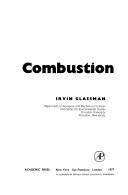
The chemist's book, and the strongest treatment of oxidation mechanisms, flammability limits, soot and pollutant formation. Read it first at this level because the kinetics is the part the undergraduate texts compress hardest.

Warnatz, Maas and Dibble, and the modern reference for detailed chemical kinetics and reduced mechanisms — the bridge from kinetics to simulation. Note that two books in this stage carry the identical one-word title; keep the authors straight. The published subtitle is Physical and Chemical Fundamentals, Modeling and Simulation.
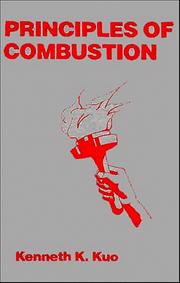
The most mathematically complete of the three, with the fullest treatment of multiphase combustion, droplets and sprays. Use it as the reference you go to when Glassman or Warnatz stops short, rather than reading it cover to cover.
The Theory
BeginnerWork through asymptotic flame theory — the analytical backbone that explains why flames have the structure they do.
▸ Study plan for this stage
Pace: A year, or a very determined half-year, for about 1,855 pages. Williams's Combustion Theory (564 pp) is the slowest reading on this path - budget 16 to 20 weeks and work every derivation with pencil and paper, because reading it passively is wasted time. Law's Combustion Physics (738 pp) then takes
- Activation-energy asymptotics: the large-Zeldovich-number limit, and why it converts a flame from an unsolvable problem into a matched inner and outer solution
- The structure of the premixed flame as an eigenvalue problem, and the flame speed emerging as the eigenvalue
- Flame stretch, Markstein length and the Lewis number, and the mechanism by which non-unity Lewis number produces diffusive-thermal instability
- Ignition and extinction as turning points of an S-curve, and the counterflow diffusion flame as the canonical configuration for finding them
- Hydrodynamic (Darrieus-Landau) instability and cellular flames
- The Chapman-Jouguet condition and the ZND structure of a detonation, and how a deflagration and a detonation sit on the same Hugoniot
- Deflagration-to-detonation transition, and why it is the hardest problem in the chapter Strehlow does best
- The difference in intent between the three: Williams derives, Law surveys the derivations against modern data, Strehlow condenses
- Set up the premixed flame problem in the large-activation-energy limit and show where the flame speed appears as an eigenvalue.
- What is flame stretch, and how does the Markstein length quantify the flame's response to it?
- Explain the S-curve for a counterflow diffusion flame. What physically happens at the ignition and extinction turning points?
- Why does a Lewis number away from unity destabilise a flame, and what does the resulting cellular structure look like?
- Draw the Hugoniot for a reactive gas and locate the deflagration branch, the detonation branch and the Chapman-Jouguet points. What does the ZND model add to the CJ result?
- Law's book covers most of Williams's ground. What specifically does Williams still do that Law does not?
- Work the full matched asymptotic derivation of the laminar flame eigenvalue in Williams by hand, inner and outer solutions and the matching condition. Then evaluate the resulting flame speed for methane-air using the rate data from the graduate-text stage and compare it against the measured value you looked up in stage one.
- Derive the extinction condition for the counterflow diffusion flame following Law, then compute the extinction strain rate for a specific fuel using his own numbers and check it against the experimental values his chapter tabulates.
- Compute the Markstein length for two mixtures with Lewis numbers on either side of unity - lean hydrogen-air and lean propane-air are the standard pair - and predict from the sign which one should form cells. Compare with the photographs in the text.
- Solve the ZND structure for a stoichiometric hydrogen-oxygen detonation using Strehlow's treatment: compute the CJ velocity, then integrate the reaction zone and plot pressure and temperature through it.
- Take one result you derived from Williams and find where Law restates it. Note what Law has added - newer data, a numerical check, a limit Williams did not consider. Doing this for three results tells you exactly what the forty years between the two books bought.
Next up: The theory assumes laminar flow; the last stage removes that assumption and follows the subject into turbulence, simulation and hardware.
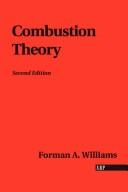
The foundational monograph, and still the reference for the mathematical theory of flames: activation-energy asymptotics, flame structure, stability. Read it first here; it is old, demanding and has not been superseded.
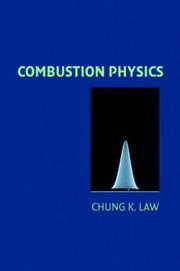
The modern successor to Williams and the most complete single graduate volume on the subject — over seven hundred pages covering laminar flames, ignition, extinction, turbulent combustion and supersonic combustion. Read it after Williams, whose methods it assumes.
A more compact treatment that is unusually good on detonation and explosion phenomena. Read it third as preparation for the detonation monograph in the next stage.
Turbulence, Computation and Application
BeginnerHandle the problems that actually arise in engineering practice — turbulent flames, numerical simulation, detonation and gas turbine combustors.
▸ Study plan for this stage
Pace: A year for about 2,560 pages, read as four separate campaigns rather than one sequence. Peters's Turbulent Combustion (304 pp) first and slowly - six to eight weeks, because it is the conceptual framework the rest use. Poinsot and Veynante's Theoretical and Numerical Combustion (522 pp) directly aft
- The turbulent combustion regime diagram - Damkohler and Karlovitz numbers against velocity and length scale ratios - and locating a real burner on it
- The flamelet concept: a turbulent flame as an ensemble of stretched laminar flames, which is Peters's central contribution and the assumption most models inherit
- Mixture fraction and conditional moment approaches for non-premixed turbulent flames, and the flame surface density and G-equation approaches for premixed ones
- RANS, LES and DNS - what each resolves, what each models, and the specific reason chemistry is the hard part in all three
- Non-reflecting boundary conditions for compressible reacting flow, which Poinsot and Veynante treat at length because getting them wrong destroys the solution
- Combustion instability: the Rayleigh criterion, thermoacoustic coupling, and why it is simultaneously a modelling problem and a hardware problem
- Detonation theory beyond ZND: cellular structure, transverse waves, and the failure and initiation criteria in Fickett and Davis
- Gas turbine combustor design as a set of competing constraints - atomisation, residence time, liner cooling, NOx and lean blowout - where every preceding chapter becomes a limit on the design
- Place a given turbulent flame on the regime diagram from its measured turbulence intensity and integral scale. Which modelling assumption does that location justify?
- What does the flamelet assumption require to be true, and where does it break down?
- For a given problem, how do you choose between RANS, LES and DNS, and what does that choice cost in chemistry fidelity?
- Why do boundary conditions matter more for compressible reacting flow than for incompressible flow, and what does the NSCBC formulation do about it?
- State the Rayleigh criterion and explain how a combustor can be redesigned to violate it.
- What does cellular detonation structure reveal that the one-dimensional ZND model cannot, and how is cell size measured?
- Compute the Damkohler and Karlovitz numbers for a real burner - a laboratory Bunsen flame and a gas turbine primary zone, using Lefebvre's own operating data for the second - and plot both on Peters's regime diagram. Then state which model each location licenses.
- Run a simple laminar flame in a solver, then reproduce one of the DNS or LES cases described in Poinsot and Veynante at reduced resolution, and compare your turbulent flame speed against theirs. The discrepancy at low resolution is the lesson.
- Set up a one-dimensional reacting flow problem in the Kee, Coltrin and Glarborg formulation with detailed transport, and run it twice - once with mixture-averaged and once with multicomponent diffusion. Quantify the difference and decide for which problems it matters.
- Compute the detonation cell size for a stoichiometric hydrogen-air mixture from the induction length using Fickett and Davis's correlation, then compare against the tabulated experimental cell sizes. The order-of-magnitude agreement, and its limits, is the state of the art.
- Size a gas turbine combustor from Lefebvre's own design procedure for a stated thrust and pressure ratio - reference velocity, residence time, air split between primary, intermediate and dilution zones - and then check the residence time against the NOx chemistry from the Glassman stage. The design either satisfies both constraints or it does not.
- Take one instability case Lefebvre describes and analyse it with the Rayleigh criterion, identifying the acoustic mode and the heat-release phase relation that sustain it.
Next up: This closes the path: the reader can now move between the chemistry, the theory, the computation and the hardware, and knows which of these books answers which kind of question.
The standard graduate treatment of turbulent premixed and non-premixed combustion, built around the flamelet concept Peters did most to develop. Read it first in this stage; it is the conceptual framework the computational books use.
Poinsot and Veynante, the reference for computational combustion: LES and DNS of reacting flows, boundary conditions, and combustion instabilities. Directly after Peters, whose flamelet models it implements.

Kee, Coltrin and Glarborg on the theory and practice of coupling detailed chemistry to fluid transport — the book behind CHEMKIN-style simulation. The most useful volume here if you will actually run the codes.
Fickett and Davis, the standard monograph on detonation theory and experiment. The catalogue files it under the bare title; the published form adds Theory and Experiment. Read it once Strehlow has introduced the phenomenon.

The application volume: combustor design, atomisation, ignition, emissions and combustion instability for aero and industrial gas turbines. Read it last — it is where every preceding chapter turns into a hardware constraint.