CNC machinist: the skilled human behind the machines
This four-stage curriculum takes a complete beginner from shop-floor literacy all the way to advanced CNC programming, metrology, and an informed understanding of where human skill fits in an increasingly automated industry. Each stage builds on the last: you must be able to read a print before you can program a part, and you must understand tolerances before metrology tools make sense. Expect roughly 10–14 months of serious study alongside hands-on practice.
Shop-Floor Foundations
BeginnerBuild core vocabulary and mental models: how metal is cut, how a machine shop is organized, and how to read the language of engineering drawings.
▸ Study plan for this stage
Pace: 8–10 weeks total. Week 1–4: Machinery's Handbook — treat it as a reference atlas, not a cover-to-cover read. Focus on the Mathematics, Mechanics, and Measurement sections (~20–30 targeted pages/day with note-taking). Week 5–10: Technology of Machine Tools by Krar — read linearly, ~25–35 pages/day, p
- Cutting fundamentals: the geometry of chip formation, rake angle, relief angle, and how tool material (HSS vs. carbide) affects cutting speed and feed
- The 'big four' machine tools — lathe, milling machine, drill press, and grinder — their axes of motion, primary operations, and workholding methods (chucks, vises, fixtures)
- Speeds and feeds: the relationship between surface footage (SFM/SFM), RPM, feed rate, and depth of cut, and how to look them up and calculate them using Machinery's Handbook tables
- Measurement and metrology: reading a vernier caliper, micrometer, and dial indicator to 0.001" precision; understanding tolerance, allowance, and fit (clearance, interference, transition)
- Engineering drawing literacy: orthographic projection, the meaning of title-block data, GD&T symbols (flatness, perpendicularity, true position), and surface finish callouts as presented in Machinery's Handbook
- Shop-floor organization and safety: the layout of a production machine shop, material flow, work-order systems, and OSHA-level hazard awareness covered in Krar's introductory chapters
- Material properties for machinability: hardness (Brinell/Rockwell scales), tensile strength, and machinability ratings for common steels, aluminum, and cast iron as tabulated in Machinery's Handbook
- Tooling taxonomy: inserts, tool holders, drill geometry, end-mill types, and the logic of selecting the right cutter for a given operation as described in Krar
- Given a workpiece material and diameter, how do you use Machinery's Handbook to find the correct cutting speed in SFM and convert it to a spindle RPM for a lathe or mill?
- What is the difference between tolerance, allowance, and fit? Given a shaft-and-hole pair with dimensions from an engineering drawing, can you classify the fit type?
- Describe the chip-formation process: what causes a continuous chip vs. a discontinuous chip, and why does it matter for tool life and surface finish?
- Looking at a three-view orthographic drawing with GD&T callouts, can you identify the datum references, interpret a position tolerance, and list the required measurements to verify the part?
- How does the geometry of a twist drill (point angle, helix angle, web thickness) affect its performance in different materials, as explained in Krar?
- What are the key safety and organizational principles of a machine shop described in Krar, and how does the physical layout of machines relate to workflow efficiency?
- Speeds-and-feeds drill: Pick 10 material/tool/diameter combinations and use only Machinery's Handbook tables to calculate RPM and feed rate for each; check your arithmetic and record the reference page for every value.
- Drawing interpretation exercise: Find or print 3 free sample engineering drawings online (e.g., from MIT OpenCourseWare or GrabCAD); annotate every line, symbol, and callout using Machinery's Handbook's drafting and GD&T sections as your decoder ring.
- Measurement lab: Borrow or purchase a set of calipers and a 0–1" micrometer. Measure 10 common household objects (bolts, coins, pipe fittings), record readings to 0.001", and calculate whether each would pass a sample tolerance of ±0.005".
- Machine-tool sketch journal: After reading each major machine chapter in Krar, draw a labeled top-view and front-view sketch of the machine from memory — mark axes, workholding, and the cutting zone. Compare to the book's diagrams and correct errors.
- Machinability comparison table: Using Machinery's Handbook, build a one-page reference table comparing 6 common materials (e.g., 1018 steel, 6061 aluminum, 304 stainless, gray cast iron, brass, titanium) across hardness, machinability rating, recommended tool material, and SFM range.
- Vocabulary self-quiz: After finishing Krar, write a one-sentence plain-English definition for 50 bolded or technical terms encountered across both books, then verify each against the source text — aim for zero look-ups on a second pass 48 hours later.
Next up: Mastering the vocabulary, drawing language, and machine-tool fundamentals in this stage gives the reader the mental scaffolding needed to understand how CNC systems automate and precisely control those same cutting operations — the natural focus of the next stage.
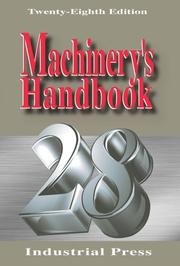
The definitive machinist reference — start by reading the introductory sections on materials, cutting tools, and shop math to build vocabulary you will use in every later book.

A comprehensive, beginner-friendly textbook covering hand tools, machine types, cutting theory, and basic operations; gives you the broad shop-floor context before specializing in CNC.
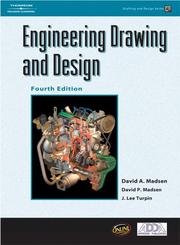
Teaches orthographic projection, dimensioning, and GD&T symbols from scratch — essential before you can interpret a part print or write a CNC program to match one.
Tolerances, Measurement & Quality
BeginnerUnderstand geometric dimensioning and tolerancing (GD&T) at a working level and learn to use precision measurement instruments so you can verify that a machined part is actually correct.
▸ Study plan for this stage
Pace: 10–12 weeks total. Weeks 1–6: Madsen's "Geometric Dimensioning and Tolerancing" (~25–30 pages/day, 4–5 days/week), working chapter by chapter through GD&T symbols, datums, and tolerance zones before moving on. Weeks 7–12: Busch's "Fundamentals of Dimensional Metrology" (~20–25 pages/day, 4–5 days/we
- GD&T symbology and drawing callouts — the 14 geometric characteristic symbols (flatness, circularity, perpendicularity, true position, etc.) as presented in Madsen, and how to read a feature control frame
- Datums and datum reference frames — how Madsen explains selecting, labeling, and sequencing primary/secondary/tertiary datums to constrain a part in space
- Tolerance zones — understanding that every GD&T callout defines a 3-D zone the feature must fall within, not just a ± number on a dimension
- Maximum Material Condition (MMC), Least Material Condition (LMC), and Regardless of Feature Size (RFS) — the modifying symbols and how they change the allowable tolerance as feature size varies (Madsen)
- The International System of limits and fits — how shaft/hole systems, clearance, interference, and transition fits are specified, as grounded in Busch's metrology context
- Precision measurement instruments — Busch's coverage of vernier calipers, micrometers, dial indicators, gauge blocks, CMMs, and surface plates: their working principles, resolution, and proper use
- Measurement error, uncertainty, and calibration — systematic vs. random error, the 10:1 gauging ratio rule, and traceability to standards as explained in Busch
- Surface texture and form measurement — how roughness (Ra), waviness, and lay are specified on drawings (Madsen) and physically measured (Busch)
- Given a feature control frame from a Madsen example, can you identify every element — the geometric characteristic symbol, tolerance value, material condition modifier, and each datum reference — and state in plain English what the part must achieve?
- How does applying an MMC modifier to a position tolerance callout change the allowable positional error as the hole diameter moves from MMC toward LMC? Walk through a numerical example.
- What is a datum reference frame, and why does the order (primary, secondary, tertiary) of datum selection matter when setting up a part for inspection?
- Using Busch's guidelines, which instrument would you choose to measure a 25 mm bore held to a ±0.01 mm tolerance, and why? What instrument resolution and gauging ratio are required?
- What is the difference between accuracy, precision, and resolution as Busch defines them, and how does each affect whether a measurement result can be trusted?
- How would you verify the flatness of a machined surface using tools described in Busch (surface plate, dial indicator, gauge blocks), and what Madsen-specified tolerance zone are you comparing your readings against?
- Symbol flashcard drill — create a card for each of the 14 GD&T characteristic symbols using Madsen's definitions; on the front draw the symbol, on the back write the tolerance zone geometry, typical application, and one example feature control frame. Quiz yourself until recall is automatic.
- Redline a real drawing — find or print a simple machined-part drawing (a bracket, flange, or shaft), then annotate every dimension and tolerance using Madsen's symbology. Identify which datums you would use and in what order, and justify each choice in writing.
- Tolerance stack-up worksheet — using a 3–5 part assembly scenario from Madsen's examples, calculate the worst-case and statistical tolerance stack-up to determine whether the assembly will always fit together. Confirm your arithmetic against the book's answer.
- Instrument handling lab — borrow or purchase a vernier caliper, outside micrometer, and dial indicator. Measure the same object (a bolt, a coin, a block) ten times with each instrument, record all readings, compute mean and standard deviation, and compare the spread to Busch's discussion of repeatability and random error.
- Gauge block wringing exercise — if gauge blocks are accessible (school lab, makerspace, or employer), wring a stack to a target dimension, verify it with a micrometer, and document the difference. Relate the result to Busch's sections on calibration and measurement uncertainty.
- Inspection report — select one of Madsen's fully toleranced example parts, create a paper inspection plan listing every feature to check, the instrument you would use (justified via Busch), the acceptance criterion, and a sample data-recording table. This simulates a real shop floor first-article inspection.
Next up: Mastering how parts are specified and verified through GD&T and metrology gives you the quality-control vocabulary and dimensional thinking you'll need to understand how CNC machines are programmed and set up to actually hit those tolerances in production.
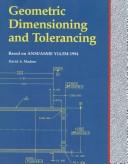
The most widely adopted GD&T textbook; builds directly on blueprint-reading skills and explains every symbol, datum, and tolerance zone with clear worked examples.
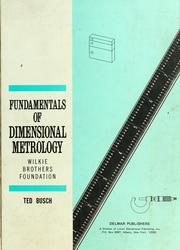
Covers micrometers, calipers, CMMs, surface plates, and measurement uncertainty — the practical companion to GD&T that shows how tolerances are actually verified on the shop floor.
CNC Programming & Setup
IntermediateWrite, edit, and prove out CNC programs in G-code; understand work offsets, tool-length compensation, feeds and speeds, and the full setup workflow for mills and lathes.
▸ Study plan for this stage
Pace: 12–14 weeks total, reading ~25–35 pages/day, 5 days/week. Week 1–6: Peter Smid's "CNC Programming Handbook" (dense reference text; budget extra time for chapters on canned cycles, cutter compensation, and macro programming). Week 7–9: John R. Walker's "Machining Fundamentals" (more accessible; focus
- G-code and M-code structure: block format, modal vs. non-modal codes, program structure (O-number, start/end blocks) as systematically catalogued in Smid's CNC Programming Handbook
- Coordinate systems and work offsets (G54–G59): how the machine coordinate system, work coordinate system, and fixture offsets interact, covered in depth by Smid and reinforced practically by Overby
- Tool-length compensation (G43/G44/G49) and cutter radius compensation (G41/G42): entry/exit moves, offset registers, and when each is applied — a major focus in Smid's handbook
- Feeds and speeds calculation: cutting speed (SFM/m·min⁻¹), RPM formula, chip load, and feed rate — grounded in Walker's Machining Fundamentals with material-specific tables
- Canned cycles for drilling, boring, tapping, and pocketing (G73–G89): parameter breakdown, R-plane vs. Z-plane logic, and cycle cancellation (G80) from Smid
- Lathe vs. mill programming differences: diameter vs. radius mode (G7/G8), turning/facing/threading cycles (G70–G76 on lathes), and turret/tool-post setup as contrasted across Smid and Overby
- Setup workflow: datum-setting with edge finders and probes, presetting tool lengths, loading offsets into the controller, and dry-run/single-block prove-out procedures detailed in Overby's CNC Machining Handbook
- Safe prove-out practices: single-block mode, feed-hold, rapid-override, and program verification using simulation before cutting — emphasized throughout Overby
- Given a part drawing with a datum in the lower-left corner, how would you determine and enter the G54 work offset on a vertical machining center, and what steps from Overby's setup workflow would you follow to verify it before cutting?
- Using the formulas presented in Walker's Machining Fundamentals, calculate the spindle RPM and feed rate (in./min) for a ½-inch HSS end mill cutting 6061 aluminum at a recommended cutting speed of 300 SFM and a chip load of 0.002 in./tooth with 4 flutes.
- Explain the difference between G41 (cutter compensation left) and G43 (tool-length compensation) as described in Smid's CNC Programming Handbook: what each compensates for, which offset register each reads, and what a proper lead-in move looks like for G41.
- Write a complete G-code program (using Smid's block-format conventions) to drill five holes in a bolt-circle pattern using a G81 canned cycle, including tool change, work offset selection, spindle start, coolant on, and program end.
- According to Smid's handbook, what is the difference between an incremental (G91) and absolute (G90) positioning mode, and describe a scenario on a lathe where switching between them mid-program would be advantageous?
- What are the key differences in programming a turning center versus a machining center, specifically regarding diameter mode, facing cycles, and threading cycles, as contrasted in Smid and Overby?
- Simulator dry-runs with Smid's examples: Type every sample program from at least three chapters of Smid's CNC Programming Handbook into a free G-code simulator (e.g., CAMotics or G-Wizard Editor) and observe the tool path; annotate each block explaining why each code is used.
- Feeds & speeds worksheet from Walker: Select five different material/tool combinations from Walker's Machining Fundamentals tables (e.g., steel with carbide, aluminum with HSS, brass with carbide) and manually calculate RPM and feed rate for each; then cross-check with an online calculator to validate.
- Write and edit a complete mill program from scratch: Using only Smid's handbook as reference, write a G-code program to machine a simple rectangular pocket (1.5" × 2" × 0.25" deep) with a roughing pass and a finish pass using cutter compensation (G41/G42), then simulate and debug it.
- Work-offset and tool-length compensation lab: On a real machine or a high-fidelity simulator, set up three different tools, measure and enter tool-length offsets into G43 registers, set a G54 work offset using an edge finder, then run a facing operation — verifying each offset before advancing to the next tool.
- Canned-cycle conversion exercise: Take a manually written drill program (using individual G00/G01 moves for each hole) from Smid's canned-cycle chapter and rewrite it using the appropriate canned cycle (G81, G83, or G73); compare line count and identify what the controller is now handling automatically.
- Prove-out checklist from Overby: Using the setup and prove-out workflow described in Overby's CNC Machining Handbook, create a personal pre-run checklist (single-block, feed override at 25%, Z-offset raised 1", air-cut first) and apply it to every program you run during this stage, logging any errors caught before they caused a crash.
Next up: Mastering manual G-code authorship, offset management, and prove-out discipline in this stage gives you the mental model of exactly what CNC controllers execute, which is the essential foundation for understanding how CAD/CAM software generates, post-processes, and optimizes those same toolpaths automatically in the next stage.
The industry-standard G-code reference — methodical, mill-and-lathe coverage with real program examples; read it sequentially the first time, then use it as a daily reference.
Bridges manual machining knowledge with CNC setup practice, reinforcing feeds-and-speeds intuition and workholding decisions that pure programming books skip.
Focuses on the practical side of CNC setup — machine selection, tooling, fixturing, and CAM workflow — filling the gap between writing a program and actually running a good part.
Advanced Practice & the Future of Manufacturing
ExpertDevelop mastery-level process thinking, understand modern CAM-driven and automated manufacturing systems, and articulate why skilled machinists remain indispensable even as automation expands.
▸ Study plan for this stage
Pace: 3–4 weeks, ~25–35 pages/day — Marsh's book is dense with industrial case studies and macro-level analysis, so budget extra time to annotate key arguments and revisit chapters on digital manufacturing and customization before moving on.
- The shift from mass production to mass customization — Marsh's central thesis that modern manufacturing is moving away from identical, high-volume outputs toward personalized, small-batch production enabled by flexible digital tools including CNC and CAM systems
- The 'new geography' of manufacturing — how automation and digital fabrication are redistributing where things are made, challenging the assumption that low-wage countries permanently hold manufacturing advantage
- Digitization of the factory floor — Marsh's exploration of how CAD/CAM integration, sensor networks, and data-driven process control are transforming machining from a craft into an information-intensive discipline
- The continued indispensability of human skill — Marsh's repeated case studies showing that even the most automated facilities depend on engineers and machinists who can interpret process data, troubleshoot anomalies, and optimize workflows that software alone cannot handle
- Supply chain compression and reshoring — understanding how shorter, more responsive supply chains enabled by flexible CNC-driven production are changing sourcing and make-vs-buy decisions
- Sustainability and resource efficiency as manufacturing imperatives — Marsh's argument that the next industrial revolution must reconcile throughput with material and energy constraints, directly affecting how machinists think about toolpaths, material removal rates, and scrap
- The role of small and medium enterprises (SMEs) in advanced manufacturing — how job shops and specialty manufacturers leverage CNC agility to compete globally, a direct bridge to real-world machining career contexts
- Convergence of physical and digital — additive manufacturing, robotics, and CNC as complementary rather than competing technologies, forming an integrated modern production ecosystem
- According to Marsh, what are the primary forces driving the transition from mass production to mass customization, and how does CNC machining specifically enable that transition at the shop-floor level?
- How does Marsh characterize the evolving role of human expertise in highly automated factories — what tasks and judgments remain irreducibly human, and why?
- What does Marsh mean by the 'new geography' of manufacturing, and what implications does it have for where precision machining work is likely to be located and valued in the coming decades?
- How do the sustainability pressures Marsh identifies translate into concrete decisions a machinist or process engineer must make about toolpath strategy, material selection, and cycle-time optimization?
- Using evidence from Marsh's case studies, explain how a small or medium-sized job shop can leverage digital manufacturing tools to compete with large-scale automated producers.
- How does Marsh position additive manufacturing relative to subtractive CNC machining — as a replacement, a complement, or something more nuanced — and what does that mean for a machinist building a long-term skill set?
- Macro-to-micro translation journal: After each major chapter in Marsh, write one paragraph connecting his macro-level industrial argument to a specific CNC process decision (e.g., his discussion of customization → how would you set up a flexible fixture and quick-change tooling system to support small-batch runs on a VMC?)
- Competitive landscape map: Using Marsh's 'new geography' framework, research and diagram one real industry (aerospace, medical devices, automotive) — identify which machining operations have reshored, which remain offshore, and hypothesize why based on Marsh's criteria (skill intensity, customization demand, lead-time sensitivity)
- Automation audit exercise: Visit or virtually tour a local machine shop or manufacturing facility (many post video walkthroughs online). Catalog every automated vs. human-judgment step you observe, then cross-reference your findings with Marsh's arguments about where human skill remains essential
- Sustainability toolpath challenge: Select a representative part you have previously programmed or can model. Re-examine your CAM strategy specifically through Marsh's sustainability lens — calculate estimated material removal waste, propose two toolpath or material changes that reduce scrap or energy use, and document the trade-offs
- SME business case write-up: Drawing on Marsh's SME case studies, write a 1–2 page brief arguing how a hypothetical 10-person job shop should invest in CNC/CAM technology over the next five years to remain competitive, citing specific arguments and data points from the book
- Future-of-work position paper: Write a 500-word structured argument — grounded strictly in Marsh's evidence — for why skilled machinists are not made obsolete by automation, suitable for presenting to a non-technical audience such as a school board or workforce development committee
Next up: Marsh's sweeping industrial vision equips the reader with the strategic and systemic vocabulary needed to engage with emerging specializations — whether that means diving deeper into Industry 4.0 implementation, advanced CAM programming, robotics integration, or entrepreneurial manufacturing — by having established why human mastery and technological fluency must evolve together rather than apart.

A readable, evidence-based argument for why craft knowledge, adaptability, and human judgment remain central to advanced manufacturing even in highly automated environments — the 'why skilled operators matter' capstone.
Discussion
Keep reading
Paths that share books, cover the same subject, or open a related topic.