Chronicles of Ancient Darkness Reading Order: Where to Start
Michelle Paver's Stone Age sequence is read strictly in publication order, and the only thing a reader needs told up front is that it comes in two blocks: the original six books, written 2004 to 2009 and forming one complete arc, and a second trio published from 2020 that continues the story with the same characters a little older. The original six end properly, so stopping after Ghost Hunter is a legitimate finish. What makes the series unusual is its refusal of anachronism — no metal, no writing, no modern psychology, and a world understood entirely through the beliefs its characters actually hold. The last stage is Paver's other work, which includes adult horror novels that are not for the same reader.
The First Three
BeginnerMeet Torak, Renn and the wolf cub, and settle into a Mesolithic forest world explained entirely from inside.
▸ Study plan for this stage
Pace: Three to four weeks. Wolf Brother is the only starting point and is short — around 220 pages — and most readers finish it in two or three sittings. Spirit Walker and Soul Eater are similar in length and read just as fast, so a book a week is a comfortable pace for an adult and about a fortnight each
- The refusal of anachronism as the series' governing rule: no metal, no writing, no agriculture, no modern psychology, and a world explained entirely through beliefs the characters actually hold
- The three souls — name-soul, clan-soul, world-soul — as the cosmology everything else runs on, including what death is and what a demon is
- The wolf chapters, written from inside Wolf's sensory world in scent and movement rather than in sight and language, which is the device the whole nine-book sequence rests on
- The clan system: Raven, Wolf, Boar, Willow, Seal and the rest, each with its own territory, taboos and clan-creature, and the political geography that follows from it
- Paver's research showing as texture rather than as lecture — how a fire-drill is used, how a bow is made, what a birch-bark container holds — with no narrator explaining that this is prehistory
- Torak's isolation as the plot engine: orphaned, clanless, and carrying an obligation his father imposed on him at the start
- Renn and Fin-Kedinn as the Raven Clan anchor, and the way the series builds a substitute family very slowly across the books
- The shift from episodic quest in Wolf Brother to a named, organised threat by the end of Soul Eater, which is what turns the sequence into one long story
- How does Paver signal that a chapter is from Wolf's point of view without saying so? Name three cues in the prose itself.
- What are the three souls, and what specifically has gone wrong when a person or animal is described as demon-possessed?
- Spirit Walker takes Torak out to the islands. What does the Seal Clan material add to the clan system that the forest clans could not show?
- At what point in Soul Eater do the Soul Eaters stop being a rumour and become an organisation? What changes about the story once they do?
- Find a passage where a piece of Mesolithic technology is used without being explained. How does Paver make it comprehensible anyway?
- Start a clan map: draw the forest, the river, the sea and the ice, and place each clan as it is introduced with its clan-creature and its territory. Paver keeps the geography consistent across all nine books and having the map makes the later journeys legible.
- Read one Wolf chapter aloud. The sentence rhythm is deliberately different from the Torak chapters and hearing it is the fastest way to notice how much of the device is prose style rather than content.
- Keep a list of every taboo and custom stated in the first three books — what may not be eaten, said, or carried between clans. By Outcast, Torak breaks several of these and the list is what makes the consequences land.
- After Soul Eater, write down every Soul Eater named so far and what is known about each. This roster is the spine of the next three books.
- Take one paragraph of description in Wolf Brother and identify every object in it that could not exist without metal or writing. There should be none, and checking is how you appreciate what Paver is doing.
Next up: You know the cosmology, the clans and the enemy, which are the three things the back half of the original arc will spend its time taking away from Torak.
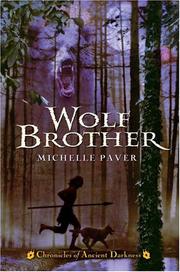
The only starting point. Six thousand years ago a boy whose father has been killed by a demon-possessed bear takes in an orphaned wolf cub. The wolf chapters are written from the wolf's sensory world, which is the device the whole series rests on.
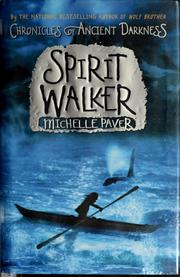
Takes Torak out to the Seal Clan islands and to a sickness nobody can explain. It widens the clan system considerably and introduces the antagonists the rest of the arc is about, so it is not optional.

North into the ice, and the coldest and most frightening of the first three. The Soul Eaters become a named, organised threat here, which is what converts the series from episodic adventure into one long story.
The Original Arc Completes
BeginnerRead the back half of the original six, which resolves the Soul Eater story fully.
▸ Study plan for this stage
Pace: Three to four weeks for the second three. Outcast, Oath Breaker and Ghost Hunter are the same length as the first three and read just as quickly, but read Oath Breaker and Ghost Hunter close together — they were written as two halves of an ending and the pause between them is the wrong place to stop
- Outcast as the emotional centre of the sequence, and the way it depends completely on the community the first three books built in order to have something to remove
- Exile within a clan system: being outcast is not loneliness but a formal status with rules, which is why it works as a plot rather than as a mood
- The Soul Eaters picked off individually across the three books, each with a distinct method, so that the roster you kept from Soul Eater becomes a countdown
- The mark on Torak and what it costs him socially — the series' consistent interest in how a group treats someone it has decided is contaminated
- Oath Breaker's pursuit structure, which clears the board of subplots and characters so that the finale has nothing left to resolve except the central threat
- Eostra and the deliberate escalation of the final antagonist beyond the human scale the earlier villains occupied
- Ghost Hunter as an ending that closes the cosmology as well as the plot — the three souls, the clan-creatures and the world-soul all get their answer
- The completeness of the original six as a fact about the series' design, and why stopping here is a legitimate finish rather than an abandonment
- What exactly is Torak accused of in Outcast, and what does the clan system's response tell you about how it handles contamination?
- Track the Soul Eaters across all six books: who is dealt with where, and by what means? Does the pattern escalate or vary?
- Oath Breaker removes several things from the board. Name three, and say what the finale gains by their absence.
- How does Ghost Hunter resolve the cosmology and not just the plot? Point to the specific answer it gives about souls or about the world-soul.
- Argue the case for stopping at Ghost Hunter. What does the original six have as a shape that the nine-book sequence does not?
- Complete the Soul Eater roster you began in the last stage: name, clan, method, book of defeat. The finished table is the plot architecture of the whole original arc on one page.
- Reread the first two chapters of Wolf Brother immediately after Ghost Hunter. Roughly half of what happens in the opening pages is now revealed to have been the ending's setup.
- Track Torak's status across all six books — clanless, adopted, marked, outcast, restored — with the book and rough chapter for each change. His social position, not his skills, is what the series actually plots.
- Extend your clan map with every location visited in Outcast, Oath Breaker and Ghost Hunter. The geography closes in a circle and drawing it shows you that.
- Write 300 words on Ghost Hunter as an ending, deciding whether it needed a sequel trilogy at all. Keep it — the next stage is a direct test of that judgement.
Next up: The original story is complete on its own terms, which is the essential context for reading three books written eleven years later to continue it.

The bleakest book of the six: Torak is exiled and hunted by the clans who have been protecting him. It is the emotional centre of the sequence and it depends completely on the three books before it.
A pursuit through the deep forest and the book that clears the board for the finale. Read it straight into the next one — they were written as two halves of an ending.

The conclusion of the original six, and a real ending rather than a pause. A reader can stop here entirely satisfied; the later trio was written a decade afterwards and was not part of the original plan.
The Return
IntermediateContinue with the second trio, written eleven years later, and know what has and has not changed.
▸ Study plan for this stage
Pace: Three to four weeks. Viper's Daughter, Skin Taker and Wolfbane are the same length as the earlier books, around 250 pages each, and read at the same pace. They open two years after Ghost Hunter and assume you remember the original six in detail, so if there has been a gap, reread your Soul Eater ros
- Picking up two years on: Torak and Renn are older, the relationship has changed, and Viper's Daughter opens by separating them, which reverses the direction the original six travelled in
- Renn's inheritance as the second trio's actual subject, and what the books do with a character who has been the competent one since book two
- The far north as a new setting — ice, sea, and clans not encountered in the forest — with Paver's research if anything heavier here than before
- Skin Taker's use of a real prehistoric climate event: volcanic ash, a failed summer, and a world where the sun does not return, which is history rather than invention
- Landscape as antagonist. Skin Taker is the most atmospheric book of the nine and the clearest demonstration of what Paver does with weather and terrain
- Belief under pressure: when the cosmology stops seeming to work, what the clans do to make it work again, which is the darkest material in the sequence
- Wolfbane's return to the Torak-and-Wolf relationship that the first book opened on, closing a nine-book circle rather than only a three-book arc
- The eleven-year gap as a visible fact — an older author writing for readers who were children when the first six appeared, and what that does to the register
- Why does Viper's Daughter begin by separating Torak and Renn? What can the book do that a joint journey could not?
- What has changed in Renn's position between Ghost Hunter and Viper's Daughter, and how much of it was set up in the original six?
- How do the clans explain the failing sun in Skin Taker, and what do they do about it? Is the response consistent with the cosmology established in Wolf Brother?
- The volcanic winter is drawn from a real event. Does knowing that change how the book reads?
- Does Wolfbane close the sequence, or only the second arc? What is left open, and deliberately?
- Having now read all nine, was the second trio necessary? Compare your answer with what you wrote at the end of the last stage.
- Before opening Viper's Daughter, write out what you remember of Renn's family and background from the original six. The trio builds directly on it and the gaps in your memory are what to reread.
- Extend your clan map northward with every new territory and clan from the three books. The geography of the whole nine-book sequence should now fit on one sheet.
- Log the environmental detail in Skin Taker chapter by chapter — light, temperature, ash, food supply — and watch how steadily Paver degrades it. The dread is built by increments and the log makes the mechanism visible.
- Read the final chapter of Wolf Brother and the final chapter of Wolfbane consecutively. Write 200 words on what the sequence claims about Torak and Wolf across nine books and eighteen years of publication.
- Compare a Wolf chapter from Wolf Brother with one from Wolfbane. The device is the same; the animal is not. Say what changed.
Next up: The sequence is finished, so the remaining question is where else Paver's method — heavy research, landscape as threat, belief taken seriously — goes, and which of her other books are for the same reader.

Picks up two years after Ghost Hunter with Renn leaving and Torak going after her, travelling far north. Paver's research is if anything heavier here, and the book assumes you remember the original six.

A winter of volcanic ash and failing light, built around a real prehistoric climate event. The most atmospheric book of the nine and the one that best shows what Paver does with landscape.

The ninth book and the current conclusion of the whole sequence. It closes the second arc and returns to the relationship between Torak and Wolf that the first book opened on.
The Rest of Paver
BeginnerMove to her other work, keeping clear which books are for the same reader and which are emphatically not.
▸ Study plan for this stage
Pace: Six to eight weeks, and the stage where the audience question matters most. Gods and Warriors is the same kind of book as Chronicles and the same length, around 300 pages, and is the obvious next series for the same reader; note that it was published in some editions as The Outsiders, so it is one n
- Gods and Warriors as the same method transposed: Bronze Age Mediterranean instead of Mesolithic forest, Hylas and Pirra instead of Torak and Renn, with the same commitment to reconstructing a worldview from inside
- Why most readers rate it a step below Chronicles — a wider cast, a more conventional adventure structure, and no equivalent of the Wolf chapters
- The double title as a practical publishing fact worth knowing before you buy: Gods and Warriors and The Outsiders are the same book
- Dark Matter's mechanism: a real place, a real polar night, meticulous 1937 period detail, and a haunting that is never explained away, so the research and the dread reinforce each other
- Isolation as Paver's constant. What Torak experiences as exile, Jack experiences as the polar dark and Stephen as altitude — the same author working the same nerve for a different audience
- Thin Air as the deliberate companion piece: the same method applied to a mountain rather than an ice field, with a 1935 Kangchenjunga expedition and a documented earlier disaster underneath it
- Wakenhyrst's use of a medieval Doom painting and of a real fenland landscape, with the horror located in a household and a mind rather than in a wilderness
- The through-line across everything she writes: an environment researched to the point of authority, a belief system taken seriously on its own terms, and a refusal to give the reader a rationalist exit
- What does Gods and Warriors keep from the Chronicles method and what does it change? Name the single biggest structural difference.
- Dark Matter never explains its haunting. What is the effect of that refusal, and how does the period research make it more rather than less credible?
- Compare the isolation in Outcast with the isolation in Dark Matter. Same author, different audience — what does she allow herself in the adult book that she does not in the children's one?
- Thin Air reuses Dark Matter's structure on a mountain. Does the second application add anything, or is it the same book at altitude?
- Wakenhyrst locates its dread in a house and a father rather than in a landscape. Is that a departure from her method or an extension of it?
- Which of these four would you give to a twelve-year-old who has just finished Wolfbane, and which would you emphatically not?
- Before buying Gods and Warriors, check whether the edition in front of you is titled The Outsiders. It is the same novel and this is a real and common purchasing mistake.
- Take a page of landscape description from Skin Taker and one from Dark Matter and set them side by side. The technique is identical; write 200 words on what is different in the effect and why.
- Read Dark Matter and Thin Air within a fortnight of each other and list the structural elements they share — the historical frame, the documented predecessor, the narrator's professional competence, the point at which the group breaks. Paver is working a form deliberately and the list is the proof.
- Track the research detail in Wakenhyrst — the Doom painting, the fen drainage, the Edwardian household — and note where a researched fact does plot work rather than scene-setting.
- Write a one-paragraph recommendation for each of the four books, naming who it is for. Being able to say honestly that Dark Matter is not for the Chronicles reader is the practical outcome of this stage.
Next up: You have read the whole nine-book sequence and know exactly which of Paver's other work belongs to the same reader, which means her next book can be picked up with your eyes open.

The first book of her Bronze Age Mediterranean series, published in some editions as The Outsiders — the same novel under two titles, so buy one. Same audience as Chronicles and the obvious next series, though most readers rate it a step below.

An adult ghost story set at an Arctic research station in 1937, and genuinely frightening. Note the shift: this is not a children's book, and the isolation and dread are far heavier than anything in Chronicles.

The Himalayan companion piece to Dark Matter — a 1935 Kangchenjunga expedition and something following it. Read it second of the two; it uses the same method on a mountain rather than an ice field.

Her Edwardian fen gothic, about a scholar, a medieval painting and a daughter kept at home. The most conventionally literary of her adult novels and the right place to finish.