Chainsaw Man Reading Order: Where to Start and What Order to Read It In
Chainsaw Man has exactly one correct order — volume 1 forward — but it is a series in two distinct halves, and knowing where the break falls saves a lot of confusion. Part 1, the Public Safety arc, runs volumes 1 to 11 and ends conclusively; Part 2, the Academy Saga, restarts from volume 12 with a new protagonist and a markedly different tone. These stages mark that hinge and the smaller escalations before it, and the last stage is where to go once you have caught up with a series that is still running.
Devil Hunting, Public Safety
BeginnerMeet Denji and the Public Safety division, and get used to a manga that plays gutter-level comedy and sudden mutilation in the same panel.
▸ Study plan for this stage
Pace: 1–2 weeks. Volumes 1 to 4 run about 192 pages each and read fast — a volume in a sitting is normal for manga at this pace. Read them in order with no gaps. The series depicts graphic dismemberment, decapitation and mutilation from volume 1 onward, often in the same panel sequence as slapstick comedy
- The devil-contract system: devils embody a fear, get stronger the more they are feared, and a hunter trades body parts or blood for their power
- Denji's premise — debt, poverty, and a set of wants so small that the series can keep denying them
- Public Safety as a government agency that treats its own hunters as consumable
- Pochita and the chainsaw devil as the plot engine and the thing the entire series is eventually about
- Fujimoto's practice of explaining his rules inside fight scenes rather than in exposition, which is why skipping is expensive
- Tonal collision as method: gutter comedy and sudden mutilation deliberately placed in the same page
- Makima's early scenes and how much of her later role is already visible in them
- How exactly does a contract work, and which four or five contracts have been shown by the end of volume 4?
- What does Denji actually want in volume 1, and how has that list changed by volume 4?
- Where does volume 3 change what you expect the series to be willing to do?
- What is Public Safety's attitude to its own devil hunters, and which scene establishes it most plainly?
- How does Fujimoto pace a fight — where does he put the panel that explains the rule?
- Keep a contract ledger as you read: each character, the devil, what was traded, what it costs. Volumes 5 to 11 pay this off constantly.
- Take one fight in volume 2 and one in volume 4 and count the panels per page in each. Fujimoto compresses and opens up the grid deliberately; the change between the two is measurable.
- Track the food motif from volume 1 — what Denji eats, and what it is standing in for each time. It runs the length of Part 1.
- Reread the first chapter of volume 1 after finishing volume 4 and note how much of the ending of Part 1 is already stated there.
Next up: You have the rules and the cast; the next stage is where the series stops being a job and becomes a war of attrition.
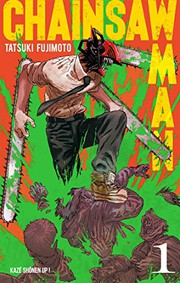
The only place to start. A teenager in debt to the yakuza merges with his chainsaw devil dog and is conscripted into a government devil-hunting agency — the premise is delivered fast and the tone is set within thirty pages.

The supporting cast arrives properly and the rules of devils and contracts get laid out. Read straight on: Fujimoto explains his system through fights rather than exposition, so skipping is expensive.

The first arc where the series shows it will kill anyone. This is the volume that decides most readers either way, and the point at which Denji's appetites stop being a joke.

The Katana Man arc peaks and the wider conspiracy behind Public Safety comes into view. Note that our catalogue record for this volume carries extra names in the author field from a translated edition — the book is Fujimoto's.
The Escalation
BeginnerFollow the middle of Part 1, where the international devil hunters arrive and the body count stops being survivable.
▸ Study plan for this stage
Pace: 1–2 weeks. Volumes 5 through 8 run 192 to 200 pages each and are best read as one continuous block — 5 to 8 is a single sequence and the volume breaks fall mid-arc. Volume 6 cuts between too many parties at once on purpose, so expect to be disoriented and read on rather than back. This block contain
- The international assassin arc: multiple governments contracting hunters against Denji, and why the chainsaw devil's heart is worth that
- Quanxi, Santa Claus and the foreign hunters as a demonstration of how much stronger the outside world is than Public Safety
- Reze and the Bomb Devil arc as Fujimoto's most conventional romance structure, deliberately placed inside his least conventional book
- Deliberate narrative disorientation — cutting between too many parties as an intended effect rather than a fault
- Volume 8 as the quiet volume: the emotional groundwork the finale depends on
- The Aki, Power and Denji household as the series' actual emotional centre
- How the series converts a fight scene into a character revelation rather than pausing for one
- What does the Reze arc tell you about Denji that the earlier volumes had not?
- Why does volume 6 cut between so many viewpoints, and what would be lost if it were told cleanly?
- What has Public Safety's standing become by the end of volume 7, and who is actually in control?
- Volume 8 has almost no fighting. What is it doing, and why does the finale need it?
- How is the Denji-Aki-Power household constructed, and at what point did it become the thing you were reading for?
- During volume 6, keep a page-by-page note of which party you are with. When you finish, look at the pattern of cuts — it is regular, and the disorientation is engineered.
- Reread the domestic scenes in volume 8 immediately after the volume 7 casualties, and write two or three sentences on what the ordering does that the reverse would not.
- Continue the contract ledger from stage one through the foreign hunters. Their contracts are the point of comparison the arc is built on.
- Compare the opening pages of volume 5 with the opening pages of volume 1: same protagonist, same setup, different stakes. Note precisely what Fujimoto assumes you now know.
Next up: The next three volumes close the Public Safety arc completely, which makes them the real end of one book rather than a pause in a longer one.

The Bomb Girl arc begins and the series introduces its best-liked antagonist. Pace matters from here — volumes 5 through 8 read as one continuous sequence.

Foreign assassins converge on Denji and Fujimoto starts cutting between too many parties at once on purpose. The disorientation is the effect he wants.

The consequences of volume 6 land and the cast is thinned drastically. Read it immediately after 6; they are one unit split by a spine.

The quietest volume in Part 1 and the one that does the emotional work the finale depends on. Do not skim it because the fighting has paused.
How Part 1 Ends
IntermediateFinish the Public Safety arc, which resolves fully — this is a real ending, not a cliffhanger.
▸ Study plan for this stage
Pace: 1 week, and read volumes 9, 10 and 11 in as few sittings as you can manage — about 192 pages each, and they are one continuous endgame. Volume 10 is the longest sustained set piece in the series and volume 11 closes the Public Safety story properly. Expect the register to move from grotesque body ho
- The endgame as a deliberate answer to the identity questions the series has held back since volume 1
- What Makima has been doing for eleven volumes, and how much of it was visible in retrospect
- Control as the devil concept the whole Part 1 structure is organised around
- Payoff structure — how volume 10 discharges setups planted as far back as volume 3
- Part 1 as a complete work: a real ending rather than a cliffhanger, and a legitimate stopping point
- The Pochita contract as the thing every earlier scene was quietly about
- Fujimoto's tonal method at full extension: the same page carrying comedy and loss
- What was Makima's objective, and which earlier scene most clearly showed it without your noticing?
- How does the Control Devil's power work, and what are its stated limits?
- What does Denji finally get, and is it what he said he wanted in volume 1?
- Which specific setups from volumes 1 to 8 does volume 10 pay off — name at least four?
- If you stopped here, what would be unfinished, and would it matter?
- Before opening volume 9, write down what you think Makima wants. Check it at the end of volume 11 — the accuracy of the guess is a good measure of how carefully Fujimoto planted it.
- After finishing, reread the Makima scenes in volumes 1 and 2. Mark every line that reads differently now. That reread is the strongest argument for the series' construction.
- Close out the contract ledger: every contract shown across eleven volumes, and which ones were still active at the end.
- Write one paragraph on whether Part 1 needed a Part 2. Decide before you read volume 12, so you have an honest position to test the next stage against.
Next up: Part 1 ends conclusively — so the next stage is a restart, with a new protagonist and a different tone, and the hinge is worth crossing deliberately.

The endgame is declared and the identity questions the series has been holding back get answered. Read 9 to 11 in as few sittings as you can.

The longest sustained set piece in the series and the payoff for everything since volume 3. Expect the tone to go from grotesque to genuinely sad without warning.
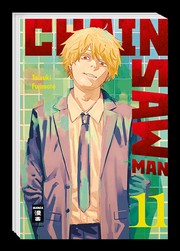
The final volume of Part 1. It closes the Public Safety story properly, and it is a legitimate place to stop if the second half's high-school register does not appeal.
Part 2: The Academy Saga
IntermediateHandle the tonal break — a new viewpoint character, a school setting, and a slower, stranger book than Part 1.
▸ Study plan for this stage
Pace: 1 week for volumes 12 and 13. The register changes sharply here: a new viewpoint character, a school setting, adolescent misery and awkward comedy in place of the Public Safety procedural, and a slower pace. Readers who bounce off Part 2 almost always bounce at volume 12, so give it both volumes bef
- Asa Mitaka as protagonist: a viewpoint built out of social humiliation rather than appetite, which is the whole tonal shift
- The Devil Hunter Club and the school setting as a deliberate genre change
- How Part 2 uses Part 1's material — as background that the characters have absorbed rather than as sequel plot
- The gap between Denji's public reputation and what the reader knows happened
- Why volume 13 is where Part 2 stops looking like a spin-off
- Reading an ongoing serial: what it means to evaluate a story whose shape is not yet available
- Fujimoto repeating his own structure in a different key, and what that repetition is for
- How is Asa's viewpoint constructed differently from Denji's, and what does the change let Fujimoto do?
- What does Part 2 assume you know from Part 1, and where would a reader starting at volume 12 be lost?
- What is Denji's position in the world of Part 2, and how did he get there?
- What changes in volume 13 that makes the second half feel load-bearing rather than optional?
- Is the tonal break a genuine risk or a repetition of the same trick in a new setting?
- Set the first chapter of volume 12 beside the first chapter of volume 1 and compare them structurally — protagonist introduction, contract, first devil. The parallels are exact and deliberate; list them.
- Track how the Chainsaw Man of Part 2 is talked about by characters who were not present for Part 1. That gap between reputation and event is the arc's main device.
- Note every point in volumes 12 and 13 where the comedy is social embarrassment rather than physical slapstick. The count is the shift, measured.
- Return to the paragraph you wrote at the end of the last stage on whether Part 1 needed a sequel, and answer it again with volumes 12 and 13 read.
Next up: The tonal whiplash between the two parts is best explained not by criticism but by Fujimoto's other books, which is where the last stage goes.
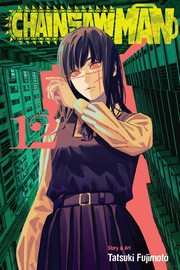
The restart. Asa Mitaka, not Denji, is the lead, and the register shifts to adolescent misery and awkward comedy. Readers who bounce off Part 2 almost always bounce here; give it two volumes before deciding.

The point at which Part 2 stops looking like a spin-off and starts using the Part 1 material deliberately. The series is ongoing past this volume, so treat it as the current stopping point rather than an ending.
The Rest of Fujimoto
IntermediateRead the other Fujimoto books, which explain the tonal whiplash in Chainsaw Man better than any commentary does.
▸ Study plan for this stage
Pace: 1–2 weeks. Look Back is a single 144-page volume and can be read in one sitting. Goodbye, Eri is 208 pages and likewise. Fire Punch, Vol. 1 is 191 pages and is the first of an eight-volume serial — read it as a sample and decide from there. Read Look Back first, then Goodbye, Eri, then Fire Punch. L
- Look Back as the demonstration that Fujimoto's abrupt cruelty is a technique, not a default — the same device used for entirely different ends
- Fire Punch as the unmoderated first draft of the ideas Chainsaw Man later disciplines
- Goodbye, Eri and the unreliable narrator: film-within-comic structure and a page grid built to look like recorded footage
- Single-volume manga as its own form, with a compression Chainsaw Man's serial format cannot use
- The recurring Fujimoto subjects — making things, being watched, and loss arriving without preparation
- How to read a serialised work against a self-contained one by the same hand
- What does Look Back do with an abrupt violent turn that Chainsaw Man does not, given the identical technique?
- Which ideas in Fire Punch reappear in Chainsaw Man, and what has been changed about them?
- How does the panel layout of Goodbye, Eri imitate a camera, and where does it break the imitation on purpose?
- Do you prefer the eight-volume Fire Punch or the later work, and on what grounds — many readers prefer the earlier and harsher book?
- What does having read these three change about your reading of the Part 1 finale?
- Read Look Back in one sitting, then find the two-page sequence that turns it. Compare it structurally with the equivalent turn in Chainsaw Man volume 7 — same manoeuvre, opposite effect.
- Compare the page grid of Goodbye, Eri with any volume of Chainsaw Man: count panels per page across ten pages of each. The difference is the form's, and it is stark.
- Read Fire Punch, Vol. 1 and list the elements later reused in Chainsaw Man. Then decide whether the reuse is refinement or dilution, and be able to defend it.
- Write 300 words on why the tonal whiplash in Chainsaw Man is not an accident, using one specific sequence from each of these three books as evidence.
Next up: You have read Chainsaw Man as a unit, across its hinge, and read the books that explain how it works — which is everything Fujimoto has published in English at book length.

A one-volume story about two girls who draw comics, and the best single thing Fujimoto has made. Read it after Part 1 — it uses the same abrupt cruelty for entirely different ends.

His previous serial, and much harsher. Start here only if you want to see the ideas in Chainsaw Man in their unmoderated first draft; many readers prefer the eight-volume Fire Punch to the later work.

A single-volume story about film, memory and an unreliable narrator, and the most formally playful thing he has done. Our catalogue record lists an additional name in the author field; the book is Fujimoto's.