Care for aging parents without burning out
This curriculum moves from emotional orientation and practical grounding, through the hard specifics of dementia, finances, and care systems, to the deepest work of caregiver identity, grief, and self-preservation. Each stage builds the vocabulary and emotional readiness needed for the next, so that by the end the reader can navigate both the logistics and the inner life of caring for aging parents with confidence and compassion.
Foundations: Orienting to the Journey
BeginnerUnderstand the emotional landscape of caregiving — role reversal, anticipatory grief, and the overall arc of what lies ahead — before diving into logistics.
▸ Study plan for this stage
Pace: 8–10 weeks total, reading roughly 20–25 pages per day: ~2–3 weeks for "How to Say It to Seniors" (focus on one chapter per sitting, pausing to reflect), ~3–4 weeks for "Passages in Caregiving" (Sheehy's narrative is dense and emotionally rich — allow extra days for journaling), and ~2–3 weeks for "C
- Role reversal: the psychological shift from being a child to becoming a parent's caregiver, and why it disorients both generations (Solie, Daly)
- Control and autonomy in aging: Solie's core argument that seniors are driven by two urgent agendas — maintaining control and leaving a legacy — and how misreading these creates communication breakdowns
- Anticipatory grief: Sheehy's concept of grieving losses (of the parent you knew, of your own life plans) before death actually occurs
- The 'Turnings' framework: Sheehy's map of the caregiving arc — the eight stages from first crisis through bereavement — giving readers a bird's-eye view of the road ahead
- Caregiver identity and faith: Daly's framing of caregiving as a spiritual season with its own purpose, helping readers find meaning rather than only burden
- Communication as care: Solie's practical linguistics — why arguing, correcting, and rushing seniors backfires, and what to say instead
- The isolation trap: all three authors address how caregivers withdraw socially and emotionally, and why naming this early is protective
- Self-compassion as a foundation: the shared message across all three books that sustainable caregiving begins with acknowledging your own needs, limits, and grief
- According to Solie, what are the two primary psychological agendas driving most seniors, and how should understanding them change the way you open a difficult conversation with an aging parent?
- Sheehy describes caregiving as unfolding in distinct 'turnings' or stages — what are the earliest turnings she identifies, and what emotional and logistical signals mark the transition from one to the next?
- How does Daly distinguish between caregiving as a burden to endure versus a 'season' with spiritual meaning, and what practices does she suggest for sustaining that perspective day-to-day?
- All three authors address anticipatory grief in some form — how does each author name or describe it, and what do they collectively suggest about processing it rather than suppressing it?
- Solie argues that well-meaning adult children often make predictable communication mistakes. What are the most common ones he identifies, and what does he recommend as alternatives?
- After reading all three books, how would you describe the overall emotional arc a caregiver should expect — from the first signs that a parent needs help through the deepest stage of active caregiving?
- 'Two Agendas' Conversation Audit (Solie): Recall a recent difficult conversation with your aging parent. Write a one-page analysis: Where did you accidentally threaten their sense of control or dismiss their legacy concerns? Rewrite two or three of your own statements using Solie's recommended language.
- Caregiving Timeline Map (Sheehy): Using Sheehy's 'turnings' as a template, sketch a personal timeline of where your family currently stands. Mark which turning you are in, what crises have already occurred, and what you anticipate next. Update this map at the end of the full curriculum.
- Grief Inventory Journal (Sheehy + Daly): Set a timer for 20 minutes and free-write on this prompt: 'What have I already lost, or am afraid of losing, in this caregiving journey?' Then, using Daly's framework, write a second entry: 'What might this season be asking me to grow into?' Do this exercise once per week throughout the stage.
- Season Reflection Card (Daly): Create a small index card with one sentence from 'Caregiving Season' that resonates most deeply. Place it somewhere visible — a mirror, a dashboard, a phone wallpaper. Notice whether your relationship to the sentence changes over the weeks of reading.
- Family Communication Role-Play (Solie): With a trusted friend or partner, role-play a scenario in which you need to raise a sensitive topic with a parent (e.g., giving up driving, moving to assisted living). Use Solie's language principles. Debrief together: What felt unnatural? What landed well?
- Stage-End Integration Letter: After finishing all three books, write an unsent letter to your future caregiver self — someone six months or two years deeper into the journey. Draw on insights from all three authors: what do you want that future self to remember about control, grief, communication, and meaning?
Next up: Having internalized the emotional landscape — role reversal, anticipatory grief, the arc of caregiving stages, and the importance of communication — the reader is now psychologically prepared to engage with the practical and logistical dimensions of caregiving (medical, legal, financial, and daily-care systems) without being blindsided or overwhelmed by the feelings those systems will inevitably s

Opens the curriculum by reframing how adult children communicate with aging parents, explaining the psychological drives of late life (control, legacy) that make hard conversations so charged. Reading this first gives you a mental model for every interaction that follows.
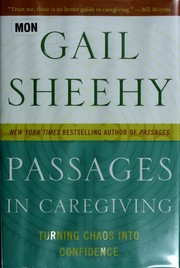
A narrative-driven, beginner-friendly overview of the full caregiving journey told through Sheehy's own experience. It maps the emotional and practical stages — from denial through crisis to acceptance — giving newcomers a reassuring roadmap.
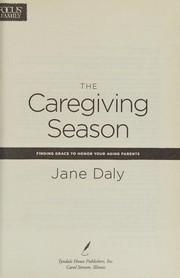
A compassionate, accessible guide to the emotional and spiritual dimensions of role reversal, helping beginners name and process feelings of grief, guilt, and love before they become overwhelming.
Practical Command: Conversations, Care Options & Costs
BeginnerGain concrete tools for initiating difficult family conversations, evaluating care settings, and understanding the financial and legal landscape of elder care.
▸ Study plan for this stage
Pace: 6–8 weeks total: Weeks 1–4 cover "Talking with Your Aging Parents" (~20–25 pages/day, including reflection pauses after emotionally heavy chapters); Weeks 5–8 cover the AARP Home Guide (~15–20 pages/day, with slower reading during room-by-room assessment sections to take notes relevant to your paren
- Initiating difficult conversations with aging parents using empathy-first frameworks (Edinberg's listening and validation techniques)
- Identifying and navigating family dynamics, resistance, and role reversals when discussing care needs
- Recognizing the emotional landscape of aging parents — fear of loss of independence, grief, and dignity — and how it shapes communication
- Assessing a parent's current and future care needs across physical, cognitive, and social dimensions
- Understanding the spectrum of care settings: aging-in-place, home modification, assisted living, and beyond
- Home safety and universal design principles: how physical environments can be adapted to support independence and prevent falls (AARP Home Guide)
- Room-by-room home assessment: identifying hazards and modifications in kitchens, bathrooms, entryways, and bedrooms
- The financial and practical logic of home modification vs. facility care as a cost and quality-of-life consideration
- After reading Edinberg, what are the key steps to opening a conversation with an aging parent who is resistant to discussing care, and how do you handle a conversation that breaks down?
- What emotional needs — such as autonomy, dignity, and fear of being a burden — must you acknowledge before proposing any practical care solution, according to Edinberg?
- How do family roles and sibling dynamics complicate elder care conversations, and what strategies does Edinberg offer for aligning family members?
- Using the AARP Home Guide, what are the highest-priority home modifications for fall prevention, and which rooms demand the most urgent attention?
- How does the AARP Home Guide define 'universal design,' and how does it differ from accessibility retrofitting — and why does that distinction matter for long-term planning?
- How do the two books together help you build a case — emotional and practical — for a specific care approach (aging-in-place with modifications vs. a care facility) that you could present to your family?
- 'Conversation Rehearsal' — Using Edinberg's frameworks, script and role-play a specific difficult conversation you need to have (or anticipate having) with your aging parent. Write out your opening statement, two likely objections from your parent, and your empathetic responses to each.
- Home Walkthrough Audit — Physically walk through your parent's home (or your own, if planning ahead) with the AARP Home Guide's room-by-room checklists in hand. Flag at least 10 specific hazards or modification opportunities and rank them by urgency and cost.
- Family Stakeholder Map — Draw a diagram of all family members involved in your parent's care. Using Edinberg's insights on family dynamics, annotate each person's likely role, concerns, and potential points of conflict or alliance. Draft a plan for a family meeting agenda.
- Care Options Comparison Chart — Create a simple side-by-side chart comparing aging-in-place (with AARP-recommended modifications) vs. one alternative care setting. Include columns for estimated cost, impact on parent's independence, family burden, and emotional fit based on what you know of your parent.
- Reflection Journal Entry — After finishing Edinberg, write a one-page personal reflection: What is the conversation you have been avoiding, and what specific fear (yours or your parent's) is at the root of it? How will you address that fear first before raising practical logistics?
- Modification Budget Draft — Pick the top 5 home modifications identified in your home audit and research realistic costs for each (using contractor quotes or online estimates). Total them and compare to one month's cost of an assisted living facility in your area.
Next up: By combining Edinberg's communication tools with the AARP Home Guide's practical assessment framework, the reader is now equipped to have informed, grounded conversations — setting the stage for the next level, where deeper legal, financial, and medical decision-making systems (such as powers of attorney, Medicare/Medicaid, and care coordination) can be tackled with confidence rather than overwhel

Provides structured, practical scripts and frameworks for the hardest conversations — driving, moving, finances, end-of-life wishes. Builds directly on Solie's communication model with actionable technique.

Covers home modification and aging-in-place options in plain language, giving caregivers a realistic picture of one of the most common and least understood care choices before they explore facility-based alternatives.
Going Deeper: Dementia & the Medical Realities
IntermediateUnderstand Alzheimer's disease and other dementias at a meaningful depth — symptoms, progression, behavioral changes, and day-to-day caregiving strategies — and navigate the medical system as an informed advocate.
▸ Study plan for this stage
Pace: 6–8 weeks total: Weeks 1–5 for "The 36-Hour Day" (~25–30 pages/day, reading in focused chapter clusters by topic — medical overview, then behavioral symptoms, then caregiving strategies, then care settings); Weeks 6–8 for "Creating Moments of Joy" (~15–20 pages/day, slower pace to allow reflection a
- The biological and medical basis of Alzheimer's disease and related dementias (vascular, Lewy body, frontotemporal) as explained in The 36-Hour Day — understanding that dementia is a disease, not normal aging
- The staged progression of dementia: how cognitive, functional, and behavioral abilities decline over time, and why care needs escalate dramatically (the '36-hour day' metaphor itself)
- Behavioral and psychological symptoms of dementia (BPSD) — including wandering, sundowning, aggression, hallucinations, and repetition — and the evidence-based strategies The 36-Hour Day offers for each
- The caregiver as medical advocate: how to communicate with physicians, understand diagnostic workups, evaluate medications, and navigate hospital and specialist systems on behalf of a person with dementia
- Person-centered care philosophy: shifting from correcting and orienting the person with dementia to entering their emotional reality, as the foundation of both books
- The 'moment' as the unit of care in Creating Moments of Joy — Brackey's core argument that because long-term memory fades, the emotional residue of a single positive moment has outsized value and is always achievable
- Practical joy-creation techniques from Creating Moments of Joy: using music, familiar routines, sensory engagement, humor, life-history ('their story'), and meaningful roles to reduce distress and increase connection
- Caregiver self-preservation: recognizing burnout, grief, and anticipatory loss as described in The 36-Hour Day, and building sustainable rhythms of respite and support
- After reading The 36-Hour Day, can you explain the difference between Alzheimer's disease and at least two other types of dementia, including how their symptom profiles differ and why that matters for caregiving?
- The 36-Hour Day dedicates extensive coverage to behavioral symptoms. Pick three specific behaviors (e.g., wandering, repetitive questioning, refusal of care) and describe the book's recommended response strategies and the reasoning behind them.
- What does The 36-Hour Day advise about the caregiver's role during medical appointments, hospitalizations, and medication reviews — and what questions should a caregiver bring to a physician?
- Jolene Brackey argues in Creating Moments of Joy that 'we cannot change the person with dementia, but we can change ourselves and the environment.' What are three concrete environmental or behavioral changes she recommends, and what outcomes do they aim to produce?
- How do the two books complement each other philosophically? Where does the clinical, problem-solving lens of The 36-Hour Day end, and where does the emotional, presence-based approach of Creating Moments of Joy begin?
- Using insights from both books, how would you design a single 'good day' for a person in the middle stage of Alzheimer's — from morning routine to bedtime — that minimizes distress and maximizes moments of joy?
- **Symptom & Stage Tracker:** As you read The 36-Hour Day, build a one-page reference chart mapping the early, middle, and late stages of dementia to: typical cognitive losses, functional losses, behavioral symptoms, and the book's top caregiving responses for each stage. Use this as a living document you can actually hand to a family member.
- **Behavioral Response Roleplay:** Choose three challenging behaviors from The 36-Hour Day (e.g., sundowning agitation, accusations of theft, refusal to bathe). For each, write a short script — what you might say or do in the moment — grounded in the book's guidance. If possible, practice the scripts aloud with a friend or fellow caregiver.
- **Medical Appointment Prep Sheet:** Using the advocacy guidance in The 36-Hour Day, draft a one-page 'Doctor Visit Toolkit' for a person with dementia: a list of the 8–10 most important questions to ask a physician, a medication log template, and a brief 'snapshot' form summarizing the patient's current functional status to hand to providers.
- **'Their Story' Interview or Reconstruction:** Drawing on Brackey's life-history technique in Creating Moments of Joy, either interview your aging parent/relative about their proudest memories, favorite music, and meaningful roles — or, if that isn't possible, reconstruct a 'life story page' from family knowledge. Identify three specific joy-creation activities tailored to that individual's histor
- **Moment Design Lab:** Pick one routine caregiving task that is often a point of friction (bathing, mealtimes, medication-taking). Using techniques from Creating Moments of Joy (music, humor, sensory cues, reframing the task), redesign the routine step-by-step into a 'moment of connection.' Write it up as a one-page protocol you could share with another caregiver.
- **Dual-Book Reflection Journal:** After finishing both books, write a 1–2 page personal reflection answering: What is the single most important thing I learned that I did not know before? What is one assumption I held about dementia caregiving that these books challenged? What is the first concrete change I will make in how I show up as a caregiver or advocate?
Next up: Mastering the medical realities and day-to-day caregiving strategies in this stage equips the reader to move from 'how do I manage today' to the longer-horizon questions of the next stage: legal and financial planning, care-setting decisions, and end-of-life preparation — because understanding the full arc of dementia progression makes those future decisions feel urgent, concrete, and actionable r
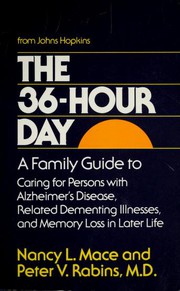
The definitive, most widely used guide to dementia caregiving. Reading it at this stage, after you have the emotional and logistical foundations, allows you to absorb its dense practical detail without being overwhelmed. It is the canonical reference every dementia caregiver needs.
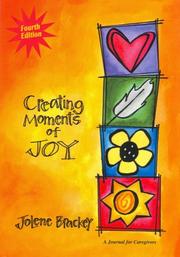
Complements the clinical depth of The 36-Hour Day with a warm, strengths-based approach to connecting with a person who has dementia. It shifts the caregiver's mindset from managing decline to finding meaning, which is critical for sustainability.
Advanced: Caregiver Burnout, Grief & the Inner Work
ExpertConfront and manage caregiver burnout, ambiguous loss, and the profound identity shifts that long-term caregiving produces — and build a sustainable self-care practice for the long haul.
▸ Study plan for this stage
Pace: 6–8 weeks total: Weeks 1–3 on "Ambiguous Loss" (~20–25 pages/day, including reflection pauses); Weeks 4–7 on "Being Mortal" (~25–30 pages/day); Week 8 reserved for integration, journaling, and exercise completion — no new reading, only synthesis.
- Ambiguous Loss (Type 1 & Type 2): Boss's distinction between physically absent but psychologically present loss (e.g., a missing person) vs. physically present but psychologically absent loss (e.g., a parent with dementia) — and why the latter is the defining grief of long-term caregiving
- Frozen Grief & Why It Stalls: How ambiguous loss blocks the normal mourning process because there is no clear ending, no ritual, and no social permission to grieve someone who is still alive
- Resilience Over Resolution: Boss's core argument that the goal is NOT to 'get over' ambiguous loss but to learn to hold two contradictory truths simultaneously — presence and absence, hope and acceptance
- Identity Erosion in the Caregiver: The gradual loss of the caregiver's own roles, relationships, and sense of self that accumulates invisibly over months and years of caregiving
- Gawande's 'Good Life' Framework: The shift from asking 'What is the matter with you?' (medical model) to 'What matters to you?' — and how this reframes every difficult conversation with an aging parent
- The Failure of Modern Medicine at End of Life: Gawande's evidence-based critique of how hospitals and medical culture prioritize safety and longevity over autonomy, dignity, and meaning for elderly patients
- Assisted Living, Hospice & the Spectrum of Care: Gawande's taxonomy of care settings and his argument for why hospice — when chosen early — often produces both better quality of life AND longer survival
- Caregiver Burnout as a Systemic, Not Personal, Failure: Synthesizing both books to understand that burnout is the predictable result of unacknowledged grief (Boss) combined with a medical system that offers caregivers no off-ramp (Gawande)
- According to Pauline Boss, why is caring for a parent with dementia or a progressive illness considered a form of 'ambiguous loss,' and how does this differ from the grief experienced after a death?
- Boss argues that 'resilience, not resolution' is the healthy goal for caregivers facing ambiguous loss — what does this look like in daily practice, and why is seeking closure potentially harmful?
- Gawande profiles several patients and families making end-of-life decisions. What patterns does he identify in the conversations that go well versus those that go badly, and what is the caregiver's role in those conversations?
- How does Gawande's concept of 'what matters to you' change the way a caregiver might approach a parent's resistance to moving into assisted living or accepting hospice care?
- In what ways do Boss and Gawande together explain caregiver burnout — what does each author contribute to a complete picture of why caregivers become depleted?
- After reading both books, how would you describe the 'inner work' a caregiver must do that no medical professional, care facility, or family meeting can do for them?
- **The Ambiguous Loss Inventory (Boss-inspired):** Write two lists — (1) things about your parent that are 'gone' even though they are still alive (personality traits, shared memories, the relationship you used to have), and (2) things that are still present and real. Sit with both lists without trying to resolve the tension between them. Revisit monthly.
- **The 'What Matters to You' Interview (Gawande-inspired):** Using the questions Gawande models in *Being Mortal*, have a structured conversation with your aging parent (or, if that is not possible, write out what you believe their answers would be). Focus on: What does a good day look like? What are you most afraid of? What trade-offs are you willing to make? Document the answers and share them wi
- **Caregiver Identity Audit:** Draw a simple wheel with 8 spokes representing roles in your life (e.g., partner, friend, professional, creative person, etc.). Rate how much time/energy each role currently receives vs. how much you want it to receive. Identify the one role most eroded by caregiving and make one concrete, calendar-blocked commitment to reclaim it this month.
- **Grief Without Permission — A Letter Exercise (Boss-inspired):** Write an uncensored letter to the parent you are losing — not the parent in front of you now, but the one from before. Say what you miss, what you are angry about, and what you wish you could still share. This letter is for you alone; it does not need to be sent or shared.
- **Care-Setting Research Sprint (Gawande-inspired):** Using Gawande's framework for evaluating care settings (autonomy, dignity, meaning, safety as a means not an end), research one local assisted living facility or hospice program. Score it against his criteria. This transforms abstract reading into a concrete decision-making tool.
- **Sustainable Self-Care Architecture:** Design a written 'Minimum Viable Self-Care' plan — the non-negotiable floor of self-care that you will protect even in a crisis week. Ground it in Boss's insight that you cannot grieve or cope from empty, and Gawande's reminder that the caregiver's wellbeing is inseparable from the quality of care the parent receives. Include at least one daily, one weekly,
Next up: By confronting the emotional and existential core of caregiving — unresolved grief, identity loss, and the limits of medicine — this stage equips the reader to move from surviving caregiving to making wise, values-aligned decisions about the final chapter: legal, financial, and legacy planning, where clear-eyed emotional groundedness is the prerequisite for every practical choice ahead.
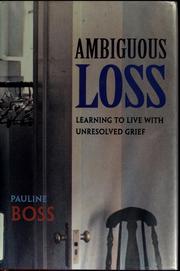
Introduces the concept of 'ambiguous loss' — grieving someone who is still physically present but psychologically changed — which is the defining emotional experience of dementia caregiving. This framework transforms confusing, unnamed pain into something understandable and workable.
Written by a clinical psychologist and caregiver, this book directly addresses caregiver identity, resentment, guilt, and the relationship strains that build over years. It provides psychological tools for sustaining yourself through a long caregiving arc.

The capstone of the curriculum. Gawande's examination of how medicine fails the elderly and dying — and what a good end of life actually requires — synthesizes everything learned and reframes the caregiver's ultimate role: not to extend life at all costs, but to protect what makes life worth living.
Discussion
Keep reading
Paths that share books, cover the same subject, or open a related topic.