Beverly Jenkins books in order: where to start
Beverly Jenkins invented Black historical romance as a commercial category in 1994, and the reason her books matter beyond the genre is the research: she writes about Reconstruction-era doctors, Black homesteaders in Kansas, Underground Railroad conductors and men passing as white in Gold Rush Nevada, and the history is load-bearing rather than decorative. Her historical fiction splits into three blocks — the nineteenth-century novels from the 1990s that made her name, the Civil War and Reconstruction books that followed, and the linked family sagas of the 2010s. This path takes them in that order, because the early historicals are where the method is clearest and the later books assume you know what she is doing. The families recur loosely across books rather than in strict series order, so almost every one of these can be read alone.
The Nineties Historicals
BeginnerRead the four books that created the subgenre, and see the research-forward method — a real historical situation first, the romance built inside it.
▸ Study plan for this stage
Pace: 5-6 weeks at roughly a book a week — Night Song 379 pages, Vivid 396, Indigo 359, Topaz 377, all conventional-length mass-market romances that read fast. Read them in the given order rather than by publication date alone, because Indigo is placed third deliberately: it deals with enslavement, the ph
- The research-forward method: Jenkins begins from a documented historical situation — a Black Kansas settlement, a Black woman physician, an Underground Railroad station, Black and Seminole lawmen — and builds the romance inside it
- The Exodusters and the Black homesteading towns of post-Reconstruction Kansas, which is Night Song's actual setting
- Black professional women of the 1870s as Vivid's subject, and the specific obstacles a woman doctor faced from the town that hired her
- The romance genre's structural obligations — the central couple, the barrier, the guaranteed emotionally satisfying ending — and how Jenkins meets them without softening the history
- The Buffalo Soldier regiments and Black frontier law enforcement, and the demographic reality Topaz restores to the western
- Jenkins's habit of naming real people and events inside the fiction, and the author's notes where she separates record from invention
- Why the 1994 publication of Night Song mattered commercially: Black historical romance did not exist as a shelf category before it
- What documented historical situation is each of these four novels built on, and how much of the setting is on the record?
- What obstacles does Viveca face in Vivid that are about her profession rather than her romance, and how does Jenkins keep the two plots from separating?
- What does Indigo show about enslavement that the other three books do not, and where in the novel is it carried?
- What does Topaz put back into the western that the genre conventionally leaves out?
- How does Jenkins signal, inside the text or in an author's note, which parts are documented?
- Read each author's note before the novel and write down the historical claim the book rests on, then note as you read where the plot depends on it and where it departs
- Track the professional plot and the romance plot in Vivid as two separate lines and mark every chapter where they intersect; this is the structural signature of a Jenkins historical
- Compare the opening chapters of Night Song and Topaz and list what each does to establish period before the couple meets — the amount of history front-loaded is a deliberate choice and it varies
- In Indigo, note every reference to Hester's scars and what each one is doing at that point in the plot; the book uses one physical fact as a running index of everything it is about
- After all four, write a one-paragraph description of the Jenkins formula as it stood in 1997; you will test it against the later books
Next up: The next stage moves to the Civil War and Reconstruction books, where the politics move from the setting into the plot.

Her 1994 debut and the book that proved the category could exist: a Buffalo Soldier and a schoolteacher in a Black settlement in Kansas. Start here for the historical reason as much as the literary one.

A Black woman physician arrives to practise in a Michigan town that expected a man. The best of the early books on the specific subject of professional Black women in the 1870s, and the first place Jenkins's archival research really shows.
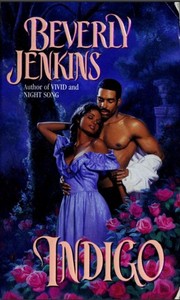
Her most celebrated novel: a formerly enslaved woman who runs an Underground Railroad station in Michigan, and a conductor she is nursing back to health. If you read only one Jenkins, read this. It is placed third because its handling of enslavement is the least softened of the four.
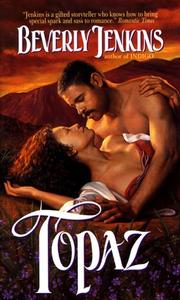
The western: a Black newspaperwoman and a Seminole-Black Ranger, taking the genre's frontier iconography and putting the actual demographics of the frontier back into it. Read it after Indigo, as the change of register.
The Later Historicals
BeginnerFollow the loosely linked families across books, and read the Civil War and Reconstruction material where Jenkins is at her most direct about the politics.
▸ Study plan for this stage
Pace: 4-5 weeks. Through the Storm is 371 pages, Winds of the Storm 377, Before the Dawn 382. Read the first two consecutively — Winds of the Storm follows directly from Through the Storm and the connection between them is the reason to pair them. Through the Storm is set during the Civil War and includes
- The war as plot rather than backdrop: Through the Storm puts its characters inside Union operations rather than adjacent to them
- Black women in Union intelligence work, which is the documented practice Winds of the Storm's heroine is drawn from
- Reconstruction New Orleans — Black political participation, the backlash against it, and why Jenkins chose that city and that decade
- The loosely linked family structure: characters recur across novels without the books forming a strict series, so each is readable alone
- How Jenkins handles political violence in a genre that guarantees a happy ending, and where she places it in the structure
- Before the Dawn's Arizona Territory setting as an example of Jenkins working outside her Midwestern and Southern ground
- The shift in her prose between the mid-nineties books and the early 2000s ones
- What is the connection between Through the Storm and Winds of the Storm, and what does the second book assume you know?
- What documented role did Black women play in Union intelligence, and how closely does Jenkins follow it?
- How does Winds of the Storm represent the collapse of Reconstruction, and where in the book does it fall relative to the romance resolution?
- What changes in Jenkins's handling of period detail between Night Song and Winds of the Storm?
- Why can Before the Dawn be read at any point, and what would you lose by reading it first?
- Read Through the Storm and Winds of the Storm consecutively and list every character, reference and consequence that carries from the first to the second; this is the mechanism the linked-family books all use
- Mark where political violence occurs in Winds of the Storm relative to the couple's resolution, then check the same placement in Night Song — the structural rule is consistent and worth naming
- Compare a period-detail passage from Vivid with one from Winds of the Storm of similar length and note what has changed in how Jenkins delivers research
- Test Before the Dawn against the formula you wrote at the end of the last stage, and record where it departs
- Write down which historical claims in these three books you could check against a source, and check one
Next up: The next stage takes the linked California saga of the 2010s, where the family connection is explicit rather than loose.
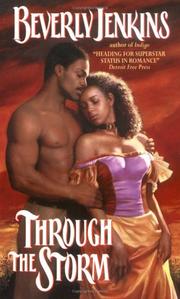
Set during the Civil War itself, with a Union spy plot, and the book where the war stops being background. Read it before the Reconstruction novels that follow it chronologically.
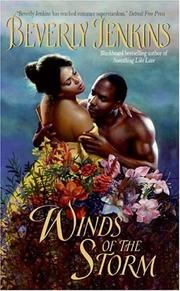
The follow-up, set in Reconstruction New Orleans with a former Union spy. Read it directly after Through the Storm — the connection is the main reason to read them as a pair.
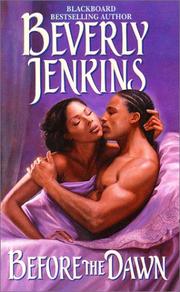
Arizona Territory in the 1880s, and a good example of Jenkins outside her usual Midwestern setting. Standalone; read it whenever you want a change of landscape.
The Destiny and Old West Books
BeginnerRead the linked California saga and the later historicals, and see how Jenkins uses a single family across several novels without writing a strict series.
▸ Study plan for this stage
Pace: 4 weeks. Destiny's Embrace is 373 pages, Destiny's Surrender 370, Something Like Love 373. Read the two Destiny books in order — they are consecutive Yates brothers and the family dynamics depend on the sequence — and use Something Like Love, a standalone Kansas western from 2005, as the break betwe
- The Yates family as a genuine connected sequence, against the looser recurrence of the earlier books
- Black landowners in nineteenth-century California, and the rancho setting as a documented rather than invented situation
- The employer-employee premise of Destiny's Embrace, and how Jenkins handles a power difference inside a romance
- The harder-edged heroine of Destiny's Surrender and what the presence of a child does to the standard courtship structure
- Jenkins's move toward humour and lightness in the 2010s books relative to the nineties historicals
- Something Like Love as a pure genre western — an outlaw's daughter and a sheriff — and what it shows about her range when the history is doing less work
- How to read a linked family sequence that is not a strict series: what carries forward and what does not
- What is the Yates family's position in California, and what documented history is it drawn from?
- How does Jenkins handle the employer-employee power difference in Destiny's Embrace?
- What does Destiny's Surrender's heroine want, and how is she different from the heroines of the nineties books?
- What carries from Destiny's Embrace into Destiny's Surrender, and what would a reader starting with the second miss?
- How much historical apparatus does Something Like Love carry compared with Night Song, and what fills the space?
- Read the two Destiny books consecutively and map the Yates family — who is where, who knows what — before starting the second; the sequence is the point of the pairing
- Compare the heroines of Destiny's Embrace and Destiny's Surrender against Viveca from Vivid, listing what each wants that is not the hero; the drift across twenty years is measurable this way
- Count the pages of historical setup in the first chapter of Something Like Love and in the first chapter of Night Song, and write a sentence on what Jenkins does with the recovered space
- Take the formula you described after stage one and revise it against these three books, keeping both versions
- Note every scene in Destiny's Surrender where the child changes what the couple can do; this is the structural problem the book sets itself
Next up: The final stage takes the late Old West sequence, where the heroines run businesses and land rather than being courted into them.
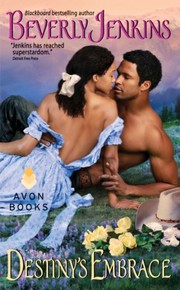
The first of the Yates family books, set on a California rancho — a Philadelphia seamstress hired as a housekeeper by a man who did not ask for one. Start the sequence here.

The next Yates brother, with a much harder-edged heroine and a child already in the picture. Read it after Embrace; the family dynamics only work in order.
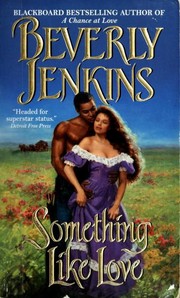
A standalone western with an outlaw's daughter and a Kansas sheriff, and one of her most purely enjoyable books. Placed here as the break between the two linked sequences.
Women Who Ran Things
IntermediateRead the Rhine Fontaine and Old West books of the 2010s, where Jenkins's heroines are business owners, ranchers and political operators rather than romantic objects.
▸ Study plan for this stage
Pace: 5 weeks. Forbidden is 377 pages, Breathless 384, Tempest 377, Wild Rain 292. Read them in this order: Forbidden, Breathless and Tempest belong to the same Old West sequence and are best taken together, with Wild Rain, the most recent, last. Forbidden turns on a Black man passing as white in Virginia
- Passing as the subject of Forbidden: what it costs, what it buys, and how a romance plot forces the deception to a decision point
- Gold Rush and Comstock-era Nevada as a setting with a real Black population, which is the historical fact the novel is built on
- The late-Jenkins heroine as proprietor — a hotel in Breathless, a ranch in Wild Rain — rather than as a woman whose situation is decided by a man
- Comedy as structure in Tempest, where the mail-order-bride premise opens by having the bride shoot her intended husband
- How a loosely linked sequence handles a returning cast when each book must still stand alone
- The distance travelled from Night Song's 1994 template, measurable in what the heroine owns, decides and refuses
- Jenkins's continuing research method in the late books, applied to Nevada, Arizona Territory and Wyoming
- What does passing cost Rhine in Forbidden, in concrete terms the novel dramatises rather than states?
- What forces the deception in Forbidden to a resolution, and could the plot have ended otherwise given the genre's obligations?
- What does each of the three later heroines own or run, and how does that change the shape of the courtship?
- How does Tempest use its opening as both premise and joke, and does the book sustain it?
- Set Wild Rain's heroine beside Night Song's and name every difference that is not incidental
- Track every scene in Forbidden where Rhine's passing is nearly exposed and note who is present each time; the pattern of near-misses is how the novel builds pressure without a villain
- For each of the four books, write down what the heroine controls at the start and what she controls at the end; the comparison across the sequence is the clearest measure of Jenkins's change over twenty-seven years
- Read the first chapter of Night Song and the first chapter of Wild Rain on the same day and list every difference in how the heroine is introduced
- Follow the recurring characters across Forbidden, Breathless and Tempest and note what each book assumes and what it re-establishes — this is how Jenkins keeps them standalone
- Revisit the formula you wrote after stage one and after stage three, and write a final version covering all fourteen books on this path
Next up: This closes the path: the four novels that created the subgenre, the Civil War and Reconstruction books, the linked family sagas, and the late heroines who own the businesses the earlier ones worked in.

The best of the late historicals: a Black man passing as white in Virginia City, Nevada, and the woman whose arrival makes the deception unsustainable. The most morally complicated book she has written, and the reason to read her later work at all.
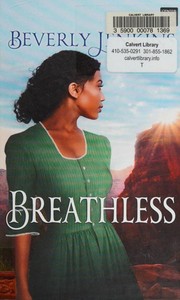
The follow-up in the same Old West sequence, lighter than Forbidden and centred on a woman running a hotel in Arizona Territory. Read it second.

A mail-order bride who shoots her intended husband on arrival, which is the setup and also the joke. The third of the sequence and the funniest.
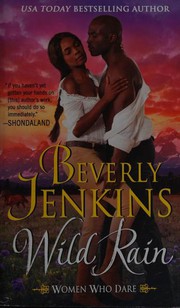
A Wyoming rancher who wants nothing to do with marriage, and a journalist from back East. The most recent of these and the one that best shows how far the heroines have moved from the 1994 template — a good place to finish.