Asterix Reading Order: Where to Start and Which Albums Are the Great Ones
Asterix runs to thirty-nine albums, and they are emphatically not of equal quality: the ones René Goscinny wrote between roughly 1965 and 1975 are among the best comics anyone has made, the first few are apprentice work, and what Albert Uderzo produced alone after Goscinny's death in 1977 is a steep drop. This path is a route through the peak rather than a complete list, and it is deliberately built from individual albums rather than the 2-in-1 collections, which is where searches start returning the wrong book. If you are buying in English, look for the Anthea Bell and Derek Hockridge translation — the puns are theirs, not the original's, and they are most of the reason the series works in English at all.
Start Here
BeginnerUnderstand the premise and read the first album that is genuinely great, so you know what the series is capable of before you decide how much of it to read.
▸ Study plan for this stage
Pace: A week, and a relaxed one. These are 48-to-96-page comic albums; Asterix the Gaul, Asterix and Cleopatra and Asterix the Legionary can each be read in half an hour and reread in twenty minutes, which you should do — the jokes are dense and the second pass catches the background gags. Read them in th
- The premise in one line: one Gaulish village holds out against Rome because Getafix brews a strength potion, and every album is a variation on that constraint
- Asterix the Gaul as apprentice work — stiffer art, thinner jokes — and why reading it as a prologue rather than a sample matters
- The Goscinny-Uderzo division of labour: Goscinny writes the premise and the puns, Uderzo carries the crowd scenes and the physical comedy
- The Anthea Bell and Derek Hockridge translation, in which the English puns are invented rather than translated — Panoramix becomes Getafix, and most of the reason the series works in English is theirs
- The running gags established immediately: the pirates, the bard tied up at the feast, Obelix's 'These Romans are crazy', Vitalstatistix on his shield
- Cleopatra as parody of a specific target — the Hollywood Egyptian epic — which is the method the rest of the series uses on other targets
- What are the fixed rules of the village that every album has to work around?
- What is visibly weaker in Asterix the Gaul than in Cleopatra — name something in the writing and something in the art?
- What exactly is Cleopatra parodying, and how much of the joke survives if you have never seen the film it is aimed at?
- Asterix the Legionary takes one institution and runs a whole album on it. What is Goscinny's structural method, stated in one sentence?
- How can you tell you are holding the Bell and Hockridge translation rather than another one?
- Read Cleopatra once for the story and once only looking at the backgrounds of the crowd scenes. Uderzo hides a second album's worth of jokes there and Goscinny wrote none of them.
- Start a running-gags tally sheet — pirates, bard, boar, 'These Romans are crazy' — and keep it for all fourteen albums. The pattern of which gags Goscinny drops during his best run is the single most interesting thing you can notice on this path.
- Look up the French names of five characters and set them against the Bell and Hockridge English ones. Getafix for Panoramix is the clean case; work out what each English name is actually doing.
- Reread the last page of Asterix the Gaul and the last page of Cleopatra. Same closing beat, two different levels of craft — write one line on what changed.
Next up: You now have the premise and a benchmark for how good the series gets, which is exactly what the travel albums need you to have.
The first album, and worth reading purely to establish the setup: one Gaulish village holds out against Rome because its druid brews a strength potion. The art is stiffer and the jokes thinner than what follows, so treat it as a prologue rather than a fair sample.

The first album where everything clicks — a full-scale parody of Hollywood Egyptian epics with Uderzo's crowd scenes doing real comic work. If you only read one Asterix, read this one, and read it early so the rest has a benchmark.

Asterix and Obelix enlist in the Roman army, which lets Goscinny run a military-bureaucracy farce for a whole album. It is the cleanest demonstration of his structural method: one premise, pushed until it breaks.
The Travel Albums
BeginnerRead the run where Goscinny built each album around a single country or institution, and see the formula at its most reliable.
▸ Study plan for this stage
Pace: A week to ten days. Three 48-to-96-page albums — Asterix and the Chieftain's Shield, Asterix at the Olympic Games and Asterix in Spain — read comfortably at one a night with a reread of each. This is the run where Goscinny fixed the formula: one country or one institution per album, treated as a coh
- One album, one target: a health farm, the Olympic Games, a foreign country — and the discipline of not leaving that target
- The Chieftain's Shield as the first album with a real detective plot underneath the comedy, and the point where Goscinny starts trusting the reader
- The doping joke in Asterix at the Olympic Games — the potion is banned, so the Gauls have to win clean — which reads differently in the twenty-first century than it did in 1968
- National caricature done affectionately rather than cheaply: Asterix in Spain is where Goscinny works out the rule he applies to Switzerland, Corsica and Belgium later
- The travelling structure as a licence for set-pieces, and how Uderzo uses the change of setting to vary the page layouts
- Character economy — Asterix and Obelix are constants, so every album's new cast has to be established and disposed of in 44 pages
- What is the actual plot of The Chieftain's Shield, and could it work as a detective story without the jokes?
- How does the Olympic Games album handle the fact that the potion would trivially win — and why is the solution funnier than the problem?
- Where is the line in Asterix in Spain between a joke about Spain and a joke about the French idea of Spain?
- Pick one of these three and identify the single premise it never leaves. Now find the two pages where Goscinny nearly leaves it.
- How do the crowd scenes here differ from Cleopatra's — is Uderzo doing more or less?
- For each album, write the premise as a one-line pitch before you read past page ten, then check it against the ending. Goscinny's premises are almost always fully stated in the first three pages.
- Take the Spain album and list every national stereotype it uses. Then mark which ones are aimed at Spaniards and which at the French tourists — the split is the whole reason the album is not cheap.
- Keep your running-gags tally going and note where the pirates appear in each of these three. Their placement is more deliberate than it looks.
- Count the panels on any two facing pages of the Olympic Games album and compare with the same count in Asterix the Gaul. The density change is measurable and it is why the later albums read faster.
Next up: The formula is now visible to you, which is the only way to appreciate the four albums where Goscinny breaks it.

A detective plot dressed as a health-farm comedy, and the album where Goscinny starts trusting the reader to follow a real story rather than a series of gags.

The doping joke — the potion is banned, so the Gauls have to win clean — is funnier now than it was in 1968. Read it after The Chieftain's Shield, which sets up the same trick of taking one modern institution and putting it in 50 BC.
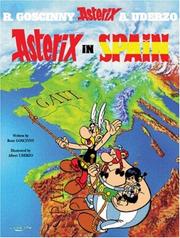
The first of the great national-stereotype albums, and the one where Goscinny works out how to make the caricature affectionate rather than cheap. Useful preparation for Switzerland, Corsica and Belgium later on.
The Peak
IntermediateRead the four albums usually named as the series' best, and be able to say what Goscinny was actually satirising in each.
▸ Study plan for this stage
Pace: Ten days to two weeks, and this is the stage to slow down on. Four 48-page albums — Asterix and the Roman Agent, Asterix in Switzerland, Mansions of the Gods and Asterix and the Laurel Wreath — each of which repays two or three readings rather than one. Read the Roman Agent before Mansions of the Go
- The Roman Agent's premise: Rome sends one man to make the villagers distrust each other, and it nearly works — the sharpest thing Goscinny wrote
- The village as vulnerable, which is the structural innovation of this stage: the potion is useless against the attacks that land here
- Property development as a weapon in Mansions of the Gods — the same idea as the Roman Agent, scaled up from social to economic
- Switzerland as the tightest plot in the series: a genuine race against a poisoning, with the comedy carried on punctuality and banking
- The Laurel Wreath's inversion — Asterix and Obelix sell themselves into slavery, which lets Goscinny satirise Roman domestic life from below rather than from outside
- Satire aimed at institutions rather than nations, which is the difference between this stage and the last one
- In The Roman Agent, what exactly is the agent's technique, and at what point does the village start doing his work for him?
- Mansions of the Gods and The Roman Agent share an idea. State it, and say which album executes it better.
- Why is Switzerland the tightest album structurally — what is the clock, and how often does Goscinny cut back to it?
- The Laurel Wreath sees Rome from the inside of a household. What does that vantage let Goscinny say that a battle album cannot?
- These four are usually named the best of the series. Which one would you drop, and what is your case?
- Read The Roman Agent with a pen and mark the panel where each named villager turns. There are more turns than you remember and they escalate in a deliberate order.
- Set the Roman Agent and Mansions of the Gods side by side and write two paragraphs: the same weapon, two scales. This comparison is the single most useful thing you can do on this path.
- In Switzerland, mark every page where the poisoning clock is mentioned or shown. The spacing is a lesson in comic pacing.
- Pick the funniest single panel across the four albums and write the reason it works — setup, timing, art or pun. Being made to choose one is the point.
- Update your running-gags tally. In at least one of these four Goscinny drops a gag he has used in every previous album; find it and say why.
Next up: With the peak established you have a fair standard against which to read the last of Goscinny and the first album written without him.
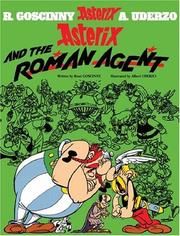
Rome sends one man to make the villagers distrust each other, and it very nearly works. The sharpest thing Goscinny wrote, and the album that shows the village is not invulnerable — read it before The Mansions of the Gods, which uses the same idea at larger scale.
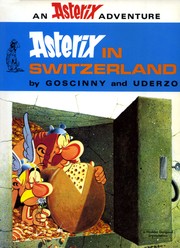
A Roman corruption plot, a genuinely tense race against a poisoning, and jokes about Swiss punctuality and banking that have not dated. Structurally the tightest album in the series.

Rome tries to defeat the village with property development instead of legions, which is the series' single best idea. Our catalogue record drops the leading article and shows it as Mansions of the Gods; it is the same album.
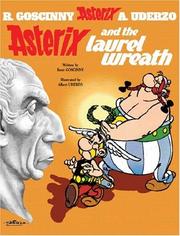
Asterix and Obelix sell themselves into slavery in Rome to steal a wreath from Caesar's palace, and Goscinny uses the setup to satirise Roman domestic life from below. The best of the Rome-set albums, so read it after the two above.
Late Goscinny, and Where to Stop
IntermediateRead the last strong albums, see what changes when Goscinny died, and decide for yourself where the series stops being worth continuing.
▸ Study plan for this stage
Pace: Ten days. Four 48-page albums: Asterix in Corsica, Obelix and Co., Asterix in Belgium and Asterix and the Great Divide. Read the first three in order, then the Great Divide last and deliberately as a comparison rather than as a continuation. Stated as plain fact rather than as atmosphere: Goscinny d
- Corsica as an album that rewards the whole path — the opening brings back characters from a dozen earlier stories, which is why it cannot be a starting point
- Obelix and Co. as economics: a Roman economist introduces market incentives to the village and does more damage than any legion
- Asterix in Belgium as the last Goscinny script, and the Waterloo pastiche near the end as the accidental sign-off
- The authorship change made visible: Uderzo's art in the Great Divide is still superb and the writing is not, which is the cleanest possible demonstration that the two jobs are separate
- How to decide where a long series stops being worth continuing, using evidence rather than reputation
- The remaining Uderzo-only albums as optional rather than forbidden — the path stops here; it does not tell you the later books do not exist
- Which earlier albums do you need to have read for the opening of Corsica to land, and what does that tell you about who Goscinny was writing for by 1973?
- What is the actual economic mechanism in Obelix and Co., and does it hold up as economics rather than as a joke about it?
- Where in Asterix in Belgium can you see the transition, if anywhere — and is the change visible in the art, the script or neither?
- Name three concrete differences between the writing of the Great Divide and the writing of The Roman Agent.
- Having read fourteen albums, where would you tell a new reader to stop, and what is the evidence for your line?
- Read Corsica and list every returning character from an earlier album on this path. Anything you cannot place is a gap in the path, not in your memory — several albums are not here.
- Diagram the economy of Obelix and Co.: who produces menhirs, who buys them, where the money comes from and what happens when demand collapses. It is a real model and it survives being drawn out.
- Read the last ten pages of Asterix in Belgium and the last ten of the Great Divide back to back. Write down the differences in joke construction, not in art quality — that is where the change actually is.
- Close your running-gags tally across all fourteen albums and produce a one-page summary: which gags survive the whole run, which Goscinny abandoned, and which Uderzo brings back.
- Write your own five-album starter list for a friend who will not read fourteen, with one line each. Naming five is harder than agreeing with the four in stage three, which is the point.
Next up: This is the end of the path: you have the great run, the authorship break drawn in plain sight, and your own defensible answer to where Asterix stops.
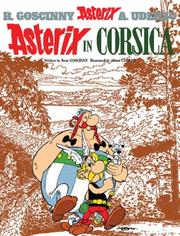
Widely regarded in France as the peak of the whole run, and it rewards having read the earlier albums — the opening brings back characters from a dozen previous stories. Do not start here.
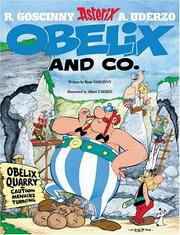
A Roman economist introduces capitalism to the village and it does more damage than any army. Goscinny writing about market economics in a children's comic, and doing it well.
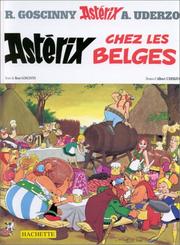
The last album Goscinny wrote. He died partway through it, and Uderzo finished the art; the Waterloo pastiche near the end is the series signing off. Read it last of the Goscinny albums.
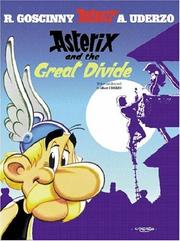
The first album Uderzo wrote as well as drew, and the honest marker of where the series changes. The art is still superb and the writing is not; read one of these to see the difference for yourself, then treat the remaining Uderzo-only albums as optional.