Applied Behavior Analysis: The Best Books for the BCBA Path, in Order
Applied behavior analysis is a small field with an unusually fixed canon: one textbook that everyone calls "the white book", one ethics text, and a philosophical foundation in Skinner that most training programmes reference and few students actually read. This path reads it in the order that makes the practice make sense — the behaviourist argument first, so that the technical vocabulary in the standard text is not merely memorised, then the standard text itself, then the applied and ethical literature, and finally the research methods that separate a behaviour analyst from a technician. It is aimed at someone considering or starting the BCBA route.
The Behaviourist Foundations
BeginnerUnderstand what radical behaviourism actually claims — including about private events — so that later technical material reads as a position rather than a procedure list.
▸ Study plan for this stage
Pace: Five to six weeks, about 1,230 pages. Science and Human Behavior (461 pages) first, at a steady chapter a day — Skinner wrote it for non-specialists and it reads far more easily than his reputation predicts. About Behaviorism (291 pages) is a week and is best read second, as the corrective. Verbal B
- The three-term contingency — antecedent, behaviour, consequence — as the unit of analysis
- Reinforcement and punishment defined by their effect on future frequency, not by whether they are pleasant
- Schedules of reinforcement and the response patterns each produces
- Radical behaviourism's actual claim about private events: that thoughts and feelings are behaviour to be explained, not evidence to be discounted, which is the point About Behaviorism exists to make
- Operant versus respondent behaviour, and why the distinction organises everything that follows
- Skinner's functional units of language — mand, tact, echoic, intraverbal — and that they are defined by controlling variables rather than by form
- Selection by consequences as an explanatory model borrowed deliberately from evolutionary reasoning
- That Verbal Behavior is a theoretical proposal, contested from the moment it appeared, and not a body of findings
- How is a reinforcer defined, and why can it not be identified in advance of observing its effect?
- What are the twenty objections About Behaviorism answers, and which of them had you arrived holding?
- What does radical behaviourism say about thoughts and feelings, and how does that differ from methodological behaviourism?
- What is the difference between a mand and a tact, given that the same word can be either?
- Which parts of modern autism intervention come directly out of Verbal Behavior, and which do not come from Skinner at all?
- Spend a week recording three-term contingencies from your own day in a notebook — antecedent, behaviour, consequence — using Skinner's definitions from Science and Human Behavior strictly. Most entries will be wrong on the first pass because the consequence is assumed rather than observed; that failure is the lesson.
- List the objections About Behaviorism answers, and beside each write whether you held it, whether Skinner's answer satisfies you, and whether the objection is about the science or about its application to people.
- Take a single page of ordinary transcribed conversation and classify each utterance into Skinner's verbal operants. Note every utterance that resists classification, and keep the list — it is the substance of the linguistic objections to the book.
- Find the passages in Science and Human Behavior where Skinner discusses control of human behaviour by institutions, and write half a page on what he thinks the ethical constraints are. Compare it later with Sidman's Coercion and Its Fallout in the fourth stage.
Next up: With the operant vocabulary attached to its reasoning rather than memorised, the standard textbook becomes a formalisation of something you already understand rather than a list of terms to learn.

Skinner's own general statement of the position, written for non-specialists and still the clearest one available. Read it first: the operant vocabulary that Cooper later formalises is introduced here with the reasoning attached.

His answer to twenty common objections, written after twenty years of being misrepresented. Short, and the fastest correction to the caricature of behaviourism that most students arrive with.

The functional analysis of language — mand, tact, echoic, intraverbal — which is the direct source of a large part of modern autism intervention. It is difficult and it is foundational, so read it here rather than skipping to the applied versions.
The Standard Texts
IntermediateLearn the field's technical core: measurement, experimental design, reinforcement and punishment procedures, and the seven dimensions of applied behavior analysis.
▸ Study plan for this stage
Pace: Three to four months. Cooper, Heron and Heward's Applied Behavior Analysis — the book everyone in the field calls the white book — is around 800 pages of dense textbook and is the backbone of most BCBA coursework and of the exam task list; it is a reference and a syllabus, not a narrative, and two t
- The seven dimensions of applied behavior analysis from Baer, Wolf and Risley, and why Cooper builds the whole book on them
- Measurement: rate, duration, latency, interresponse time, and the difference between continuous recording and interval estimates
- Interobserver agreement and treatment integrity as the two things that make a behavioural claim credible
- Functional behaviour assessment — indirect, descriptive and experimental functional analysis — and the four common functions
- Reinforcement procedures: shaping, chaining, prompting and prompt fading, differential reinforcement in its variants
- Punishment procedures, the field's own restrictions on them, and the least-restrictive-alternative principle
- Generalisation and maintenance treated as things that must be programmed rather than hoped for
- That Cooper is organised for certification and Miltenberger for comprehension, which is why the pair works better than either alone
- What are the seven dimensions, and what does each one rule out?
- Given a target behaviour, which measurement system would you choose and what would you lose by choosing another?
- What distinguishes a descriptive assessment from an experimental functional analysis, and what can only the latter establish?
- What are the four functions a functional analysis tests for, and how does an intervention differ depending on which is identified?
- Why does Cooper treat generalisation as a design problem rather than an outcome?
- Where do Cooper and Miltenberger present the same procedure differently, and what does each presentation assume about the reader?
- Take one behaviour and write a complete measurement plan from Cooper's chapters: operational definition, dimension, recording method, schedule, and an interobserver agreement procedure with the calculation written out. Then have someone else code the same ten-minute sample and compute the agreement for real.
- Work the graphing chapters properly — plot a set of Cooper's own data by hand on equal-interval paper, mark condition change lines, and write the visual-analysis statement the graph supports. Reading about visual analysis and doing it are different skills.
- For each of the four functions, design an intervention for the same topography of behaviour, using Miltenberger's worked examples as templates. Four different plans for one behaviour is the clearest demonstration of why function matters more than form.
- Go through Cooper's punishment chapters and list every restriction, safeguard and precondition the text itself imposes. Keep that list for the ethics stage.
- Map ten operant terms from Cooper back to the passage in Science and Human Behavior where Skinner introduces them, and note where the textbook has narrowed or sharpened a definition.
Next up: The textbook teaches the principles in the abstract; the next stage is where they are delivered to actual children, which is where both the field's results and its most serious criticism come from.

Cooper, Heron and Heward — the field's standard text and the backbone of most BCBA coursework and the exam task list. Read it as the reference it is; the Skinner reading you have just done makes its first six chapters far easier.
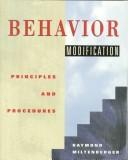
Shorter, more procedural and more example-driven than Cooper, covering the same principles applied to everyday behaviour change. Best read in parallel with Cooper — it is the one that makes the concepts stick.
Practice and Populations
IntermediateSee how the principles are actually delivered with the populations the field mostly serves, including the historical programmes that shaped current practice.
▸ Study plan for this stage
Pace: Six to eight weeks, about 1,030 pages. Maurice, Green and Luce's Behavioral Intervention for Young Children with Autism (400 pages) is an edited manual — read the chapters relevant to a practitioner's role rather than straight through. Lovaas's Teaching Individuals with Developmental Delays (429 pag
- Discrete trial teaching: its structure, its documented results, and its known limits in generalisation
- Early intensive behavioural intervention as a programme — hours, duration, staffing — and what the intensity claim rests on
- Naturalistic and incidental teaching as the response to discrete trial's generalisation problem
- Skinner's verbal operants operationalised as a curriculum, which is what Barbera's book actually is
- Assent, and the more recent shift toward assent-based and trauma-informed practice, which developed in response to the criticism rather than independently of it
- The historical use of aversives in the field, including in Lovaas's published programmes, and the professional restrictions that followed
- That indistinguishability from peers was an explicit outcome measure in this literature, and that it is the specific target of the self-advocacy critique
- The difference between an edited practitioner manual, an originator's own programme manual, and a parent-practitioner translation
- What did Lovaas's intervention programme actually consist of, in hours and procedures, as his own manual describes it?
- What outcome measures does this literature use, and what does each one treat as success?
- What is the generalisation problem with discrete trial teaching, and what do the naturalistic approaches change about it?
- How does Barbera's curriculum map onto Skinner's verbal operants from the first stage, operant by operant?
- Which of the criticisms made by autistic self-advocates are addressed anywhere in these three books, and which are not addressed at all?
- Read Lovaas's manual with a marker and record every procedure it describes that would not be acceptable under a current professional ethics code, and every one that would. Both columns will be long. This is the exercise that makes the history concrete rather than abstract.
- Take Barbera's assessment and teaching sequence and write, beside each step, which Skinnerian verbal operant it is training and which passage of Verbal Behavior it comes from. Where you cannot find one, note it — some of the curriculum is not Skinner's.
- Set the outcome measures used across the Maurice volume side by side and sort them into skill acquisition, reduction of behaviour, and resemblance to non-autistic peers. Then write half a page on what a programme optimising the third would look like.
- Find the published position statements of at least two autistic-led organisations on applied behavior analysis, and write, for each specific objection, whether these three books contain a response to it, a partial response, or nothing.
- Compare a single teaching procedure — prompting and prompt fading, say — as it appears in Cooper, in Lovaas and in Barbera, and note what changes between a textbook, a programme manual and a practitioner's translation.
Next up: The practice literature shows what is done; the next stage is the methodology that decides whether it worked, and the ethics framework that decides whether it should have been done at all.

The manual, edited by Maurice with Green and Luce, that took early intensive intervention out of the university clinic and into ordinary practice. Read it first here as the standard applied reference.
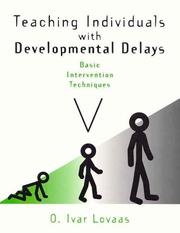
Lovaas's own teaching manual, and a primary document for the history of the field. Read it critically: the discrete-trial programme it describes is the origin of both modern practice and the serious criticism of that practice from autistic adults.

The practical translation of Skinner's Verbal Behavior into a working teaching method, written by a BCBA and parent. Read it last in this stage — it closes the loop from stage one's hardest book to daily practice.
Method and Ethics
IntermediateAcquire the single-subject research methodology the field is built on, and the ethical framework that the certification actually tests.
▸ Study plan for this stage
Pace: Two to three months, about 1,355 pages, and this is the stage that separates a behaviour analyst from a technician. Sidman's Tactics of Scientific Research (428 pages) is a 1960 methodological classic and is far more readable than its reputation; give it three to four weeks. Bailey and Burch's Resea
- Single-subject design as an alternative logic of inference, not a small-sample compromise
- Steady-state strategy, baseline stability and the deliberate pursuit of variability's causes rather than its averaging-out
- Reversal, multiple baseline, alternating treatments and changing criterion designs, and the threat each controls for
- Why Sidman rejects group statistics for this subject matter, and what that costs as well as what it buys
- Social validity: whether the goals, procedures and outcomes are acceptable to the people affected — the ethical hinge in an applied field
- The certification board's code as an enforceable document with specific obligations, not a statement of values
- Sidman's argument that punishment and negative reinforcement produce reliable side effects — escape, avoidance, counter-control, aggression — which is a factual claim about the tools rather than a moral one
- Why a field holding these particular tools carries a correspondingly specific obligation, which is Coercion's whole argument
- Why does Sidman argue that averaging across subjects can conceal rather than reveal a behavioural process?
- For a given intervention, which single-subject design would you choose, and what would make a reversal design unethical to run?
- What is social validity and who is competent to judge it — and what does that answer imply for the criticism raised in the previous stage?
- What obligations does the ethics code impose that a practitioner might not anticipate, and which of the Bailey and Burch scenarios did you get wrong?
- What side effects does Sidman attribute to coercive control, and what is his evidence for each?
- Where does Coercion and Its Fallout apply to procedures described in Lovaas's manual, and does Sidman say so himself?
- Take one intervention from the previous stage and write out how you would evaluate it under three different single-subject designs from Sidman, stating for each what threat it controls and what it cannot rule out. Then say which you would actually run and why.
- Work every scenario in Ethics for Behavior Analysts cold, writing your answer before reading the discussion, and keep a tally of the ones you got wrong. The pattern in your errors is more useful than the score.
- Follow Bailey and Burch's steps to draft a complete single-subject study protocol — question, design, measurement, IOA, treatment integrity, social validity measure — for a behaviour you could actually observe.
- Read Coercion and Its Fallout with your list of Cooper's punishment safeguards from the second stage beside you, and mark which safeguards address the side effects Sidman documents and which do not.
- Write a page on what Sidman's argument implies for the self-advocacy criticism from the previous stage. He is not writing about autism intervention, and the strength of the exercise is working out how much of his case transfers anyway.
Next up: Coursework and certification behind you, the last stage is about what to keep on the shelf for the questions the textbooks are too compressed to answer.

The classic argument for single-subject designs and steady-state strategy against group statistics. It is the methodological conscience of the field and is more readable than its reputation suggests.

Bailey and Burch's practical companion to Sidman: how to actually run and publish a single-subject study. Read it second, as the applied version of the argument you have just accepted.

The standard ethics text, organised around the certification board's code and full of real scenarios. Effectively required reading for the BCBA exam, and worth reading before you have a caseload rather than after.

Sidman on why punishment and negative reinforcement produce predictable side effects, and why a field with these tools has an obligation to be careful. The best internal critique behaviour analysis has produced, and the right book to end the ethics stage on.
The Reference Shelf
IntermediateKnow the comprehensive works to consult once you are practising and the coursework is behind you.
▸ Study plan for this stage
Pace: Open-ended, and not a reading stage. Fisher's Handbook of Applied Behavior Analysis is a multi-author reference of some 544 pages covering assessment, treatment and application areas at a depth no single textbook reaches — consult it by chapter. Mayer, Sulzer-Azaroff and Wallace's Behavior Analysis
- What a handbook is for: a specific question at depth, with a literature attached, rather than a subject taught
- Where Fisher's contributors disagree with each other, and why a multi-author reference makes that visible in a way a textbook cannot
- Mayer, Sulzer-Azaroff and Wallace's systems and school-wide framing, and the settings in which Cooper's individual-client framing fits badly
- Organisational behaviour management and behavioural systems analysis as application areas outside clinical practice
- How quickly this literature dates, given that the certification task list and the ethics code are both revised
- Reading a chapter's citations as the actual product — the reference is a map to the primary literature
- For a given clinical or organisational question, which of these two references would you open first, and why?
- Where does the Fisher handbook's treatment of a topic disagree with Cooper's, and is the disagreement about evidence or about scope?
- What does Mayer, Sulzer-Azaroff and Wallace's school-wide framing make possible that an individual behaviour plan does not?
- How would you establish whether a recommendation in a chapter still reflects current practice and the current ethics code?
- Which of the questions raised across this path do neither of these references answer?
- Pick one narrow question from your own practice or coursework and look it up in the Fisher handbook, in Mayer, Sulzer-Azaroff and Wallace, and in Cooper. Note how long each took, how much detail each gave, and how many primary sources each pointed you to.
- Take one Fisher chapter, follow three of its citations to the original papers, and write a paragraph on whether the chapter's summary is fair to each.
- Find a topic where Mayer, Sulzer-Azaroff and Wallace and Cooper give different guidance, and work out whether the difference is edition age, setting, or genuine disagreement in the field.
Next up: This closes the path: from Skinner's own argument, through the standard texts, the applied programmes and the criticism they attract, to the methodology, the ethics and the shelf a practising analyst works from.
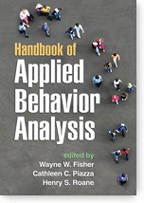
The multi-author handbook covering assessment, treatment and application areas at a depth no single textbook reaches. Consult it by chapter rather than reading it through.

Mayer, Sulzer-Azaroff and Wallace, the main alternative comprehensive text to Cooper, with more attention to organisational and school-wide application. A useful second opinion when Cooper's framing is not fitting the setting you work in.
Discussion
Keep reading
Paths that share books, cover the same subject, or open a related topic.

