Anne Perry books in order: where to start with Pitt and Monk
Anne Perry wrote two long Victorian detective series in parallel for thirty years — Thomas and Charlotte Pitt, and William Monk — plus a First World War quintet and a great many Christmas novellas. The two main series are independent, so the real question is which to start, and the answer is usually Monk: it opens with a stronger hook, the early books are better constructed, and the social range is wider. Pitt is worth reading too, but its first books are apprentice work in a way Monk's are not. This path takes Monk first, then Pitt from the beginning, and ends outside both.
Start with Monk
BeginnerMeet a detective who has lost his memory and is not sure he likes the man he is discovering he was, and read the four books that establish the trio at the centre of the series.
▸ Study plan for this stage
Pace: Eight to ten weeks, about 1,730 pages across four novels of 350 to 480 pages. Read The Face of a Stranger, A Dangerous Mourning, Defend and Betray and A Sudden Fearful Death in that order — the sequence is the point, because the trio at the centre assembles across it. These are Victorian detective n
- Monk's amnesia as a detective device that makes the investigator his own case
- The recovered past as a moral problem rather than a puzzle: Monk keeps discovering he was disliked and finding out why
- Hester Latterly, Crimean nurse, as the series' actual engine — professional, unmarriageable by choice, and unimpressed
- Oliver Rathbone and the courtroom as the third leg, and the shift from investigation to advocacy
- The great house as a closed society, which A Dangerous Mourning uses in the way Victorian detective fiction usually uses a village
- Perry's central legal theme: what a Victorian woman could and could not do about what was done to her
- The medical and nursing material, which comes from Hester's Crimean service and gives A Sudden Fearful Death its setting
- That the early Monk books are better constructed than the early Pitt books, which is why this path starts here
- What does Monk discover about the man he was, and how does the series make that a source of suspense rather than of self-pity?
- How does A Dangerous Mourning use the structure of a great household — who may speak to whom, who is invisible — to constrain the investigation?
- What is the defence in Defend and Betray, and what does the novel argue about what the law could recognise in 1857?
- What does Hester do in A Sudden Fearful Death that Monk cannot, and why does it require her professional standing?
- By the fourth book, what is the working arrangement between Monk, Hester and Rathbone, and how did each part of it get established?
- Keep a running list of everything Monk learns about his own past, book by book, with the source of each fact. The list is the series' second plot and it is easy to lose track of.
- In Defend and Betray, mark every point at which a character says what the law permits, and write out the resulting picture of a Victorian wife's legal position. Perry is precise about this, and reconstructing it from the novel is more instructive than looking it up.
- Take one interview scene each from The Face of a Stranger and A Sudden Fearful Death and compare how Monk questions a servant and how Hester questions a nurse. The class and gender mechanics of who will talk to whom are the series' method.
- Track Rathbone across the four books and note the point at which the courtroom starts carrying the climax rather than the arrest.
Next up: The first four books assemble the trio and set up Monk's past as a slow-burning question; the next two are where that past stops being background and becomes the plot.

Monk wakes in hospital with no memory, is handed a murder case, and gradually realises the investigation includes himself. The single best opening in Perry's work, and the reason to start here rather than with Pitt.
A killing inside a great house, with the household treated as a closed society. Read it second: it consolidates Hester Latterly, the Crimean nurse who is the series' real engine, into a full lead.
A courtroom novel about a woman who admits to killing her husband, and why. The book where the series' preoccupation with domestic violence and Victorian legal powerlessness becomes explicit, and generally rated the strongest early Monk.
A nurse murdered in a hospital, and Hester working inside the case rather than beside it. Read it fourth — it is where the three leads settle into the working arrangement the rest of the series assumes.
Monk Deepens
IntermediateFollow Monk past the setup into the two books where his recovered past finally becomes the plot.
▸ Study plan for this stage
Pace: Four to five weeks, about 820 pages. The Sins of the Wolf (464 pages) then The Silent Cry (359 pages), in that order. The Sins of the Wolf is generally rated the strongest single Monk novel and is the payoff for having read the first four in sequence: it puts Hester herself in the dock, which only w
- Putting the series' moral centre on trial, and what that does to a reader four books in
- The Scottish legal setting of The Sins of the Wolf and how a different jurisdiction changes what the defence can do
- Rathbone's advocacy under real pressure, which is where the courtroom material earns its place
- St Giles and the rookeries as a specific place in the Victorian social imagination, not a generic slum
- The point at which Monk's amnesia stops being the series' engine, and what replaces it
- Perry's method of prosecuting a social arrangement through a single crime, fully formed by these two books
- What is the case against Hester, and why is it plausible rather than obviously false?
- How does the Scottish setting change the legal machinery, and what does Perry get out of the difference?
- What does The Silent Cry expose, and how does Perry structure the novel so that the exposure arrives gradually?
- At what point does Monk's own past stop being the recurring question, and what does the series use for momentum afterwards?
- What can these two books do that the first four could not, and what did the first four have to establish for them to work?
- Read The Sins of the Wolf and write out the prosecution case as a prosecutor would put it, using only what the novel establishes. If it comes out weak, reread — the book depends on it being strong.
- Return to your list of Monk's recovered past and mark the last entry that materially affects a plot. That marker is the hinge of the series.
- In The Silent Cry, note the order in which Perry lets the reader understand what is happening in St Giles, and write a paragraph on why the withholding is structural rather than coy.
- Compare the courtroom sequence here with the one in Defend and Betray and write half a page on what Rathbone has learned and what Perry has learned about writing him.
Next up: With one series fully in view, the other can be started from its beginning and read as what it is — a novelist's apprentice work developing, in public, into something better.

Hester is accused of murdering a patient, which puts the series' moral centre in the dock. The best single Monk novel and the payoff for reading the first four in order.
St Giles, a father dead and a son mute, and the ugliest social material Perry had handled to that point. Read it here for the point where the series stops being about Monk's amnesia at all.
Pitt, from the Beginning
BeginnerStart the other series in publication order and watch a policeman marry above his class, which is the whole engine of the books.
▸ Study plan for this stage
Pace: Six to eight weeks, about 1,050 pages across four short novels of 224 to 288 pages. Read The Cater Street Hangman, Callander Square, Resurrection Row and Bluegate Fields in publication order and accept that the first two are apprentice work: The Cater Street Hangman (1979) is slow by modern standard
- The class marriage as the series' engine: a police inspector who cannot be received in the houses he must search, and a wife who can
- Charlotte Ellison's decision in The Cater Street Hangman, and why the series depends on it rather than on the murders
- Great-Aunt Vespasia, introduced in Callander Square, who becomes the best character in the series and its access to the aristocracy
- Emily as the other half of Charlotte's social reach, and the sisters' investigation as a parallel plot
- The respectable street as a crime scene, which is the first novel's whole proposition
- Perry's characteristic move — the crime is real, but the concealment is the subject
- The visible improvement from Callander Square to Resurrection Row, which is worth watching as craft rather than resenting as unevenness
- What does Charlotte choose at the end of The Cater Street Hangman, and what does the choice cost her socially?
- What can Charlotte and Emily find out that Pitt cannot, and what is the exact social mechanism in each case?
- What is different about the plotting of Resurrection Row compared with the two books before it?
- What does Bluegate Fields say about the relationship between the aristocracy and the East End, and how does the plot enforce the point?
- Read against the early Monk novels, what is Pitt's series doing that Monk's is not?
- Read The Cater Street Hangman and The Face of a Stranger's opening chapters back to back and write a paragraph on why this path recommends starting with Monk. Having tested the recommendation is better than taking it.
- For each of the four Pitt novels, write down every piece of information that reaches Pitt through Charlotte or Emily rather than through police work. The proportion is the series' argument about class.
- Track Vespasia from her entrance in Callander Square onward and note what each of her appearances makes possible in the plot.
- Compare the prose of Callander Square with that of Bluegate Fields — sentence length, scene construction, how much is summarised versus dramatised — and describe the improvement concretely rather than as an impression.
- Note where Bluegate Fields' social anger appears in the text and whether it is voiced by a character or by the narration.
Next up: The early Pitt books establish the marriage and the method; the next stage is the mature series, where the individual killer is replaced by a machine, and then the point at which Perry leaves the Victorians entirely.

Her first novel: garrottings in a respectable street, and an inspector who cannot be received in the houses he needs to search. Slow by modern standards but structurally necessary, since Charlotte's decision here drives thirty more books. Some catalogue records carry a marketing string in the title; it is the 1979 novel.

Two babies' bodies found in a garden square, and the first appearance of Great-Aunt Vespasia, who becomes the best character in the series. Read it second despite being weaker than what follows.

Corpses turning up out of their graves in inconvenient places — the first Pitt novel that is properly plotted rather than merely atmospheric. This is where the series becomes worth reading on its own terms.
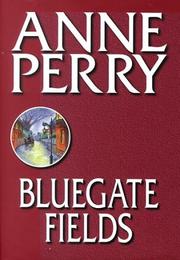
A schoolboy's body in a sewer, and the collision between the aristocracy and the male brothels of the East End. Read it fourth; it is the first Pitt with the social anger the Monk books had from the start.
Pitt at Full Strength, and Beyond the Series
IntermediateRead the mature Pitt novels where the political conspiracy machinery arrives, then step outside both Victorian series.
▸ Study plan for this stage
Pace: Eight to ten weeks, about 1,320 pages. Death in the Devil's Acre (267 pages), Silence in Hanover Close (352 pages) and Highgate Rise (336 pages) in that order, then No Graves As Yet (363 pages) last. The three Pitts are the mature run: Devil's Acre is the strongest of the early-middle books, Silence
- The move from a murderer to a system: conspiracy, secret societies and institutional protection as the mature series' antagonists
- Charlotte undercover in Silence in Hanover Close, and the risk the series is willing to put her in once it trusts her
- Slum landlordship, sanitary reform and philanthropy as the material of Highgate Rise, and Perry's use of a crime to indict a business model
- Respectability as the thing being protected in almost every Perry plot, whichever series you are in
- Pitt's professional position deteriorating as he investigates upward, which becomes a structural feature of the later books
- The 1914 quintet as Perry's most ambitious project, and the continuities with the Victorian novels — concealment, complicity, institutions closing ranks
- How a series set in 1914 reads differently when the reader knows what is coming and the characters do not
- What is the difference between the antagonist of Bluegate Fields and the antagonist of Highgate Rise?
- What does Charlotte risk in Silence in Hanover Close, and what does the series gain by letting her risk it?
- How does Death in the Devil's Acre connect the rookeries to the professions, and is the connection argued or asserted?
- What does No Graves As Yet do with the summer of 1914 that a novel set after the outbreak could not?
- Having read both Victorian series and the opening of the quintet, what is the single preoccupation all three share?
- Take Highgate Rise and write out the property arrangement at its centre — who owns what, who profits, who is protected — as a diagram. Perry buries a genuine argument about slum landlordship in a murder plot, and extracting it is the exercise.
- Mark every scene in Silence in Hanover Close in which Charlotte is in danger of exposure, and note what specifically would give her away. The class detail is the suspense mechanism.
- Compare the ending of Highgate Rise with the ending of Defend and Betray: both are Perry, both are about what the law will and will not do, and they resolve differently. Write half a page on why.
- Read the first fifty pages of No Graves As Yet and list everything in it that would be at home in a Pitt novel and everything that would not.
- Finish by writing a one-page answer to the question the whole path has been building toward: what is Anne Perry actually writing about, across two series, thirty years and two centuries?
Next up: This closes the path: Monk first because he opens better, Pitt from the beginning because his marriage is the engine, and the 1914 quintet as the place both series were heading.

Mutilated bodies in the slums behind Westminster Abbey, and a plot that runs from the rookeries to the professions. The strongest of the early-middle Pitts.

A three-year-old burglary and murder reopened, with Charlotte going undercover as a lady's companion. Read it here — it is the book that turns Charlotte from an amateur assistant into an operator.

Arson, a dead doctor's wife and slum landlords protected by respectability. This is where Perry starts using the series to prosecute Victorian society rather than individual killers.
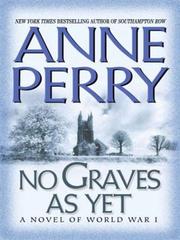
The first of the World War One quintet, opening in Cambridge in the last days of June 1914. Read it last: it is her most ambitious project and it makes most sense once you know what her Victorian books were doing.