Animorphs Reading Order: Where to Start
Animorphs ran to fifty-four numbered books plus four Megamorphs and four Chronicles, published monthly, and by the mid-thirties K.A. Applegate had handed most of the writing to ghostwriters working from her outlines. Reading all sixty-two in order is a real slog with a noticeable quality trough in the middle, and it is not how most people should approach the series. This path is a route rather than a checklist: the opening books that establish the premise, the Chronicles that supply the backstory, the handful of numbered books that are genuinely good novels about war and dissociation, and the ending — which is famous for refusing to be comforting.
The First Five, in Order
BeginnerGet the premise, the rotating narrators and the rules of morphing, and decide whether the series is for you before committing to fifty more books.
▸ Study plan for this stage
Pace: One to two weeks. These are short middle-grade paperbacks — The Invasion, The Visitor and The Predator are around 155 to 192 pages each, The Encounter 157, The Message 160 — so the whole stage is roughly 850 pages and an adult reader will move through a book in an evening. Read them strictly in orde
- The rotating first-person narration, and that the five narrators are not interchangeable voices
- The rules of morphing as established in The Invasion: acquisition by touch, the two-hour limit, the return to your own body, and that the rules are load-bearing rather than decorative
- The Yeerks as parasites who need a host to perceive the world at all, which is what makes them more than a monster
- Controllers, and the fact that anyone in the cast's daily life may already be one
- Rachel's appetite for the fighting, established in The Visitor, and the series' immediate awareness of it
- The permanence of Tobias's situation in The Encounter, which converts the premise from a power fantasy into something with costs
- Ax's arrival in The Message, which turns a local resistance into one front of a galactic war
- What exactly does Elfangor give the five children, and what does he tell them about the limits before he dies?
- How do the narrative voices of Jake, Rachel, Tobias, Cassie and Marco differ — in sentence length, in humour, in what each one notices?
- What happens to Tobias in The Encounter, and what does the series do with it afterwards rather than reversing it?
- What does the reader learn in The Predator that makes the Yeerks something other than a uniform enemy?
- By the end of these five books, which of the war's rules have been established and which are still open?
- Keep a five-column notebook, one per narrator, and after each book write three sentences that could only have been written by that narrator. By The Predator you will be able to identify a voice from a page — which is exactly the skill the mid-series ghostwritten books fail to reward.
- Write down every rule of morphing as it is stated in The Invasion, then add each new rule or exception as the next four books introduce it. Keep the list running for the whole path; the series breaks its own rules deliberately and the list is how you catch it.
- Reread the opening chapter of The Invasion after finishing The Predator and note how much of the series' shape is already present in the construction-site scene.
- Track Rachel specifically across The Visitor and her appearances in the other four, and write a paragraph on what the books have already decided about her before the plot needs it.
Next up: The first five establish the premise and the cast; the Chronicles books explain where the war came from, and they land much harder once you already care about the people fighting it.
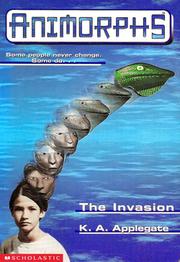
Book one, narrated by Jake: five kids cross a construction site, meet a dying alien, and acquire the power to morph. Everything the series does later depends on the bargain struck in these ninety pages. The records are credited to Katherine Applegate, which is the same author.
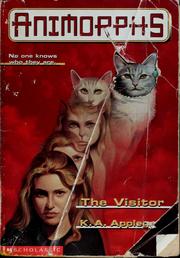
Rachel's book, and the first sign that the narrators are not interchangeable — she likes the fighting, and the series notices. Read it second and start tracking how each voice differs.
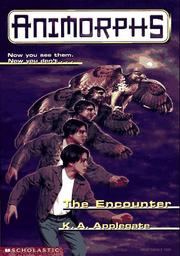
Tobias, trapped in hawk form after overrunning the two-hour limit, working out what he still is. The book where the premise turns out to have permanent costs, and the first that is genuinely upsetting.
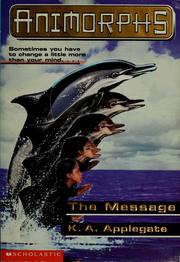
Cassie's book, which introduces Ax and opens the series out from a local resistance to a galactic war. Read it fourth — it is the pivot from premise to plot.
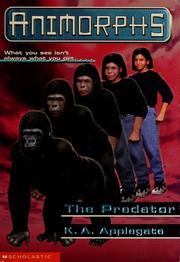
Marco's book, and the one that establishes the Yeerk side as something other than a monolith. By the end of it you know the full cast and the shape of the war, which is the point at which the numbered run becomes optional.
The Backstory Books
BeginnerFill in the history the numbered books keep referring to, and read the two volumes that most fans rate above anything in the main run.
▸ Study plan for this stage
Pace: Two weeks, about 770 pages. The Andalite Chronicles (326 pages) is the longest book in the series and is widely rated the best thing in it; read it first here, after the first five, so its reveals about Elfangor and about the origin of the enemy land as reveals rather than as exposition. The Hork-Ba
- Elfangor's history before Earth, and how the events of The Andalite Chronicles retroactively reframe his death in The Invasion
- The origin of Visser Three and the specific decision that produced him
- Andalite culture as something the series is critical of rather than presenting as the good side
- The Hork-Bajir as a people rather than a monster design, which changes how every subsequent battle scene reads
- The Time Matrix and the series' willingness to introduce a device that would solve everything and then remove it
- The rotating-narration format applied to a whole-team story in the Megamorphs volumes
- That these three books are told outside the main sequence's present, which is how the series delivers information the narrators could not know
- What does The Andalite Chronicles reveal about how the Yeerks got off their home world, and who is responsible?
- How does knowing Elfangor's history change your reading of the first chapter of The Invasion?
- What does The Hork-Bajir Chronicles say about the Andalites' conduct, and how does that complicate the war?
- What does In the Time of Dinosaurs do with the rotating narration that a single-narrator numbered book cannot?
- After these three books, is there still a straightforwardly good side in this war?
- Reread the first chapter of The Invasion immediately after finishing The Andalite Chronicles, and write down everything in it that now reads differently. This is the single best demonstration of why the Chronicles are placed here rather than first.
- Take one battle scene involving Hork-Bajir from the first five books and reread it after The Hork-Bajir Chronicles. Write a paragraph on what has changed, given that not one word of the scene has.
- Add the Time Matrix and every Andalite technology from The Andalite Chronicles to your running rules list, and note how the main sequence avoids using them.
- Compare how In the Time of Dinosaurs handles a narrator handoff with how the numbered books do it — the Megamorphs format switches mid-book rather than mid-series.
Next up: With the history in place, the path skips the ghostwritten middle of the numbered run and goes straight to the handful of books that are the reason adults still argue about a children's series.
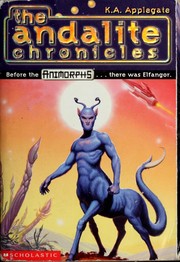
Elfangor's story — how he got to Earth, what he did before, and the origin of the enemy. Widely considered the best book in the entire series, and it is best read after the first five so the reveals land.
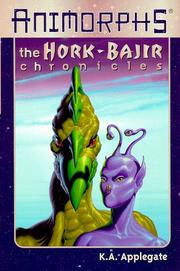
How the Hork-Bajir were enslaved, told largely from their side. It converts a background alien race into a people, which changes how the rest of the war reads.
Megamorphs #2, and the one Megamorphs book worth going out of your way for: the whole team thrown back to the Cretaceous, narrated in rotation. Read it here as a break from the main sequence — the Megamorphs volumes sit between numbered books but do not need to be read at their exact slots.
The Numbered Books That Justify the Series
BeginnerSkip the ghostwritten filler and read the handful of mid-series novels that are the reason adults still argue about this children's series.
▸ Study plan for this stage
Pace: Two weeks, about 750 pages across four short books. This stage deliberately skips most of the numbered run: by the mid-thirties K.A. Applegate had handed the writing to ghostwriters working from her outlines, the quality is uneven, and reading all fifty-four in order is a slog with a noticeable trou
- The Departure's central case: a Yeerk who has also quit, and whether the two of them can be judged by the same standard
- Cassie as the series' moral centre and the specific cost the books make her pay for it
- Visser One as a character with politics, a history and a family, narrated from her own point of view
- That the series lets the enemy's account be internally coherent rather than merely villainous
- Elfangor's Secret's use of real historical battles to say what the series has been implying about war
- Escalation: the widening gap by book 52 between what the team does and what the first five books' rules allowed
- Ghostwriting as a fact of the series' production, and the resulting unevenness that makes a curated route defensible
- What is Cassie's argument in The Departure, and what does the book do with it — does she win?
- How does Visser change your reading of the Yeerk characters encountered in the first five books?
- Why does Elfangor's Secret use real battles rather than invented ones, and what would be lost if it had not?
- What does Ax do in The Sacrifice, and why would the others not have sanctioned it?
- What do these four books have in common that most of the numbered run does not?
- Read The Departure and Visser back to back and write out the Yeerk case for the invasion as strongly as the two books allow. If it comes out as a straw man, you have missed what the books are doing.
- Take the rules list you have been keeping since The Invasion and mark every rule that has been broken, bent or quietly abandoned by book 52. The drift is the series' actual arc.
- Pick one numbered book from the ghostwritten middle stretch that this path skips — anything in the high twenties or thirties — and read it. Then write a paragraph on what specifically is different from The Departure. Skipping is a defensible judgement, but it is worth having tested it once.
- Track Cassie's decisions across The Departure and her appearances in The Message, and write half a page on whether the series treats her as right.
- Note where The Sacrifice sets up the finale, and predict from it how the series will end before reading the last stage.
Next up: The Sacrifice leaves the war a few moves from its end; the last stage is the conclusion the series is remembered for, and the cosmology book that makes it legible rather than arbitrary.

Book nineteen: Cassie quits, and spends the book with a Yeerk who has also quit. The strongest single argument the series makes about complicity, and readable almost standalone.
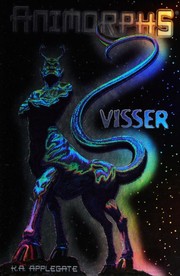
Visser One on trial, narrated from inside the enemy. It is the companion piece to The Departure and the book that makes the villains' politics coherent rather than generic.

Megamorphs #3, a time-travel book that goes through Agincourt, Trafalgar and Normandy and is unusually direct about what war costs. Read it after Visser, once the series has earned the tone.

Book fifty-two, and the last of the great ones: Ax alone, doing something the others would not sanction. It sets up the ending directly, so read it immediately before the final stage.
The Ending
BeginnerRead the conclusion the series is remembered for, and the cosmology book that reframes it.
▸ Study plan for this stage
Pace: About a week, roughly 360 pages. Read The Ellimist Chronicles (200 pages) first, then The Beginning (book 54, 159 pages) — the order matters, because the Ellimist's origin is what turns the finale's refusals into a position rather than a shrug. The Beginning is one of the bleakest endings ever publi
- The Ellimist's origin, and the series' explanation of what a godlike being can and cannot do about a war
- The Ellimist and Crayak as a constraint system rather than a good-and-evil pairing
- That the series has been quietly answering the question of divine intervention since book seven
- The Beginning's treatment of what happens to soldiers after a war ends, which is its real subject
- Rachel's arc completed, and the connection back to the first sign of it in The Visitor
- The refusal to resolve as a deliberate formal choice, not a sequel hook
- The 2001 reader reaction, and Applegate's stated view of it
- What are the Ellimist's limits, and why does the series insist on them?
- How does knowing the Ellimist's history change how you read his interventions earlier in the series?
- What does The Beginning say happens to each surviving character after the war, and what does the series decline to tell you?
- Is Rachel's ending prepared for, or imposed? Argue it from The Visitor and from her books in the middle run.
- What would a comforting version of this ending have had to give up, in terms of what the previous fifty-three books established?
- Read The Ellimist Chronicles and then list every earlier intervention you can recall, marking which ones his stated limits actually permit. The series is more consistent about this than it appears on first reading.
- After finishing The Beginning, go back to your five-column narrator notebook from the first stage and write a final entry for each character. Set the first entry and the last side by side; that comparison is what the series is for.
- Write down the objections readers raised to the ending in 2001, then write the strongest defence of it you can from the text of The Sacrifice and The Ellimist Chronicles alone.
- Return to the rules list one last time and mark which of the original rules from The Invasion are still standing on the last page. Very few are.
Next up: This closes the path: the premise, the history behind it, the handful of numbered books that carry the series' argument, and the ending that refuses to soften it.
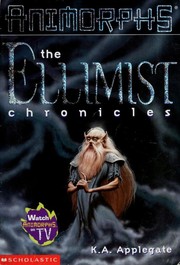
The origin of the godlike figure who has been nudging events since book seven, and the closest the series comes to stating its own philosophy. Read it before the finale — it makes the last book's refusals legible rather than arbitrary.

Book fifty-four, and one of the bleakest endings ever put in front of middle-grade readers: the war ends, the survivors do not recover, and the last page does not resolve. Read it knowing that the anger it provoked in 2001 was the point.