Alejo Carpentier in Order: Where to Start with the Inventor of Magical Realism
Carpentier coined lo real maravilloso — the marvellous real — a decade before the Boom writers who got the credit for magical realism, and said plainly that he was describing Latin America rather than inventing a technique. His books are short and extremely dense. This path starts with the shortest and most famous and works toward the baroque late novels.
Start here
IntermediateRead the short novel where the theory is stated and demonstrated at once.
▸ Study plan for this stage
Pace: About a week for a book of under 200 pages, because the reading order matters more than the pace: read the prologue, read the novel straight through over three or four sittings, then read the prologue again. The second reading of the prologue is where the path actually begins.
- Lo real maravilloso as Carpentier defines it in the prologue: the marvellous is a fact of Latin American reality, not a literary technique imported from Europe
- His attack on European surrealism as manufactured wonder - tricks arranged by writers who had to invent what he could simply report
- Ti Noel as the vantage point: the Haitian revolution seen from below and across decades, never from the council chamber
- Mackandal's metamorphoses, and the novel's refusal to adjudicate whether they happened or were believed
- Henri Christophe, Sans-Souci and the citadel at La Ferriere - a revolution that installs a new tyranny with the same whip
- The cyclical structure: liberation, betrayal, liberation again, with Ti Noel outliving every regime
- Compression as method - decades of history in fewer than two hundred pages, with the gaps doing the work
- What exactly does the prologue claim is different about Latin American reality, and does the novel prove it or merely illustrate it?
- Mackandal's execution is witnessed by both the colonists and the enslaved, who see different things. Which account does the novel treat as true, and how does it avoid choosing?
- Why is Ti Noel the point of view rather than any of the historical leaders?
- What does the citadel at La Ferriere cost, and what is Carpentier saying by giving the same labour to the black king that the French demanded?
- Does the novel's ending offer any progress at all, or is the cycle the whole argument?
- Read the prologue, mark its three or four central claims in the margin, then read the novel with those marks visible and tick each claim where the narrative demonstrates it.
- List every marvellous event in the book and note beside each whether it is narrated as fact or as something a character believes. The proportion is the answer to the whole lo real maravilloso question.
- Read the Mackandal execution scene twice, once tracking what the colonists see and once tracking what the enslaved see. Write two short paragraphs, one from each vantage.
- Sketch a timeline of the novel's decades on one sheet and mark where Ti Noel is at each point. Seeing how much history passes in under 200 pages is the fastest way to feel Carpentier's compression.
Next up: The prologue's theory and its short demonstration prepare you for the two long novels where Carpentier gives the same ideas room to work at full length.
The Haitian revolution seen from below, across decades. Its prologue is where lo real maravilloso is first argued, and the novel is the proof. Under 200 pages. Our record carries a marketplace listing string as its title.
The two big ones
IntermediateMove to the novels usually called his best.
▸ Study plan for this stage
Pace: 5-6 weeks. The Lost Steps is not long but is extremely dense and rewards about 15 pages a day; Explosion in a Cathedral runs to roughly 350 pages across twenty years of history, so budget 25 pages a day and read it in longer sittings than the first.
- The Lost Steps as a journey upriver that is also a journey backwards through historical time, from the modern city to something like the first days
- Its diary form, and the fact that the narrator is a musicologist - the search is for an instrument, so the whole novel is organised around origins of music
- Rosario and the question of whether the narrator can actually stay, or is only a tourist in the past
- The failure to find the way back as the novel's real subject: you cannot re-enter a time you have already left
- Explosion in a Cathedral and Victor Hugues bringing the French Revolution, and the guillotine, into the Caribbean
- Esteban and Sofia as the two ways of receiving an imported idea - disillusion and commitment
- The painting the English title names, which hangs in the family house and is described repeatedly, so that an image of a building blown apart and frozen mid-explosion becomes the novel's model of revolution
- Carpentier's baroque sentence: accumulation, catalogue, the piling up of objects until the period itself becomes physical
- In The Lost Steps, what are the successive time-strata the narrator passes through as he moves up the river, and where does the movement stop?
- Is the narrator's failure to return a personal failure or a structural impossibility the novel is asserting?
- How does Victor Hugues change across Explosion in a Cathedral, and at what point does the liberator become the administrator of the guillotine?
- The painting is described several times. What is Carpentier saying by making the emblem of revolution a permanent, frozen explosion?
- Both novels are about ideas that travel badly. What survives the journey in each, and what does not?
- Keep a chapter-by-chapter note of the historical era The Lost Steps has arrived at - twentieth-century city, colonial town, conquest, pre-history. The list is the novel's structure made visible.
- Find every passage in Explosion in a Cathedral where the painting is described and read those passages consecutively. Then write a paragraph on what changes between the first description and the last.
- Set the arrival of the guillotine in Explosion in a Cathedral beside Mackandal's execution in The Kingdom of This World. Both are scenes of state killing witnessed by a colonised population; write half a page on the difference.
- Take one of Carpentier's longest sentences, mark its clauses, and rewrite it as five plain sentences. Reading the two versions aloud shows exactly what the baroque manner buys and what it costs.
Next up: After two long novels of accumulation, the short books show the same prose forced into a fixed container, where the compression becomes the form.
A musicologist goes up the Orinoco looking for a primitive instrument and travels backwards through time as he goes. Often named his masterpiece.

The French Revolution arriving in the Caribbean, and what an idea becomes when it is exported. The best single novel about revolution in Latin American fiction.
The compressed ones
IntermediateThe short experiments, where the prose is at its most baroque.
▸ Study plan for this stage
Pace: About 2 weeks for roughly 220 pages combined. The Chase is built to be read at close to the length of the symphony it is set against, so try to read it in one or two sittings; Concierto barroco is under 100 pages and is best read in a single evening.
- The Chase's structure keyed to a performance of Beethoven's Eroica, so the reading time and the fictional time are deliberately close
- A fugitive hiding in a concert hall - the pursued man, the ticket-seller, and the retrospective account that fills the interval
- How Carpentier uses a fixed musical form to constrain a narrative, in the same way the prologue constrained The Kingdom of This World
- Concierto barroco as pure joy: an indiano from Mexico and his Cuban servant Filomeno arriving in a carnival Venice
- The meeting with Vivaldi, Handel and Scarlatti, and the improvised concert where the European masters and a Caribbean percussionist play together
- The deliberate anachronism at the end, when the novel breaks its own chronology and jumps forward into the twentieth century
- Carpentier's argument that Latin America's contribution to European culture was always there and always uncredited
- How closely does The Chase's structure actually track the symphony, and what does the reader gain from noticing?
- Whose account are we getting in The Chase, and at what point do you realise the chronology is not straightforward?
- In Concierto barroco, what changes in the music when Filomeno joins in, and what is Carpentier claiming about the origins of European baroque?
- Why does the novel break chronology at the end rather than closing in its own century?
- These two books are the shortest here and the most formally extreme. Is the constraint doing the work, or the prose?
- Play a recording of Beethoven's Eroica while reading The Chase and note where the movement changes fall against the book's divisions. Even an imprecise match tells you what the form is for.
- Read Concierto barroco in one sitting, then go back and mark every musical instrument named. The list is the argument of the novel in miniature.
- Find the exact sentence where Concierto barroco leaves its own century and write down what you had assumed the book was doing up to that point.
- Set the Venice concert scene beside the upriver instrument search in The Lost Steps. Both are about where music comes from and they answer the question in opposite directions.
Next up: With the theory, the long novels and the experiments behind you, the late dictator novel can be read as Carpentier applying everything at once to the political present.
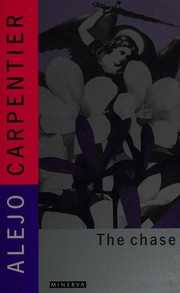
A political assassin hides in a concert hall for the length of a Beethoven symphony, which is the length of the book.
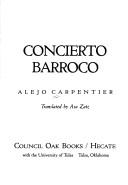
A Mexican and his Cuban servant meet Vivaldi, Handel and Scarlatti in Venice. Short, joyful and formally the strangest thing here.
The late novel
IntermediateFinish with the dictator novel.
▸ Study plan for this stage
Pace: 3 weeks for roughly 370 pages. It is more episodic than Explosion in a Cathedral, so 20-25 pages a day works well; the Paris chapters and the chapters back in the unnamed republic can usefully be read in separate sittings.
- The Head of State as a composite Latin American dictator, deliberately not identified with one real figure
- The shuttle between Paris and the republic, and the dictator as a European aesthete at one end and a killer at the other
- The title's joke on Descartes's Discourse on Method - a rationalist frame stretched over an unreasoning regime
- The Student as the opposing force, and the deliberate thinness of that opposition
- Carpentier as one of the wave of 1970s Latin American dictator novels, and the most sardonic of them
- Culture used as an alibi: the same baroque accumulation that produced wonder in earlier books here produces furniture, opera boxes and self-justification
- How the exile's Paris in this book differs from the revolutionary Paris that exported the guillotine in Explosion in a Cathedral
- What is the effect of never naming the country, and would the novel be stronger or weaker with a real one?
- How does the Descartes joke in the title actually operate in the text - is the Head of State rational, or performing rationality?
- The Student is barely characterised. Is that a flaw or a deliberate refusal to offer the reader a hero?
- Carpentier had spent his career arguing that the marvellous was real. What has happened to the marvellous in this book?
- Read against the other five books here, is Reasons of State a summation or a departure?
- Keep two columns while reading - what the Head of State does in Paris and what is done in his name at home - and fill them in chapter by chapter. The gap between columns is the novel.
- Read the Paris chapters of Reasons of State against Esteban's European sections in Explosion in a Cathedral, and write half a page on what Carpentier thinks Latin Americans go to Europe for.
- Mark every place the Head of State cites a European author, philosopher or artwork to justify himself. Read the list on its own and note how much of it is Carpentier's own baroque inheritance turned against itself.
- Write a one-paragraph summary of each of the six books on this path in publication order, then in the order you read them. The two lists explain why the path is arranged as it is.
Next up: You now have the full Carpentier: the theory, the two long masterpieces, the short experiments and the late political novel, which is enough to read the essays and the remaining minor fiction without a guide.

A Latin American dictator in exile in Paris. Part of the wave of dictator novels of the 1970s and the most sardonic of them.