Agatha Raisin Reading Order: Where to Start with M.C. Beaton
M.C. Beaton wrote more than thirty Agatha Raisin mysteries, and they are not thirty equally good books. The plots are light and largely interchangeable; what carries the series is Agatha herself — a retired London PR executive who bought a Cotswolds cottage expecting a village idyll and is rude, vain and lonely enough to be genuinely interesting — plus a running romantic and neighbourly plot that only makes sense read in order. So the sensible approach is to read the first four in sequence, decide there whether you like her, then take the strong middle books rather than grinding through every volume. This path stops well before the series does, which is deliberate. Note that our catalogue files M.C. Beaton under her legal name, Marion Chesney; these are the right books.
The First Four, in Order
BeginnerMeet Agatha, the village of Carsely and the recurring cast, and find out within four short books whether the series is for you.
▸ Study plan for this stage
Pace: Three to four weeks. These are short books — Agatha Raisin and the Quiche of Death is 201 pages, the Potted Gardener 196, the Walkers of Dembley 170 — and each is a two- or three-evening read. Take them in strict order and close together, because the recurring cast is established across all four and
- Agatha is the series and the plots are not. She is a retired London PR executive, rude, vain, snobbish about her own origins and badly lonely, and the comedy comes from her trying to be liked by people whose approval she does not understand how to earn.
- The Quiche of Death establishes the joke the whole run depends on: she cheats at the village baking competition with a shop-bought quiche, and someone dies of it. Her first act in the series is a fraud committed to be admired.
- The recurring cast arrives in these four books and stays: Mrs Bloxby, the vicar's wife, who is the only person in Carsely who is straightforwardly kind to Agatha, and Bill Wong, the young detective who tolerates her interference.
- The village of Carsely is a construction and Beaton knows it — the series is partly about an incomer who bought a fantasy of English village life and is now living in a real village with committees in it.
- The Vicious Vet introduces James Lacey next door and starts the romantic pursuit that shapes the next dozen books. It is the one early volume you cannot skip on plot grounds.
- The Potted Gardener is the first that is properly good as a mystery, and the Walkers of Dembley is the strongest of the opening four. If you want a fair sample of the series at its normal quality, it is these two rather than the first.
- The formula is fixed early: a village institution, a death inside it, Agatha investigating out of boredom and vanity, and a solution she often reaches by luck or by rudeness rather than by deduction.
- What does Agatha actually want in the Quiche of Death, and is it ever solving the murder?
- What is Mrs Bloxby for, structurally? What would the series lose without her?
- How does Beaton get information to Agatha that a private citizen should not have? Name the mechanism she uses in each of the four books.
- Where does Agatha solve a case by reasoning, and where by accident or provocation? Count across the four.
- After the Walkers of Dembley: is it the mysteries or the character keeping you here? Answer honestly, because it decides whether to continue.
- Keep a one-line structural log for each of the four: what chapter the body appears in, who supplies the police information, what Agatha does that is socially disastrous, and how the solution arrives. By the fourth book you will have the formula written down, and the rest of the path is about how it varies.
- Write down every character introduced in these four who reappears. It is a short list, and knowing it is what makes the later books navigable.
- Note Agatha's stated age in book one and watch what happens to it across the run. The series' relationship to time is one of its odder features and it starts here.
- After the Walkers of Dembley, write two sentences on whether you like Agatha. The series never asks you to approve of her, and readers who expect it to soften her generally quit around book six.
Next up: The recurring cast and the James Lacey pursuit are now in place, which is the only continuous plot the series has and the reason the next three books must be read in order.

The first book and the only correct starting point: Agatha retires early, moves to the Cotswolds, enters a shop-bought quiche in the village baking competition, and someone dies of it. It establishes the joke the whole series runs on — that she is a fraud trying to be liked — and introduces Mrs Bloxby and DC Bill Wong.

The second, and where the romantic subplot starts: James Lacey moves in next door and Agatha begins the pursuit that shapes the next dozen books. Skipping it makes several later volumes incomprehensible.
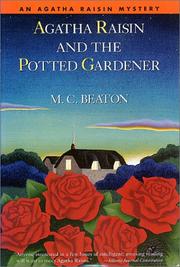
The third, and the first one that is properly good — a village horticultural rivalry, a genuinely nasty murder, and Agatha returning from a self-improvement holiday to find a competitor for James. Read straight on from the second.

A ramblers' right-of-way dispute turned lethal, and the strongest of the opening four. If you have got this far and are not enjoying yourself, stop here — the series does not change character later.
The Romance Plot Takes Over
BeginnerFollow the James Lacey arc through its peak, which is the closest the series comes to a continuous story and the reason order matters at all.
▸ Study plan for this stage
Pace: Two to three weeks. Three short books of around 200 pages each. These must be read consecutively — the Murderous Marriage and the Terrible Tourist are effectively one story in two volumes, and reading the second without the first makes no sense at all. The Terrible Tourist is the weakest mystery of
- The Murderous Marriage is the pivot of the whole series: Agatha's wedding day, a husband she had never mentioned, and consequences that reshape everything with James. Reading it out of sequence spoils several books at once.
- The Terrible Tourist moves the pair abroad to Cyprus. Beaton's holiday books are a recurring format and they consistently produce her thinnest mysteries and her most consequential character developments.
- Sir Charles Fraith, the impoverished baronet who becomes the series' other long-running male presence, arrives in this stretch and permanently complicates the James plot.
- The Wellspring of Death returns to Carsely for a bottled-water development and a village planning fight, with Agatha back doing PR — and it is where the cosy formula settles into its best version.
- Beaton's actual subject in these three is humiliation. Agatha gets what she wanted and it goes wrong publicly, and the comedy is closer to the bone here than anywhere else in the run.
- The series is at its best when the crime grows out of a village institution — the fete, the horticultural society, the planning committee — and at its weakest when Agatha is on holiday.
- What does the Murderous Marriage reveal about Agatha's past, and how does it change what her pursuit of James has meant up to now?
- Why does the Terrible Tourist fail as a mystery, specifically? Is it the setting, the pacing or the absence of a village institution?
- What does Charles Fraith do for the series that James Lacey cannot?
- In the Wellspring of Death, how does the village planning fight generate the crime? Compare it with how the Potted Gardener generated its own.
- Is Agatha treated sympathetically in these three books, or is she the joke? Point to specific scenes.
- Continue the structural log from stage one, and add a column for where the story leaves Carsely. Match it against your own rating of each book — the correlation is the clearest pattern in the whole series.
- Reread the last two chapters of the Murderous Marriage immediately before starting the Terrible Tourist. Beaton picks up almost mid-situation and the second book assumes it.
- Write down, before starting the Wellspring of Death, what you expect to happen between Agatha and James. Whether the series can still surprise you at book seven is worth knowing.
- Compare the Cyprus chapters of the Terrible Tourist with any Carsely chapter for how much detail the setting gets. The difference is why the holiday books do not work.
Next up: The romance is now the series' spine rather than a subplot, and the next three books are the run at the height of its powers with that spine in place.
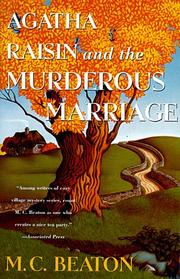
The pivot of the whole series: Agatha's wedding day, a husband she had not mentioned, and the fallout that reshapes her relationship with James. Reading this out of sequence spoils several books at once.
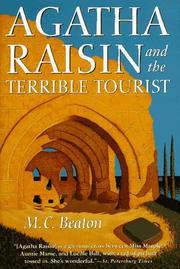
The immediate sequel, moving the pair to Cyprus. It is the weakest of the early run as a mystery and unskippable as a plot, which is a fair summary of the series' occasional problem.

Back in Carsely for a bottled-water development and a village planning fight, with Agatha returning to PR work. The series recovers its footing here and this is where the cosy formula settles into its best version.
The Strongest Middle Run
IntermediateRead the three consecutive books most Agatha readers rate highest, and see the character get slightly, genuinely sadder without the comedy collapsing.
▸ Study plan for this stage
Pace: Two to three weeks for three consecutive books of about 196 pages each. This is the stretch most Agatha readers rate highest, and it is short enough to read in a fortnight. Read them in order — they are consecutive volumes and the character's mood carries from one to the next.
- The Wizard of Evesham has one of the tightest plots Beaton wrote — a blackmailing hairdresser — and is the funniest book in the series on Agatha's vanity, which is the engine of the whole run.
- The Witch of Wyckhadden is the most atmospheric volume: a shabby out-of-season seaside hotel, a cast of elderly residents, and Agatha hiding there after a hair disaster. It is the book that best justifies the comparison with Christie.
- The Fairies of Fryfam sends her to a Norfolk village on an astrologer's advice and introduces an apparently supernatural element. It is the volume that most tests how much whimsy you will accept, and readers split on it.
- Across these three the character gets genuinely sadder without the comedy collapsing — Agatha alone, ageing, in unfamiliar places, still incapable of asking for company directly.
- Beaton is unusually good at closed communities of the elderly, and the Wyckhadden hotel is the best example. The comic cruelty and the real pathos are doing the same work.
- Vanity is the series' consistent moral subject. Agatha's hair, her clothes, her attempts to be younger, and the fact that these are treated as both ridiculous and completely understandable.
- What makes the Wizard of Evesham's plot tighter than the earlier books? Track how many suspects there are and how the information is released.
- How does the Wyckhadden hotel setting do the work that a village usually does in this series?
- Does the Fairies of Fryfam commit to the supernatural or explain it away? Does the choice work?
- Where in these three books is Agatha at her loneliest, and how does Beaton keep the scene comic?
- If someone will only read three Agatha Raisin novels, are these the right three? What would you swap in from stage one or two?
- Keep the structural log running and compare these three entries against the opening four. Same formula, and note precisely what Beaton is now varying — the setting, the timeframe, the number of suspects.
- Read the Wyckhadden hotel scenes against the Carsely scenes of the Wellspring of Death and write a paragraph on what a closed cast gives Beaton that an open village does not.
- Mark every passage in these three books where the joke about Agatha's appearance turns from comic to sad. The turn is deliberate and it is what distinguishes this stretch.
- Test the whimsy question directly: write down, at the halfway point of the Fairies of Fryfam, what you expect the explanation to be. Your reaction to the actual one predicts how you will feel about the later series.
Next up: This is the series at its peak, so the last stage is about reading the remaining twenty-plus books selectively rather than in sequence.
A blackmailing hairdresser, and one of the tightest plots Beaton wrote. It is also the funniest on Agatha's vanity, which is the engine of the series.
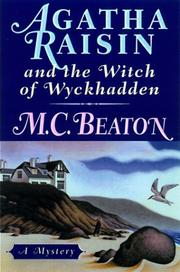
Agatha holed up in a shabby seaside hotel over the winter after a hair disaster, among a cast of elderly residents. The most atmospheric book in the run and the one that best justifies the Christie comparison.
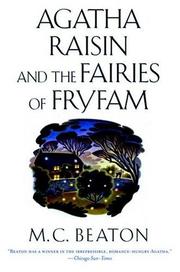
Agatha decamps to a Norfolk village on an astrologer's advice and finds something apparently supernatural. Read it third here — it is the one that most tests how much whimsy you will take.
Where to Dip In Afterwards
IntermediatePick from the later books selectively rather than reading all twenty-plus, using the four that stand up on their own.
▸ Study plan for this stage
Pace: Three to four weeks for four books of 200 to 260 pages, and these do not have to be read back to back. The Love from Hell should follow stage three fairly closely because it closes the romantic arc; after that the other three can be picked up whenever. This is where the path deliberately stops, well
- The Love from Hell is the last book essential to the continuing arc: the James marriage in collapse, and Agatha herself under suspicion. After it the romantic plot largely resolves and the later volumes become close to standalone.
- The Day the Floods Came is the bleakest book in the series and the best written of the later run — Agatha alone, travelling, and a body in a flooded river. It is the right test of whether the standalone phase interests you.
- The Perfect Paragon marks the format change: Agatha now runs her own detective agency with staff, which is how the rest of the series operates. Read one book from this phase and make it this one.
- The agency format changes the series structurally — Agatha delegates, the cases arrive as business rather than as village accident, and the amateur-sleuth premise that generated the early comedy is gone.
- A Spoonful of Poison — a village fete and poisoned jam — deliberately echoes the first book, which makes it the most satisfying place to stop: it closes the circle the Quiche of Death opened.
- The series' reading-order rule in one line: books one to seven in sequence, the middle run in sequence, and everything after the Love from Hell in any order you like.
- Beaton wrote these fast and they are not thirty equally good books. Treating the later run as a shelf to select from rather than a sequence to complete is the difference between enjoying the series and grinding through it.
- What does the Love from Hell resolve, and what does the series lose once it is resolved?
- Why is the Day the Floods Came better written than the books around it? Look at the pacing and at how much time Agatha spends alone.
- What does the detective agency change about the kind of story Beaton can tell — and what does it cost?
- How does A Spoonful of Poison echo the Quiche of Death, point by point? What has changed about Agatha between the two fetes?
- Where would you tell a friend to stop, and why there rather than a book earlier or later?
- Read the first chapter of the Quiche of Death and the first chapter of A Spoonful of Poison on the same evening. Fifteen years of series apart, the same village-fete setup, and the difference in Agatha is the whole argument for reading in order.
- Complete the structural log across all fourteen books and look at what changed and when: chapter of the body, source of police information, method of solution. That single sheet is a better guide to the series than any synopsis.
- Pick one later book at random from outside this path, read fifty pages, and check it against your log. If it fits the formula exactly and adds nothing, you have your answer about the remaining volumes.
- Write the four-line reading-order recommendation you would give someone who has never read Beaton: where to start, what is mandatory, what is skippable, where to stop.
Next up: This is the end of the path: fourteen books that give the whole arc, with the remaining twenty-plus available to dip into and no obligation to.

The James marriage in collapse and Agatha as a suspect herself. The last book that is essential to the continuing arc — after this the romantic plot largely resolves and later volumes become close to standalone.
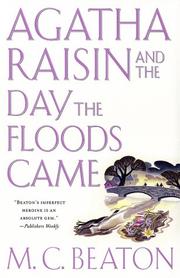
Agatha alone, travelling, and a body in a flooded river. It is the bleakest of the series and the best written of the later run; a good test of whether the standalones interest you.

Agatha now running her own detective agency, which is the format the rest of the series uses. Read one book from this phase and make it this one.

A village fete, poisoned jam, and a plot that deliberately echoes the first book. The most satisfying place to stop: it closes the circle the Quiche of Death opened, and the two dozen remaining volumes are for completists rather than for readers.