Adult ADHD: work with your brain
This four-stage curriculum moves from personal recognition and emotional validation, through the neuroscience and clinical picture, into concrete executive-function systems, and finally into advanced self-advocacy and lifestyle design. Each stage builds the vocabulary and self-awareness needed to get the most out of the next, so reading in order matters — especially for a beginner who may still be figuring out whether and how ADHD shows up in their own life.
Foundations: Recognition & Validation
BeginnerUnderstand what adult ADHD actually looks and feels like from the inside, shake off misconceptions, and gain the emotional language to recognize ADHD patterns in your own life.
▸ Study plan for this stage
Pace: 6–8 weeks total: Weeks 1–3 for "ADHD 2.0" (~25–30 pages/day, including pausing to journal); Weeks 4–7 for "You Mean I'm Not Lazy, Stupid or Crazy?!" (~20–25 pages/day, slower pace to absorb the self-reflective exercises embedded in the text); Week 8 as an integration week — no new reading, only revi
- ADHD as a neurological difference, not a character flaw or lack of willpower — the core reframe introduced in both books
- The 'interest-based nervous system' model from ADHD 2.0: ADHD brains are driven by interest, challenge, urgency, and passion rather than importance or deadlines
- Default Mode Network (DMN) dysregulation explained in ADHD 2.0: why the ADHD brain struggles to shift attention and why mind-wandering feels uncontrollable
- The 'Variable Performance Paradox' from You Mean I'm Not Lazy, Stupid or Crazy?!: why adults with ADHD can hyperfocus on some tasks yet completely fail at others of equal or lesser complexity
- Shame, self-blame, and the cumulative emotional toll of a lifetime of undiagnosed ADHD — a central theme of You Mean I'm Not Lazy, Stupid or Crazy?!
- Masking and compensation strategies: how many adults with ADHD have developed elaborate workarounds that hide symptoms from others (and themselves)
- ADHD in adulthood looks different from childhood: impulsivity often becomes internal, hyperactivity becomes restlessness or racing thoughts, and inattention dominates
- The importance of community and connection — Hallowell's concept of 'finding your tribe' as a therapeutic and stabilizing force for adults with ADHD
- After reading ADHD 2.0, can you explain in your own words what the Default Mode Network is and why its dysregulation produces the specific experience of ADHD — not just the symptoms, but the felt sense of it?
- Both books argue that ADHD is not about intelligence or laziness. What specific evidence, stories, or frameworks from each book would you use to counter someone who holds that misconception?
- You Mean I'm Not Lazy, Stupid or Crazy?! places heavy emphasis on the emotional and psychological aftermath of living undiagnosed. What patterns of self-perception does the book identify, and do any resonate with your own history?
- How does Hallowell's 'interest-based nervous system' model explain behaviors that might otherwise look like procrastination, irresponsibility, or selfishness in an adult with ADHD?
- Both books were written for adults specifically. What distinctions do they draw between childhood ADHD presentation and adult ADHD presentation, and why does that distinction matter for recognition?
- After completing both books, what is one misconception about ADHD you personally held before reading that you can now articulate and refute with specific ideas from the texts?
- **Symptom-to-Story Mapping (during ADHD 2.0):** Each time Hallowell describes a symptom or brain-based pattern, pause and write 2–3 sentences about a specific moment in your own life where that pattern showed up. Build a running personal 'evidence log' — this transforms abstract neuroscience into lived recognition.
- **Misconception Audit (after finishing ADHD 2.0):** Write down every belief about ADHD you held before starting — from your own assumptions or things others have said to you. Then annotate each one with what the book actually says. This makes the reframe explicit and personal.
- **The 'Lazy, Stupid, or Crazy' Self-Inventory (during You Mean I'm Not Lazy, Stupid or Crazy?!):** The book prompts readers to examine internalized labels. Create a three-column table with the headers 'Label I was given / gave myself,' 'Behavior it was describing,' and 'ADHD-informed reframe.' Aim for at least 10 rows.
- **Variable Performance Log (during You Mean I'm Not Lazy, Stupid or Crazy?!):** For one full week, track tasks you completed with ease versus tasks you avoided or failed at. Note the interest level, urgency, and emotional stakes of each. Review it through the lens of the interest-based nervous system model from ADHD 2.0.
- **Comparative Book Dialogue:** After finishing both books, write a one-page 'conversation' between Hallowell and Kelly — where do their frameworks agree, where do they emphasize different things, and whose framing resonated more with your experience? This builds critical synthesis rather than passive absorption.
- **Teach-Back Exercise (Week 8):** Explain adult ADHD — what it is, what it isn't, and what it feels like from the inside — out loud to a friend, family member, or into a voice memo, using only concepts from these two books. Note where you stumble: those are the concepts to revisit before moving to the next stage.
Next up: By the end of this stage you will have shifted from confusion or self-doubt to a clear, validated framework for recognizing ADHD in yourself — which creates the essential emotional foundation for the next stage, where the focus moves from "what is this?" to "what do I actually do about it?" through practical strategies, systems, and treatment options.
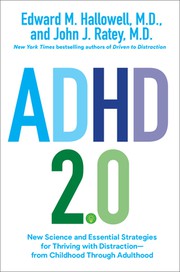
Written by two psychiatrists who both have ADHD, this is the ideal first book — accessible, warm, and packed with up-to-date science that immediately reframes ADHD as a trait to work with rather than a deficit to overcome.

A pioneering classic written by adults with ADHD for adults with ADHD; it normalizes the shame and confusion that often precede diagnosis and builds the emotional foundation needed before diving into strategies.
The Brain Behind ADHD: Neuroscience & Diagnosis
BeginnerUnderstand the neurological and executive-function model of ADHD — why the brain works this way, what is actually impaired, and how diagnosis works — so that every strategy you learn later has a 'why' behind it.
▸ Study plan for this stage
Pace: 6–8 weeks total. Week 1–4: "Taking Charge of Adult ADHD" by Barkley (~20–25 pages/day, 4–5 days/week). Week 5–8: "Smart but Stuck" by Brown (~15–20 pages/day, 4–5 days/week — slower pace to absorb the case studies deeply). Allow one buffer day per week for reflection and journaling.
- ADHD as a neurological disorder of self-regulation, not a deficit of attention or willpower — Barkley's core reframe
- The Executive Function (EF) model: how ADHD impairs inhibition, working memory, emotional regulation, planning, and self-monitoring (Barkley's five EF domains)
- The time-blindness concept: ADHD as an impaired sense of time and future consequences, not just distractibility
- Dopamine and norepinephrine dysregulation: why the ADHD brain underresponds to delayed rewards and seeks immediate stimulation
- The diagnostic criteria for adult ADHD (DSM-based): symptom thresholds, age of onset, cross-setting impairment, and why adult presentation differs from childhood
- Brown's 'Clusters of Impairment' model: six cognitive clusters (activation, focus, effort, emotion, memory, action) as a complement to Barkley's EF framework
- The 'Smart but Stuck' paradox: why high IQ does not protect against ADHD impairment and how intelligence can mask — and delay — diagnosis
- Comorbidities and differential diagnosis: anxiety, depression, learning disabilities, and sleep disorders that frequently co-occur with or mimic adult ADHD
- In your own words, why does Barkley argue that calling ADHD an 'attention deficit' is misleading — and what does he propose as a more accurate description of what is impaired?
- What are Barkley's five executive function domains, and can you give one real-life example of how each one breaks down in an adult with ADHD?
- What does 'time blindness' mean in the context of ADHD, and how does it explain procrastination and difficulty with long-term goals better than laziness or poor motivation does?
- How does Brown's six-cluster model of impairment differ from or complement Barkley's EF model — and which clusters resonate most with your own experience or observations?
- What criteria must be met for an adult to receive an ADHD diagnosis, and why is self-report alone considered insufficient according to both authors?
- Using at least one case study from 'Smart but Stuck,' explain how high intelligence can simultaneously mask ADHD symptoms and amplify the emotional distress caused by them.
- **Brain-Model Sketch:** After finishing Barkley's EF chapters, draw a simple diagram of the five executive function domains from memory. Label each one and write one sentence describing how it fails in ADHD. Compare it back to the book and correct any gaps.
- **Personal Symptom Audit:** Using Brown's six cognitive clusters as a framework, create a two-column table — 'How this shows up in my life (or someone I know)' vs. 'How I previously explained this behavior (e.g., lazy, careless).' Notice where the neurological model reframes the narrative.
- **Time-Blindness Log:** For one full week, keep a small notebook or phone note where you record every instance of time slipping away unexpectedly, underestimating task duration, or losing track of deadlines. At the end of the week, annotate each entry with the Barkley concept it illustrates.
- **Case Study Analysis:** Choose two of Brown's case studies from 'Smart but Stuck.' For each one, write a half-page identifying: (a) which of Brown's six clusters are most impaired, (b) which of Barkley's EF domains map onto those impairments, and (c) what the diagnostic journey looked like and why it was delayed.
- **Diagnostic Criteria Checklist:** Download or write out the DSM-5 adult ADHD symptom list. For each symptom, write one concrete behavioral example that would count as evidence in an adult (not a child). Then note which symptoms Barkley or Brown specifically discuss and what nuance they add beyond the DSM language.
- **'Explain It to Someone' Test:** Without looking at your notes, explain the neuroscience of ADHD to a friend, family member, or voice memo as if they've just been diagnosed. Aim for 3–5 minutes. Afterward, note which concepts felt shaky — those are your re-read targets.
Next up: By internalizing *why* the ADHD brain is wired the way it is — its impaired executive functions, dopamine dynamics, and time perception — you will be primed to evaluate and adopt practical management strategies in the next stage with a clear mechanistic 'why' behind every tool, rather than following advice on blind faith.
Barkley is the world's leading ADHD researcher; this book translates his executive-function model into plain language and is the single best clinical overview for a non-specialist, providing the scientific backbone for everything that follows.
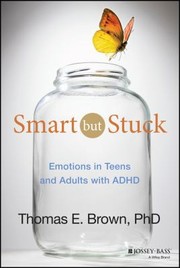
Brown's case-study format makes the 'hidden' executive-function deficits of high-functioning adults with ADHD vivid and concrete, deepening the diagnostic picture Barkley establishes.
Systems & Strategies: Building a Life That Works
IntermediateTranslate neurological understanding into practical, ADHD-compatible systems for time management, organization, emotion regulation, and daily functioning — both with and without medication.
▸ Study plan for this stage
Pace: 8–10 weeks total: ~2.5–3 weeks per book at roughly 20–25 pages/day. Suggested breakdown — "The ADHD Advantage" (Weeks 1–3): read in three passes: skim for strengths inventory, deep-read for reframe strategies, re-read highlighted sections; "Order from Chaos" (Weeks 4–6): read slowly and actively — p
- Strengths-first reframing (Archer): ADHD traits such as hyperfocus, risk tolerance, and creativity are genuine cognitive advantages when channeled into the right environments and roles — not deficits to be masked.
- ADHD-compatible system design (Paul): Effective organization systems must be built around how the ADHD brain actually works — visible, simple, forgiving of inconsistency — rather than borrowed from neurotypical productivity culture.
- The 'good enough' principle (Paul): Perfectionism is the enemy of functional systems; a system used imperfectly every day beats a perfect system abandoned after a week.
- Time blindness as a structural problem (Archer & Paul): Difficulty sensing time is neurological, not motivational — solutions must externalize time (timers, visual clocks, buffers) rather than rely on internal awareness.
- Emotion dysregulation as a core ADHD feature (Solden): Intense emotional reactivity, rejection sensitive dysphoria, and shame spirals are neurologically rooted ADHD symptoms, not character flaws, and require targeted regulation strategies.
- Internalized shame and identity reconstruction (Solden): Decades of masking, criticism, and underperformance create a layered shame identity in women with ADHD that must be actively dismantled before practical strategies can stick.
- Medication as one tool among many (Archer & Solden): Medication can lower the neurological 'cost' of functioning but does not replace intentional systems; strategies must be designed to work with or without it.
- Scaffolding vs. willpower (Paul & Solden): Sustainable daily functioning depends on environmental scaffolds — routines, cues, accountability structures — not on generating more willpower or motivation.
- According to Dale Archer in 'The ADHD Advantage,' what are the three to four ADHD traits most commonly linked to entrepreneurial or creative success, and what conditions must be present for those traits to function as advantages rather than liabilities?
- Jaclyn Paul argues in 'Order from Chaos' that most organization systems fail people with ADHD for a specific structural reason — what is that reason, and what are her core criteria for designing a system that will actually hold?
- How does 'Order from Chaos' distinguish between a 'reset' and a 'maintenance' routine, and why does Paul consider the reset routine more foundational for ADHD households?
- Sari Solden identifies a particular emotional pattern — distinct from general anxiety or depression — that underlies many women's relationship with their ADHD diagnosis. What is it, how does it develop across the lifespan, and what does she propose as the first step in addressing it?
- Across all three books, how is the role of medication framed? Where do Archer, Paul, and Solden agree, and where do their emphases meaningfully differ?
- How do the practical strategies in 'Order from Chaos' need to be adapted or supplemented, according to Solden's framework, for women whose ADHD has been accompanied by significant shame or late diagnosis?
- Strengths audit (from 'The ADHD Advantage'): List 10 moments in your life when an ADHD trait — hyperfocus, spontaneity, pattern-recognition, high energy — produced a genuinely good outcome. For each, identify the environmental condition that made it work. Use this as the foundation for designing your systems.
- System autopsy (from 'Order from Chaos'): Choose one organization or time-management system you have tried and abandoned. Write a one-page post-mortem using Paul's criteria: Was it visible? Was it simple enough? Did it require too many steps? Did it punish you for missing a day? Redesign it with those failure points corrected.
- Build and live-test one 'reset routine' (from 'Order from Chaos'): Following Paul's guidance, design a single 10–15 minute daily reset routine for one area of your home or work life. Run it every day for two weeks, tracking not whether you did it perfectly but whether the space/system recovered. Adjust after week one.
- Time externalization experiment (Archer & Paul): For one full week, remove all reliance on internal time-sense. Use a visual timer for every task block, set two-minute 'transition warnings' before switching activities, and build a 15-minute buffer before every commitment. Journal what changes in your stress level and punctuality.
- Shame-to-neutral journaling (from 'A Radical Guide for Women with ADHD'): Solden guides readers through rewriting their personal narrative. Choose one recurring self-critical story ('I'm lazy,' 'I'm a bad partner,' 'I can't be trusted') and write three versions: (1) the shame story as you've told it, (2) the same events retold through a neurological lens, (3) what a compassionate mentor who unders
- Medication-agnostic system audit: Design or review your current daily functioning system and explicitly mark which elements require medication to work and which work regardless. Identify at least two structural scaffolds (alarms, visual cues, accountability partners, body-doubling) that can substitute for or reinforce medicated focus on difficult days.
Next up: By grounding practical systems in both neurological reality (Archer), structural design (Paul), and emotional/identity work (Solden), this stage equips the reader to move from 'surviving daily life' to exploring the deeper relational, professional, and therapeutic dimensions of ADHD — the natural focus of an advanced stage.

Bridges the gap between understanding ADHD and leveraging it; read first in this stage to maintain a strengths-based mindset before diving into the harder work of building systems.

A practical, ADHD-specific guide to home organization and daily routines written by someone with ADHD — directly applies the executive-function concepts from Stage 2 to real household and scheduling challenges.

Essential for women (and valuable for anyone) because it addresses the unique ways ADHD is masked and misdiagnosed in adults, and offers schema-based therapy tools for rebuilding self-concept alongside practical strategies.
Advanced Integration: Medication, Relationships & Long-Term Design
ExpertMake fully informed decisions about medication, understand how ADHD affects relationships and emotional regulation at a deeper level, and design sustainable long-term life architecture that works with your ADHD brain.
▸ Study plan for this stage
Pace: 6–8 weeks total: Weeks 1–3 on "Driven to Distraction" (~25–30 pages/day, including re-reading key chapters on medication and emotional regulation); Weeks 4–7 on "The ADHD Effect on Marriage" (~20–25 pages/day with journaling pauses after each section); Week 8 reserved for synthesis, review, and comp
- The neurobiological basis of ADHD as framed by Hallowell — understanding ADHD not as a deficit of attention but as inconsistent regulation of attention, and what that means for long-term self-design
- Medication as one tool among many: Hallowell's nuanced, clinically grounded framework for evaluating stimulant and non-stimulant options, benefits, risks, and the importance of working with a knowledgeable prescriber
- The 'ADHD Effect' cycle described by Orlov — how untreated or unacknowledged ADHD creates a pursuer/withdrawer dynamic, a parent/child relationship pattern, and chronic resentment in partnerships
- Emotional dysregulation as a core (often under-discussed) ADHD symptom — Hallowell's concept of 'shame resilience' and Orlov's framing of emotional flooding and its impact on relationship repair
- The non-ADHD partner's experience: Orlov's detailed account of anger, loneliness, over-responsibility, and the grief of unmet expectations — understanding both sides of the dynamic
- Rebuilding relationship systems: Orlov's structured approach to renegotiating roles, responsibilities, and communication patterns once ADHD is on the table
- Long-term life architecture: Hallowell's concept of finding your 'right fit' environment — career, relationships, routines — that leverages ADHD strengths rather than constantly fighting deficits
- The role of diagnosis and shared understanding in relationships — how naming ADHD changes the narrative from character flaw to neurological difference, and why that reframe is necessary but not sufficient
- According to Hallowell in 'Driven to Distraction,' what are the key criteria for deciding whether medication is appropriate, and what should a person expect from a well-managed medication trial?
- How does Orlov define the 'ADHD Effect' cycle, and what are the specific behavioral patterns each partner typically falls into when ADHD goes unaddressed in a relationship?
- Hallowell describes ADHD as involving a 'right fit' problem rather than purely a deficit — what does this mean in practice for designing a sustainable adult life, and what domains does it apply to?
- What does Orlov identify as the most common mistakes couples make after an ADHD diagnosis, and what does her research suggest is required for genuine, lasting relationship repair?
- How do both Hallowell and Orlov address emotional dysregulation — where do their frameworks overlap, and where do they differ in emphasis or recommended approach?
- Based on both books, what would a realistic, integrated long-term support plan look like for an adult with ADHD — covering medication, relationships, environment, and emotional health?
- Medication Decision Map: Using Hallowell's framework, create a personal one-page document listing your current symptoms, impairments, goals, concerns about medication, and a list of informed questions to bring to a prescriber or psychiatrist — treat this as a living document to update over time.
- Relationship Cycle Audit (Orlov): Draw out the pursuer/withdrawer or parent/child cycle as Orlov describes it, then map your own closest relationships onto it — identify which role you tend to occupy, what triggers the pattern, and at what point the cycle could be interrupted.
- Non-ADHD Partner Perspective Exercise: Write a one-page letter from the perspective of a non-ADHD partner in your life (real or hypothetical), honestly articulating their frustrations and unmet needs as Orlov describes them — this builds empathy and reveals blind spots.
- Life Architecture Design: Following Hallowell's 'right fit' concept, audit three major life domains — work/career, living environment, and daily routine — and identify one concrete structural change in each that would reduce friction and play to your ADHD strengths rather than against them.
- Emotional Regulation Trigger Log: Over two weeks, keep a brief daily log of moments of emotional flooding or dysregulation (as discussed by both authors) — note the trigger, your response, and one alternative response you could have used. Review at the end of week two for patterns.
- Couples or Relationship Conversation Guide: Using Orlov's chapter on renegotiating roles, draft a structured agenda for a real conversation with a partner, family member, or close friend about how ADHD affects your dynamic — include specific requests, acknowledgments of their experience, and proposed system changes.
Next up: By internalizing Hallowell's clinical wisdom and Orlov's relational framework, the reader has now built a full-spectrum understanding of ADHD across biology, identity, relationships, and life design — creating the foundation needed to explore deeper therapeutic modalities, coaching frameworks, or specialized topics (such as ADHD in women, workplace advocacy, or parenting with ADHD) at an expert le
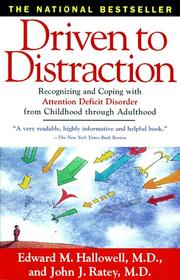
The landmark book that brought adult ADHD into public awareness; reading it last lets you appreciate the full clinical and human picture with the vocabulary and frameworks you've built, and its chapters on medication and relationships are still definitive.

ADHD doesn't exist in isolation — this research-backed book tackles how ADHD reshapes relationship dynamics and provides concrete communication and accountability systems, completing the picture of ADHD across all life domains.
Discussion
Keep reading
Paths that share books, cover the same subject, or open a related topic.