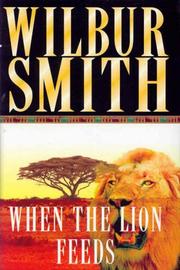
Start with When the Lion Feeds. It is the 1964 debut, it opens the first Courtney trilogy, and it is the template every later Smith novel works from, at its freshest. If Zulu wars and the Witwatersrand gold rush are not the draw, the other genuinely legitimate entry point is River god, his best-selling book, which requires nothing read beforehand at all.
The thing that actually matters here, and that most reading orders bury: Wilbur Smith's forty-odd novels are not one sequence. They are several unrelated family sagas — the Courtneys, the Ballantynes, an Ancient Egypt series — plus a shelf of standalones, and the Courtneys alone split into three internally chronological blocks that were published decades apart and wildly out of internal order. Getting the boundaries right is most of the battle. Each saga can be read entirely on its own, and none of them requires any of the others.
The Courtneys, block one
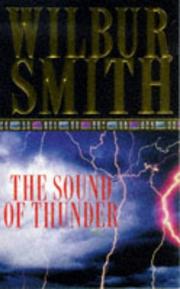
When the Lion Feeds, The Sound of Thunder and A Sparrow Falls are one trilogy: Sean Courtney from the Zulu wars through the Boer War to the aftermath of the First World War. The feud set running in the second book powers three more novels, so do not skip it. The third closes the arc, and if you want one complete Smith story and nothing else, this is the natural place to stop.
The Courtneys, block two
Written roughly twenty years later and set across the twentieth century. The burning shore opens it with Centaine de Thiry on the Skeleton Coast and reads perfectly well cold, which makes it a reasonable alternative starting point if the 1960s prose of the first trilogy does not suit you. Power of the Sword puts two half-brothers on opposite sides of Afrikaner nationalism and is the strongest novel of the block. Rage covers Sharpeville, the ANC and the consolidation of apartheid — Smith writing close to events he lived through. The block continues past this path with Golden Fox and A Time to Die.
The Courtneys, block three
This is where internal chronology and publication order come apart completely. Birds of prey is set in the 1660s, making it the earliest Courtney story, and it was the ninth Courtney novel written. Monsoon follows Hal Courtney's sons across the Indian Ocean and is probably the most purely enjoyable book on the whole shelf. Blue Horizon closes the block in southern Africa and assumes both earlier volumes.
The recommendation, since this is a real question: read each block in publication order and read the blocks in the order above rather than rearranging the whole saga into internal chronology. Internal chronology would have you open with Birds of prey, three hundred years earlier and thirty years later in Smith's career, which is a strange first impression and drains the retrospective pleasure of watching the family reach back. Publication order is also the order Smith's craft improves in.
The Ballantynes
A separate family in a separate country, sharing no plot with the Courtneys. A falcon flies — published in the United States as Flight of the Falcon — opens the sequence with the Atlantic slave trade and the Zambezi. Men of men covers Cecil Rhodes, the Matabele and the founding of Rhodesia, and is the most historically substantial of the four. The sequence continues with The Angels Weep and The Leopard Hunts in Darkness, which are not on this path. You can read the Ballantynes cold, before or after any Courtney block.
Ancient Egypt, and the standalone
River god is Taita the slave and the Hyksos invasion, a complete change of setting and a legitimate first Smith. The Seventh Scroll is its direct sequel but set in the present day, with archaeologists hunting Taita's tomb — an unusual structure and the single biggest reason people get confused about this series' order. The sequence goes on with Warlock, The Quest, Desert God and Pharaoh, none of which are here. The Sunbird is the best of the standalones: a modern archaeological dig braided with the lost Carthaginian city it uncovers, belonging to no saga and readable at any point.
Two honest warnings
First, editions. Several catalogue records on this path carry ISBNs from non-English publishers — Men of men and River god are French editions, and When the Lion Feeds and The Sunbird sit in a reprint range that usually signals a foreign or print-on-demand reissue. Check the publisher and language on the listing before ordering those four.
Second, the content. Smith's colonial-era African novels carry racial characterisation that many present-day readers find hard to take: African characters are frequently rendered through the assumptions of the period and the perspective of the white families the books follow, and the violence and sexual content are both explicit. That is a factual description of the books, not a verdict on whether to read them.
What is not covered
Fourteen novels out of more than forty. The later Courtney and Egyptian volumes, credited to Smith with a co-author, are absent, as are standalones including Shout at the Devil, Gold Mine and Hungry as the Sea. Treat this as the spine of the two major sagas plus the best standalone. The full ordered list is on the Wilbur Smith path.