Water treatment is one subject taught as two. Making raw water safe to drink and making sewage safe to return to a river share a chemistry and a microbiology and very little else, so this list builds the common foundation first and then splits into a drinking-water stage and a wastewater stage. The design references at the end are enormous and they assume calculus, a course in fluid mechanics and general chemistry; the first three books assume nothing.
Two practical warnings before the list. These texts are long-lived and heavily revised, and several of our catalogue records are early editions of books that are now many editions on — use the record to identify the right book and buy a current printing, because the regulatory chapters and the data go stale fast. And no book substitutes for the operator certification or the professional engineering licence that plant work actually requires; these are how you learn the subject, not how you become qualified to practise it.
What a plant is, and why it matters
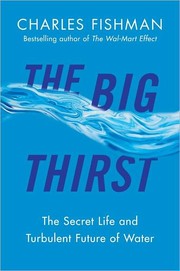
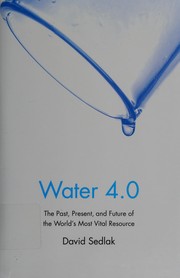
Charles Fishman's The big thirst treats water as an economic and political object rather than a chemical one, in 388 pages with no technical prerequisites. It establishes why the engineering is worth doing. David Sedlak's Water 4.0 is the better second book for an engineer: a history of urban water systems in four revolutions — Roman aqueducts, sand filtration and chlorination, sewage treatment, and the reuse era now beginning — and it gives you the chronology every unit process below slots into.
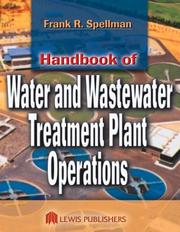
Frank Spellman's Handbook of Water and Wastewater Treatment Plant Operations is the operator-level entry at 624 pages: what each tank, pump and basin physically does, written for people who run plants rather than design them. It sits before the theory deliberately, because knowing the hardware makes the design equations far easier to motivate. Our record is the first edition of a book that has since expanded considerably.
The engineering foundation
Introduction to environmental engineering by Mackenzie Davis and David Cornwell is the standard undergraduate survey and the natural on-ramp: materials balances, reactor theory, hydraulics and an overview of both treatment halves in one volume. Read it before either design text. Water supply and pollution control by Warren Viessman and Mark Hammer gives the systems view the design books assume — sources, demand, distribution networks, collection systems and receiving-water impacts, which is to say the pipes on either side of the plant. Both of our records are 1980s editions of texts now much further on.
Chemistry and microbiology
Chemistry for environmental engineering and science by Clair Sawyer and colleagues is the classic bridge from general chemistry to what a treatment engineer needs: alkalinity, hardness, BOD and COD, nitrogen forms, and the analytical methods behind every number on a discharge permit. Start the stage here, at 752 pages.
Mark Benjamin's Water chemistry is the rigorous aquatic chemistry text — acid-base systems, complexation, precipitation and redox done properly, with the graphical methods that make equilibrium problems tractable. It is harder than Sawyer and worth it. Note that the publication year on our record is clearly wrong metadata; the book is Benjamin's and the second edition is current.
Gabriel Bitton's Wastewater Microbiology is the half most engineering curricula skimp on: what actually lives in activated sludge, why bulking and foaming happen, and how pathogens and indicator organisms behave. Read it before the wastewater design stage, not after.
Drinking water design
Principles of water treatment is the teaching version of the field's big reference, by the same author team led by John Crittenden: the same physical and chemical principles at 672 pages, with worked design examples, and the right book to read before the full volume. Then MWH's Water Treatment, the definitive drinking-water design reference at 1,920 pages in our record — every unit process derived and then designed, with the mass-transfer and reactor theory the shorter books assert. It is a lookup volume for a career, not a book you read through. Water quality & treatment, the American Water Works Association handbook edited by James Edzwald, is the practitioner's counterpart at 1,696 pages: specialist chapters on regulation, source protection, disinfection by-products and corrosion control.
Wastewater design
Mackenzie Davis's Water and Wastewater Engineering is the design-course text and the best single book covering both halves at design depth with one consistent method and worked examples, at 1,296 pages. Wastewater engineering is Metcalf and Eddy, the field's reference work and the book every English-language wastewater design is checked against. Our record is the fourth edition at 1,834 pages, displayed under the truncated title; the current edition is subtitled Treatment and Resource Recovery and adds substantial material on energy and nutrient recovery, so buy that one.
Close with Biological wastewater treatment by Leslie Grady and colleagues, 1,020 pages treating the biology as a modelling problem: stoichiometry, kinetics, and the activated sludge models that plant simulators implement. It goes last because it is where Metcalf and Eddy's design rules come from. Our record is an early edition; the third is current. The stage goals and the reading schedule for each stage are at /paths/pt_ai_water-and-wastewater-treatment.