The art market is the largest substantially unregulated market in the developed world, and it is built on deliberate opacity: private sales with undisclosed prices, guarantees and irrevocable bids at auction, and a dealer network with every reason not to explain itself. Which is why the good books here are business journalism, economics and insider memoir rather than anything resembling a textbook.
Read in an order that establishes the mechanics before the scandals. The temptation is to start with the money laundering and the price-fixing, and you will misread all of it if you do not first know how a gallery actually sets a price and what an auction guarantee is.
How the machine works
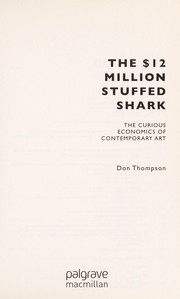
The $12 million stuffed shark by Donald N. Thompson is the standard entry point: an economist explaining branding, scarcity and signalling in contemporary art, using the Hirst shark as the case study. Seven Days in the Art World by Sarah Thornton is the other essential first book — a sociologist's ethnography of an auction, a crit, a fair, a magazine, a studio, which shows you the people and the rituals rather than the theory. Together they cover mechanism and culture.
Then the insider view. The value of art by Michael Findlay is written by a dealer of long standing and argues, against most of this list, that commercial value, social value and aesthetic value are separable things worth judging separately. It is a partisan book from someone with skin in the game, and it is more honest about that than most.
Thompson wrote two follow-ups. The Supermodel and the Brillo Box extends the argument into how specific prices get made, and Orange Balloon Dog is the most recent update, covering the guarantee-driven auction era. There is real repetition across the three: if you want two, read the first and the last and skip the middle volume unless the pricing case studies interest you.
Dealers, auction houses, and their history
Breakfast at Sotheby's by Philip Hook is an auctioneer's A-to-Z of what actually adds and subtracts value — subject, size, provenance, condition, whether the sitter is smiling — and is the most enjoyable book here. Duveen by S. N. Behrman, from 1952, profiles the dealer who moved European old masters into American collections and effectively invented the modern art-dealer role; it is a period piece and a masterclass in salesmanship. Rogues' gallery by Philip Hook is his history of art dealing across two centuries, which supplies the long context for everything else.
Boom by Michael Shnayerson is a journalist's account of the rise of the mega-gallery and the artists and dealers who built the contemporary market. Read as an outsider portrait built on extensive access, which means it is well informed and its sources had reasons to talk.
The parts nobody wants explained
Big bucks by Georgina Adam is her survey of the market's explosive growth; Dark side of the boom is the more important sequel, on money laundering, freeports, sanctions and the mechanics of using art to move value invisibly. Adam covered the market for the Financial Times for years and this is investigative reporting, not commentary. The Art of the Steal by Christopher Mason is the account of the Sotheby's and Christie's commission price-fixing conspiracy, the case that put an auction-house chairman in prison and remains the clearest documented instance of collusion at the top of the trade.
Close with the academics. Talking prices by Olav Velthuis is a sociologist's study of how dealers in Amsterdam and New York actually arrive at a number, and why they will discount rather than publicly lower a price. Art of the deal by Noah Horowitz analyses art as an asset class — funds, shares, financialisation — and is the most rigorous treatment of the investment argument.
Follow the whole path and you will read an auction result the way the trade does: as a number produced by a set of arrangements, most of which were made before the lot came up.
Follow the full ordered path here: The Art Market: The Best Books on How Art Is Priced and Sold, in Order.