Spectroscopy is really two subjects sharing a name. One is a practical identification skill: you have an unknown compound, you run IR, NMR and mass spec, and you reason your way to a structure. The other is physics — how photons interact with the quantised energy levels of molecules, why some transitions are allowed and others forbidden, and why symmetry decides. Both are legitimate, they use largely the same instruments, and they need almost opposite reading orders.
The second thing that derails people is buying the wrong kind of book. Several of the most recommended titles in this field are reference works, not courses. You cannot read them cover to cover and you should not try; you look things up in them while working a problem. Knowing which is which saves months.
The practical route: identifying structures
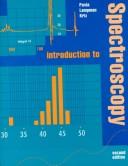
Introduction to spectroscopy is the standard first book for the bench route. It teaches IR, NMR and mass spectrometry as tools for solving structures, with a large stock of worked problems, and problems are the only way this skill is acquired.
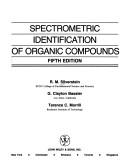
Spectrometric identification of organic compounds is the companion reference — extensive correlation tables for chemical shifts, absorption frequencies and fragmentation patterns. It overlaps the previous book heavily in scope but not in function: if you have the first as your course, treat this as the lookup volume rather than a second pass over the same material. Infrared and Raman Spectroscopy goes deeper on interpretation specifically, and is where to go once you can read a spectrum but not yet a difficult one.
Principles of instrumental analysis covers the instruments themselves — sources, monochromators, detectors, sampling — and it is the book that stops spectra being magic. Read it once you have used a machine and started wondering what the numbers on the front panel do.
NMR, which deserves its own stage
Understanding NMR spectroscopy is the standard modern treatment, building from the vector model to product operators and explaining why two-dimensional experiments work rather than just how to run them. NMR spectroscopy explained covers much of the same ground at greater length and with more hand-holding, which makes it the better self-study option for some readers. These two genuinely overlap — pick one as your primary text and use the other only if you get stuck.
Mass Spectrometry is the comprehensive reference for the third technique: ionisation methods, analysers, and how to read fragmentation. It is dense, and it is the book you keep.
The physical theory route
Fundamentals of molecular spectroscopy is the short classic bridge — rotational, vibrational and electronic spectroscopy derived from quantum mechanical principles, at a length you can actually finish. Start the theory route here even if you came through the practical books first.
Molecular symmetry and group theory teaches point groups, character tables and representations from scratch, and Symmetry and spectroscopy then applies that machinery to vibrational and electronic spectra, which is where selection rules stop being arbitrary rules to memorise. Take them in that order; the second assumes the first.
Modern spectroscopy is the standard general text covering the whole range at degree level. Molecular quantum mechanics supplies the underlying theory in more depth than any spectroscopy book will, and is the right place to go when a derivation in Hollas is compressed past comprehension.
Two specialist endpoints. Molecular spectra and molecular structure is Herzberg's monumental multi-volume reference — a lifetime's compilation, used for lookup, never read straight. Astronomical Spectroscopy is for readers whose target is astrophysics rather than the laboratory, where the samples are stars and the atomic physics matters more than the sample prep.
Follow the path in order for whichever route matches your goal, and skip the other branch until you need it.
Follow the full ordered path here: The Best Spectroscopy Books to Read First.