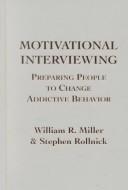
Buy two books, not one. William R. Miller and Stephen Rollnick's founding text — catalogued here under the bare title Motivational interviewing — sits beside David Rosengren's Building Motivational Interviewing Skills, Second Edition rather than before it. MI is a conversational skill measured by what a practitioner produces in a session, and reading the theory alone reliably yields people who can define change talk and cannot evoke it. Rosengren supplies the graded exercises, transcripts and self-assessments; the founding text supplies the model they are exercises in.
Before you order, check the edition, because clinicians buy by edition and ours cannot tell you which one you are getting. Our catalogue holds a single record filed under the bare title, carrying 1991 metadata — the year of the first edition, when the book was still framed around addictive behaviour — while the ISBN attached to that record belongs to a later Guilford printing. The editions are not cosmetic revisions of each other. The third edition (2012, subtitled Helping People Change) restructured the method around the four processes of engaging, focusing, evoking and planning, which is the vocabulary every current training uses; the fourth (2023, Helping People Change and Grow) is what a course will assign today. Read the seller's edition statement, not our listing.
One honesty rail, stated once. These books teach a method that is normally learned with supervision and with coded recordings of real sessions. They do not confer a licence, a qualification, or the right to practise in any regulated setting, and nothing here replaces the training your employer or registration body requires.
The founding text, and learning to do it
Motivational interviewing is the only genuinely required reading in the path: the model, its spirit, and the distinction between evoking a client's own reasons for change and supplying your own. Building Motivational Interviewing Skills, Second Edition is the practitioner workbook — the largest book in this path at over 500 pages, and the one to work through with a pen. Listening Well is Miller's short book on accurate empathy, 114 pages, and the right addition if reflective listening is the weak part of your practice. Skip it if you already have solid counselling training; it is the foundation MI assumes rather than MI itself.
MI in health care
Motivational interviewing in health care, by Rollnick, Miller and Christopher Butler, is the standard text for clinicians and takes seriously the constraint that defines medical MI: doing this in seven minutes, in a role carrying authority the method deliberately sets aside. Health behavior change is the earlier and more general guide, written for nurses and primary-care staff, and it overlaps the newer book substantially — take it for the agenda-setting and importance-confidence tools, which the later book compresses, and skip it otherwise. Motivational Interviewing in Diabetes Care is a single-condition worked example, and worth reading even outside diabetes because a whole book on one chronic, self-managed illness shows how the method behaves over years rather than one appointment.
Other settings, and harder cases
Four applied volumes follow, and they are genuinely different problems rather than the same book relabelled. Motivational interviewing in nutrition and fitness covers dietetics and exercise counselling, where the temptation to lecture is strongest. Motivational Interviewing in Schools is the clearest treatment of MI where the practitioner holds real institutional power over the client. Motivational Interviewing in Social Work Practice, Second Edition is the statutory case, where attendance may be mandated and the worker also assesses. Motivational Interviewing with Adolescents and Young Adults, Second Edition covers the developmental adaptations and assumes you can already run a standard MI conversation.
Then the integration books. Motivational Interviewing and CBT addresses the most common real-world combination and should be read once you can do both separately. Motivational interviewing in the treatment of anxiety is the most interesting edge case here: the ambivalence is about treatment itself rather than about a behaviour, so the standard change-talk model has to bend.
One gap worth naming. Group-format MI is a real branch of this literature — the format that most tests what is essential in the method — and our catalogue does not currently carry a book on it, so the path stops at individual practice. Follow the full reading path for the stage notes and study questions, or build your own list at /create.
Follow the full ordered path here: The Best Books on Motivational Interviewing, in Reading Order.
Ready to learn something deeply?
Build a reading path — free