There is a real and unsettled argument at the centre of this subject, and any reading list that hides it is doing you a disservice. One camp holds that regional homelessness rates are driven overwhelmingly by housing markets — rents relative to incomes, and vacancy rates — and that addiction and mental illness explain who becomes homeless within a region but not why one region has five times the rate of another. The other camp holds that permissive drug policy, untreated serious mental illness and a reluctance to require treatment are what produce visible street homelessness, and that housing-first policy has been oversold. These are not two framings of the same claim; they imply different policies, and reasonable people hold each.
This path therefore does two things. It sorts the books by what they are — ethnography, quantitative policy analysis, history, textbook, advocacy — because those categories carry very different kinds of authority. And it puts the two sides of the causal argument next to each other rather than picking one.
Ethnography and reporting first
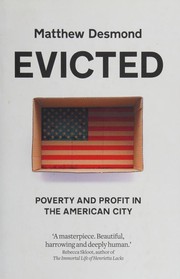
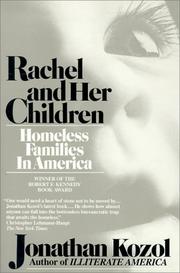
Evicted is Matthew Desmond's ethnography of eviction in Milwaukee, following tenants and landlords over time. It is the book that moved eviction from a footnote in housing research to a central object, and the fieldwork is the reason. Rachel and her children is Jonathan Kozol's 1988 reporting from New York's welfare hotels — advocacy journalism, openly so, and a document of the crisis's first modern wave. Tell them who I am is Elliot Liebow's ethnography of homeless women in Washington DC shelters, written by a sociologist who volunteered in them for years; it is the least polemical book on this list and among the most humane. Rough Sleepers is Tracy Kidder's narrative account of Jim O'Connell and the Boston street medicine programme — reporting on care delivery rather than on policy.
The causal argument, both sides
Homelessness Is a Housing Problem by Gregg Colburn, with Clayton Page Aldern, is the quantitative case for the housing-market explanation: it compares metropolitan areas and finds that rates track rent levels and vacancy rather than regional rates of drug use, mental illness, poverty or climate. It is the most rigorous statement of that position and its data and methods are the thing to evaluate.
San Fransicko by Michael Shellenberger argues the opposite, that progressive drug and housing policy in West Coast cities produced the street conditions there. It is advocacy, written by an author with an explicit political project, and its use of evidence has been sharply criticised by researchers in the field — as has, in fairness, the wider tendency to treat any single-cause account as settled. Read it to understand the strongest popular version of the argument, and read the criticism alongside it.
Policy and the supply question
Golden Gates by Conor Dougherty is journalism on California's housing politics and the rise of the pro-development YIMBY movement. The Affordable City by Shane Phillips is a practitioner's toolkit: an actual menu of policy instruments, with trade-offs stated. Arbitrary Lines by M. Nolan Gray is a policy argument that American zoning should largely be abolished — clear, well-made, and a position rather than a survey. Housing policy in the United States by Alex F. Schwartz is the textbook, and the right place to check how a programme actually functions when the argumentative books gesture at it.
The history that produced the market
The Color of Law by Richard Rothstein is a legal and documentary history arguing that American residential segregation was created by explicit government policy rather than by private preference. Crabgrass Frontier by Kenneth T. Jackson is the 1985 academic history of suburbanisation, and the scholarly foundation Rothstein builds on. Family Properties by Beryl Satter is a history of contract selling in Chicago, told partly through her own father's legal work — the most vivid account of how housing discrimination extracted money in practice.
Escaping the Housing Trap by Charles L. Marohn, Jr. and Daniel Herriges is the Strong Towns argument: that treating housing as both a financial asset and a consumer good is a structural contradiction. It is advocacy from a specific movement, and clearly labelled as such by its own authors.
Follow the path in order and you will finish able to state both sides of the causal argument in their strongest form, which is more than most coverage of this subject manages.
Follow the full ordered path here: Housing and Homelessness: The Best Books on Rent, Eviction and the Streets.