Start with The Third Policeman. It is the funniest and the most gripping of his books, it is short, and it moves — a murder, a stolen cash box, a police barracks where the sergeant is concerned that people are gradually turning into bicycles, and a footnoted scholarly apparatus devoted to a philosopher called de Selby who believes night is caused by accumulations of black air. The ending reframes everything before it, and it is one of the very few genuinely earned twists in literary fiction.
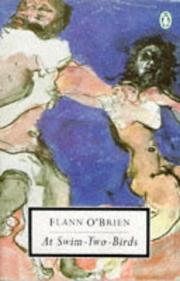
The obvious alternative is At Swim-Two-Birds, the 1939 debut, and it is the greater book by most critical accounts. It is also much harder: a student writes a novel about a novelist whose characters drug him so they can live their own lives, with Finn MacCool and a cowboy gang in Dublin sharing the page. Come to it second, when you already trust the writer.
Three names, and a shelf that makes no chronological sense
He was born Brian O'Nolan, wrote novels as Flann O'Brien, and wrote a daily newspaper column in The Irish Times as Myles na gCopaleen. All three names appear on books, which is why his section in a bookshop looks like three authors having an argument.
The publication history is stranger still. At Swim-Two-Birds came out in 1939 and sold almost nothing. The Third Policeman was finished in 1940, rejected by his publisher, and then hidden — he told friends the manuscript had been lost on a journey — and it did not appear until 1967, a year after he died. So the best novel is the last one published and the second one written. Reading him in publication order means reading his masterpiece at the end, out of sequence with everything it influenced.
The sequence we recommend
The Third Policeman first. At Swim-Two-Birds second.
Third, The Dalkey archive (1964). Read it after The Third Policeman and not before, because O'Brien, believing the earlier manuscript was permanently lost, cannibalised it — de Selby returns, and so does a version of the bicycle material. Coming to it first spoils the better book and makes the weaker one look more original than it is. On its own terms it is enjoyable: an ageing James Joyce is discovered working as a barman in Skerries and denying he wrote Ulysses.
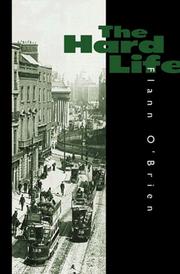
The hard life (1961) fits fourth. It is the slightest of the novels and the most conventional, a Dublin story of two brothers and a guardian, sustained largely by the dialogue. Read it if the others have won you over.
The columns
The best of Myles collects the Cruiskeen Lawn columns, written over more than twenty years. This is where a large number of Irish readers would tell you the real achievement lies — the Catechism of Cliche, the Ventriloquism section, the Brother, the plot-selling bureau, the running war against literary pretension. It is not a book to read straight through. Keep it and open it anywhere.
One major work is missing from our catalogue: An Béal Bocht, written in Irish in 1941 and translated as The Poor Mouth, a parody of the Gaeltacht misery memoir that is savagely funny and unlike anything else he wrote. Its absence here is a gap in our records, not a judgement.
Where to stop
Two novels and the columns are enough: The Third Policeman, At Swim-Two-Birds, The best of Myles. Add The Dalkey archive only if you want to see how the salvage operation worked. The full ordered path is below.
Follow the full ordered path here: Flann O'Brien in Order: Where to Start with Ireland's Great Comic Novelist.