Deep learning is one of the most consequential and most misunderstood subjects in tech. You can call a model in ten lines of code without understanding anything about why it works, and that ignorance holds you back the moment a model misbehaves. Real capability comes from understanding the math and the mechanics, not just the API.
But the math is also where most people bounce off, usually because they hit it in the wrong order — a rigorous textbook before any intuition, or a framework tutorial before any theory. This path sequences it deliberately: just-enough foundations, then a broad overview, then the deep theory, then practice and the modern architectures shaping the field.
Build the foundations
Start with Mathematics for Machine Learning, which covers the linear algebra, calculus, and probability you need — and only what you need — with machine learning as the motivation. Then The Hundred-Page Machine Learning Book gives you the entire landscape concisely, so you know where deep learning sits before you dive in.
Understand neural networks
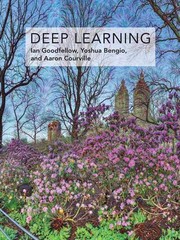
Now the core. Deep Learning by Goodfellow, Bengio, and Courville is the definitive theoretical reference on the field's foundations. Read it alongside Neural Networks and Deep Learning by Michael Nielsen, whose free, intuition-first online book makes backpropagation and gradient descent finally click. The pairing of rigor and intuition is exactly what makes this stage work.
Practice and specialize
Theory needs a keyboard. Deep Learning with Python by Francois Chollet — creator of Keras — teaches you to build real models with clear code and clearer explanations, and Dive into Deep Learning combines math, discussion, and runnable notebooks in one interactive text. From there, specialize: Deep Learning for Computer Vision: Expert techniques to train advanced neural networks using TensorFlow and Keras covers vision, and Natural Language Processing with Transformers teaches the architecture behind today's language models.
Go deeper
To round out your understanding, Probabilistic Deep Learning covers uncertainty and Bayesian methods that most tutorials ignore, and The deep learning revolution by Terrence Sejnowski gives the scientific and historical context that explains how the field got here.
Follow the path in order and deep learning becomes a subject you understand rather than invoke — with the CS-fundamentals and algorithms paths as ideal companions.
Follow the full reading path →
Ready to learn something deeply?
Build a reading path — free