The subject has two halves and one seam. The first half is the analysis of a single borrower: reading the accounts, understanding the business, structuring a facility. The second is portfolio-level credit risk: default correlation, capital, hedging, modelling. Almost everything difficult happens at the seam, and the reading order below crosses it deliberately rather than by accident.
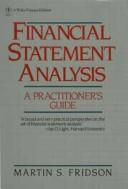
Start with Martin S. Fridson's Financial statement analysis, written with Fernando Alvarez. It is a practitioner book with a distinctly sceptical temperament — its subject is not how accounts are prepared but how they mislead, which is the correct starting posture for a lender. Milind Sathye's Credit Analysis and Lending Management is the academic textbook to follow it with: structured, exam-shaped, and clear on the lending process from application through to recovery. Timothy W. Koch's Bank management is the broader university text on how a bank works as a whole — funding, spreads, asset-liability management — which is the context every credit decision sits inside.
Before going further, the plain statement this subject deserves: these are professional books, and reading them is not a substitute for the credentials, training or supervisory sign-off that lending roles require. Nothing here is investment or credit advice, and no book will tell you whether a particular loan is sound.
Analysing a borrower
Fundamentals of corporate credit analysis by Blaise Ganguin and John Bilardello is the rating-agency method set out plainly: business risk, financial risk, and how the two combine into a view. It is the most directly useful book here for anyone who has to write a credit paper. Morton Glantz's Credit engineering for bankers is the more quantitative practitioner treatment, heavy on cash-flow modelling and stress testing. Joetta Colquitt's Credit Risk Management covers the full commercial-lending lifecycle and is strong on the operational side that textbooks skip — documentation, covenants, monitoring, workout.
The Bank Credit Analysis Handbook by Jonathan Golin and Philippe Delhaise deserves its own note, because it addresses a genuinely different problem: analysing a bank as a borrower or counterparty, where the usual ratios do not apply and the balance sheet is the business. Hennie van Greuning's Analyzing and managing banking risk is the World Bank framework alongside it, aimed at supervisors and emerging-market institutions.
Portfolio and model
Managing credit risk by John B. Caouette, Edward Altman and Paul Narayanan is the standard bridge from single-name analysis to portfolio thinking, and its later edition was written with the crisis in view. Anthony Saunders and Linda Allen's Credit risk measurement surveys the quantitative approaches without demanding that you derive them. David Lando's Credit Risk Modeling is the genuinely mathematical book on this shelf: intensity-based and structural models, priced properly, assuming stochastic calculus and a graduate finance background. Do not start there.
Then three portfolio books. Jeffrey R. Bohn's Active credit portfolio management in practice, written with Roger Stein, is the Moody's KMV structural-model view — distance to default, expected default frequency, and how to manage exposure on those measures. Lev Dynkin's Quantitative Credit Portfolio Management comes out of Barclays index research and is about constructing and benchmarking a credit bond portfolio, which is a different job from lending. Greg N. Gregoriou's The handbook of credit portfolio management is an edited collection, uneven as such books are, and useful for particular chapters rather than as a read-through.
Date them against the current regime
This matters more here than in most subjects. Anything written before roughly 2013 describes a world before Basel III, which raised capital quality and quantity, introduced the leverage ratio and the liquidity coverage ratio, and has been phasing in its output floor since. More consequentially for the analyst's daily work, both IFRS 9, effective 2018, and the US CECL standard, phased in from 2020, replaced incurred-loss provisioning with expected credit loss — so loss allowances are now forward-looking and model-driven from origination, which is simply not the world Ganguin, Glantz or Colquitt were writing in. Dodd-Frank added supervisory stress testing on top. Fridson's scepticism, Sathye's process and Golin's bank-analysis framework all survive this intact; the specific provisioning, capital and regulatory chapters in the older books do not, and should be checked against current standards rather than trusted.
Work through the full reading path in order and the modelling books will arrive after the judgement books, which is the right way round.
Follow the full ordered path here: The Best Credit Analysis and Lending Books, in Order.