Two things need saying before the reading order. First, nothing on this list is patient-facing guidance about your own anesthetic. The professional texts here describe drug doses, airway management and crisis algorithms for clinicians working under supervision inside a hospital system; reading them will not tell you what should happen in your operation, and questions about a specific case belong with the anesthesiologist or anesthetist who is doing it. Second, the list splits cleanly in half, and the split is more important than the order: the first six books are written for general readers, and the last eight assume medical school.
That professional half assumes pharmacology, cardiovascular and respiratory physiology, airway and neuraxial anatomy, and enough clinical context to know what a case looks like. They are written for anesthesiology residents, nurse anesthetists and anesthesiologist assistants preparing for examinations and for practice. A curious reader can absolutely open them — this is not gatekeeping — but should expect to be reading a reference written for someone mid-training, not an explanation.
The general reader's half
Counting backwards is a memoir by Henry Jay Przybylo, a paediatric anesthesiologist, and it is the best entry point on the list: it explains what the job actually consists of, minute by minute, without needing you to know any of it in advance. Kate Cole-Adams's Anesthesia is the more unsettling companion — long-form journalism woven with personal narrative about consciousness, memory and intraoperative awareness, the rare event where a patient retains some awareness during surgery. It reports the research honestly, including how contested the incidence figures are.
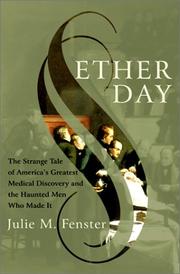
Then the history, which is unusually good in this field. Julie Fenster's Ether Day reconstructs the 1846 public demonstration at Massachusetts General and the vicious priority fight between Morton, Wells and Jackson that followed and ruined all three. Stephanie Snow's Blessed days of anaesthesia is the scholarly counterpart, covering the nineteenth-century reception in Britain — the religious objections, the class and gender arguments about pain in childbirth, and how quickly the resistance collapsed. The wondrous story of anesthesia, edited by Edmond Eger and colleagues, is the reference history: a huge multi-author volume you consult rather than read through, and the place to go once a question in Fenster or Snow needs a real answer.
Steven Orebaugh's Understanding anesthesia is the one book here written specifically for patients, by an anesthesiologist, explaining what happens and why. It is the only item on this list that is intended to inform someone facing surgery, and it still does not replace the pre-operative conversation.
The professional half
Miller's Basics of Anesthesia, edited by Manuel Pardo, is the standard first text — known everywhere as Baby Miller — and is where residents start. Anesthesia Secrets by Brian Keech uses the question-and-answer format of the Secrets series and works well for oral-examination preparation and rapid review rather than for first learning. The anesthesia guide by Arthur Atchabahian is a pocket-style clinical handbook organised for use in the moment.
Above those sit the four large references. Miller's Anesthesia is the multi-volume standard of the field, the book cited when a practice question needs settling. Clinical Anesthesia edited by Paul Barash and Morgan and Mikhails Clinical Anesthesiology edited by John Butterworth are the two main alternatives — Barash is the fuller reference, Morgan and Mikhail the more readable single volume that many residents prefer as their primary text. Owning all three is redundant; most departments pick one. David Longnecker's Anesthesiology is the fourth comprehensive option, notable for its emphasis on perioperative medicine.
Finally, A Practice of anesthesia for infants and children, edited by Charles Coté, is the subspecialty reference. Paediatric anesthesia is not adult practice scaled down — the pharmacokinetics, airway anatomy and physiological reserve all differ — and this is the book that says so at length.
Work through the path in order if you are new to the subject, and stop at Orebaugh unless you are training. Books do not confer credentials, and the professional half of this list is a supplement to supervised clinical training, never a substitute for it.
Follow the full ordered path here: How to Read About Anesthesia and Anesthesiology, in Order.